
 Comparative efficacy of low-volume remotely piloted aircraft spraying with adjuvants for coffee berry borer control
ABSTRACT
The coffee berry borer (Hypothenemus hampei) is one of the main pests in coffee cultivation, requiring more efficient and sustainable application technologies. This study aimed to evaluate the efficacy of different spray volumes and adjuvants for pest control using remotely piloted aircraft (RPA). The experiment was carried out in a commercial coffee plantation, in a randomized block design, with a 2 × 5 + 1 factorial arrangement: two volumes (9 and 12 L ha -1) and application of bifenthrin + acetamiprid, alone or combined with four adjuvants (mineral oil, nonionic surfactant, vegetable oil and organosilicate), in addition to a control without application, with four replications. Applications were performed with a DJI T10 RPA operating at 1.5 m height, 6.0 m s-1 speed, and 3.5 m swath width, under environmental conditions of 26-30 °C, 51-81% relative humidity, and wind speeds of 2.6-8 km h-1. Spray deposition was quantified using manganese sulfate as a tracer and analyzed by spectrophotometry. Infestation was evaluated at 7, 14, 21, and 28 days after application (DAA). The 9 L ha-1 volume provided 67-71% control at 28 DAA, superior to 12 L ha-1. The vegetable oil adjuvant increased deposition by 15-20% compared to the insecticide alone. RPA technology ensured adequate canopy penetration with a 25% reduction in spray volume compared to conventional methods. Vegetable oil and organosilicate were the most effective adjuvants. It is concluded that RPA applications with optimized low spray volumes and specific adjuvants are effective for coffee berry borer management.
Key words:
Hypothenemus hampei; RPA technology; spray volume optimization; adjuvant efficacy; coffee pest management
HIGHLIGHTS:
The 9 L ha-1 application with adjuvants yielded 67%-71% borer control at 28 days, superior to the 12 L ha-1 application.
Vegetable oil adjuvant enhanced spray deposition by 15%-20% compared to insecticide alone.
Remotely piloted aircraft achieved canopy penetration with a 25% reduction in spray volume than conventional applications.
RESUMO
A broca-do-café (Hypothenemus hampei) é uma das principais pragas da cafeicultura, exigindo tecnologias de aplicação mais eficientes e sustentáveis. Este estudo objetivou avaliar a eficácia de diferentes volumes de pulverização e adjuvantes no controle da praga utilizando aeronave remotamente pilotada (RPA). O experimento foi conduzido em lavoura comercial de café, em delineamento em blocos casualizados, com arranjo fatorial 2 × 5 + 1: dois volumes (9 e 12 L ha-1) e aplicação de bifentrina + acetamiprido, isolado ou combinado com quatro adjuvantes (óleo mineral, surfactante não iônico, óleo vegetal e organossiliconado), além de uma testemunha sem aplicação, com quatro repetições. As pulverizações foram realizadas com RPA DJI T10, operando a 1,5 m de altura, 6,0 m s-1 de velocidade e 3,5 m de faixa, sob condições ambientais de 26-30 °C, 51-81% de umidade e vento de 2,6-8 km h-1. A deposição da calda foi quantificada utilizando sulfato de manganês como traçador, com análise por espectrofotometria. A infestação foi avaliada aos 7, 14, 21 e 28 dias após a aplicação (DAA). O volume de 9 L ha-1 proporcionou controle de 67-71% aos 28 DAA, superior ao de 12 L ha-1. O adjuvante óleo vegetal incrementou a deposição em 15-20% comparado ao inseticida isolado. A tecnologia RPA assegurou adequada penetração da calda no dossel com redução de 25% no volume em relação ao convencional. Óleo vegetal e organossiliconado apresentaram maior eficiência. Conclui-se que a aplicação com RPA, em baixo volume e com adjuvantes específicos, é eficaz no manejo da broca-do-café.
Palavras-chave:
Hypothenemus hampei; tecnologia RPA; otimização do volume de aplicação; eficácia do adjuvante; manejo de pragas do café
Introduction
Brazil is the world’s largest coffee producer and exporter, and coffee has considerable economic and social relevance for the country (CONAB, 2024). However, the coffee berry borer (Hypothenemus hampei) remains one of the main phytosanitary challenges that directly affects productivity and final product quality (Aristizábal et al., 2016; Moreno-Ramirez et al., 2024). Although the economic losses associated with this pest are considerable, it is imperative to focus on the development of effective application strategies beyond its economic impact. This is particularly attributed to the biological characteristics of the pest, which infests the fruits in the field and shelters itself within the coffee bean, thereby posing challenges for chemical control (Aristizábal et al., 2017).
Conventional chemical control of coffee berry borers is primarily performed using ground-based sprayers. However, this presents operational limitations in coffee plantations, especially regarding spray coverage uniformity in dense and difficult-to-access canopies (Hu et al., 2022). Groundbased applications require higher spray volumes and longer operational times. This increases losses from runoff and evaporation and increases the risks of drift and environmental contamination (Marubayashi et al., 2021). Therefore, there is a need for technologies that can enhance the accuracy and efficiency of spray deposition, especially within canopies where infested fruits are concentrated (Aristizábal et al., 2017).
In this context, RPAs have garnered attention as promising alternatives, enabling applications with low spray volumes, greater deposition uniformity, better droplet penetration in the canopy, and optimization of target exposure to spray, especially in coffee crops. (Lou et al., 2018; Carvalho et al., 2021; Silva et al., 2024). RPAs operate with narrow swaths and precisely control the flight height and speed, enabling adjustments to different canopy architectures, which is often a limitation of conventional ground equipment (Lou et al., 2018).
Using adjuvants in low-volume sprays is a well-known strategy for improving the physicochemical properties of mixtures, such as surface tension and spreadability, in addition to mitigating evaporation losses (Marubayashi et al., 2021). However, the innovative component of this study lies in the evaluation of the direct connection between the type of adjuvant and biological efficiency in the control of the coffee borer at low application volumes using RPAs. Unlike previous studies, which focus mainly on improving deposition, the work establishes a clear relationship between optimized deposition from using specific adjuvants and increased effectiveness in pest control. In this study, we have also addressed the problem of efficiency in reduced volumes, a critical point for application sustainability. Therefore, we aimed to compare the efficacy of low-volume RPA spraying (9 and 12 L ha-1) with different adjuvants for coffee berry borer control.
Material and Methods
The experiment was conducted in Arabica coffee (Coffea arabica L.), cultivar Catuaí amarelo IAC 62, in conventional plantings of seven years old, with spacing of 3.20 × 0.9 m. This area had no history of coffee borer infestation, and before the experiment, there were no previous applications in the area. The mill is located in the municipality of Jeriquara, São Paulo, Brazil, with an average altitude of 870 m, latitude 20° 18′ 43″ S, and longitude 47° 35′ 23″ W. The study was conducted over two harvests, with the first from December 2022 to February 2023 and the second harvest at the same stage from December 2023 to February 2024. According to the Köppen classification, the climate of Jeriquara is classified as Cwb, temperate with a dry winter and less than 30 mm of rain in the driest month. The average temperatures of the hottest month are below 22 °C, and the coldest month below 18 °C (CEPAGRI, 2024).
The experiment was conducted in a randomized block design (RBD), with ten treatments in a 2 × 5 factorial design comprising two spray volumes vs. one insecticide alone and the same insecticide combined with four adjuvants, with four replicates (Table 1). The plots consisted of three planting rows, with only the central row sprayed. In this row, three plants with a representative infestation of the crop were selected for spray evaluations. The remaining rows and plants formed buffer zones.
Treatments comprising chemical insecticide with or without adjuvants, used to evaluate coffee berry borer control
Conventional sampling was performed before application to verify coffee borer infestation in the experimental area. To perform sampling at planting, the plot was covered in a zigzag pattern, and 100 fruits from the upper, middle, and lower third of each selected plant were randomly collected in the third phase, which was characterized by flowering and expansion of the fruits. The fruit collected from each plot, with each plot consisting of four plants, constituted a single sample. Subsequently, the infested and non-infested fruits were separated, and the percentage of infestation in the plantation was determined (Marcolan et al., 2015).
To quantify the control of infestation after application, weekly sampling was conducted to estimate the levels of infested fruits in the respective treatments and the efficiency of borer control using the modified formula of Henderson & Tilton (1955), considering the number of infested fruits. Four assessments were conducted during the sampling period of the first harvest and four during the second harvest, totaling eight assessments throughout the experiment. Sampling involved counting the number of grains punctured by the borer on each plagiotropic branch at harvest.
In the experiment, a DJI T10 RPA was used with a capacity of eight liters, which was pre-regulated and calibrated before application. The operational efficiency was 15 acres per hour, containing four rotors, maximum operational flight speed of 7 m s-1, maximum flight speed of 10 m s-1 with strong GNSS signals, wind resistance of 8 m s-1, maximum effective spray width ranging from 3 to 5.5 m, hover duration of 17 min, and maximum spray flow of 1.5 L min-1 (DJI, n.d). The spray nozzle used in the RPA was TXA 8001 (TeeJet). The RPA can automatically plan flight routes in the area, fly autonomously, and automatically adjust its flight height using a radar device to maintain distance from the plant canopy.
The flight speed was 6.0 m s-1, and the average flight height of 1.5 m above the top of the coffee plant canopy was kept constant across all treatments, with a spray width of 3.5 m, in addition to the working pressure, which was 5 bar. Applications were made overplanted rows of coffee crops. The applications were performed in the morning between 8:30 and 11:30 A.M. Between different treatment applications, the tank was cleaned with running water so that there was no contamination between the products or interference in the control.
To determine the deposition of the chemical products, a manganese sulfate (930 ppm) marker was added to the spray solution (Costa et al., 2015). After applying the spray solutions, a drying time of 60 min was allowed, and leaves from the upper and lower parts of each treatment were collected. Four leaves were collected from each plot for the deposition analysis. The leaves were placed in plastic bags, labeled, and transported to the laboratory.
In the plastic bags with the leaves, 100 mL of 0.2 mol L-1 hydrochloric acid (HCl) solution was added and kept in the acid for 60 min for marker extraction. After this time, the contents were filtered with filter paper, and the extract was used to quantify the recovered Mn2⁺ metal ion (ppm) using an atomic absorption spectrophotometer. The leaves were dried for area measurement using the leaf area integrator method (LI-Cor Portable, model LI-3000 A). This provides the actual leaf area (ALA), used to correlate the amount of spray solution in relation to the specific leaf area (μL of spray solution cm2 of leaf).
The meteorological conditions were monitored using a digital thermo-hygrometer, which recorded temperature and relative humidity, and a digital anemometer, which recorded wind speeds. These meteorological conditions were constantly monitored during the applications. They were within the acceptable standard for an effective application, where the temperature varied between 26 and 30 °C, the humidity was between 51 and 81%, and the wind speed was between 2.6 and 8 km h-1.
The data variance (ANOVA) was analyzed using the F-test, and the means were compared using Tukey’s test (p ≤ 0.05). Tests for the normality and homogeneity of variance were also performed. The statistical software used was SpeedStat, version 3.2 (Carvalho et al., 2020).
Results and Discussion
The coffee borer infestation obtained by conventional sampling before application was homogeneous throughout the experimental area in the two seasons evaluated (2022/23 and 2023/24) (Tables 2 and 3). Under conditions of pest infestation in crops, pest control is recommended (Pérez et al., 2015). Control measures are recommended when the infestation rate exceeds 3% (Pérez et al., 2015), as observed in this study.
Average infestation of the coffee berry borer in treatments before application of phytosanitary products, with their respective spray volumes for the ‘Catuaí’ cultivar. 2022/23 harvest
Average infestation of the coffee berry borer in treatments before applying phytosanitary products, with their respective spray volumes for the ‘Catuaí’ cultivar. 2023/24 Harvest
Analysis of variance (ANOVA) was performed to evaluate the effect of ten treatments over four evaluation periods, that is, 7, 14, 21, and 28 DAA. In all periods analyzed, the treatments showed statistically significant differences (p < 0.05), indicating a differential response between the control methods used. Based on these results, a comparison of means (Tukey’s test) was used to differentiate between the treatments and identify those that were the most effective over time.
The results were expressed in terms of efficiency calculated using the Henderson & Tilton formula (1955), which considers the number of infested fruits. Therefore, higher efficiency indicates fewer infested fruits. The integrated analysis of the two harvests showed consistent trends in efficacy patterns, especially concerning direct control of the coffee borer. Treatments with insecticides alone or in combination with adjuvants generally showed progressive increases in efficacy over 28 DAA, regardless of the production cycle. At 7 and 14 DAA, the observed efficiencies were still below 50% (Figures 1A and B; 2A and B). This suggests that the initial post-application period was limited by low translocation and/or penetration into the interior of the canopy, where borer females often take refuge soon after infestation flight.
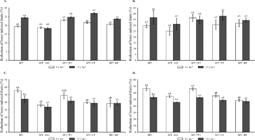
Efficiency (%) in controlling the coffee borer in an experiment with different application volumes, insecticide, and adjuvants. (A) 7 DAA, (B) 14 DAA, (C) 21 DAA, and (D) 28 DAA. Cultivar: ‘Yellow Catuaí’. Harvest: 2022/23
However, from 21 DAA onwards, the control pattern was consolidated, and the most efficient treatments (9 L ha⁻1) showed consistent superiority in both seasons (Figure 1C and 2C). The highest efficacy was observed at 28 DAA, with values ranging up to 71% (1D and 2D), indicating a satisfactory residual effect and reinforcing the potential of using low volumes. This increases the concentration of the mixture per leaf area. The replication of these results in two different harvests enhances the statistical and agronomic reliability of the observed evidence, in addition to corroborating the studies performed by Aristizábal et al. (2016). This highlighted the need to reach the internal parts of the plant to enhance the effectiveness of pest control. Similar results were obtained by Crause et al. (2023), who observed greater persistence of RPA products in perennial crops under tropical conditions.

Efficiency (%) in controlling the coffee borer in an experiment with different application volumes, insecticide, and adjuvants. (A) 7 DAA, (B) 14 DAA, (C) 21 DAA, and (D) 28 DAA. Cultivar: ‘Yellow Catuaí’. Harvest: 2023/24
Despite these advances, the maximum efficacy observed in this study was 71%. This is considered lower than the commercial level of 80%, highlighting the need for additional adjustments in the application technology for a more efficient control (Metellus et al., 2020; MorenoRamirez et al., 2024).
The evaluation of the deposit was conducted based on the retention of grout on the coffee leaves. This is because this plant compartment represents the primary interception surface during the RPA application. Although the target insect develops inside the fruit, Cunha et al. (2024a) and Chen et al. (2020) justified the use of leaves as reliable indicators of cover efficiency. This is primarily attributed to their strategic position in the canopy and proximity to the fruits.
The joint analysis of the two seasons showed that, although the highest leaf deposits were achieved in the treatments with 12 L ha⁻1 and vegetable oil, with average values of 0.24 μL cm⁻2, this higher deposition did not translate into superior pest control (Figures 3 and 4). Treatments with smaller volumes resulted in greater biological efficiency. This finding suggests a complex interaction between the volume of syrup, concentration of the solution, and biological efficacy.
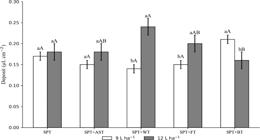
Deposit of phytosanitary spray solution for two spray volumes and adjuvants per plant for coffee borer control using RPA. Cultivar: ‘Yellow Catuaí’. 2022/23 harvest
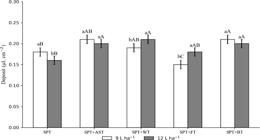
Deposit of phytosanitary spray solution for two spray volumes and adjuvants per plant for coffee borer control using RPA. Cultivar: ‘Yellow Catuaí’. 2023/24 harvest
The main reason for the better performance of the smaller volumes was the higher concentration of the active ingredient per drop. At lower volumes, the same amount of products were distributed in a smaller number of drops but with a higher concentration. This higher concentration on the surface of the target increased the probability of absorption and lethal contact with the pest, although the total deposition on the leaf was lower. Deposition is not the sole determining factor; the concentration of the active ingredient at the point of impact is crucial.
This dissociation between total leaf deposition and control efficacy corroborates the findings of Wang et al. (2021), who demonstrated that the location and concentration of the droplet, and not just its quantity, are critical for reaching the biological target. In the present study, the efficacy of pest control in treatments with lower volume was identified as the key factor for pest control, surpassing the amount of product deposited on the leaf.
Meanwhile, low volumes (9 L ha⁻1) with adjuvants such as organosilicate provided better levels of control, including with lower absolute deposition values. This corroborates the hypothesis that more concentrated formulations favor the penetration and persistence of active ingredients in the innermost layers of the canopy where fruits and insects are located (Cunha et al., 2024a). Young and mature leaves have surface microarchitectures capable of influencing the absorption and redistribution of the mixture, reinforcing their importance as targets for evaluation (Cunha et al., 2024b). Although direct deposition on fruits represents the ideal condition, monitoring on leaves is methodologically feasible, as validated by literature. This approach offers an effective technical indicator of the performance of RPA applications.
Conclusions
-
1. Applying RPA to coffee plantations has demonstrated considerable agronomic potential for the control of coffee borers.
-
2. The lowest volume (9 L ha⁻1) showed the best pest control, reaching efficacy of up to 71% at 28 days after application, although still below the commercial recommendations (≥80%), the main contribution of this study lies in the finding that efficacy is not directly correlated with increased total leaf deposition.
-
3. In contrast, the higher efficiency observed in the volumes of 9 L ha⁻1 suggests that the higher concentration of the active ingredient per drop and the more homogeneous distribution in the target are the key factors for more effective control.
-
4. The combination of adjuvants significantly modified the performance of the treatments, with vegetable oil and nonionic surfactants being effective in improving the deposition. However, their effects depended on the volume applied.
-
5. The lack of a correlation between higher deposits and better coffee borer control highlights the need to focus on direct investigations of the fruit where the pest is lodged. Therefore, leaf deposits should be considered a complementary variable and not the sole indicator of treatment success.
-
6. The integrated results of the two harvests reinforce the operational feasibility of the use of RPA in the context of borer management but indicate the need for advances in nozzle calibration, more effective formulations, and adoption of complementary control strategies within the scope of integrated pest management (IPM).
Data availability statement:
The authors declare that there are no data underlying the text.
Acknowledgments:
We thank the Coordination for the Improvement of Higher Education Personnel (CAPES) for granting a scholarship to the first author, São Paulo State University (UNESP Jaboticabal), the National Council for Scientific and Technological Development (CNPq), AgrOAzul for its availability and continuous partnership, and Cafézal Consultoria for the availability of its structure and for making the research viable.
Literature Cited
-
Aristizábal, L. F.; Bustillo, A. E.; Arthurs, S. P. Integrated pest management of coffee berry borer: Strategies from Latin America that could be useful for coffee farmers in Hawaii. Insects, v.7, e6, 2016. https://doi.org/10.3390/insects7010006
» https://doi.org/10.3390/insects7010006 -
Aristizábal, L. F.; Johnson, M.; Shriner, S.; Hollingsworth, R.; Manoukis, N. C.; Myers, R.; Bayman, P.; Arthurs, S. P. Integrated pest management of coffee berry borer in Hawaii and Puerto Rico: Current status and prospects. Insects, v.8, e123, 2017. https://doi.org/10.3390/insects8040123
» https://doi.org/10.3390/insects8040123 -
Carvalho, A. M. X.; Mendes, F. Q.; Mendes, F. Q.; Tavares, L. F. SciELO - Brasil -. Crop Breeding and Applied Biotechnology, v.20, e327420312, 2020. https://doi.org/10.1590/1984-70332020v20n3s46
» https://doi.org/10.1590/1984-70332020v20n3s46 - Carvalho, F. K.; Chechetto, R. G.; Mota, A. A. B.; Antuniassi, U. R. Entendendo a tecnologia de aplicação: Aviões, helicópteros e drones de pulverização. FEPAF, Botucatu, 2021. p.88.
-
CEPAGRI/UNICAMP - Centro de Pesquisas Meteorológicas e Climáticas Aplicadas à Agricultura - Retrieved November, 2024, from https://www.cpa.unicamp.br/
» https://www.cpa.unicamp.br/ -
Chen, P. C.; Lan, Y. B.; Douzals, J.; Ouyang, F.; Wang, J.; Xu, W. C. Droplet distribution of Unmanned Aerial Vehicle under several spray volumes and canopy heights in the cotton canopy. International Journal of Precision Agricultural Aviation, v.3, p.77-79, 2020. http://doi.org/10.33440/j.ijpaa.20200304.136
» http://doi.org/10.33440/j.ijpaa.20200304.136 -
CONAB - Companhia Nacional de Abastecimento. Clima mais favorável e bienalidade positiva apontam produção estimada em 58,08 milhões de sacas de café. Available: <https://www.conab.gov.br/ultimas-noticias/5362-clima-maisfavoravel-ebienalidadepositiva-apontam-producao-estimada-em-58-08milhoes-de-sacas-de-café;>. Accessed: Apr. 2024.
» https://www.conab.gov.br/ultimas-noticias/5362-clima-maisfavoravel-ebienalidadepositiva-apontam-producao-estimada-em-58-08milhoes-de-sacas-de-café -
Costa, L. L.; Ferreira, M. C.; Campos, H. B. N.; Carvalho, G. G. F.; Barbosa, J. C. The mixture volume sprayed by hydraulic and centrifugal energy nozzle for the control of Asian soybean rust. Acta Scientiarum, v.37, p.425-433, 2015. https://doi.org/10.4025/actasciagron.v37i4.19598
» https://doi.org/10.4025/actasciagron.v37i4.19598 -
Crause, D. H.; Vitoria, E. L.; Ribeiro, L. F. O.; Ferreira, F. A.; Lan, Y.; Chen, P. C. Droplet deposition of leaf fertilizers applied by an unmanned aerial vehicle in Coffea canephora plants. Agronomy, v.13, e1506, 2023. https://doi.org/10.3390/agronomy13061506
» https://doi.org/10.3390/agronomy13061506 -
Cunha, J. P. A. R. da; Fonseca, L. F. da; Alvarenga, C. B. de; Lopes, L. de L.; Martins Filho, R. M. S. Spray deposition from an unmanned aerial vehicle on a coffee crop. Engenharia Agrícola, v.44, e20240021, 2024a. https://doi.org/10.1590/1809-4430-Eng.Agric.v44e20240021/2024
» https://doi.org/10.1590/1809-4430-Eng.Agric.v44e20240021/2024 -
Cunha, J. P. A. R.; Lopes, L. L.; Alvarenga, C. B. Spray deposition and losses to soil from a remotely piloted aircraft and airblast sprayer on coffee. AgriEngineering, v.6, p.2385-2394, 2024b. https://doi.org/10.3390/agriengineering6030139
» https://doi.org/10.3390/agriengineering6030139 -
Henderson, C. F.; Tilton, E. W. Test with acaricides against the brown wheat mite. Journal of Economic Entomology, v.48, p.157-161, 1955. http://dx.doi.org/10.1093/jee/48.2.157
» http://dx.doi.org/10.1093/jee/48.2.157 -
Hu, H.; Kaizu, Y.; Huang, J.; Furuhashi, K.; Zhang, H.; Li, M.; Huang, J.; Imou, K.; Furuhashi, K. Research on methods decreasing pesticide waste based on plant protection unmanned aerial vehicles: A review. Frontiers in Plant Science, v.13, p.1-8, 2022. http://doi.org/10.3389/fpls.2022.811256
» http://doi.org/10.3389/fpls.2022.811256 -
Lou, Z.; Xin, P.; Han, X.; Lan, Y.; Duan, T.; Fu, W. Effect of unmanned aerial vehicle flight height on droplet distribution, drift and control of cotton aphids and spider mites. Agronomy, v.8, p.2-13, 2018. https://doi.org/10.3390/agronomy8090187
» https://doi.org/10.3390/agronomy8090187 - Marcolan, A. L.; Espindula, M. C.; Centro de Pesquisa Agroflorestal de Rondônia (Brazil). Café na Amazônia, Rondônia: Embrapa, Cap.12, p.257-260, 2015.
-
Marubayashi, R. Y. P.; Oliveira, R. B.; Ferreira, M. C.; Roggia, S.; Moraes, E. D.; Saab, O. J. G. A. Insecticide spray drift reduction with different adjuvants and spray nozzles. Revista Brasileira de Engenharia Agrícola e Ambiental, v.25, p.282-287, 2021. https://doi.org/10.1590/1807-1929/agriambi.v25n4p282-287
» https://doi.org/10.1590/1807-1929/agriambi.v25n4p282-287 -
Metellus, D.; Sampaio, M. V.; Celoto, F. J. Activity of insecticides on coffee berry borer (Hypothenemus hampei) (Coleoptera: Curculionidae, Scolytinae). Bioscience Journal, v.36, p.1099-1115, 2020. https://doi.org/10.14393/BJ-v36n4a2020-46735
» https://doi.org/10.14393/BJ-v36n4a2020-46735 -
Moreno-Ramirez, N.; Bianchi, F.J.J.A.; Manzano, M. R.; Dicke, M. Ecology and management of the coffee berry borer (Hypothenemus hampei): The potential of biological control. BioControl, v.69, p.199-214, 2024. https://doi.org/10.1007/s10526-024-10253-6
» https://doi.org/10.1007/s10526-024-10253-6 -
Oliveira, C. M.; Auad, A. M.; Mendes, S. M.; Frizzas, M. R. Economic impact of exotic insect pests in Brazilian agriculture, Journal of Applied Entomology, v.137, p.1-15, 2013. https://doi.org/10.1111/jen.12018
» https://doi.org/10.1111/jen.12018 -
Pérez, J.; Infante, F.; Vega, F. E. A. Coffee berry borer (Coleoptera: Curculionidae: Scolytinae) bibliography. Journal of Insect Science, v.15, e83, 2015. https://doi.org/10.1093/jisesa/iev053
» https://doi.org/10.1093/jisesa/iev053 -
Reis, P. R. Manejo da broca do café. Revista Cultiva, v.198, p.38-40, 2015. https://revistacultivar.com.br/artigos/manejo-da-broca-do-cafe
» https://revistacultivar.com.br/artigos/manejo-da-broca-do-cafe - Salgado, J. A. M.; Nascimento, A. M.; Monteiro, A. C. A. Relatório técnico de eficiência e praticabilidade agronômica. Lavras: Agroteste - Pesquisa e Desenvolvimento, 2020. Relatório de Estudo de Campo, Protocolo TKI-15BR.
-
Sasaki, R. S.; Teixeira, M. M.; Maciel, C. F. S.; Alvarenga, C. B.; Forastiere, P. R. Espectro das gotas produzidas por pontas de jato plano duplo defasado com indução de ar. Engenharia na Agricultura, v.23, p.211-218, 2016. https://doi.org/10.13083/reveng.v24i3.618
» https://doi.org/10.13083/reveng.v24i3.618 -
Silva, J. E.; da Silva, W. H. B.; Ferraz, M. A. J.; Menezes, E. A. S.; da Costa, O. P.; Inácio, F. D., Barboza, T. O. C., Melo, C. A. D., Carvalho, G. R.; Santos, A. F. dos. Impact of spray volume and flight speed on the efficiency of drone applications in coffee plants of different ages. Smart Agricultural Technology, v.9, e100694, 2024. https://doi.org/10.1016/j.atech.2024.100694
» https://doi.org/10.1016/j.atech.2024.100694 -
Wang, C.; Herbst, A.; Zeng, A.; Wongsuk, S.; Qiao, B.; Qi, P.; Bonds, J.; Overbeck, V.; Yang, Y.; Gao, W.; He, X. Assessment of spray deposition, drift, and mass balance from unmanned aerial vehicle sprayer using an artificial vineyard. Science of the Total Environment, v.777, e146181, 2021. https://doi.org/10.1016/j.scitotenv.2021.146181
» https://doi.org/10.1016/j.scitotenv.2021.146181
Edited by
-
Editors:
Geovani Soares de Lima & Walter Esfrain Pereira

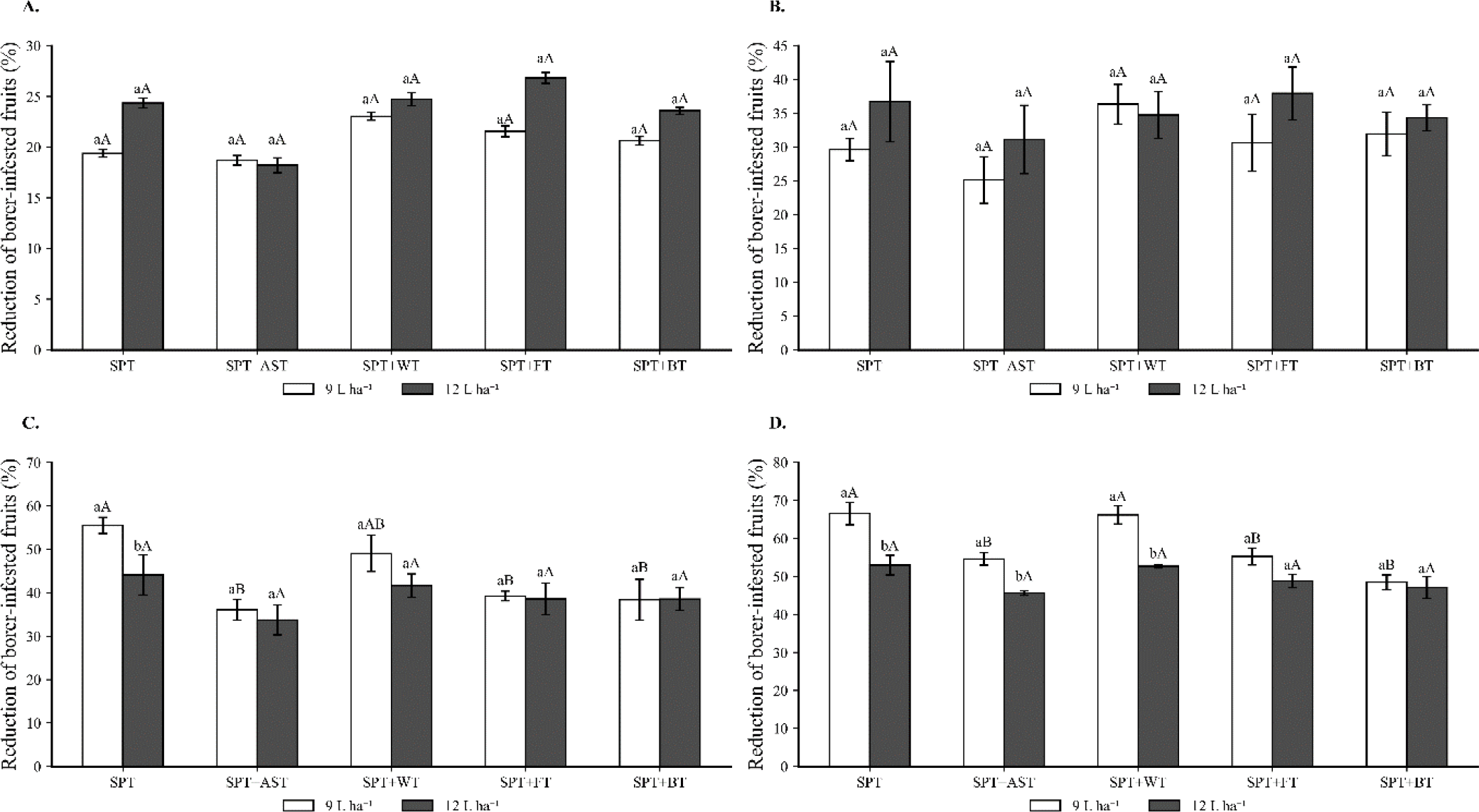 *Means followed by the same uppercase letters among adjuvants and lowercase letters among volumes within each parameter do not differ from each other according to Tukey’s test at p ≤ 0.05; vertical bars represent the standard error of the average (n = 4)
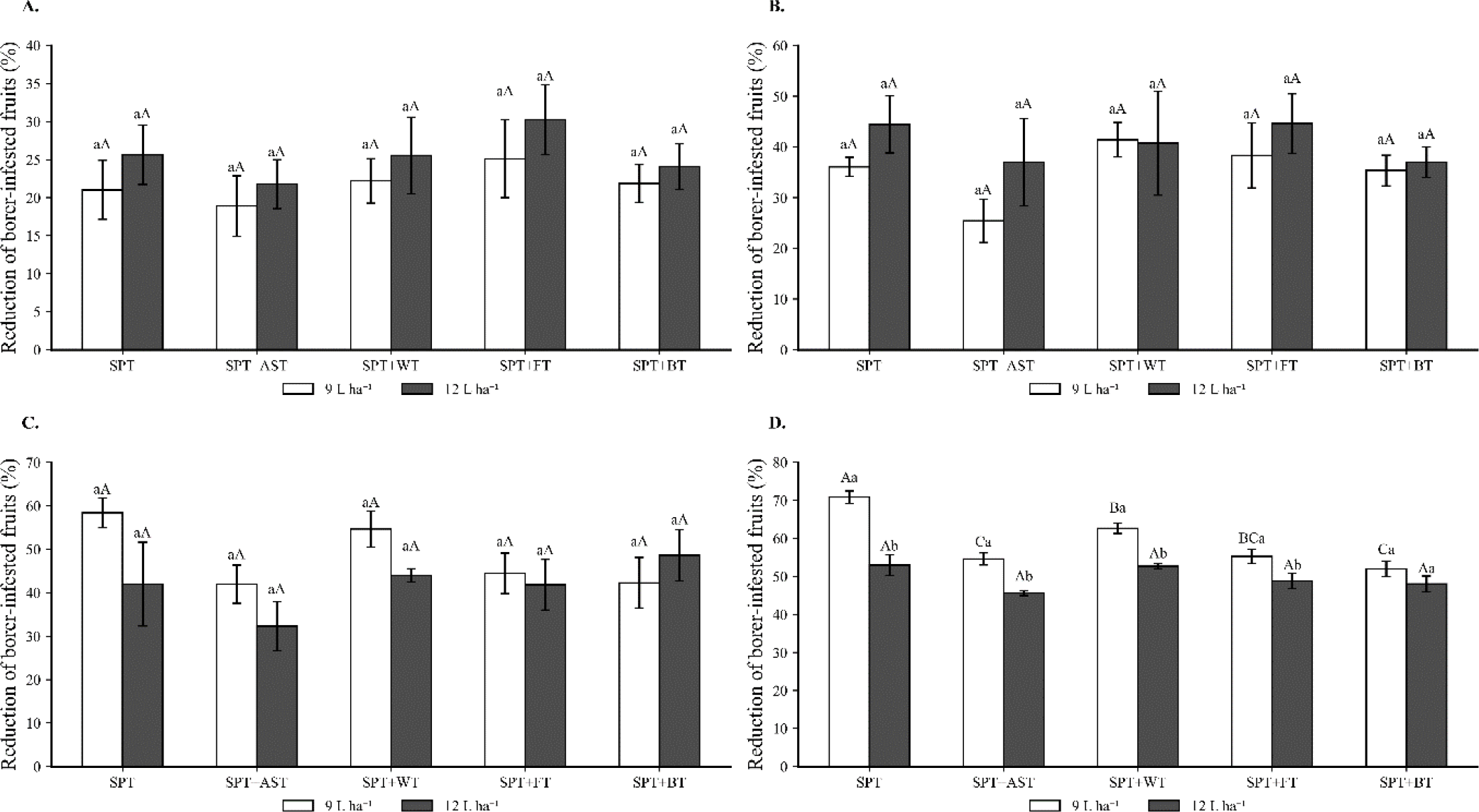 *Means followed by the same uppercase letters among adjuvants and lowercase letters among volumes within each parameter do not differ from each other according to Tukey’s test at p ≤ 0.05; vertical bars represent the standard error of the mean (n = 4).
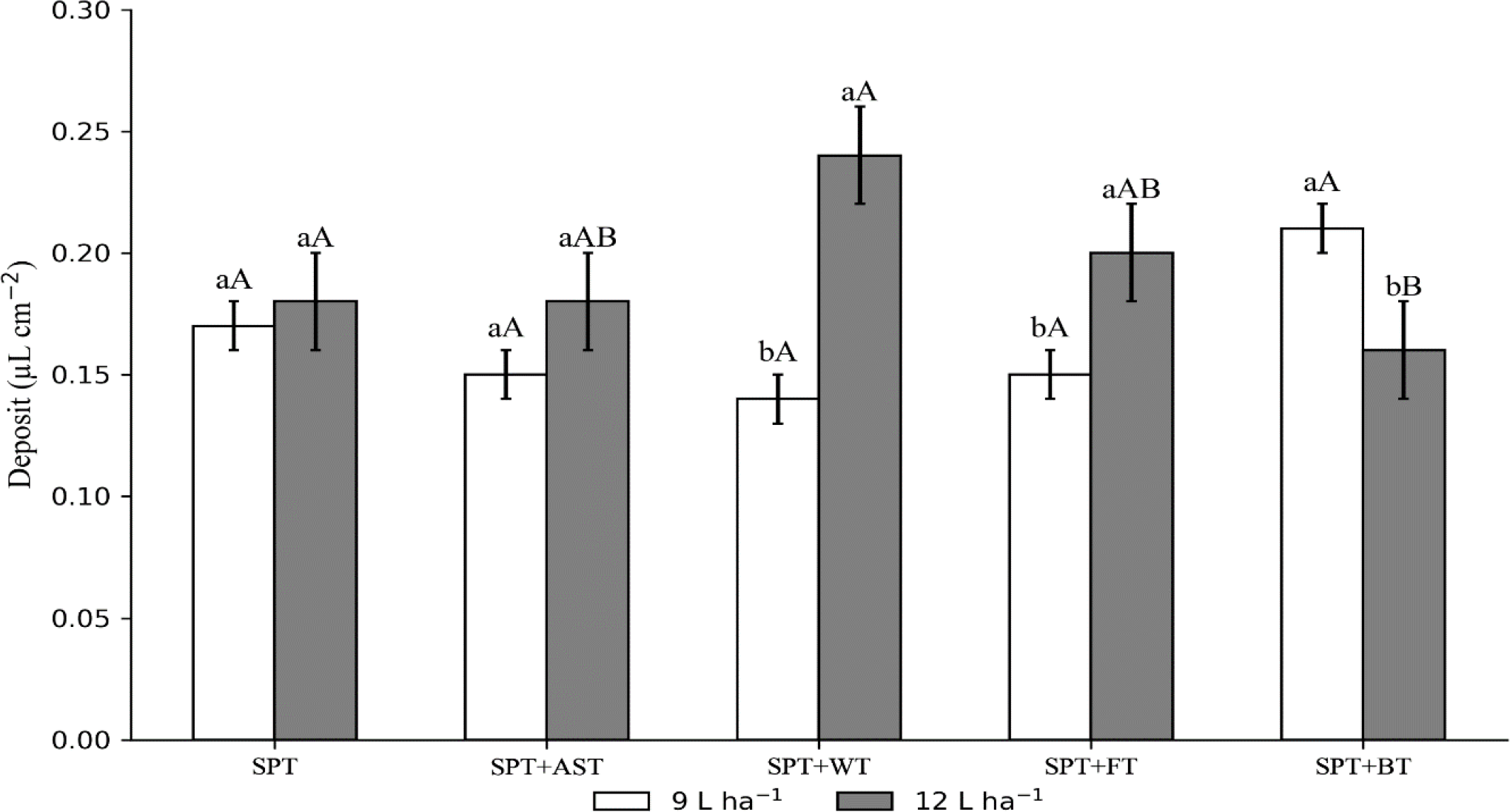 *Means followed by the same uppercase letters among adjuvants and lowercase letters among volumes within each parameter do not differ according to Tukey’s test at p ≤ 0.05
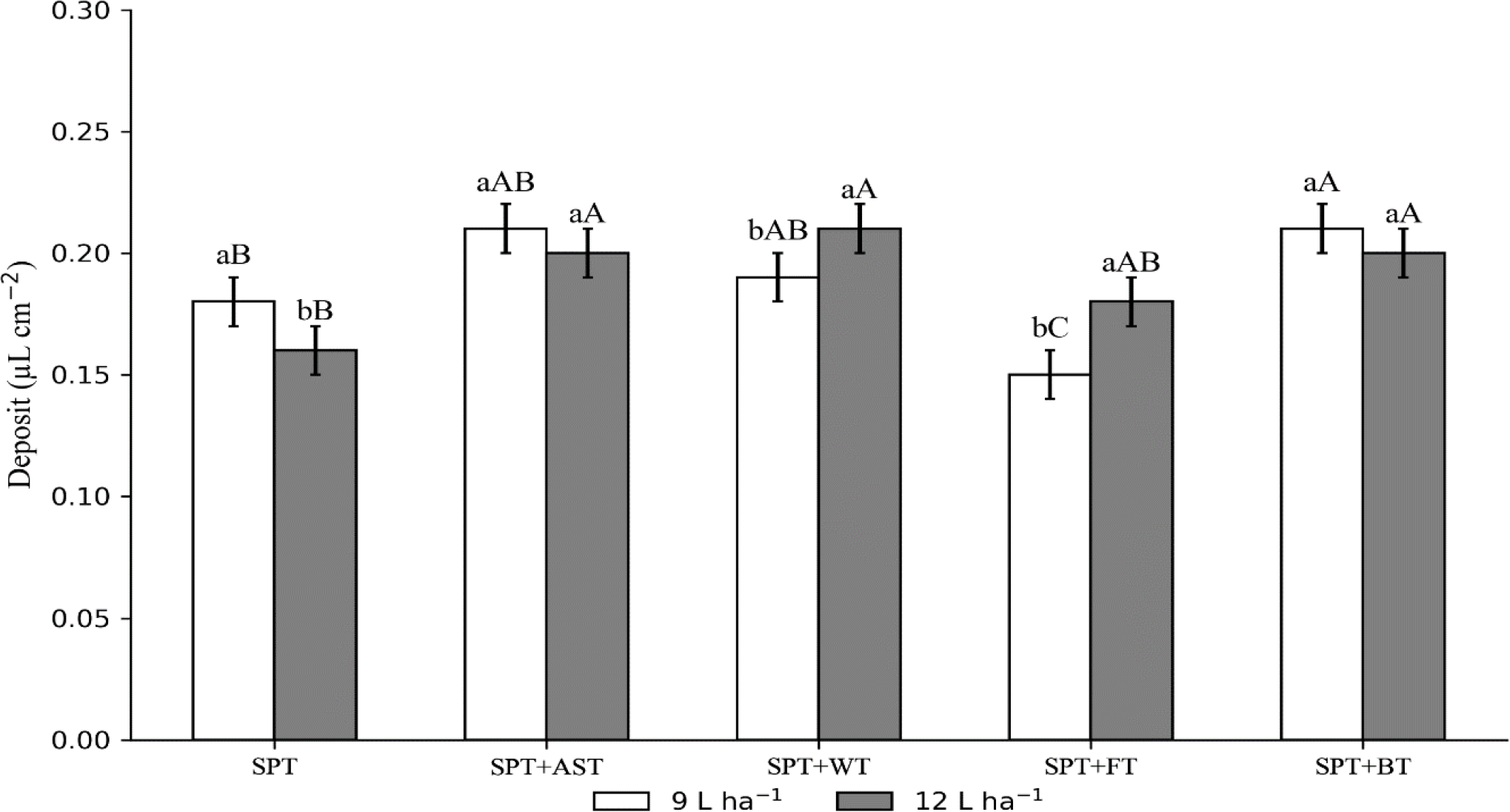 *Means followed by the same uppercase letters among adjuvants and lowercase letters among volumes within each parameter do not differ according to Tukey’s test at p ≤ 0.05