
 Humanization guidelines for universities
ABSTRACT
This article aims to propose humanization guidelines for universities as a way to initiate discussions and organize the humanization process within the university context. It is an applied and descriptive study with a qualitative approach, employing bibliographic and documentary research as technical procedures. Based on the literature, four conceptions of humanization oriented to the university context and seven aspects of humanization were identified. By relating these conceptions and aspects, five humanization guidelines for universities are proposed: Welcoming; Valuing work and workers; Student rights; Inclusion and social development; and Democratic university. The results may provide a foundation for further studies on the university humanization process, its organization, and systematization in alignment with other educational management instruments.
Keywords:
Humanization; Universiy; University Management
RESUMO
Este artigo buscou propor diretrizes de humanização para as universidades como forma de iniciar discussões e organizar o processo de humanização no contexto das universidades. Trata-se de um estudo de natureza aplicada e descritiva, com abordagem qualitativa, valendo-se da pesquisa bibliográfica e documental como procedimentos técnicos. A partir da literatura, identificaram-se quatro concepções de humanização voltadas para o contexto universitário, assim como sete aspectos de humanização. Ao relacionar essas concepções e aspectos, propuseram-se cinco diretrizes de humanização para as universidades: acolhimento; valorização do trabalho e do trabalhador; direitos dos estudantes; inclusão e desenvolvimento social; e universidade democrática. Os resultados poderão embasar novos estudos sobre o processo de humanização das universidades, sua organização e sistematização, em consonância com outros dispositivos de gestão educacional.
Palavras-chave:
Humanização; Universidade; Gestão Universitária
RESUMEN
Este artículo busca proponer directrices de humanización para las universidades como una forma de iniciar discusiones y organizar el proceso de humanización en el contexto de las universidades. Se trata de un estudio aplicado y descriptivo, con enfoque cualitativo, utilizando como procedimientos técnicos la investigación bibliográfica y documental. A partir de la literatura, identificamos cuatro concepciones de humanización dirigidas al contexto universitario, así como siete aspectos de la humanización. Relacionando estos conceptos y aspectos propusimos cinco directrices de humanización de las universidades: Acogida; Valorar el trabajo y los trabajadores; Derechos de los estudiantes; Inclusión y desarrollo social; y Universidad Democrática. Los resultados podrían sustentar nuevos estudios sobre el proceso de humanización de las universidades, su organización y sistematización en línea con otros dispositivos de gestión educativa.
Palabras clave:
Humanización; Universidad; Gestión Universitaria
INTRODUCTION
The process of humanization is not simple to study. The first idea that may come to mind is the somewhat simplified notion that to humanize is to attribute human qualities or to make something, or a set of things, more human (Güney and Seker, 2012). Although accurate, this notion is neither the only one nor as straightforward as it may seem.
To initiate the discussion on how to define the concept of humanization, the questions posed by Kohli (1991) are considered and expanded with additional questions that remain pertinent. Who determines what is considered ‘human’ in this process? What can become more human? Are there shared principles of humanization that apply both to individual and to divergent contexts? Is it possible to humanize the educational process? Would humanizing the educational process provide an answer to democracy, justice, freedom, or equity? If so, how would these conceptions be implemented in a specific society? How can these ideals be made tangible?
The purpose of this approach is not to provide precise answers to each of these questions, but to use them to stimulate curiosity in the search for a conception of the humanization process that can guide this research and contribute to its implementation in the university context.
Universities are responsible for generating, systematizing, and transmitting knowledge, as well as preserving and encouraging cultural, philosophical, scientific, and artistic production and dissemination; developing technologies; and actively participating in the solution of social problems (Melo, 2002).
Through the inseparable tripod of teaching, research, and extension, together with another constitutive element essential to its existence — management — the university fulfills its mission: to use the full potential of human knowledge and capacity to transform society (Sleutjes, 1999).
When the focus is placed on the student, it becomes possible to observe how the university fulfills its social role as an educational institution committed to the emancipation of individuals. This focus on the educational and formative process highlights not only the student, but also the transformative relationships that must occur within the university and that extend far beyond the student. These transformations are made possible by workers within established labor relations and through direct and indirect contact with students, including faculty and managers.
In light of these reflections, it is necessary to consider the intrinsic interdependent relationship between the student and the university. While the university promotes teaching, research, and extension activities, it is in the student that knowledge becomes consolidated through higher education. For students to assume a leading role, faculty must also do so. The same applies to other staff members and managers. Actions that foster welcoming practices, dialogue, attentive listening, and bonding are required, along with innovation in teaching methods. These actions must occur across the entire university context, from strictly administrative sectors to offices, libraries, cafeterias, administrative units, and classrooms.
Based on these considerations, it is important to examine how humanization is addressed in universities. This study was proposed to initiate discussions and to organize the humanization process in the university context, while respecting the structural model of the Brazilian university system, which is based on a four-part framework: teaching, research, extension, and management.
This article aims to propose humanization guidelines for universities. To achieve this aim, the following specific objectives were defined: to identify the main aspects of humanization present in universities; to present a conception of humanization applied to universities; and to establish guidelines for humanization actions in universities.
Based on these objectives, it is intended to encourage universities to redesign their management processes, with particular attention to the people who share this environment, for example, by promoting welcoming dialogue, valuing individuals and their work and/or studies, and fostering democratic participation in decision-making. These changes may contribute positively to addressing some of the challenges currently faced by universities.
METHODOLOGICAL PROCEDURES
This study can be characterized as applied, descriptive research with a qualitative approach. Study execution relied on bibliographic and documentary research as technical procedures.
For the literature review, a systematized search protocol was adopted in the Scopus, Brazilian Digital Library of Theses and Dissertations, and Web of Science databases. The protocol included two descriptor groups in Portuguese: humanização (humanization) and universidade (university), and one set of exclusion descriptors, also in Portuguese: Saúde; Enferm*; Medic*; Hospita*; Cuida*; Parto; Art*; Comput*; Imun*. Exclusion descriptors were necessary because the descriptor humanização (humanization) yielded many studies in diverse fields, which hindered the selection of works aligned with the purpose of this research.
The search was conducted in December 2021, and after careful screening, approximately 50 articles addressing humanization and university or humanization and education were identified. However, none addressed guidelines for humanization in the university setting, which is the aim proposed in this study.
Based on the selected literature, the texts were grouped into four broad areas, which served as the foundation for defining four conceptions of humanization related to the university context.
To outline humanization actions developed by Brazilian institutions that, in some way, gained visibility and prominence in teaching, research, and extension, ten Brazilian universities that stood out in the Times Higher Education World University Rankings in 20231 were selected for analysis:
-
USP – Universidade de São Paulo;
-
UNICAMP – Universidade Federeal de Campinas;
-
UFRGS – Universidade Federal do Rio Grande do Sul;
-
UNIFESP – Universidade Federal de São Paulo;
-
UFMG – Universidade Federal de Minas Gerais;
-
UFS – Universidade Federal de Sergipe;
-
PUC-RIO – Pontifícia Universidade Católica do Rio de Janeiro;
-
PUCRS – Pontifícia Universidade Católica do Rio Grande do Sul;
-
UNESP – Universidade Estadual Paulista; and
-
UFRJ – Universidade Federal do Rio de Janeiro.
This ranking was selected because its performance indicators assess the three axes mentioned above, in addition to internationalization.
Documentary analysis was used to identify the main humanization aspects contained in the universities’ institutional documents. The documents included the institutional development plan, bylaws, general regulations, and any other document that could contribute to the analysis and to the development of the proposed guidelines. Within these materials, excerpts indicating actions or intentions to humanize the university were identified, using as analytical categories the four conceptions of humanization established in the literature.
Finally, guidelines for implementing humanization in universities were established based on the main humanization aspects identified in the institutional documents analyzed, combined with the conceptions of humanization and the key actors involved.
HUMANIZATION, EDUCATIONAL INSTITUTIONS, AND THE UNIVERSITY
Education, a social right established in Brazil's 1988 Federal Constitution, is a duty of the State and the family, and society must work jointly to support and promote it. This joint effort should enable individuals to reach their full potential, acquire skills and qualifications that support career success, and prepare to become active citizens who contribute to society (Brasil, 1988). Beloshitsky and Berezhnay (2007) indicate that the challenge of humanization in education lies in the fact that it cannot be implemented through training, but rather through psychological support oriented toward personal development, with emphasis on civic, spiritual, mental, and responsibility-related dimensions. In this sense, a focus on students’ internal interests and needs is required, alongside conditions that support self-development, self-expression, self-affirmation, and self-realization.
Pereira (1992) also addressed this issue, arguing that educational institutions should go beyond knowledge transmission. Instead, they must connect such knowledge to the historical moment, positioning it critically as part of a network of relationships.
Thus, in the classroom, humanization can be understood as an approach that values the human dimensions involved in creating, reconstructing, and transforming relationships, actions, and knowledge, enabling development through an educational task that encompasses the diverse nature of the individuals present (Castro, 1980; Jeffrey, 2001).
Accordingly, for humanization to become a priority in educational institutions, individuals must share experiences collaboratively within the same environment, as education that values the human dimension relies on the most advanced knowledge produced by humanity. Such knowledge enables a more universal and freer understanding of the human being, with the aim of full human liberation. The authors therefore argue that schools should prioritize education that enables social transformation through knowledge (Almeida, Barros and Rabal, 2019).
Humanization is a continuous process, and educational institutions constitute an important transformative agent that supports students in achieving their full human potential, as these institutions are responsible for providing an education that prepares students for life as dignified and autonomous individuals. This responsibility includes not only knowledge transmission but also the promotion of values such as equality, freedom, and justice. In addition, educational institutions must provide a safe and welcoming environment in which students can develop skills and demonstrate their potential. This objective can be achieved through policies and programs that support vulnerable students, promote diversity, equity, and inclusion, strengthen students’ mental and physical health, and encourage active participation in school life and decision-making (Castro, 1980; Dneprov, 1994; Jeffrey, 2001; Shaposhnikova, Romanova and Tarasenko, 2013; Almeida, Barros and Rabal, 2019).
Educational institutions must also prepare students to become responsible and engaged citizens, capable of contributing to the construction of a fairer and more egalitarian society. This preparation includes promoting a culture of collective understanding and respect, fostering open and respectful dialogue, and addressing issues of discrimination and prejudice (Castro, 1980; Dneprov, 1994; Jeffrey, 2001; Shaposhnikova, Romanova and Tarasenko, 2013; Almeida, Barros and Rabal, 2019).
Universities, as higher education institutions, have the same importance and responsibility to act as transformative and emancipatory agents for students, as do other educational institutions.
According to Kraemer (2006), the university must provide the highest level of education in order to train and qualify the population and society. In this sense, Marilena Chauí (2003) highlights the centrality of the university's social role, as universities are guided by principles and values established by society and serve as references for society itself. They thus take shape as social institutions because they exist within society and its context, seeking dialogue, study, research, and solutions to social issues (Chauí, 2003; Bernheim and Chauí, 2008). Pivatto (2007, p. 338) complements this idea by stating that education is a "thought produced by the human being"2 for use by peers, implying "a view of oneself and of the human being in general."3
As a social institution, the university interacts with other social structures (Freire, 2011a) and is "inhabited" by social actors beyond students. The university's social actor (whether faculty, managers, or other staff members) plays an important role in students’ academic lives by raising awareness of the social harms present in society, not through imposition, but through questions that enable students to change their own perception of reality. In this sense, students cease to be merely objects present in the university (and in the world) and begin to perceive themselves as subjects in this space (Freire, 2011a).
Bernheim and Chauí (2008) describe the university as a project aimed at democratizing knowledge and culture, seeking to ensure diversity, plurality, and the inclusion of all social segments. It is an academic community grounded in freedom, autonomy, excellence, cosmopolitanism, and international cooperation. In addition, it trains qualified professionals and critical citizens who are aware of their rights and duties.
Teaching, research, and extension constitute the university's supporting tripod; they are inseparable and contribute to the fulfillment of the university's mission: to transform society through knowledge and human potential (Sleutjes, 1999). These pillars complement and reinforce one another, play an important role in institutional functioning, and contribute more broadly to societal development. To this tripod, a fourth pillar — management — must be added, as it permeates the others by providing structural conditions and strategies for the institution's full operation and its projection in society. These pillars, considered fundamental to sustaining the university, are related to the four conceptions of humanization identified in the literature, which are systematized and presented in the following section.
AN OVERVIEW OF CONCEPTIONS OF HUMANIZATION
In biological and physiological terms, humanizing relates to the human being itself, both in the sense of the Homo sapiens species and in the sense of individual development and maturation. However, merely being a human being is not sufficient to satisfy the concept of humanization. It is necessary to recognize the diversity of life goals that each person pursues and the plurality of lives people live, considering every dimension of the subject that may exist (Ericson, 1991).
Accordingly, humanization must consider the fact that human beings are diverse, plural, and distinct. In addition, it must consider actions, practices, and institutions constructed over time within a given social and cultural space, because these are the bases through which individuals come to define and perceive themselves. Another relevant factor is that these constructions are subject to change and transformation through human interactions over time, including in the constitution of individuals, such as the transformation from child to adult. These transformations begin at birth through the educational process (Ericson, 1991; Almeida, Barros and Rabal, 2019).
According to Pereira (1992, p. 25), it is necessary to understand that "the human being is born an animal, as a species, and, for this reason, must be humanized."4 This process occurs as the person establishes "social relations with nature, with others, and with oneself."5 However, this does not occur as a mere social product, because the person is not a passive actor. On the contrary, as a thinking and creative being, the person intervenes in and actively participates in this process of social transformation.
The first conception of humanization presented in this article focuses on education and individual development. Humanization in the educational process involves the promotion of kindness and justice. Teachers should provide guidance on human values, behavior, and communication to students as a way to humanize them, making this a priority. Its goal is to enable individuals to become leaders and to work toward justice. This entails the ability to engage in dialogue, remain accessible, demonstrate dedication and integrity, and show love and compassion (Golz, Graumann and Whybra, 2019; Hardiyanto, 2020).
This understanding was also defended by Dneprov (1994), who argued that respect for the child's personality is required, along with trust in the child's abilities and an understanding of personal goals, needs, and interests. In addition, this process implies the creation of favorable conditions for the development of the child's skills and talents, for living a normal life across different stages of development, and for self-determination and decision-making.
In this sense, contemporary education faces the challenge of intervening in society in such a way that individuals act consciously within reality, pursuing their own humanization, learning to live with others without treating them as a threat, and feeling, living, and working toward the common good (Mendonça, 2006; Almeida, Barros and Rabal, 2019).
The second conception of humanization concerns transformative human relationships with nature. Pereira (1992) defines humanization as the process through which human beings confront and modify nature to satisfy desires, creating, dominating, and controlling. This refers to labor and social labor relations. Mendonça (2006) complements this view by noting that the individual becomes human at the same time as the person is constituted as a human being through labor relations used to transform nature, reshaping one's surroundings to experience comfort within it.
Although human beings seek to transform their surroundings to achieve satisfaction, it is necessary to consider that society's primary interest today remains oriented toward economic values at the expense of valuing the human being. Technological advancement constitutes one of the greatest challenges to preserving humanism, because modern technology dehumanizes human relationships (Golz, Graumann and Whybra, 2019). The space for humanization has become increasingly limited, as everything is concentrated on increasing production in the shortest possible time to maximize profits, without ever reaching complete satisfaction (Almeida, Barros and Rabal, 2019).
Alongside this advancement, the division of labor and social inequality make individuals increasingly alienated from their work. As a result, what was once a source of satisfaction becomes an obligation, as individuals must work to meet external and subsistence needs. These dynamics signal a process of dehumanization (Castro, 1980; Mendonça, 2006).
Currently, institutions have sought ways to reorganize their organizational structures, because resistance to change may result in failure (Fincato and Carpes, 2020). As humanity developed new mechanisms for interacting with society and nature, it became increasingly impressed with its own capacities. As a result, adversities faced in each era were set aside, and insufficient attention was paid to the consequences of technological advances (Fincato and Carpes, 2020), among them dehumanization.
The more society advances technologically, the more human beings may lose their human identity and empathy and, in a sense, become dehumanized (Castro, 1980, p. 4). Freire (2011b, p. 40) goes further by stating that "Humanization and dehumanization, within history, in a real, concrete, objective context, are possibilities of human beings as unfinished beings who are aware of their unfinishedness."6 The existence of this antagonism is important for understanding another conception of humanization, because individuals are constituted through human praxis in the world, either by seeking transformation or by remaining inert.
This transformation, or the inertia of human activity under a given social condition, constitutes an action of oppression or liberation. The transformation of the oppressed becomes possible only when they emerge from the oppressive reality through critical consciousness, recognizing a condition of subordination and seeking to recover their humanity (Jeffrey, 2001; Mendonça, 2006; Freire, 2011b).
Education plays a fundamental role in the emancipation process of the oppressed through liberatory and critical education oriented toward transforming social reality. In addition, it can contribute to liberation by enabling individuals to understand their situation of oppression, develop critical consciousness, and struggle for their own emancipation. However, for this to occur, education must not be limited to the transmission of technical knowledge and information; it must be presented as a dialogical process in which educator and learner learn together through horizontal, participatory dialogue (Freire, 2011b).
Humanization is continuously constituted in the collective activity of individuals: an ongoing and imperfect historical-social transformation, as human beings are inherently incomplete. Dehumanization entails the deprivation of human dignity and of the possibility and opportunity to shape one's own life, to be seen and heard in the community and by others. In this sense, to dehumanize a human being, it is sufficient to treat the person merely as a means, a tool, or a cog, rather than valuing the person as a thinking and free individual, with the same respect one would wish to receive (Ericson, 1991; Soltis, 1991). For Roux and Becker (2016), humanization depends on the ontological right to voice and the expression of opinions.
In this sense, the third conception of humanization is centered on the idea of liberation and empowerment, closely reflecting Paulo Freire's view of humanization (Freire, 2011b). From this perspective, humanization is an action that can be used to achieve human liberation. Liberation is achieved when individuals are able to control their own lives and actively participate in shaping their own destiny. It involves awareness of oppression, critical analysis and questioning of power structures and dominant ideologies, and action and reflection (praxis) in relation to the world to challenge and transform oppressive systems and work toward a more just and equitable society. This process also involves continuous dialogue and mutual learning that enable individuals and groups to share ideas, perspectives, and experiences (Ericson, 1991; Jeffrey, 2001; Mendonça, 2006; Freire, 2011b; Roux and Becker, 2016).
Even so, orienting humanization toward a societal model that honors and fosters both individual and collective well-being appears to be the most appropriate goal, that is, a democratic society (Soltis, 1991).
A democratic society is one that enables the progressive growth of both the individual and the collective. This is John Dewey's understanding of a democratic society and aligns closely with the educational context in which this study is situated (apud Soltis, 1991).
Another important concept in Dewey's work related to democratic society is freedom. For him, freedom is tied to interactions among different groups, pluralism, and variety, which stimulate and expand human knowledge and experiences collectively; in other words, shared interests strengthen social well-being. When individuals are socially engaged in a given objective, group learning exceeds what would be achieved alone, because the unique talents of each group member are recognized and valued (Soltis, 1991).
P. White (1991) reinforces that, with respect to individuals, no one has the right to direct another's life merely because one is "better" or "knows more," and no individual interest should override that of others. This supports the discussion above and points to the fair treatment of individuals and the collective, which is characteristic of democracy. The author also emphasizes the importance of establishing roles of personal and social trust in society and notes that schools can contribute significantly to this need, because humanizing and democratizing schools entails transforming the teacher–student relationship through cooperation, understanding, and mutual trust.
The fourth conception of humanization, which relates to democracy, can be understood as the pursuit of ensuring dignity, respect, and opportunities for individuals’ full development within a democratic society. This includes promoting equality, freedom, and justice, as well as individuals’ active participation in the political process and in decision-making that affects their lives. In addition, the humanization process aligns with democracy by prioritizing the well-being and empowerment of both individuals and the collective. Both seek to create a society in which individuals are treated with dignity and respect and have the opportunity to reach their full potential (Ericson, 1991; Soltis, 1991; White, J., 1991; White, P., 1991).
However, a democratic society develops from the foundations of a democratic school system, which provides democratic relationships within educational systems to ensure the development of a humanized citizen (Dneprov, 1994).
In Chart 1, the different conceptions of humanization discussed thus far are presented in a consolidated summary.
These four conceptions of humanization enabled the establishment of the analytical categories used to identify humanization aspects in universities.
IDENTIFYING HUMANIZATION ASPECTS IN UNIVERSITIES
Based on the review of institutional documents from the ten leading Brazilian universities according to the Times Higher Education World University Rankings (2023), aspects that could indicate actions or intentions related to humanization in universities were identified, in line with the four conceptions of humanization presented above. This approach allowed examination of how humanization currently appears in the university context.
These aspects were not identified in all universities examined; however, nine presented at least one relevant aspect related to humanization.
Among the ten universities analyzed, UNICAMP was the only institution whose documents contained all major humanization aspects identified, whereas PUC-RS was the only institution whose documents contained none. The remaining universities showed varied distributions across the main aspects. Importantly, the absence of one or more aspects in the documents does not mean that the institution lacks or does not implement actions related to humanization; rather, these aspects were not found in the institutional documents selected for this study.
For the analytical category "humanization, education, and individual development," aspects related to the promotion of human dignity and freedom of expression were identified. The documents indicate that institutions encourage relationships that respect human autonomy, dignity, and fundamental rights through actions that defend life; freedom of thought and expression; diversity; cooperation; solidarity; empathy; and inclusion. In addition, they oppose actions that promote physical and moral violence; inequalities motivated by philosophical, political, or religious convictions; racism; sexism; homophobia; and other forms of prejudice and discrimination. Finally, they promote autonomy and intellectual freedom; critical capacity for lifelong learning; tolerance toward divergent opinions; encouragement of free access to knowledge; ethical conduct; and civic education (USP, 2012a; PUC-Rio, 2018; UFMG, 2018; 2022; UNICAMP, 2020; 2022; UNIFESP, 2021).
Another identified aspect concerns the recognition and personal development of students and individuals more broadly. Institutions encourage student agency, holistic development, and social responsibility by generating, preserving, and sharing knowledge, skills, and competencies, particularly those with social relevance. Recognition should be present in all spaces, including management and infrastructure, which must be aligned with individuals’ needs so that they can develop their skills and competencies.
A welcoming approach for the academic community also contributes to recognition, as its purpose is to foster a healthy and sustained presence in the university environment. This recognition should encompass students’ learning singularities, academic planning, and professional career choice. To this end, institutions emphasize cultural formation, the sharing of knowledge, skills, and competencies, and a sense of belonging to the institution, consistently placing the human person first (USP, 2012a; PUC-Rio, 2018; UFMG, 2018; 2022; UNICAMP, 2020; 2022; UFS, 2021; UFRJ, 2021).
For the analytical category "humanization and transformative labor relations," aspects related to professional practice for social development were identified. Institutions promote actions, including extension activities, that encourage studies on environmental, cultural, social, and economic problems in society, with the purpose of mitigating them through societal participation. These actions aim to educate professionals and researchers who, through a critical and analytical perspective, can propose solutions to multiple societal challenges, thereby promoting economic and sustainable development and reducing inequalities and regional asymmetries, enabling social transformation (PUC-Rio, 2018; UFMG, 2018; 2022; UNICAMP, 2020; 2022; UNIFESP, 2020).
Regarding interaction with the world of work, some institutions emphasize the need to expand university relationships with the labor sphere. In this context, culture may serve as a relevant link between the two spaces, given its potential to promote citizenship (UFMG, 2018; 2022; UNICAMP, 2020; 2022; UNIFESP, 2020).
Finally, one institution highlights actions focused on valuing workers, positioning solidarity as a central element of labor relations. A work environment marked by solidarity, collaboration, and respect, and free from any form of harassment, provides workers with security in carrying out daily activities, supported by health promotion. In addition, it supports the development of workers’ strengths, resulting in improved professional performance and the fulfillment of individual aspirations (UFMG, 2018; 2022).
For the category "humanization, liberation, and empowerment," many institutions present aspects that encourage recognition and social development. Institutions support the development of partnerships between society and the university so that science serves the community, strengthening high-impact partnerships grounded in democracy and plurality. Society should be included in university activities, and students should be educated with the purpose of integrating into society. This university–society integration should promote the construction of public-interest social goals aimed at achievements and solutions to societal needs. In addition, links with public authorities and exchanges between the university's scientific knowledge and traditional popular knowledge are necessary, all in support of social development (UNESP, 1989; 2022; USP, 2012a; PUC-Rio, 2018; UFMG, 2018; 2022; UNICAMP, 2020; 2022; UNIFESP, 2020; 2021; UFS, 2021; UFRJ, 2021).
Some institutions emphasize the importance of dialogue and communication, particularly with respect to integration with society and the recognition of diversity and interdisciplinarity. In addition, investment in dialogue and communication supports more effective engagement with the university's target audiences and increases the visibility of activities developed across all contexts, as well as the assessment of community impact. For this reason, the provision of multiple communication channels for the academic community is important, especially to enable dialogue with society (USP, 2012a; UNICAMP, 2020; 2022; UNIFESP, 2020; 2021).
University extension can also contribute to institutional communication and social development by fostering dialogue and interaction between the academic community and society, with the purpose of helping address societal challenges. It can also broaden the university's social inclusion across different societal segments, contributing to the consolidation of achievements (UFRGS, 2016; UFMG, 2018; 2022; UNICAMP, 2020; 2022).
For the analytical category "humanization and democracy," institutions present aspects that value collectivity. Student education should be holistic and humanistic, developing skills and responsibility for professional practice grounded in integrity, respect for others, and active participation in the community. Universities are encouraged to expand engagement and inclusion with the community, broadening access and diversity through extension activities and through inclusion, retention, and student support policies. This inclusion should prioritize the consolidation of citizenship, welcoming practices, equal opportunity for all, respect for diversity, and an environment free from prejudice and inequalities, with priority given to collective interests, since the university should contribute to transforming society into a more just and humane one. In this sense, a welcoming approach appears to foster a healthy and sustained presence in the university environment (USP, 2012a; 2012b; UFRGS, 2016; PUC-Rio, 2018; UFMG, 2018; 2022; UNICAMP, 2020; 2022; UFS, 2021).
Another identified aspect relates to democracy, freedom, equality, and justice. Institutions encourage the consolidation of democracy in the university through actions that promote community participation in decision-making, with spaces for listening, proposing, cooperation, voting, and social oversight, for both internal and external publics. Universities should be plural and democratic, connected with the community, and committed to dialogue, debureaucratization, and transparency. In addition, they should uphold freedom of expression; democratic and academically rigorous debate; social interaction; respect for individuality, collectivity, and social diversity; and the principles of freedom of thought and expression, cooperation, solidarity, empathy, justice, human dignity, and, ultimately, democracy (UNESP, 1989; 2022; USP, 2012a; 2012b; UFMG, 2018; 2022; UNICAMP, 2020; 2022; UNIFESP, 2021).
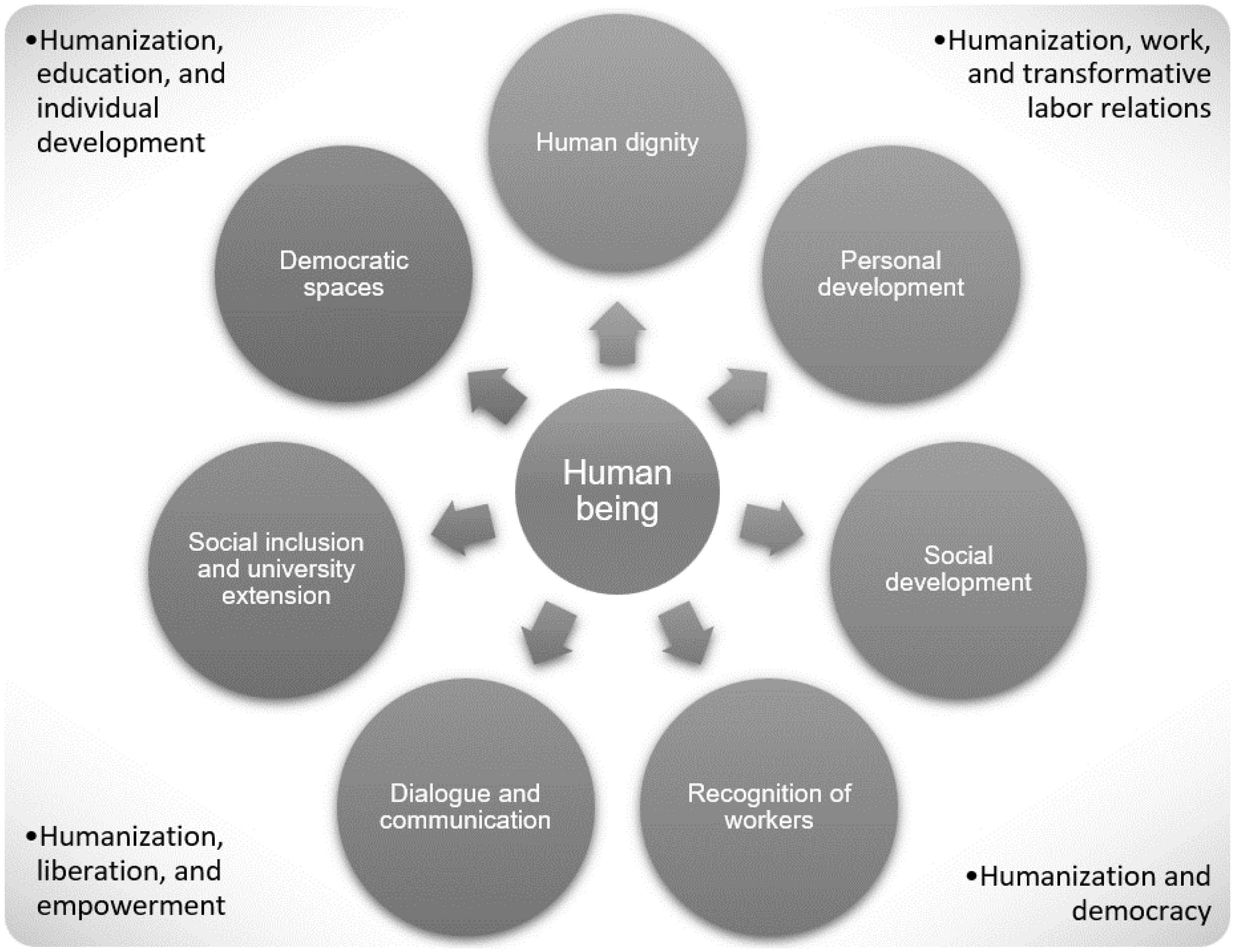
Figure 1 shows how all major humanization aspects identified are interconnected and related, with the human being and the surrounding environment as the connecting element within a broader whole: the four conceptions of humanization.
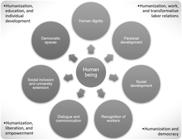
The conception of humanization, education, and individual development can be identified in the aspects of human dignity, dialogue and communication, and personal development, as it entails the promotion of kindness, justice, and respect for individuals’ interests and needs through dialogue and compassion.
The conception of humanization and transformative labor relations can be identified in the aspects of personal development, social development, recognition of workers, and human dignity. This conception indicates that work and social relations of work contribute to the humanization process, through which individuals transform their surroundings to satisfy their desires and needs.
The conception of humanization, liberation, and empowerment can be identified in the aspects of social development, dialogue and communication, and social inclusion and university extension. Its core idea is to create a more just and equitable society through action in the world, with critical analysis and questioning of power structures, while fostering dialogue and mutual learning to generate new ideas, perspectives, and experiences.
In turn, the conception of humanization and democracy can be identified in the aspects of dialogue and communication and democratic spaces, as it promotes equality, freedom, and justice, as well as people's participation in political and decision-making processes.
The main aspects of humanization are also interrelated due to their primary element, without which none can exist: the human being. Democratic spaces exist only if there are people to participate equally in proposing, developing, and creating initiatives. When social inclusion, university extension, dialogue, and communication are addressed, one immediately considers the people required to interact, engage in dialogue, and carry out actions for the community. Dialogue and communication depend on individuals, just as students’ engagement in the community and extension activities depends on their active participation in society. Likewise, individuals work and are recognized for their work. The development of individuals and society requires others who act, encourage, and support them. All these aspects are permeated by the promotion of human dignity.
This reflection on the main aspects of humanization in universities contributed to the development of a conception of humanization that supports the proposed humanization guidelines for universities.
Humanization in the university context is defined as the act of promoting and prioritizing individuals’ well-being, autonomy, kindness, freedom, equality, justice, and dignity through dialogue, values, actions, and transformative relationships. This act must recognize and respect the unique characteristics, interests, and needs of different individuals and communities, while promoting the democratization of knowledge and culture. Its aim is to foster a society in which all individuals are treated with dignity and respect and are able to reach their full potential, thereby contributing to the formation of qualified professionals and critical citizens who are aware of their rights and duties. Individuals are central actors in this process and must prioritize dialogue, mutual learning, and the promotion of new ideas, conceptions, and knowledge.
HUMANIZATION GUIDELINES FOR UNIVERSITIES
To present humanization guidelines for universities, we first defined the key actors within the university community, as they are both responsible for implementing and recipients of actions within the humanization process. These actors include all individuals who are part of the academic community: students (undergraduate, graduate, exchange students, etc.); faculty (at all levels); managers (at all levels, including those in collegiate bodies); university staff working within the institutional environment (administrative staff, educational technicians, outsourced workers, and employees of external companies operating within the university, such as snack bars, restaurants, and printing/copy services, etc.); and members of the external community who benefit from or are affected by the university's actions.
Next, we present a definition for each guideline, based on its relationship with the main humanization aspects, and suggest when each guideline should be implemented in the university context.
The first guideline is the welcoming approach. In universities, it should focus on recognizing the legitimacy and singularity of all key actors, with priority given to human dignity and social inclusion. Its purpose is to build relationships of trust, commitment, and bonding among faculty, students, university staff, and managers through dialogue, free from prejudice.
This guideline aligns with Ericson (1991), J. White (1991), Dneprov (1994), and Almeida, Barros, and Rabal (2019), who emphasize the need to recognize individuals’ diversity, plurality, and distinctiveness, while respecting individuality and personal qualities. In addition, Golz, Graumann, and Whybra (2019) and Hardiyanto (2020) indicate that humanization presupposes guidance toward human values, communication, and dialogue. This perspective is reinforced by authors who argue that humanization involves continuous dialogue and mutual learning, enabling groups to share ideas, perspectives, and experiences (Ericson, 1991; Jeffrey, 2001; Mendonça, 2006; Freire, 2011b; Roux and Becker, 2016).
The second guideline concerns the recognition of work and workers. Faculty, managers, and university staff must be recognized and encouraged to develop their full potential, as they are responsible for daily work across multiple university areas to ensure proper institutional functioning. Their experience must be made visible, and they must be included in decision-making processes, based on their capacity to analyze, define, and improve work processes. In addition, university relationships with the world of work must be expanded, as universities continuously educate future professionals for the labor market.
Pereira (1992) and Mendonça (2006) argue that humanization occurs as individuals are constituted as human beings through the transformations they produce in nature through work and labor relations. For this reason, recognition of work and workers is essential. This guideline also aligns with Dneprov (1994), who highlights that favorable conditions for the development of skills and talents are crucial for individuals’ self-determination and decision-making.
Brazil's Federal Constitution frames education as a right of all individuals and as a duty of the family and the State, in collaboration with society, to promote and encourage it with quality, equal access and retention, freedom to teach, and pluralism of ideas and pedagogical conceptions (Brasil, 1988). Therefore, students’ rights constitute an important humanization guideline. Beyond legal rights, universities also define rights in their regulations, bylaws, general rules, and other internal norms. In this context, through dialogue and communication, universities must encourage students to become familiar with these rights and ensure their fulfillment throughout all stages of education, from admission to degree completion.
Golz, Graumann, and Whybra (2019) and Hardiyanto (2020) support this guideline by emphasizing that humanization must be oriented toward human values, communication, and dialogue. Additionally, P. White (1991) highlights the need to establish bonds of trust at both personal and social levels and underscores the central role of educational institutions in this process. By promoting humanization and democratization of the educational environment and transforming teacher–student relationships into cooperative, understanding, and trust-based interactions, institutions can contribute significantly to this goal. Such trust can be strengthened by encouraging students to understand their rights and by ensuring that these rights are upheld.
From the moment students enter the university, they must receive continuous information necessary to fully benefit from institutional opportunities. Furthermore, the environment must be structured to support the fulfillment of these rights, particularly for students with disabilities and special educational needs.
The fourth guideline is inclusion and social development. Its purpose is to ensure that teaching, research, and extension—inseparable in principle—are directed beyond the academic space, with attention to students’ characteristics and their academic and professional aspirations. Additionally, it is necessary to promote the dissemination of outputs generated through these pillars both within and beyond the university, fostering inclusion and broader social development.
According to Sleutjes (1999), extension involves applying knowledge produced within the university to address and solve concrete societal problems. In this context, collective engagement around shared objectives generates more substantial knowledge than isolated efforts, as it enables the recognition and appreciation of each individual's unique skills (Soltis, 1991). Thus, inclusion and social development contribute to the progressive advancement of both individuals and the collective.
Moreover, this process aligns with the concept of democracy, as humanization and democracy share the goal of promoting individual and collective well-being and empowerment, contributing to the construction of a community in which all individuals are valued with dignity and respect and have opportunities to reach their full potential (Ericson, 1991; Soltis, 1991; White, J., 1991; White, P., 1991).
The democratic university is also proposed as a guideline. It should promote freedom of thought and expression, cooperation, solidarity, empathy, justice, human dignity, academically rigorous and democratically grounded debate, social interaction, and respect for individuality, collectivity, and social diversity. To achieve this, universities must encourage the inclusion of new actors in institutional analysis and decision-making processes, which requires extensive dialogue and effective communication. Management practices should be expanded into spaces for collective learning, analysis of institutional contexts, and consensus-building for improvements, with the inclusion of extension activities whenever possible.
This guideline aligns with the understanding of humanization and democracy presented by Ericson (1991), Soltis (1991), J. White (1991), and P. White (1991). These authors argue that humanization, when associated with democracy, involves ensuring that all individuals are treated with dignity and respect and have equal opportunities for full development within a democratic context. This includes promoting values such as equality, freedom, and justice, as well as encouraging active participation in political processes and decision-making that affect individuals’ lives (Ericson, 1991; Soltis, 1991; White, J., 1991; White, P., 1991).
Furthermore, Dneprov (1994) argues that a democratic society develops from a democratic educational system, which fosters democratic relationships within the educational sphere and contributes to the formation of humanized citizens.
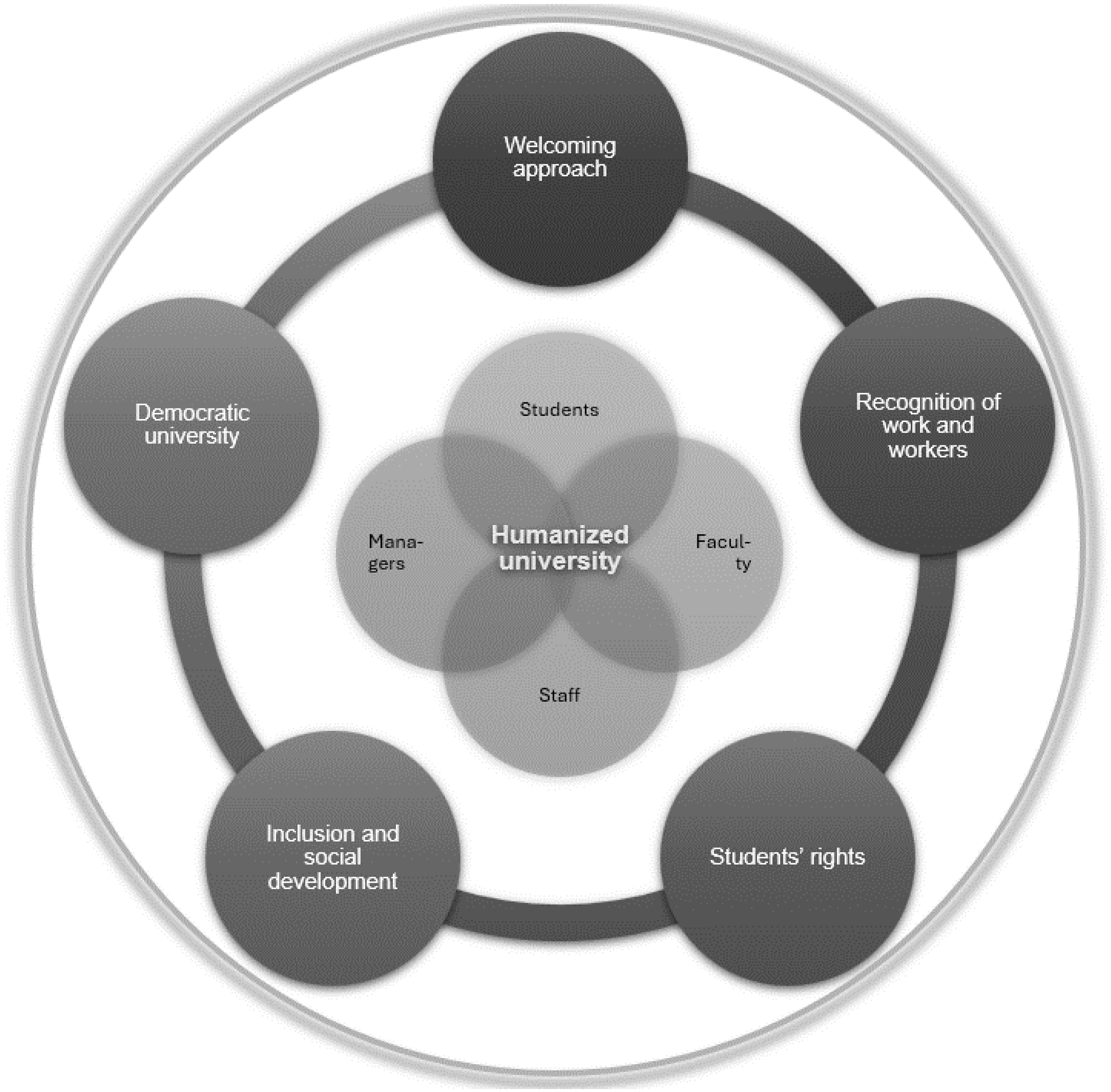
To strengthen humanization in universities, these guidelines must coexist, remain interconnected, and be applied within their respective contexts by the key actors. Figure 2 represents these actors at the core of the humanized university, surrounded by the humanization guidelines, which together constitute the humanized university.
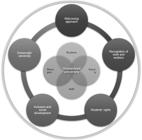
We understand that the university humanization process should begin with the welcoming approach guideline, since the implementation of the other guidelines necessarily depends on welcoming actions (toward staff, faculty, students, managers, and the broader community).
The democratic university guideline also extends into the other guidelines, because recognizing work and workers requires ensuring opportunities for expression; by being aware of their rights, students gain greater participation in deliberative and decision-making spaces; including the community in the university's deliberative spaces—thereby listening to it and addressing its needs—promotes inclusion and social development; and democratic spaces presuppose the welcoming of actors who will discuss and decide on the university's future.
By recognizing work and workers, key actors foster mutual respect, solidarity, empathy, and human dignity, which are also embedded in the democratic university and welcoming approach guidelines.
With individuals at the center of the entire process, it is expected that, through the implementation of humanization actions, key actors will achieve empowerment and development, reaching their full potential in accordance with their needs, desires, and interests.
Finally, the proposed humanization guidelines must be implemented in an integrated manner for the humanized university to be effectively established in the university context. In addition, all actors must both implement and receive humanization actions, as they are the protagonists of this process. To strengthen humanization within the university, training for this experience is essential, particularly for managers, faculty, and university staff, as they are responsible for building a more humanized university. Therefore, these actors must internalize the guidelines and apply them consistently in their decisions, teaching practices, and daily actions.
FINAL CONSIDERATIONS
The topic of humanization, particularly with respect to its organization within universities, remains underexplored. Further progress and additional studies are therefore needed.
To propose humanization guidelines for universities, it was first necessary to present a conception of humanization applied to the university context and to identify humanization aspects present in universities.
With these results, readers may reflect on the relevant and positive transformations that humanization can produce in the university context, especially for the people who share this environment daily, interacting, engaging in dialogue, producing knowledge, and undergoing change. For university management, these transformations may yield positive outcomes for challenges faced by many institutions, such as improving student persistence and reducing dropout, retention, and time-to-degree delays; reducing work-related health leave; strengthening interaction among the university's key actors; and generating additional solutions for society.
The proposed guidelines may serve as a foundation for new and more advanced studies on the university humanization process. Some of these studies may examine whether, in practice, these guidelines can foster a more humanized university.
In addition, future studies may complement the organization, systematization, and implementation of the guidelines with other management instruments, such as the definition of axes or guiding principles and a dedicated organizational methodology. The former would aim to direct all humanization actions carried out in universities, whereas the latter would aim to structure the humanization process within universities.
The proposed humanization guidelines have strong potential to improve the daily life of these institutions across multiple domains and to bring them closer to the communities in which they are embedded. Moreover, the key actors are the primary beneficiaries of implementation: managers, faculty, staff, and especially students. However, achieving this requires that all of them receive training, embrace humanization, and practice it in everyday life, in interactions, dialogues, emails, and decisions. We are all human beings, and we all want to be treated accordingly.
-
1
Available at: https://www.timeshighereducation.com/world-university-rankings/2023/world-ranking. Accessed on: Apri 13, 2026.
-
2
pensamento produzido pelo ser humano (Our translation).
-
3
uma visão de si mesmo e de ser humano em geral (Our translation).
-
4
o ser humano nasce animal, enquanto espécie e por este motivo, precisa ser humanizado. (Our translation).
-
5
relações sociais com a natureza, com os outros e consigo mesmo. (Our translation).
-
6
Humanização e desumanização, dentro da história, num contexto real, concreto, objetivo, são possibilidades dos homens como seres inconclusos e conscientes de sua inconclusão. (Our translation).
-
Funding:
The study received no funding.
Data availability statement:
The research data are available in the body of the article.
References
-
ALMEIDA, Jacqueline Daniele França de; BARROS, Marta Silene Ferreira; RABAL, Taira Sanches. Formação e ação docente na perspectiva sócio-histórica: um olhar para humanização dos sujeitos na educação. Revista Ibero-Americana de Estudos em Educação, Araraquara, v. 14, n. 1, p. 108-122, 2019. https://doi.org/10.21723/riaee.v14i1.11143
» https://doi.org/10.21723/riaee.v14i1.11143 -
BELOSHITSKY, Aleksandr Vladimirovich; BEREZHNAY, Irina Fedorovna. Pedagogical conditions for students’ personal and professional development at higher education institutions. Journal of Institute for Educational Research, Belgrado, v. 39, n. 2, p. 259-270, 2007. https://doi.org/10.2298/ZIPI0702259V
» https://doi.org/10.2298/ZIPI0702259V - BERNHEIM, Carlos T.; CHAUÍ, Marilena S. Desafios da universidade na sociedade do conhecimento: cinco anos depois da conferência sobre ensino superior. Brasília, DF: Unesco, 2008.
- BRASIL. Constituição da República Federativa do Brasil Brasília, DF: Senado Federal, 1988.
-
CASTRO, Maria das Neves Cézar de. Afetividade no ensino: um enfoque humanista. 1980. 201f. Dissertação (Mestrado) – Faculdade de Educação, Universidade Estadual de Campinas, Campinas, 1980. Disponível em: http://repositorio.unicamp.br/acervo/detalhe/48058 Acesso em: 26 jun. 2022.
» http://repositorio.unicamp.br/acervo/detalhe/48058 -
CHAUÍ, Marilena de Souza. A universidade pública sob nova perspectiva. Revista Brasileira de Educação, São Paulo, n. 24, p. 5-15, 2003. https://doi.org/10.1590/S1413-24782003000300002
» https://doi.org/10.1590/S1413-24782003000300002 -
DNEPROV, Eduard G. The reform of education in Russia and state policy in the educational system: background, goals, principles and stages of implementation. Journal of Education Finance, v. 19, n. 4, p. 36-45, 1994. Disponível em: http://www.jstor.org/stable/40703870 Acesso em: 20 nov. 2022.
» http://www.jstor.org/stable/40703870 -
ERICSON, David P. Humanization, democracy, and political education. Studies in Philosophy and Education, Holanda, v. 11, n. 1, p. 31-43, mar. 1991. https://doi.org/10.1007/BF00368402
» https://doi.org/10.1007/BF00368402 -
FINCATO, Denise Pires; CARPES, Ataliba Telles. A 5ª revolução (industrial) e a volta à humanidade como elemento de disrupção. Revista de Direito do Trabalho, São Paulo, v. 46, n. 209, p. 105-126, jan./fev. 2020. Disponível em: https://hdl.handle.net/20.500.12178/172833 Acesso em: 20 mar. 2023.
» https://hdl.handle.net/20.500.12178/172833 - FREIRE, Paulo. Educação e mudança 34. ed. São Paulo: Paz e Terra, 2011a.
- FREIRE, Paulo. Pedagogia do oprimido 50. ed. Rio de Janeiro: Paz e Terra, 2011b.
-
GOLZ, Reinhard; GRAUMANN, Olga; WHYBRA, David. The humanization of education: some major contemporary challenges for an innovative concept. International Dialogues on Education, Alemanha, v. 6, n. 2, p. 30-42, 2019. Disponível em: https://files.eric.ed.gov/fulltext/EJ1245201.pdf Acesso em: 15 dez. 2022.
» https://files.eric.ed.gov/fulltext/EJ1245201.pdf -
GÜNEY, Barcu G.; SEKER, Hayati. The use of history of science as a cultural tool to promote students’ empathy with the culture of science. Educational Sciences: Theory & Practice, v. 12, n. 1, p. 533-539, 2012. Disponível em: https://files.eric.ed.gov/fulltext/EJ978457.pdf Acesso em: 15 dez. 2022.
» https://files.eric.ed.gov/fulltext/EJ978457.pdf -
HARDIYANTO, Fahrudin Eko. Revitalizing the prophetic teacher ethic in developing human resources for education. Universal Journal of Educational Research, v. 8, n. 6, p. 2686-2692, 2020. https://doi.org/10.13189/ujer.2020.080653
» https://doi.org/10.13189/ujer.2020.080653 -
JEFFREY, Debora Cristina. Humanização e qualidade de ensino: uma estratégia (de) política educacional para educar o cidadão. 2001. 261f. Dissertação (Mestrado em Educação) – Programa de Pós-Graduação em Educação, Universidade Estadual de Campinas, Campinas, 2001. Disponível em: https://bdtd.ibict.br/vufind/Record/UNICAMP-30_510f2c941f74eefe8a8df6438c941aa9 Acesso em: 20 ago. 2022.
» https://bdtd.ibict.br/vufind/Record/UNICAMP-30_510f2c941f74eefe8a8df6438c941aa9 -
KOHLI, Wendy. Humanizing education in the Soviet Union: A plea for caution in these postmodern times. Studies in Philosophy and Education, Holanda, v. 11, n. 1, p. 51-63, mar. 1991. https://doi.org/10.1007/BF00368404
» https://doi.org/10.1007/BF00368404 -
KRAEMER, Maria Elisabeth Pereira. O ensino universitário e o desenvolvimento sustentável. Revista Eletrônica Com Scientia Ambiental, Curitiba, v. 2, p. 1-25, 2006. Disponível em: http://www.comscientia-nimad.ufpr.br/2006/02/acervo_cientifico/outros_artigos/artigo_maria_elizabeth.pdf Acesso em: 20 ago. 2021.
» http://www.comscientia-nimad.ufpr.br/2006/02/acervo_cientifico/outros_artigos/artigo_maria_elizabeth.pdf -
MELO, Pedro Antônio de. A cooperação universidade/empresa nas universidades públicas brasileiras 2002. 330f. Tese (Doutorado em Engenharia de Produção) – Programa de Pós-Graduação em Engenharia de Produção, Universidade Federal de Santa Catarina, Florianópolis, 2002. Disponível em: https://repositorio.ufsc.br/handle/123456789/84179 Acesso em: 28 jan. 2023.
» https://repositorio.ufsc.br/handle/123456789/84179 -
MENDONÇA, Nelino José Azevedo de. A humanização na pedagogia de Paulo Freire 168f. 2006. Dissertação (Mestrado em Educação) – Programa de Pós-Graduação em Educação, Universidade Federal de Pernambuco, Recife, 2006. Disponível em: https://repositorio.ufpe.br/handle/123456789/4507 Acesso em: 27 jun. 2022.
» https://repositorio.ufpe.br/handle/123456789/4507 -
PEREIRA, Salézio Antônio. Os cursos noturnos da Universidade Federal do Paraná, enquanto motivação de demanda 116f. 1992. Dissertação (Mestrado em Educação) – Programa de Pós-Graduação em Educação, Universidade Federal do Paraná, Curitiba, 1992. Disponível em: https://hdl.handle.net/1884/68388 Acesso em: 27 jun. 2022.
» https://hdl.handle.net/1884/68388 -
PIVATTO, Pergentino Stefano, Visão de homem na educação e o problema da humanização. Revista Educação, Porto Alegre, v. 30, n. 2, p. 337-363, 23 ago. 2007. Disponível em: https://revistaseletronicas.pucrs.br/ojs/index.php/faced/article/view/562 Acesso em: 1º set. 2021.
» https://revistaseletronicas.pucrs.br/ojs/index.php/faced/article/view/562 -
PONTIFÍCIA UNIVERSIDADE CATÓLICA DO RIO DE JANEIRO (PUC-RIO). Plano de desenvolvimento institucional (PDI-PUC-Rio) Rio de Janeiro: Conselho de Ensino e Pesquisa, 2018. Disponível em: https://www.puc-rio.br/sobrepuc/cpa/download/plano_de_desenvolvimento_institucional.pdf Acesso em: 23 ago. 2023.
» https://www.puc-rio.br/sobrepuc/cpa/download/plano_de_desenvolvimento_institucional.pdf -
ROUX, Cornelia; BECKER, Anne Becker. Humanising higher education in South Africa through dialogue as praxis. Educational Research for Social Change, Porto Elizabeth, v. 5, n. 1, p. 131-143, abr. 2016. https://doi.org/10.17159/2221-4070/2016/v5i1a8
» https://doi.org/10.17159/2221-4070/2016/v5i1a8 -
SHAPOSHNIKOVA, Tatiana Leonidovna; ROMANOVA, Marina Leonidovna; TARASENKO, Natalia Aleksandrovna. Conditions to inculcate tolerance in students. Life Science Journal, v. 10, n. 11, p. 325-330, 2013. Disponível em: http://www.lifesciencesite.com/lsj/life1011s/060_21374life1011s_325_330.pdf Acesso em: 15 dez. 2022.
» http://www.lifesciencesite.com/lsj/life1011s/060_21374life1011s_325_330.pdf -
SLEUTJES, Maria Helena Silva Costa. Refletindo sobre os três pilares de sustentação das universidades: ensino-pesquisa-extensão. Revista de Administração Pública, Rio de Janeiro, v. 33, n. 3, p. 99-101, 1999. Disponível em: https://bibliotecadigital.fgv.br/ojs/index.php/rap/article/view/7639 Acesso em: 24 fev. 2023.
» https://bibliotecadigital.fgv.br/ojs/index.php/rap/article/view/7639 -
SOLTIS, Jonas F. Humanizing education: Dewey's concepts of a democratic society and purpose in education revisited. Studies in Philosophy and Education, Holanda, v. 11, n. 1, p. 89-92, mar. 1991. https://doi.org/10.1007/BF00368406
» https://doi.org/10.1007/BF00368406 -
UNIVERSIDADE DE SÃO PAULO (USP). Plano de Desenvolvimento Institucional 2012–2017 São Paulo: Comissão Permanente de Avaliação, 2012 a. Disponível em: http://www6.usp.br/wp-content/uploads/PDI-VIIEncontro.pdf Acesso em: 23 ago. 2023.
» http://www6.usp.br/wp-content/uploads/PDI-VIIEncontro.pdf -
UNIVERSIDADE DE SÃO PAULO (USP). Resolução n. 4.871, de 22 de outubro de 2001 Aprova o Código de Ética da Universidade de São Paulo. São Paulo: Reitoria, 2012b. Disponível em: https://leginf.usp.br/?resolucao=resolucao-no-4871-de-22-de-outubro-de-2001 Acesso em: 23 ago. 2023.
» https://leginf.usp.br/?resolucao=resolucao-no-4871-de-22-de-outubro-de-2001 -
UNIVERSIDADE ESTADUAL DE CAMPINAS (UNICAMP). Planes – Planejamento estratégico 2021–2025 Campinas: Coordenadoria-Geral da Universidade, 2020. Disponível em: https://geplanes.cgu.unicamp.br/geplanes/planes.html Acesso em: 23 ago. 2023.
» https://geplanes.cgu.unicamp.br/geplanes/planes.html -
UNIVERSIDADE ESTADUAL DE CAMPINAS (UNICAMP). Regimento-geral da Universidade Estadual de Campinas Campinas: Governo do Estado de São Paulo, 2022. Disponível em: https://downloads.sg.unicamp.br/?t=5bfbe908bd530d5c43f99eb09d2d37e4&f=2db7456fd9ef8d40bc1891d21fffa1ee. Acesso em: 23 ago. 2023.
» https://downloads.sg.unicamp.br/?t=5bfbe908bd530d5c43f99eb09d2d37e4&f=2db7456fd9ef8d40bc1891d21fffa1ee -
UNIVERSIDADE ESTADUAL PAULISTA "JÚLIO DE MESQUITA FILHO" (UNESP). Resolução Unesp n. 21, de 21 de fevereiro de 1989 Aprova o Estatuto da Universidade Estadual Paulista "Júlio de Mesquita Filho." São Paulo: Conselho Universitário, 1989. Disponível em: https://www.ia.unesp.br/#!/ensino/graduacao/area-do-aluno/legislacao/Acesso em: 23 ago. 2023.
» https://www.ia.unesp.br/#!/ensino/graduacao/area-do-aluno/legislacao/ -
UNIVERSIDADE ESTADUAL PAULISTA "JÚLIO DE MESQUITA FILHO" (UNESP). Plano de Desenvolvimento Institucional 2022–2026 São Paulo: Comissão Permanente de Gestão do Plano de Desenvolvimento Institucional (PDI), 2022. Disponível em: https://www2.unesp.br/Home/pdi20750/pdi-unesp-2022---2026-_versao2023.pdf Acesso em: 23 ago. 2023.
» https://www2.unesp.br/Home/pdi20750/pdi-unesp-2022---2026-_versao2023.pdf -
UNIVERSIDADE FEDERAL DE MINAS GERAIS (UFMG). Plano de Desenvolvimento Institucional 2018-2023 Belo Horizonte: UFMG, 2018. Disponível em: https://ufmg.br/storage/c/e/c/9/cec964e64ae9ba1b073e4c169c50165f_15525812888029_1368629454.pdf Acesso em: 23 ago. 2023.
» https://ufmg.br/storage/c/e/c/9/cec964e64ae9ba1b073e4c169c50165f_15525812888029_1368629454.pdf -
UNIVERSIDADE FEDERAL DE MINAS GERAIS (UFMG). Diretrizes institucionais para os núcleos de acolhimento na UFMG Belo Horizonte: Comissão Permanente de Saúde Mental, 2022. Disponível em: https://www.ufmg.br/prorh/wp-content/uploads/2022/11/Diretrizes-Nucleos-de-Acolhimento-e-Escuta-15set2022.pdf Acesso em: 23 ago. 2023.
» https://www.ufmg.br/prorh/wp-content/uploads/2022/11/Diretrizes-Nucleos-de-Acolhimento-e-Escuta-15set2022.pdf -
UNIVERSIDADE FEDERAL DE SÃO PAULO (UNIFESP). Resolução n. 183, de 18 de junho de 2020 Dispõe sobre o texto final do Estatuto da Universidade Federal de São Paulo. São Paulo: Conselho Universitário, 2020. Disponível em: https://www.unifesp.br/institucional/institucionalsub/estatuto-e-regimento-institucional Acesso em: 23 ago. 2023.
» https://www.unifesp.br/institucional/institucionalsub/estatuto-e-regimento-institucional -
UNIVERSIDADE FEDERAL DE SÃO PAULO (UNIFESP). Plano de Desenvolvimento Institucional Unifesp: PDI 2011–2025. São Paulo: Unifesp, 2021. 3 v. Disponível em: https://www.unifesp.br/reitoria/proplan/sumario-executivo Acesso em: 23 ago. 2023.
» https://www.unifesp.br/reitoria/proplan/sumario-executivo -
UNIVERSIDADE FEDERAL DE SERGIPE (UFS). Plano de Desenvolvimento Institucional PDI 2021–2025 2. ed. São Cristóvão: Comissão Geral e Executiva, 2021. Disponível em: https://pdi.ufs.br/uploads/page_attach/path/16993/PDI_2021-2025_-_2a_Edi__o-2022__para_site_.pdf Acesso em: 23 ago. 2023.
» https://pdi.ufs.br/uploads/page_attach/path/16993/PDI_2021-2025_-_2a_Edi__o-2022__para_site_.pdf -
UNIVERSIDADE FEDERAL DO RIO DE JANEIRO (UFRJ). Plano de Desenvolvimento Institucional 2020–2024 Rio de Janeiro: Conselho Universitário, 2021. Disponível em: https://pdi.ufrj.br/wp-content/uploads/2023/10/Planejamento-Estrategico-Institucional.pdf Acesso em: 23 ago. 2023.
» https://pdi.ufrj.br/wp-content/uploads/2023/10/Planejamento-Estrategico-Institucional.pdf -
UNIVERSIDADE FEDERAL DO RIO GRANDE DO SUL (UFRGS). Plano de Desenvolvimento Institucional: PDI 2016–2020: Construa o futuro da UFRGS. Porto Alegre: Comitê do PDI, 2016. Disponível em: https://www.ufrgs.br/governanca/wp-content/uploads/2020/05/PDI-2016-2026.pdf Acesso em: 23 ago. 2023.
» https://www.ufrgs.br/governanca/wp-content/uploads/2020/05/PDI-2016-2026.pdf -
WHITE, John. Humanisation and education: issues for school reform. Studies in Philosophy and Education, Holanda, v. 11, n. 1, p. 3-9, mar. 1991. https://doi.org/10.1007/BF00368399
» https://doi.org/10.1007/BF00368399 -
WHITE, Patricia. Humanisation, democracy and trust: The democratisation of the school ethos. Studies in Philosophy and Education, Holanda, v. 11, n. 1, p. 11-16, mar. 1991. https://doi.org/10.1007/BF00368400
» https://doi.org/10.1007/BF00368400
Edited by
-
Responsible Editor:
Décio Gatti Júnior https://orcid.org/0000-0002-5876-6733

 Source: Prepared by the authors (2024).
 Source: Prepared by the authors (2024).