
 OSCE in Brazil: history, foundations, and perspectives for the assessment of clinical competencies
ABSTRACT
Introduction: Competency-based medical education requires methods capable of assessing students’ clinical performance in a valid and reliable manner. The Objective Structured Clinical Examination (OSCE) has become internationally established as one of the main instruments for assessing the shows how level of Miller’s pyramid.
Development: This essay discusses the role of the OSCE in the assessment of clinical competencies, reviews its international and Latin American trajectory, highlights the pioneering Brazilian contribution to the introduction of the method in Latin America, and analyses its use in formative, summative, informative (diagnostic), and proficiency assessments. We argue that the current Brazilian debate should not frame the need for practical assessment as incompatible with the logistical impracticality of a single nationwide centralized OSCE. Given the extremely large number of medical schools in Brazil, together with marked institutional heterogeneity, a hybrid model appears more feasible: a national cognitive assessment combined with decentralized assessment of clinical skills conducted within individual medical schools or regional consortia, but under a national competency framework, standardized documentation requirements, and strict external regulation and auditing. We further argue that the historical experience of the OSCE in Brazil, particularly the pioneering initiatives developed at the Ribeirão Preto Medical School, University of São Paulo, provides valuable evidence regarding both the strengths and limitations of the method, including operational costs, the need for faculty development, standardized patient training, blueprinting, standard setting, and psychometric analysis.
Conclusion: We contend that the future of practical assessment in Brazil depends less on the mere quantitative expansion of the OSCE and more on the establishment of a national quality governance structure based on shared station banks, interinstitutional consortia, post-implementation review, and integration of the examination into programmatic assessment systems.
Keywords:
Educational Measurement; Clinical Skill; Clinical Competence; Students
RESUMO
Introdução: A educação médica baseada em competências exige métodos capazes de avaliar, de forma válida e confiável, o desempenho clínico do estudante. O Objective Structured Clinical Examination (OSCE) consolidou-se internacionalmente como um dos principais instrumentos para aferir o nível shows how (demonstrar como faz) da pirâmide de Miller.
Desenvolvimento: Este ensaio discute o lugar do OSCE na avaliação das competências clínicas, revisa sua trajetória internacional e latino-americana, resgata o protagonismo brasileiro na introdução do método na América Latina e analisa seus usos em avaliações formativas, somativas, informativas (diagnósticas) e de proficiência. Sustenta-se que o debate brasileiro atual não deve contrapor a necessidade de avaliação prática à inviabilidade de um OSCE de âmbito nacional centralizado. Alternativamente, o elevadíssimo número de escolas médicas no Brasil, com forte heterogeneidade institucional, faz com que um modelo híbrido pareça mais factível: avaliação cognitiva de âmbito nacional associada à avaliação descentralizada das habilidades clínicas nas próprias escolas ou em escolas organizadas em microrregiões, mas sob matriz nacional, documentação padronizada e estrita regulação e auditoria externas. Argumenta-se que a experiência histórica do OSCE no Brasil, especialmente a partir das iniciativas pioneiras da Faculdade de Medicina de Ribeirão Preto da Universidade de São Paulo, oferece evidências valiosas sobre potencialidades e limites do método, incluindo custo operacional, necessidade de capacitação docente, treinamento de pacientes padronizados, blueprinting, definição de padrões de desempenho e análise psicométrica.
Conclusão: Defende-se que o futuro da avaliação prática no Brasil dependa menos da simples expansão quantitativa do OSCE e mais da construção de uma governança nacional de qualidade, baseada em bancos compartilhados de estações, consórcios interinstitucionais, revisão pós-implementação e integração do exame a sistemas de avaliação programática.
Palavras-chave:
Avaliação Educacional; Avaliação de Desempenho Profissional; Competência Clínica; Estudantes de Medicina
INTRODUCTION
The assessment of medical students is increasingly understood as a continuous process of gathering and interpreting information on performance, aimed at at least three objectives: to promote learning, to inform decisions on progression and certification, and to provide evidence on the quality of the education offered by medical schools1)-(4. In the contemporary context, these objectives are not satisfactorily met by a single tool, but rather by assessment systems capable of combining multiple sources of evidence and integrating their results into justifiable educational decisions1), (5)-(7.
The spread of competency-based education has reinforced this need. When the aim of training is to develop the ability to apply knowledge, skills, attitudes and values in specific professional situations, assessment cannot be limited to the cognitive domain. It must capture how the student performs, communicates, examines patients, prioritises problems, makes decisions and behaves in a variety of clinical situations5)-(7. From this perspective, the Objective Structured Clinical Examination (OSCE) has become the benchmark method for the standardised assessment of clinical skills and competencies in a simulated environment, playing a key role in assessment programmes and in high-stakes decision-making processes7)-(14.
In Brazil, this discussion has taken on renewed importance with the deepening of the debate on the quality of medical education, the revision of the National Curriculum Guidelines and the resumption of external evaluation mechanisms, notably the ENAMED15)-(19. At the same time, the country has a broad, diverse and rapidly expanding medical education system, which makes the task of developing valid, reliable and feasible assessments for all graduates even more challenging.
In this essay, we review the rationale for using the OSCE in the assessment of clinical skills, examine aspects of its introduction and dissemination in Brazil, and discuss possible links between local performance assessments and national regulatory mechanisms. We maintain that the OSCE should become a standard part of medical education in Brazil, but not through a single, centralised national practical examination. In a country of continental dimensions and marked institutional diversity, it seems more realistic to combine a nationwide cognitive examination with a decentralised practical assessment, carried out at medical schools or within regional arrangements, under a national framework, with standardised documentation, psychometric quality assurance and external auditing.
Student assessment: quality requirements
Regardless of the method used, student assessment must meet well-established quality criteria: validity, reliability, feasibility, acceptability, educational impact and catalytic effect2)-(4), (7. Validity refers to the correspondence between what is intended to be assessed and what is actually observed. Reliability refers to the consistency of the measurements obtained. Feasibility depends on the availability of sufficient human, material and organisational resources. Acceptability refers to the extent to which students, teachers and institutions embrace the method used. The educational impact and catalytic effect, on the other hand, refer to the assessment’s capacity to positively influence learning, teaching and the curriculum itself2), (3), (7.
It is beyond the scope of this essay to discuss all the attributes, but there are two strategies that are very useful in practice for ensuring quality in assessment: the use of Miller’s pyramid (Figure 1) and blueprinting. In 1990, George Miller proposed a framework for classifying assessment into four levels: knows, knows how, shows how and does11. Using this framework helps to align the assessment method with the domain being assessed, thereby ensuring validity. In this framework, the levels knows and knows how are best assessed using cognitive instruments, whilst the shows how level requires structured observation of performance in simulated or controlled situations.
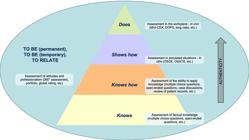
Schematic diagram of the modified Miller pyramid11*. The modification involves placing the pyramid on a circular background representing the affective-attitudinal domain, expressed by the Portuguese verbs ser (to be - permanent state), estar (to be - temporary state) and relacionar-se (to relate). For each level of the pyramid and this framework, examples of methods that can be used are provided, with particular emphasis on the OSCE at the shows how level.
The other strategy, blueprinting, is derived from engineering and involves constructing a map or structured representation (blueprint) of what is to be assessed. By using blueprinting, it is possible to specify, right from the test-planning stage, the range of content, contexts and competencies that will be assessed. In the OSCE, which assesses clinical skills (rather than specialities), blueprinting must ensure a balanced representation of essential clinical competencies, such as history-taking, physical examination, communication, clinical reasoning, decision-making and professionalism12)-(14. For example, it is more important to ensure an appropriate distribution of stations that assess essential skills (such as the ability to carry out a physical examination, communication and clinical reasoning) than simply to organise the stations around specific areas or specialities (Figure 2).
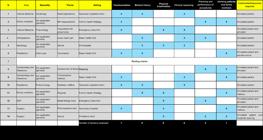
Example of a blueprint or specification matrix for an OSCE designed to assess the clinical skills of final-year undergraduate medical students. The examination comprises 14 stations, set in different scenarios, which assess six broad areas of clinical competence (rather than specialities). In this examination, each skill is assessed in a variety of contexts, across a minimum of five stations and a maximum of seven stations.
The combination of conceptual alignment and appropriate blueprinting does not eliminate all methodological problems, but it does reduce significant threats to the validity and fairness of the process. In high-stakes exams, this planning must be accompanied by examiner training, an explicit definition of pass criteria, an analysis of station performance, and systematic monitoring of inter-examiner and inter-circuit variability7),(12)-(14. In psychometric terms, this means recognising that the reliability of the OSCE stems less from the format itself and more from the quality of its implementation: the number of stations, the sampling of the domain, case standardisation, the behaviour of the assessors and the consistency of the assessment criteria. Therefore, in high-stakes examinations, it is advisable to supplement traditional indicators with more robust approaches, such as generalisation studies, inter-assessor reliability analysis and systematic reviews of poorly performing stations.
Student assessment in the context of competency-based education
Contemporary medical education has shifted its focus from a predominantly content-centred curriculum to a competency-based approach5. This development has profoundly altered the assessment logic. It is no longer sufficient to assess knowledge retention or problem-solving ability through written examinations; it has become necessary to observe how students integrate knowledge, skills, communication, professionalism and clinical decision-making in directly observable situations1), (5)-(7.
This is precisely where the OSCE can offer its greatest contribution. Since it was first proposed in the 1970s, the method has made it possible to structure the assessment of clinical performance into stations with clearly defined tasks, explicit criteria and relatively standardised conditions. This has alleviated some of the traditional limitations of bedside examination, which is heavily dependent on the complexity of each clinical case, the observer and the context in which it is conducted8)-(10. In Miller’s pyramid, the OSCE is predominantly situated at the shows how level: it allows the student to be observed taking a medical history, carrying out a focused physical examination, explaining procedures, communicating risks and management options, counselling patients and interpreting findings under comparable conditions amongst candidates8)-(10.
This conceptual framework clarifies a crucial point: the OSCE does not assess the full range of clinical competence, but rather a structured and intentional sample of observable performances. Its value stems precisely from this ability to assess, with reasonable objectivity, aspects of the construct of clinical competence that cognitive tests fail to adequately capture. Conversely, its quality depends on rigorous decisions regarding the purpose of the examination, the content of the stations, the training of standardised patients and assessors, and the appropriate use of checklists and global scales12)-(14. From this perspective, the OSCE should not be seen as an alternative to assessment in a real-world setting, but rather as a complementary component of a broader system. Documented in-service assessments, portfolios, longitudinal monitoring and overall judgements remain essential for the does level. The particular benefit of the OSCE lies in making comparable aspects of clinical practice that are usually presented to students in an uneven and ad hoc manner.
Accordingly, there is no such thing as “the” OSCE in the abstract. There are different designs, each suited to a different purpose. In training contexts or those involving low-stakes exams, it is possible to work with smaller circuits, place greater emphasis on feedback and have lower requirements for overall reliability. In summative or high-stakes contexts, such as progression, certification or selection, it is essential to have a larger sample size for each domain, greater psychometric rigour, formal processes for setting cut-off marks, quality control and detailed documentation of the examination and its post-implementation analyses7), (12)-(14.
Introduction and dissemination of the OSCE in Brazil and Latin America
The international history of the OSCE is relatively well known. In Dundee, in the mid-1970s, Ronald Harden and his colleagues formalised an objective and structured examination to overcome the limitations of the traditional clinical examination, later named the OSCE8), (20), (21. In the decades that followed, this approach became established as a benchmark and was extended to different contexts, including the assessment of technical skills, the clinical assessment of students and trainees, and medical licensing processes in North America22)-(27. This development demonstrated that the method could be integrated into results-based curricula and assessment systems spread out over the course of the programme10), (28.
In Latin America, however, the spread of the OSCE was slower and more uneven. A recent review has identified an increase in the use of this method, which remains concentrated in a few countries and is often accompanied by incomplete methodological descriptions, making it difficult to assess the quality of the examinations and compare experiences29. This weakness in reporting is not trivial: without sufficient information on blueprinting, assessor training, station characteristics, the definition of standards and reliability analyses, the apparent objectivity of the OSCE may lead to overly optimistic interpretations of its quality13), (29.
In the context of Latin America, the Brazilian experience deserves special historical recognition. Between 1989 and 1995, the Carlos Chagas Institute of Postgraduate Medical Education participated, in partnership with the Educational Commission for Foreign Medical Graduates (ECFMG), in international applications of a structured clinical examination based on standardised patients, with common stations in different countries26. Although this experience was subsequently documented only to a limited extent, it suggests that Brazil was an early participant in the international movement towards standardised practical assessment.
The best-documented pioneering initiative took place at the Ribeirão Preto School of Medicine, part of the University of São Paulo. In 1995, a group led by Luiz Ernesto de Almeida Troncon implemented a six-station OSCE for the final assessment of students on the General Semiology course. In 1996, the study was published in two articles in the Revista Brasileira de Educação Médica: the first described the design of the examination, which comprised two stations involving the taking of medical histories from simulated patients and four stations involving physical examinations of real, standardised patients; the second presented the results of the examination and the perceptions of the 41 students assessed30), (31. The authors noted that, to their knowledge, this was the first time this approach had been used in the country.
Also at FMRP-USP, the OSCE has been incorporated into the final institutional assessment of medical undergraduates, including in studies comparing curricula32), (33. At the same time, institutions with innovative curricula, such as the State University of Londrina and the Marília School of Medicine, have introduced structured assessments of clinical skills inspired by the OSCE model, with local adaptations consistent with their educational programmes34), (35. The wider adoption of this format for selection processes, however, occurred mainly following the introduction of practical tests into medical residency entrance examinations, as stipulated by the National Medical Residency Commission in 200436. It is worth noting that Brazil’s trajectory has not been linear. There have been some high-quality institutional initiatives, but also a lack of continuity, inconsistencies in terminology and a dearth of published data on validity and reliability, which helps to explain why some of the national output has remained largely overlooked in international reviews.
Lessons learnt from the OSCE in Brazil and international examples
The early Brazilian contributions were significant not only because they predated much of the subsequent regional literature, but also because they highlighted issues that remain relevant today. Studies carried out by FMRP-USP have shown that the OSCE provides detailed information on student performance and can identify weaknesses in the curriculum with greater accuracy than traditional cognitive assessments. At the same time, they highlighted significant operational, cultural and institutional challenges. The students rated the relevance of the clinical cases and content positively, but reported significant difficulties with time management and the stress inherent in the format; while faculty recognised the method’s ability to assess specific skills, they also highlighted its high cost and limitations in capturing a more integrated approach to the patient30), (31), (37.
The 2004 study, also conducted by Troncon, is particularly instructive because it analysed three consecutive years of OSCE use at a traditional medical school, involving 258 students and teaching staff from the institution37. Even following organisational changes, difficulties persisted in relation to the duration of each station, student stress, resource consumption and the low level of institutional uptake of the results. Perhaps the main lesson is that the usefulness of the OSCE depends not only on its intrinsic characteristics, but also on the context in which it is implemented. A successful OSCE requires educational governance, administrative support, teacher training and an institutional culture of consistent use of the results.
This conclusion helps us to understand the distinction between formative and summative use of the method. In educational settings, the OSCE can have a significant educational impact when combined with structured feedback and genuine opportunities for remedial work. In such circumstances, shorter, more targeted assessments may be sufficient to guide learning. In summative contexts, and particularly in high-stakes situations, the requirements reach a new level: it is necessary to broaden the scope of the assessment, reduce sources of irrelevant variability, define defensible pass criteria, and carry out more robust post-implementation analyses, including attention to the behaviour of stations, assessors, checklists and global scales7), (12)-(14.
The issue becomes even more sensitive when proficiency and licensing examinations are taken into account. In Brazil, the second stage of the Revalida programme retains the requirement for practical demonstration of competencies through structured stations, reaffirming that cognitive mastery alone is insufficient for high-stakes regulatory decisions38), (39. This lends legitimacy to the argument in favour of practical assessments for graduates from Brazilian schools as well. On the other hand, international experience suggests that caution is warranted regarding the idea of a large, centralised national OSCE. In the United States and Canada, national clinical components have been phased out, against a backdrop of high costs, logistical complexity and the gradual strengthening of clinical assessments carried out throughout the training programme40), (41. These changes do not mean that practical assessment has lost its importance. On the contrary, they suggest that mature systems tend to distribute it more intelligently.
By contrast, other countries with a long tradition of assessment and well-established regulatory processes have retained OSCE-style assessments, such as the United Kingdom, Australia, Switzerland and Japan, albeit with different formats. Some countries, such as Switzerland and Japan, continue to hold examinations that are highly standardised at national level, albeit at different stages of a doctor’s training; whilst others, such as the United Kingdom and Australia, use OSCE in a decentralised manner, often with national guidelines and governance, but without a single, centralised examination for all candidates.
The UK model combines two components: the Applied Knowledge Test and the Clinical and Professional Skills Assessment. In the latter, the medical schools themselves organise and conduct the assessment of clinical and professional skills, whilst the national regulatory body acts as an external guarantor of the quality, consistency and fairness of the process42)-(44. This arrangement demonstrates that it is possible to combine a common national framework with decentralised implementation, without the need to bring together all the country’s graduates within a single national OSCE.
We therefore believe that the British model is particularly relevant to the Brazilian debate, not as a model to be copied mechanically, but as evidence that a common national framework and decentralised implementation can coexist effectively. Conversely, its viability depends on robust institutional prerequisites, including accreditation, external quality assurance and the systematic monitoring of educational processes. In Brazil, the increased number of medical degree programmes without a robust, mandatory accreditation system makes this challenge even greater45), (46. International literature itself shows that the consolidation of high-quality OSCE depends on continuous cycles of design, testing, implementation, review and redesign; in other words, it is not simply a matter of administering a practical test, but of maintaining an assessment programme capable of learning from its own data7), (14), (42)-(44.
A proposal for Brazil
The establishment of the ENAMED has reignited the debate on how to coordinate external evaluation and certification of medical training in the country16), (18. Although the examination has, to date, been predominantly cognitive in focus, it highlights the need for a coherent national framework for the assessment of clinical skills at the end of undergraduate training. In our view, the main pitfall to avoid is the false dichotomy between two equally unsatisfactory alternatives: on the one hand, a single, centralised national OSCE for all candidates; on the other, the absence of a nationally regulated practical component.
Given the scale of the Brazilian medical education system, the number of medical schools, the variation in infrastructure and the annual number of graduates, a centralised national OSCE appears to be logistically unfeasible and likely to be excessively costly. However, this impracticability does not justify abandoning practical assessment. A more consistent alternative might be a hybrid model: a centralised national cognitive examination and the assessment of clinical skills through local or regional OSCEs, conducted by medical schools either individually or in consortia, but subject to a national competency framework, minimum blueprinting requirements, common documentation standards and independent external audit mechanisms.
This model offers clear advantages. It retains the practical assessment as a requirement for certification, promotes greater integration between the curriculum, teaching and longitudinal assessment, reduces the complexity of a single nationwide examination, and encourages inter-institutional cooperation in the sharing of assessment stations, assessor training and standardised patient training. Furthermore, it allows some of the technical work to be centralised or shared, such as the development of a national database of stations, blueprinting guidelines, reference frameworks for setting cut-off grades, and post-implementation analysis protocols. It is also important to recognise that decentralisation will only be legitimate if it is accompanied by transparency and comparability. It is not enough for each school simply to state that it conducts an OSCE; it will be necessary to demonstrate, with auditable evidence, which skills were assessed, under what conditions, by whom, using which instruments, with what pass mark, and with what aggregate results.
For this arrangement to be credible, certain elements are essential (Table 1): a national matrix of clinical competencies; standardised documentation of the planning and conduct of examinations; ongoing faculty development programmes and standardised patient training; post-implementation analysis, including the setting of a pass mark, reliability measures and an assessment of station performance; and external mechanisms for audit, regulation and, ideally, accreditation7), (14), (43), (45)-(47.
Finally, given the Herculean task of structuring and refining the assessment of clinical skills in a vast country with over 450 medical schools, this challenge should not be delegated to a single institution. It requires coordination between the Ministry of Education, the Brazilian Association of Medical Education, the Federal Council of Medicine, regulatory bodies, medical schools, students and accreditation bodies. However, given the complexity of an examination such as this, it is essential that there also be an independent technical group responsible for setting quality standards, monitoring implementation and continuously reviewing the quality of the system.
CONCLUSIONS
Brazil’s experience with the OSCE offers a twofold lesson. On the one hand, it shows that the country was an early adopter of the method in Latin America and has gained sufficient experience to make a valuable contribution to the design of contemporary solutions. On the other, it shows that simply adopting the format does not, in itself, solve the problems of clinical assessment. Without a supportive institutional environment, investment, technical rigour and a culture of consistent application of the results, the examination loses its legitimacy and sustainability. In summary, the OSCE remains a key tool for assessing clinical skills in medical education. Its current relevance, however, calls for responses commensurate with the scale and diversity of the Brazilian education system. A hybrid approach, with centralised cognitive assessment and decentralised practical assessment under strict national regulation, appears to be the most realistic option for reconciling validity, feasibility and social responsibility in the certification of future doctors.
References
- 1 van der Vleuten CP, Schuwirth LW, Driessen EW, Dijkstra J, Tigelaar D, Baartman LK, et al. A model for programmatic assessment fit for purpose. Med Teach. 2012;34(3):205-14.
- 2 Panúncio-Pinto MP, Troncon LEA. Avaliação do estudante - aspectos gerais. Medicina (Ribeirão Preto). 2014;47(3):314-23.
- 3 Norcini J, Anderson B, Bollela V, Burch V, Costa MJ, Duvivier R, et al. Criteria for good assessment: consensus statement and recommendations from the Ottawa 2010 Conference. Med Teach . 2011;33(3):206-14.
- 4 Troncon LEA. Avaliação do estudante de medicina. Medicina (Ribeirão Preto) . 1996;29:429-39.
- 5 Frank JR, Snell LS, Cate OT, Holmboe ES, Carraccio C, Swing SR, et al. Competency-based medical education: theory to practice. Med Teach . 2010;32(8):638-45.
- 6 Norcini J, Anderson MB, Bollela V, Burch V, Costa MJ, Duvivier R, et al. 2018 Consensus framework for good assessment. Med Teach . 2018;40(11):1102-9.
- 7 Boursicot K, Kemp S, Wilkinson T, Findyartini A, Canning C, Cilliers F, et al. Performance assessment: consensus statement and recommendations from the 2020 Ottawa Conference. Med Teach . 2021;43(1):58-67.
- 8 Harden RM, Stevenson M, Downie WW, Wilson GM. Assessment of clinical competence using objective structured examination. Br Med J. 1975;1(5955):447-51.
- 9 Harden RM. What is an OSCE? Med Teach . 1988;10(1):19-22.
- 10 Harden RM. Revisiting “Assessment of clinical competence using an objective structured clinical examination (OSCE)”. Med Educ. 2016;50(4):376-9.
- 11 Miller GE. The assessment of clinical skills/competence/performance. Acad Med. 1990;65(9 Suppl):S63-7.
- 12 Boursicot K, Roberts T. How to set up an OSCE. Clin Teach. 2005;2(1):16-20.
- 13 Patricio M, Juliao M, Fareleira F, Young M, Norman G, Vaz Carneiro A. A comprehensive checklist for reporting the use of OSCEs. Med Teach . 2009;31(2):112-24.
- 14 Daniels VJ, Pugh D. Twelve tips for developing an OSCE that measures what you want. Med Teach . 2018;40(12):1208-13.
- 15 Oliveira SS, Rodrigues ET, Afonso DH, Ribeiro ACA, Palhares AA, Moraes NP, et al. Novas Diretrizes Curriculares Nacionais do curso de graduação em Medicina de 2025: um convite para a transformação da educação médica no Brasil. Rev Bras Educ Med. 2026;50(01):e050.
- 16 Ministério da Educação. Portaria MEC Nº 330, de 23 de abril de 2025. Institui o Exame Nacional de Avaliação da Formação Médica - Enamed. Brasília: MEC; 2025.
- 17 Flauzino RH, Panúncio-Pinto MP, Bollela VR, Troncon LEA. Avaliação do estudante de graduação nas profissões da saúde: mudanças associadas ao desenvolvimento docente. Rev Bras Educ Med . 2025;49(3):e089.
-
18 Instituto Nacional de Estudos e Pesquisas Educacionais Anísio Teixeira. Enamed. Brasília: Ministério da Educação; 2025 [acesso em 10 de maio de 2026]. Disponível em: Disponível em: https://www.gov.br/inep/pt-br/areas-de-atuacao/avaliacao-e-exames-educacionais/enamed
» https://www.gov.br/inep/pt-br/areas-de-atuacao/avaliacao-e-exames-educacionais/enamed - 19 Ministério da Educação. Resolução CNE/CES nº 3, de 30 de setembro de 2025. Institui Diretrizes Curriculares Nacionais do Curso de Graduação em Medicina. Brasília: Ministério da Educação ; 2025.
- 20 Harden RM. Assess clinical competence-an overview. Med Teach . 1979;1(6):289-96.
- 21 Harden RM, Gleeson FA. Assessment of clinical competence using an objective structured clinical examination (OSCE). Med Educ . 1979;13(1):41-54.
- 22 Faulkner H, Regehr G, Martin J, Reznick R. Validation of an objective structured assessment of technical skill for surgical residents. Acad Med . 1996;71(12):1363-5.
- 23 Stillman PL, Regan MB, Swanson DB, Case S, McCahan J, Feinblatt J, et al. An assessment of the clinical skills of fourth-year students at four New England medical schools. Acad Med . 1990;65(5):320-6.
- 24 Stillman P, Swanson D, Regan MB, Philbin MM, Nelson V, Ebert T, et al. Assessment of clinical skills of residents utilizing standardized patients. A follow-up study and recommendations for application. Ann Intern Med. 1991;114(5):393-401.
- 25 Papadakis MA. The Step 2 clinical-skills examination. N Engl J Med. 2004;350(17):1703-5.
- 26 Ziv A, Ben-David MF, Sutnick AI, Gary NE. Lessons learned from six years of international administrations of the ECFMG’s SP-based clinical skills assessment. Acad Med . 1998;73(1):84-91.
- 27 Reznick RK, Blackmore D, Cohen R, Baumber J, Rothman A, Smee S, et al. An objective structured clinical examination for the licentiate of the Medical Council of Canada: from research to reality. Acad Med . 1993;68(10 Suppl):S4-6.
- 28 Harden RM. AMEE Guide No. 14: Outcome-based education: Part 1-An introduction to outcome-based education. Med Teach . 1999;21(1):7-14.
- 29 Armijo-Rivera S, Fuenzalida-Munoz B, Vicencio-Clarke S, Elbers-Arce A, Bozzo-Navarrete S, Kunakov N, et al. Advancing the assessment of clinical competence in Latin America: a scoping review of OSCE implementation and challenges in resource-limited settings. BMC Med Educ . 2025;25(1):587.
- 30 Troncon LEA, Foss NT, Voltarelli JC, Dantas RO. Avaliação de habilidades clínicas por exame objetivo estruturado por estações, com emprego de pacientes padronizados: descrição de dois métodos (parte I). Rev Bras Educ Med . 1996;20(2-3):45-52.
- 31 Troncon LEA, Foss NT, Voltarelli JC, Dantas RO. Avaliação de habilidades clínicas por exame objetivo estruturado por estações, com emprego de pacientes padronizados; uma aplicação no Brasil (parte II). Rev Bras Educ Med . 1996;20(2-3):53-60.
- 32 Figueiredo JF, Troncon LE, Rodrigues M de L, Cianflone AR, Colares M de F, Peres LC, et al. Effect of curriculum reform on graduating student performance. Med Teach . 2004;26(3):244-9.
- 33 Troncon LEA, Figueiredo JFC, Rodrigues MLV, Piccinato CE, Peres LC, Cianflone ARL, et al. Avaliação de uma reestruturação curricular na Faculdade de Medicina de Ribeirão Preto: influência sobre o desempenho dos graduandos. Rev Bras Educ Med . 2004;28(02):145-55.
- 34 Perim G, Sakai M, Almeida M, Marchese M. Sistema Integrado de Avaliação do Curso de Medicina da UEL: SIAMed. Avaliação: Revista da Avaliação da Educação Superior (Campinas). 2005;10:135-69.
- 35 Mazzoni C, Moraes M. A avaliação prática estruturada de habilidades clínicas na Famema: fundamentos para construção e aplicação. Gestão Univ. 2006;99:63-70.
- 36 Comissão Nacional de Residência Médica. Resolução CNRM nº 008/2004, de 05 de agosto de 2004. Dispõe sobre o processo de seleção pública dos candidatos aos Programas de Residência Médica. Brasília: CNRM; 2024.
- 37 Troncon LEA. Clinical skills assessment: limitations to the introduction of an “OSCE” (Objective Structured Clinical Examination) in a traditional Brazilian medical school. São Paulo Medical Journal. 2004;122(1):12-7.
-
38 Instituto Nacional de Estudos e Pesquisas Educacionais Anísio Teixeira. Revalida. Brasília: Ministério da Educação ; 2026 [acesso em 10 de maio de 2026]. Disponível em: Disponível em: https://www.gov.br/inep/pt-br/areas-de-atuacao/avaliacao-e-exames-educacionais/revalida
» https://www.gov.br/inep/pt-br/areas-de-atuacao/avaliacao-e-exames-educacionais/revalida - 39 Ministério da Saúde, Ministério da Educação. Matriz de correspondência curricular para fins de revalidação de diplomas de médico obtidos no exterior. Brasília: MEC, MS; 2009.
- 40 Howley LD, Engle DL. Discontinuation of the USMLE Step 2 Clinical Skills Examination: studying the past to define the future. Acad Med . 2021;96(9):1247-9.
- 41 Smirnova A. Licensing exams in Canada: a closer look at the validity of the MCCQE Part II. Can Med Educ J. 2022;13(4):23-9.
-
42 General Medical Council. Clinical and professional skills assessment (CPSA). London: General Medical Council; 2026 [acesso em 10 de maio de 2026]. Disponível em: Disponível em: https://www.gmc-uk.org/education/medical-licensing-assessment/uk-medical-schools-guide-to-the-mla/clinical-and-professional-skills-assessment-cpsa
» https://www.gmc-uk.org/education/medical-licensing-assessment/uk-medical-schools-guide-to-the-mla/clinical-and-professional-skills-assessment-cpsa - 43 General Medical Council. Requirements for the Medical Licensing Assessment Clinical and Professional Skills Assessment. London: General Medical Council ; 2024.
- 44 General Medical Council. Promoting excellence: standards for medical education and training. London: General Medical Council ; 2026.
- 45 Bedoll D, van Zanten M, McKinley D. Global trends in medical education accreditation. Hum Resour Health. 2021;19(1):70.
- 46 Tempski P, Girotto LC, Brenelli S, Giamberardino DD, Martins MA. Accreditation of medical education in Brazil: an evaluation of seventy-six medical schools. BMC Med Educ . 2024;24(1):656.
- 47 Australian Medical Council. Procedures for Assessment and Accreditation of Medical Schools by the Australian Medical Council. Kingston: Australian Medical Council; 2024.
- 48 Bollela VR, Borges MC, Volpe FAP, Santos LL, Santana RC, Ricz HMA, et al. Princípios gerais de avaliação do profissional da saúde em formação. Residência médica : ensino e avaliação das competências: Manole; 2022.
Research data is available in the body of the document.

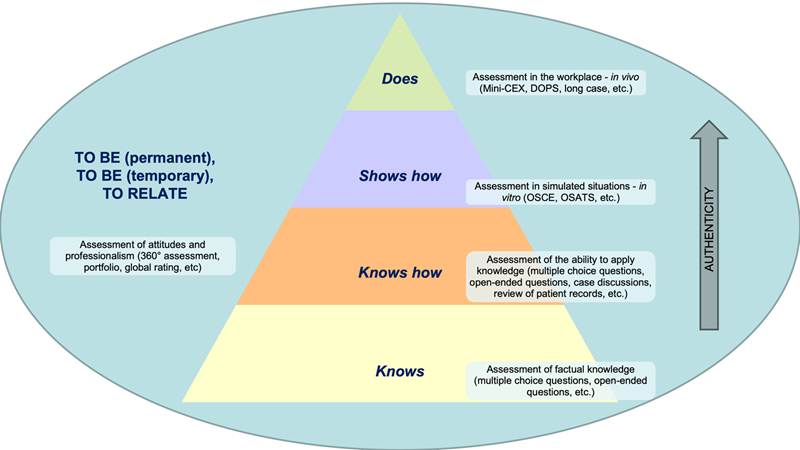 Source: Miller
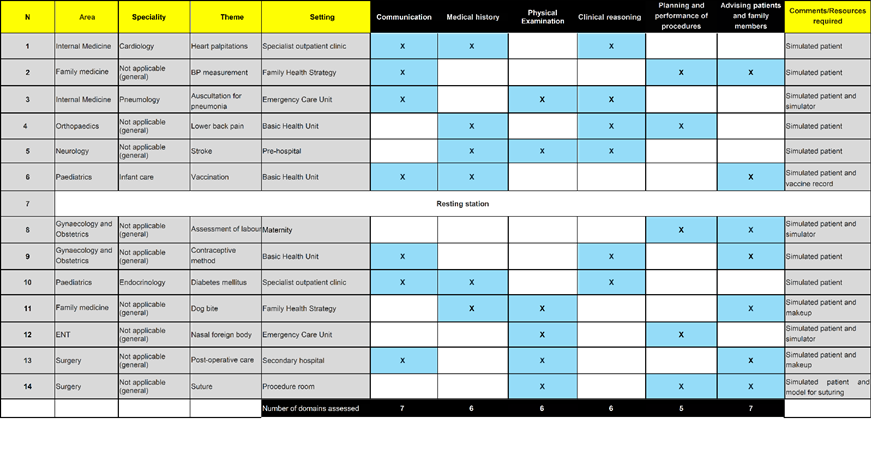 Source: Authors.