 Educational products of a professional master’s degree in light of Capes criteria: documentary research
ABSTRACT
Introduction: Professional master’s programs propose to develop educational products with applicability in the student’s professional field. To guarantee the quality of the products developed, the Coordination for the Improvement of Higher Education Personnel (CAPES) has over time been improving the way in which these products are evaluated, guiding them based on the following criteria: adherence, impact, access, applicability, innovation and complexity.
Objective: To analyze the educational products developed by MPES according to the CAPES criteria.
Methods: This is a quantitative-qualitative research study of the documentary analysis type. It includes educational products that are derived from TACCs produced between 2020 and 2023, available in the institutional repository, and those not linked to the research project and line of research are excluded. The collected data were converted into graphs for quantitative analysis, and the selected products were subjected to Bardin’s content analysis.
Results: One hundred educational products were evaluated, of which six were excluded, leaving 94; of these, 92.6% were classified as technological and 7.4% as technical. All are replicable. They have high applicability (68.1%) and achieved scope, while 31.9% have potential scope. 75.5% have medium innovative content, 18.1% have low innovative content and 3.2% have high innovative content. Complexity was classified as medium in 68.1% of the products, low in 17% and high in 14.9%.
Final considerations: The analysis of the educational products generated at MPES allows us to reflect on the training possibilities and tensions that permeate academic production in the field of health education. Based on this, the creation of new products can be directed, offering improvements to previous proposals.
Keywords:
documentary analysis; educational technology; teaching materials
RESUMO
Introdução: Os mestrados profissionais propõem a elaboração de produtos educacionais com aplicabilidade no campo de atuação profissional do discente. Para garantir a qualidade dos produtos desenvolvidos, a Coordenação de Aperfeiçoamento de Pessoal de Nível Superior (Capes) vem aperfeiçoando, ao longo do tempo, a forma de avaliação desses produtos, orientando-os a partir dos seguintes critérios: aderência, impacto, acesso, aplicabilidade, inovação e complexidade.
Objetivo: Este estudo teve como objetivo analisar os produtos educacionais desenvolvidos em um mestrado profissional em Ensino na Saúde (MPES), segundo os critérios da Capes.
Método: Trata-se de uma pesquisa qualiquantitativa, do tipo análise documental. Incluíram-se produtos educacionais derivados dos trabalhos acadêmicos de conclusão de curso produzidos no período de 2020 a 2023, disponíveis no repositório da instituição, e excluíram-se aqueles que não tinham vínculo com o projeto e a linha de pesquisa. Converteram-se os dados coletados em gráficos para a análise quantitativa, e os produtos selecionados foram submetidos à análise de conteúdo de Bardin.
Resultados: Foram avaliados cem produtos educacionais, dos quais seis foram excluídos, restando 94; destes, 92,6% foram classificados como tecnológicos e 7,4% como técnicos. Todos são replicáveis. Dos produtos educacionais classificados, 68,1% possuem alta aplicabilidade e abrangência realizada, enquanto 31,9% têm abrangência potencial. Além disso, 75,5% têm médio teor inovativo; 18,1% baixo teor inovativo e 3,2% têm alto teor inovativo. A complexidade foi classificada como média em 68,1% dos produtos, baixa em 17% e alta em 14,9%.
Conclusão: a análise dos produtos educacionais permite refletir sobre as possibilidades formativas e as tensões que atravessam a produção acadêmica no campo do ensino na saúde. A partir daí é possível direcionar a criação de novos produtos, aperfeiçoando o que já vem sendo proposto.
Palavras-chave:
Análise Documental; Tecnologia Educacional; Materiais de Ensino
INTRODUCTION
The Professional Master’s Degree (MP) is a type of stricto sensu postgraduate course that combines academic knowledge and professional practice, with a focus on qualifying professionals capable of responding in an innovative and contextualised way to the concrete demands of the world of work.
As defined by the Coordination for Higher Level Education (CAPES), the curricular structure of a professional master’s degree must emphasise the connection between up-to-date knowledge, mastery of the relevant methodology and application geared to the specific field of professional activity. The final coursework must always be linked to real problems in the student’s area of expertise, in accordance with the nature of the area and the purpose of the course1.
The Professional Master’s in Health Teaching is a strategic response to the need to qualify teaching in the field of health, promoting the articulation between pedagogical knowledge and care practice. Based on the identification of a problem situation in their day-to-day work, master’s students are challenged to critically investigate the issue, resulting in the development of an educational product applicable to their reality, as well as the production of a scientific article that systematises the process and its results2.
An educational product (EP) can be defined as an object that facilitates a learning experience, that is, an experience of change and enrichment in some sense. It is the tangible result of a teaching or learning activity3.
In its guidelines, CAPES, the body that periodically assesses master’s programmes, establishes that these products must meet certain criteria: adherence, impact, applicability, innovation and complexity4)-(5. These criteria were established following the publication of a document produced by the Technical Production Working Group in 2019. The document proposed applying these parameters to all areas of assessment4.
When it comes to evaluation in the field of teaching, authors such as Hentges et al6 emphasise the need to gather evidence to prove the relevance of products, demonstrating their effective contribution to both teaching and learning processes and professional practice. According to Coelho7,
For these EPs to fulfil their role effectively, it is essential to carry out research to assess their effectiveness. The creation of these materials should not be arbitrary, but based on well-structured evaluation processes. This is crucial in order to minimise the variability inherent to interventions and the different contexts in which they are applied, which can result in inconsistent, biased or insufficiently detailed data, hindering the interpretation of results and the generalisability of conclusions 7 .
Methodologies for developing and evaluating processes and products are being widely discussed in Brazilian postgraduate programmes, reinforcing the need to expand discussions on effectiveness, impact and innovation potential relevant to teaching7. Despite there being interest, a lack of studies on the evaluation and validation of educational products persists. Most research has focused on descriptive approaches, with an emphasis on different disciplines, but not specifically on the area of health teaching8)-(10.
Considering the existence of official CAPES guidelines on the development of educational products, this research aims to analyse the educational products developed in the Professional Master’s Degree in Health Teaching (MPES) at the Federal University of Alagoas (UFAL), in order to verify their compliance with the criteria established by the agency.
METHOD
This study adopts a quantitative and qualitative methodological approach, based on documentary analysis. The research focuses on the analysis of educational products developed by master’s students from a Professional Master’s programme in Health Teaching.
Documentary analysis was used as a methodological strategy, as it allows for the systematic investigation of written records, with a view to understanding, categorising and interpreting the information contained therein. This approach is not limited to describing explicit data, but makes it possible to identify patterns, infer implicit meanings and critically contextualise the content analysed. It is used in various areas of knowledge to analyse texts, reports, legislation, minutes, digital archives, among others, consisting of a broad and intense examination of as yet unprocessed documents11.
The methodological process initially consisted of reading the abstracts of the educational products from the academic final courseworks (TACC) produced by MPES students between 2020 and 2023, after the publication of the RT- CAPES 2019, archived in the programme repository, which can be accessed via an electronic link. Products with no link to the research line or project or whose access was unavailable - with expired or unavailable links - were excluded.
The educational products were classified according to CAPES criteria by three researchers experienced in health teaching and familiar with assessing professional master’s degree products. The raters initially read through the materials independently. Subsequently, consensus meetings were held to discuss the differences identified, which were resolved by joint analysis based on CAPES guidelines and specialised literature, until the raters reached agreement.
As this is a qualitative investigation with an exploratory-descriptive objective, the intention was not to use inferential analyses of inter-rater agreement, such as the kappa coefficient. Nonetheless, methodological rigour was ensured through independent reading of the materials, the prior and explicit definition of the classification criteria and the adoption of a systematic process for the consensual resolution of identified disagreements.
A form was drawn up to systematise the registration and evaluation of products, allowing for objective and standardised responses. The rater ticked the corresponding options (yes or no) or the most appropriate rating for each item. Initially, the identification of the product and the title of the TACC to which it is linked were recorded, taking into account the possibility of the same work giving rise to more than one product, as long as the inclusion criteria were met. Next, aspects such as technical or technological nature, adherence to objectives, impact, applicability and the possibility of replication in other contexts were analysed. When confirmed, the applicability was indicated as being of high or potential scope. The degree of innovation was also assessed - high, medium, low or absent - and the level of complexity of the product, classified as high, medium or low, depending on its nature and the requirements for implementation.
According to CAPES guidelines, an educational product is considered technological when its creation is the result of new knowledge; when it results from the application or adaptation of pre-existing knowledge, it is classified as a technical product4. Adherence refers to the degree to which the product is linked to the research project developed by the master’s student and its alignment with the programme’s line of research. Impact, in turn, relates to the significant insertion of the product into the author’s professional context, by proposing practical and contextualised solutions to real problems identified in their area of work. This articulation between thematic relevance and applicability in the professional field is fundamental for the product to fulfil its transformative role in health education 2), (12).
As far as applicability is concerned, the evaluation guidelines recommend considering the resource’s ability to reach and its suitability for the target audience, in terms of language, format and means of dissemination. Complexity refers to the diversity of actors involved, the relationships established and the knowledge required to develop and implement the product5.
It should be noted that, prior to the publication of RT- CAPES 2019, activities such as classes, presentations or similar actions were often accepted as educational products, even when they did not fulfil clear pedagogical objectives or were not adequately linked to the corresponding line of research. This practice revealed the absence of defined criteria to ensure the educational relevance and effective contribution of these products to academic or professional development.
Content Analysis, following Bardin’s method14, was used as a data analysis technique to examine underlying meanings and patterns in the materials analysed, involving stages such as: a) identification and selection of documents that meet the research objective; b) analytical reading: focus on central content, as well as implicit aspects; c) categorisation and coding; d) organisation of information into categories to facilitate interpretation; e) triangulation: integration of documentary data with other research sources to validate conclusions14.
Once these methodologies were aligned with the evaluation of the educational products, the documentary analysis made it possible to interpret them in the light of the Capes criteria, taking into account the objectives of the research, the nature of the products analysed and the training purposes of the professional master’s programme itself. In this context, the method helped to identify the existence of good practices and the prevalence of innovative formats (such as podcasts or mobile applications), as well as analysing the adherence of the products to the master’s students’ lines of research.
As it involved analysing publicly accessible documents by browsing the institutional repository, and because it did not involve the use of instruments such as interviews or questionnaires, the study did not need to be submitted for ethical appraisal.
The quantitative data was converted into tables and graphs, showing the distribution behaviour of the variables in percentiles.
RESULTS AND DISCUSSION
This research resulted in 100 papers retrieved in the period investigated, six were excluded after applying the eligibility criteria, resulting in a final sample of 94 educational products. The analysis covered the criteria of adherence, impact, applicability, innovation and complexity, in the light of content analysis. Among the papers excluded, three were not characterised as educational products and three could not be accessed due to expired links. From this sample, the products were described and discussed in terms of their type, degree of innovation and potential for application in different training contexts.
During the reading of the abstracts, it was noted that the writing style varied between the papers, revealing the absence of a presentation standard adopted by the institution. Several summaries presented limited information, making it difficult to understand the product developed. Only a minority provided a clearer, more structured description of the educational resource. Thus, the full evaluation of the products depended on access to the complete material, that is, the TACCs developed by the master’s students. Nonetheless, most of the products analysed essentially met the criteria established by CAPES3 for educational products within the scope of professional master’s programmes.
According to the CAPES Technical Group4, the same product can take on different classifications depending on how these five criteria are integrated into the development and purpose of the production. This distinction therefore requires a critical and reasoned analysis of the constituent elements of each product, based on the intentionality of the researcher, the originality of the proposal and the potential of the MPES. Understanding this nuance is essential for guiding master’s students in the construction of products that are coherent with the objectives of the professional master’s programme, strengthening the connection between practice and the production of applicable and innovative knowledge, in accordance with the parameters established by CAPES.
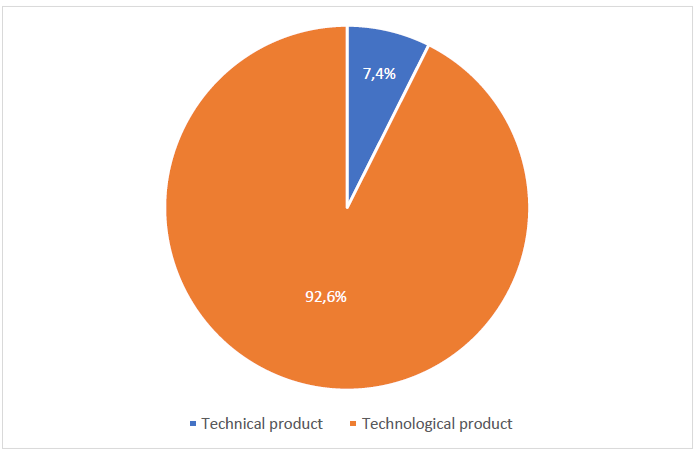
In terms of type, 92.6% of the products originating from the MPES are technological, the result of the application of new scientific knowledge, with a higher degree of novelty. On the other hand, technical products account for around 7.4% of the materials; in this case, they are productions derived from the use of existing knowledge (Graph 1).
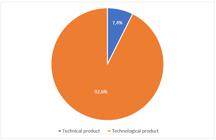
Classification of educational products into technical and technological, according to CAPES criteria.
Products that have a strong impact on professional practice, propose innovative solutions to everyday challenges, articulate different types of knowledge and involve multiple actors tend to be classified as technological. On the other hand, those that use already consolidated approaches, even if they are relevant and contextualised, are closer to the profile of technical products4.
Among the products with the greatest technological potential are those involving the use of digital tools, interactive games, online simulators or platforms to support teaching and clinical decision-making. These examples demonstrate innovation in both form and content, as well as requiring greater technical complexity to implement. On the other hand, the products that generated workshops based on traditional methodologies, manuals and booklets with content adapted to specific audiences - although pertinent and applicable - tend to be configured as technical products, especially when they fail to incorporate elements of technological innovation.
Analysis of educational products
Analysing the 94 educational products developed by MPES students between 2020 and 2023 revealed that they all meet the criteria of adherence, impact, applicability and complexity to some degree. In addition, 95.7% had some element of innovation, which demonstrates the authors’ commitment to proposing significant solutions for health teaching. Table 1 shows the stratification of products by assessment criterion, in number and percentage.
These criteria were essential for measuring the quality and relevance of MPES products in the educational and professional context, reflecting their contribution to the advancement of academic training and effectiveness in resolving practical issues in the field of health.
The definition of adherence includes the degree to which the educational product is aligned with the programme’s line of research and institutional objectives, ensuring that its design responds to the expected academic and social demands. Impact, on the other hand, refers to the actual changes brought about by the implementation of the product, measuring its ability to generate concrete benefits in the teaching-learning process or in professional practice4.
The educational products showed 100% adherence and impact, demonstrating full alignment with institutional guidelines and adequate response to the needs of the educational and social context. This result reflects the high relevance of the projects to the field of health and suggests that the products have fulfilled their role in generating concrete benefits for the target audiences.
The extract from the product entitled “Teacher development workshop through art”15 reflects this premise:
The most prominent challenge is the weaknesses of the teaching staff, such as difficulties in interaction, unity, relationships and communication, as well as a lack of openness to change and the use of new teaching methodologies. One of the strategies suggested was to reactivate the teacher development policy and make the planning week more dynamic 15 .
The product entitled “How would you like to be told difficult news?”16 also reveals this direction:
The video [...] helps and engages students to solve problems and awakens their desire to delve deeper into subjects [...], with the aim of explaining, helping and elucidating the most relevant points within bad news communication 16 .
This coherence between proposal and application is in line with the CAPES guidelines, which prioritise the social and institutional impact of the products of professional master’s programmes4.
According to Pereira et al.(17, institutional adherence and social impact are fundamental aspects in the evaluation of educational products in professional programmes, as they reflect the practical relevance and contribution to the health system.
In turn, the applicability criterion assesses how well an educational product fits the needs of the target audience and how capable it is of being used in different contexts.
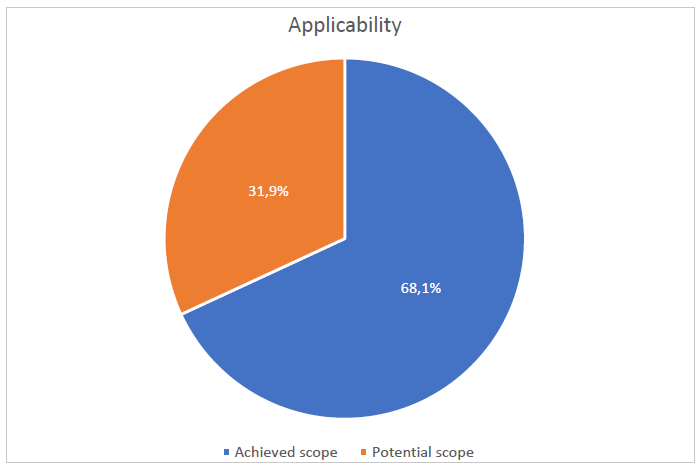
In terms of this criterion, 68.1% of the papers were highly applicable, demonstrating that they effectively reached their target audience, while 31.9% of the products showed the potential to reach other areas of activity. This data shows that the majority of educational products are of immediate use, but there is also a promising field for expansion, indicating potential for dissemination and adaptation to other realities (Graph 2).
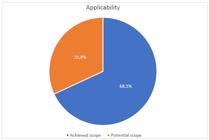
Examples with potential scope as educational products are identified in the following excerpts:
[...] that this educational video is a tool used for EPS and that it can help in understanding the idiosyncrasies of “being a father”. [...] sensitising professionals to the importance of contributing to and teaching about the paternal role in the Neonatal Unit 18 .
Encouraging the use of podcasts in the discipline of Intensive Physiotherapy serves to facilitate communication between students through highly diffused digital media and is also effective in promoting autonomy in relation to the search for information produced and distributed 19 .
Botomé et al.20 point out that the practical applicability of educational interventions is central to the effectiveness of training programmes aimed at professional practice. The product “Manual of good practices for preceptors in nursing internships”, for example, was used in university hospitals, but has the potential to be replicated in private or community institutions, with minimal adaptations. According to Diniz et al.21, applicability increases the social and institutional value of products and is an essential criterion for measuring their effectiveness and adaptability.
While most of the products are being effectively applied in specific contexts, there is significant room to expand the reach and maximise the impact. This suggests the need for strategies that promote greater dissemination, such as institutional collaborations and publication on widely accessible channels. Achieving 100% replicability indicates that the educational products have characteristics that allow them to be applied in different contexts. This quality is fundamental to maximising the results of educational interventions and strengthening evidence-based practices in other institutions or programmes.
According to Morais et al.22, replicability is one of the pillars for consolidating good educational practices and should be encouraged as a means of scaling up the social impact of vocational training.
The innovative content of the educational products was assessed on the basis of their degree of originality and creativity. According to Freitas5, innovation in professional master’s degree products must take into account the applied context and the transformation of pedagogical practices. Even without the requirement for novelty, creativity and originality in problem-solving are expected.
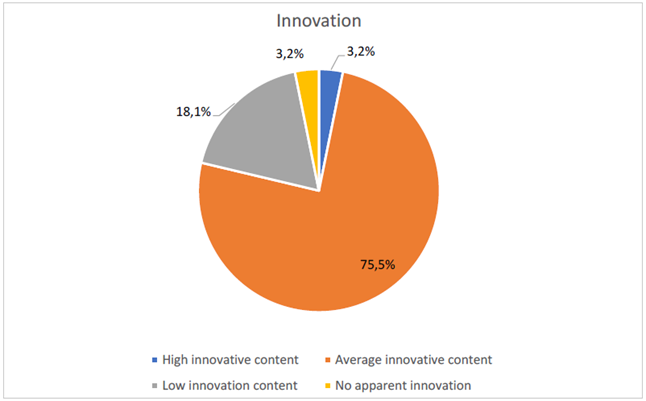
The data showed that 3.2% of the products had a high innovative content and were created on the basis of new knowledge. Because they use a combination of existing knowledge, 75.5% of the products were classified as having a medium level of innovation. Finally, 18.1% of the products were classified as having a low level of innovation, based on the adaptation of pre-existing knowledge (Graph 3).
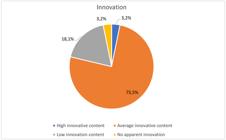
Although they represent a minority of the MPES, the products with a high innovative content prove that, even under the time constraints and intense professional routine of the Master’s student in Health Teaching, it is perfectly feasible to devise genuinely original solutions. These initiatives of excellence demonstrate that the environment of a professional programme, although focused on the practice setting, can and should be fertile ground for creativity, producing ideas and solutions that go beyond traditional models, generating profound changes in the method of teaching and learning.
Professional master’s degrees are geared toward going beyond technical mastery to create interventions that radically transform teaching and care - such as an augmented reality app that revolutionises the acquisition of clinical skills, or a collaborative platform that reinvents mentoring between preceptors and patients - posing challenges to “the traditional way” and demanding a vision to conceive “new possibilities”.
Bandura’s social learning theory23 emphasises that the exchange of knowledge in a community, complemented by videos, articles and case studies, continually enriches users’ repertoires, as the MPES product below demonstrates:
Proposing a virtual community aimed at training communication and empathy skills through a digital application 24 .
The app “Empathetic communication: learning to speak and listen from the heart”24 exemplifies the high level of innovation by creating a virtual community that combines socio-emotional skills training, gamification and multimedia resources in a single digital environment. This proposal goes beyond mere video lessons. Corroborated by Riess25, who highlights the post-pandemic scenario, marked by remote teaching and telecare, this tool emerges as an important element in training professionals capable of maintaining empathetic connections at a distance, improving the quality of the relationship with the patient.
The adoption of playful mechanics - challenges, rewards and progression systems - is in line with the instructional design in health proposed by Kapp26, guaranteeing engagement in the development of self-knowledge and emotional intelligence, as occurs in the product “Flash software: health communication game show”, classified as having a high degree of innovative content:27
The development of software in the form of a game to be applied to health students, with the educational objective of reinforcing the importance of using popular terms, respecting the cultural identity and social context of SUS users 27 .
As such, this app uniquely combines pedagogical and technological innovation in a product that not only transfers knowledge, but also cultivates behavioural skills that are fundamental to clinical and educational practice in the twenty-first century.
The predominance of products with a medium level of innovation reflects the training profile of the professional master’s degree, in which applied in-depth study of consolidated themes is prioritised over the novelty characteristic of a doctorate4. In terms of innovation, incremental initiatives prevailed, reinforcing the need to encourage disruptive pedagogical solutions, supported by emerging technologies and advanced active methodologies.
With a lower incidence (3.2%), some of the studies have a low innovative content because they use pre-existing knowledge without a creative or innovative approach, such as the instructional manual “Care when dressing: step-by-step”. The material contains a range of information that had already been published in various forms of media by the Ministry of Health and major reference centres two years before its publication28.
This methodological “comfort zone” limits the emergence of truly disruptive proposals, although it is consistent with the aims of the MPES, which favours immediate applicability over the creation of completely new knowledge. Even so, the presence of prototypes incorporating cutting-edge technologies signals that there is room to raise the level of innovation through institutional stimuli aimed at developing more daring and interdisciplinary solutions29.
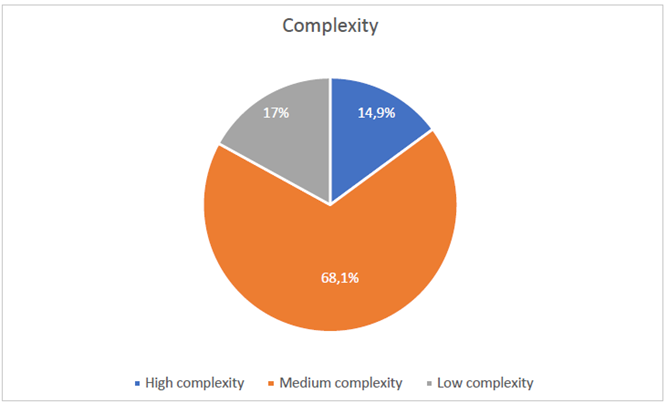
The complexity criterion assesses the degree of coordination between the different types of knowledge, actors and processes involved in the products of a professional master’s programme4. All the educational products showed some dimension of complexity, albeit in different intensities: only 14.9% reached high complexity as they required the synergy of multiple actors - teachers, preceptors, students and sometimes service teams - and the negotiation of conceptual and operational conflicts (Graph 4).
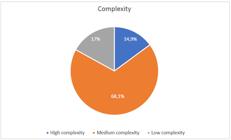
The majority of the products (68.1%) fell into the medium complexity category, combining consolidated knowledge and practices with new configurations, but in a relatively stable way and without intense coordination demands; finally, 17% were classified as low complexity, being adaptations of existing content, with restricted participation of actors and without significant integration challenges.
This distribution reflects the profile of the programme: despite there being room for sophisticated interdisciplinary initiatives, MPES has generated projects of intermediate complexity, which balance theoretical depth and practical feasibility, while the cases of high and low complexity signal opportunities to expand strategic and consolidated collaborations.
The prototype “Electronic medical record for learning”30 illustrates the medium-complexity dimension. By integrating teachers, students and preceptors on a digital platform, it brings the university closer to the professional reality, maximising situational learning without requiring complex institutional structures:
Make available to universities a prototype electronic application capable of integrating teachers, students and preceptors from health courses, in order to bring the university closer to the practice setting and professional reality, with the aim of enhancing learning 30 .
This digital prototyping strategy demonstrates how medium-complexity educational products can offer viable and contextually relevant solutions, as noted by Rizzatti et al.31, who emphasise the role of prototypes in transforming pedagogical practices in health. Medium-complexity products in professional master’s programmes combine consolidated knowledge with formats adapted to specific contexts, linking technology and practice without requiring extensive interdisciplinary negotiations12.
Finally, complexity remained at an intermediate level, pointing to the opportunity to promote interdisciplinary approaches and multi-professional integration, as advocated by Haddad et al.(32) to broaden the formative impact. Although this average level reflects a balanced profile of academic development, it is suggested that an increased proportion of highly complex products could consolidate the role of the MPES as a benchmark in the training and transformation of health education.
Following the conclusion of the research, in order to provide greater clarity for analysing the abstracts, a standard narrative model is proposed to be used by master’s students when preparing the TACC to describe their educational products, in line with the CAPES assessment criteria. The model calls for the following information: author(s); title and type of product; area of focus and line of research; problem or need that motivated its creation; objectives and target audience; theoretical basis; summary description of content and format; implementation strategy; results or evidence of impact; potential for replicability; aspects of innovation; partnerships and collaborations; derived intellectual production; registration or availability in repositories; and sustainability strategies for updating or maintaining use.
The results presented show the characteristics of the educational products generated in the Professional Master’s in Health Teaching (MPES) based on the CAPES criteria. Analysing the data offers insights into the potential and challenges associated with academic production in this context.
We found that the central themes of the products are directly related to the training of the master’s students, with a focus on the application of knowledge in clinical, pedagogical and interprofessional settings. They are all wide-ranging and related to the lines of research, with potential applicability in the students’ professional practice environments. The products are also replicable, one of the prerequisites for disseminating knowledge in health teaching.
FINAL CONSIDERATIONS
The findings suggest that the programmes need to move beyond formal compliance with the CAPES criteria. It is necessary to adopt staggered strategies: in the short term, to consolidate adherence, applicability and replicability; in the medium term, to develop impact indicators and continuous evaluation mechanisms; and in the long term, to stimulate disruptive innovation and greater methodological complexity, guaranteeing the sustainability and social relevance of the educational products.
While reading the products, a lack of information and clarity in the summaries was identified, which led to difficulties in data collection, with the researchers having to return to the TACC several times. There is a need to standardise the writing of summaries, and an urgent need to make them compulsory, as some products had neither a summary nor an abstract.
The limited time available to master’s students in the health sector, who combine training and professional practice, tends to restrict the development of more innovative educational products. Overcoming this challenge requires incorporating innovation right from the conception of projects, with continuous monitoring by supervisors and advisory boards. The literature recommends offering workshops in educational design and active methodologies, as well as encouraging interdisciplinary projects and creating spaces for dissemination and recognition.
It highlights the need to continue investing in strategies that maximise the scope, innovation and complexity of educational products, ensuring not only immediate relevance but also lasting impact in the field of health.
To improve complexity, investment can be made in strategies that increase the cognitive involvement and practical applicability of the product. Complexity should not only be about the number of actors and technology involved, but about the depth and interaction with knowledge.
As regards the expansion of an innovative horizon, there is a recommendation for interdisciplinary partnerships and teacher training programmes in cutting-edge methodologies, as well as encouraging the use of emerging technologies in order to fully exploit the potential of these productions.
The analysis made it possible to review existing scientific production and direct the creation of new products, perfecting what is already being proposed and enabling improvements to be made to the weak points in the productions, in order to increase the scientific value of the products of the Professional Master’s Degree in Health Teaching.
This study has some limitations that should be taken into account when interpreting the results. Firstly, the classification of educational products was based on documentary analysis and qualitative judgement, without external validation or statistical analysis of inter-evaluator agreement, which can introduce subjectivity, especially in the criteria of innovation and complexity. Furthermore, the analysis focussed predominantly on the formal and descriptive characteristics of the products, without evaluating their real impact on educational or care practice. Another aspect refers to the possible institutional bias, since the evaluators are linked to the programme analysed, although independent reading and consensus strategies were adopted.
Despite these limitations, the results presented offer a consistent overview of the profile of the educational products analysed and contribute to the improvement of training and evaluation processes within the scope of a Master’s Degree in Health Teaching.
Finally, the methodological process of this study culminated in the creation of a prototype of a digital tool (mobile application) the aim of which is to instrumentalise academic managers in the structured evaluation of educational products, as well as to help students in the preparation of their final coursework pieces, according to the criteria established by CAPES. The prototype is currently being tested and will be submitted for patent registration, making it an applied and innovative development of this research.
References
- 1 Coordenação de Aperfeiçoamento de Pessoal de Nível Superior. Portaria nº 131, de 28 de junho de 2017. Dispõe sobre o mestrado e o doutorado profissionais. Brasília: Capes; 2017.
-
2 Coordenação de Aperfeiçoamento de Pessoal de Nível Superior. Portaria nº 80, de 16 de dezembro de 1998. Dispõe sobre o reconhecimento dos mestrados profissionais e dá outras providências. Brasília: Capes ; 1998 [acesso em 12 de outubro de 2022]. Disponível em: Disponível em: https://abmes.org.br/arquivos/legislacoes/Portaria-Capes-80-1998-12-16.pdf
» https://abmes.org.br/arquivos/legislacoes/Portaria-Capes-80-1998-12-16.pdf -
3 Kaplún G. Material educativo: a experiência de aprendizado. Comunicação e Educação. 2003; 27:46-60 [acesso em 03 de novembro de 2022]. Disponível: Disponível: https://www.revistas.usp.br/comueduc/article/view/37491/40205
» https://www.revistas.usp.br/comueduc/article/view/37491/40205 -
4 Coordenação de Aperfeiçoamento de Pessoal de Nível Superior. Produção técnica Grupo de Trabalho. Brasília: Capes ; 2019 [acesso em 12 de outubro de 2022]. Disponível em: Disponível em: https://www.gov.br/capes/pt-br/centrais-de-conteudo/10062019-producao-tecnica-pdf
» https://www.gov.br/capes/pt-br/centrais-de-conteudo/10062019-producao-tecnica-pdf -
5 Freitas R. Produtos educacionais na área de ensino da Capes: o que há além da forma? Educação Profissional e Tecnológica em Revista. 2021;5(2):5-20 [acesso em 22 de outubro de 2022]. Disponível em: Disponível em: https://ojs.ifes.edu.br/index.php/ept/article/view/1229
» https://ojs.ifes.edu.br/index.php/ept/article/view/1229 -
6 Hentges A, Moraes MLB, Batalha ERC. A formação continuada e os mestrados profissionais na área de ensino: a pertinência dos produtos educacionais. Revista Multidisciplinar em Educação. 2019;6(14):23-36 [acesso em 11 de dezembro de 2022]. Disponível: Disponível: https://periodicos.unir.br/index.php/EDUCA/article/view/3467
» https://periodicos.unir.br/index.php/EDUCA/article/view/3467 -
7 Coelho IMWS. Desenvolvimento e avaliação de produtos educacionais na pós-graduação profissional em ensino: metodologias e desafios emergentes. Revista Ensino em Debate. 2024;2:e2024039 [acesso em 03 de novembro de 2022]. Disponível em: Disponível em: https://revistarede.ifce.edu.br/ojs/index.php/rede/article/view/82
» https://revistarede.ifce.edu.br/ojs/index.php/rede/article/view/82 -
8 Bisognin E. Produtos educacionais: análise da produção do mestrado profissional em Ensino de Física e de Matemática do Centro Universitário Franciscano de Santa Maria, Rio Grande do Sul, Brasil. Polyphonía. 2013;24(2):43-58 [acesso em 05 de março de 2023]. Disponível: Disponível: https://revistas.ufg.br/sv/article/view/37938
» https://revistas.ufg.br/sv/article/view/37938 -
9 Vailant CCR. Análise e caracterização dos produtos educacionais desenvolvidos nos mestrados profissionais da região Centro-Oeste do Brasil [monografia]. Jataí: Instituto Federal de Goiás; 2016 [acesso em 05 de março de 2023]. Disponível em: Disponível em: https://repositorio.ifg.edu.br/handle/prefix/2032
» https://repositorio.ifg.edu.br/handle/prefix/2032 -
10 Côco D. Procedimentos metodológicos para avaliação de produtos educacionais: contribuições para um mestrado profissional da área de ensino de humanidades. In: Sá SO, Freitas F, Castro PA, Sanmamed MG, Costa AP. Investigação qualitativa em educação: avanços e desafios. Aveiro: Ludomedia; 2020 [acesso em 02 de agosto de 2024]. Disponível em: Disponível em: https://publi.ludomedia.org/index.php/ntqr/article/view/91/86
» https://publi.ludomedia.org/index.php/ntqr/article/view/91/86 -
11 Lima Junior EB, Oliveira GS, Santos ACO, Schnekenberg GF. Análise documental como percurso metodológico na pesquisa qualitativa. Cadernos da Fucamp. 2021;20(44):36-51 [acesso em 01 de dezembro de 2023]. Disponível em: Disponível em: https://revistas.fucamp.edu.br/index.php/cadernos/article/view/2356
» https://revistas.fucamp.edu.br/index.php/cadernos/article/view/2356 - 12 Machado LP, Moraes MCB, Rocha CMF. Produto educacional: possibilidades de inovação nos mestrados profissionais em ensino na saúde. Revista Brasileira de Educação Médica. 2019;43(1):110-7.
- 13 Bardin L. Análise de conteúdo. São Paulo: Edições 70; 2016.
-
14 Torres QSN. Arte e ensino médico: o olhar de docentes de medicina de uma instituição pública [dissertação]. Maceió: Universidade Federal de Alagoas; 2022 [acesso em 20 de fevereiro de 2023]. Disponível em: Disponível em: https://www.repositorio.ufal.br/handle/123456789/10636
» https://www.repositorio.ufal.br/handle/123456789/10636 -
15 Paz LS. Os saberes e práticas sobre a comunicação de notícias difíceis numa Residência multiprofissional em saúde [dissertação]. Maceió: Universidade Federal de Alagoas; 2021 [acesso em 14 de março de 2023]. Disponível em Disponível em https://www.repositorio.ufal.br/handle/123456789/8772
» https://www.repositorio.ufal.br/handle/123456789/8772 - 16 Pereira DR. Produtos educacionais na pós-graduação: reflexões e experiências. Campinas: Mercado de Letras; 2021.
-
17 Ramos HMN. Ensino da paternidade na unidade neonatal em um hospital público de ensino no discurso dos profissionais de saúde [dissertação]. Maceió: Universidade Federal de Alagoas; 2022 [acesso em 12 de julho de 2024]. Disponível em: Disponível em: https://famed.ufal.br/pt-br/pos-graduacao/ensino-na-saude/documentos/taac/2022/tacc_final-_rafaela_russo-1.pdf/view
» https://famed.ufal.br/pt-br/pos-graduacao/ensino-na-saude/documentos/taac/2022/tacc_final-_rafaela_russo-1.pdf/view -
18 Freitas NR. Percepção discente sobre aprendizagem baseada em projetos na produção de podcast em disciplina de fisioterapia intensiva [dissertação]. Maceió: Universidade Federal de Alagoas; 2023 [acesso em 12 de julho de 2024]. Disponível em: Disponível em: https://famed.ufal.br/pt-br/pos-graduacao/ensino-na-saude/documentos/taac/2023/tacc_ficha_catalogfica_e_folha_de_aprovao.pdf/view
» https://famed.ufal.br/pt-br/pos-graduacao/ensino-na-saude/documentos/taac/2023/tacc_ficha_catalogfica_e_folha_de_aprovao.pdf/view - 19 Botomé SP, Silva RRC. Avaliação de objetivos de ensino de História a partir da contribuição da análise de comportamento. Acta Comportamentalia. 2017; 25:329-46.
- 20 Diniz APR, Lopes RE. Produto educacional: questões conceituais e metodológicas. Brasília: Liber Livro; 2020.
- 21 Morais RA. Produto educacional: concepções e práticas. Curitiba: CRV; 2022.
- 22 Bandura A. Social learning theory. Englewood Cliffs: Prentice-Hall; 1977.
-
23 Carvalho LN. O ensino da comunicação na formação médica: uma perspectiva de promover o cuidado integral [dissertação]. Maceió: Universidade Federal de Alagoas; 2021 [acesso de 13 de julho de 2024]. Disponível em Disponível em https://www.repositorio.ufal.br/jspui/handle/123456789/10721
» https://www.repositorio.ufal.br/jspui/handle/123456789/10721 - 24 Riess H. The science of empathy. J Patient Exp. 2017;4(2):74-7.
- 25 Kapp KM. The gamification of learning and instruction: game-based methods and strategies for training and education. San Francisco: Pfeiffer; 2012.
-
26 Silva VM. Software em flash: comunicação em saúde game show. 2020 [dissertação] Maceió: Universidade Federal de Alagoas; 2020 [acesso em 02 de agosto de 2024]. Disponível: Disponível: https://www.repositorio.ufal.br/handle/123456789/10804
» https://www.repositorio.ufal.br/handle/123456789/10804 -
27 Duarte PWG. Cuidados na hora da paramentação. 2022 [dissertação] Maceió: Universidade Federal de Alagoas; 2022 [acesso em 02 de agosto de 2024]. Disponível em: Disponível em: https://famed.ufal.br/pt-br/pos-graduacao/ensino-na-saude/documentos/taac/2022/tacc_defesa_paulo_duarte_revisado_3-5-2022.pdf/view
» https://famed.ufal.br/pt-br/pos-graduacao/ensino-na-saude/documentos/taac/2022/tacc_defesa_paulo_duarte_revisado_3-5-2022.pdf/view -
28 Reeves S, Fletcher S, Barr H, Birch I, Boet S, Davies N, et al. A BEME systematic review of the effects of interprofessional education: BEME Guide No. 39. Med Teach. 2016;38(7):656-68 [acesso em 04 de setembro de 2024]. Disponível em: Disponível em: https://pubmed.ncbi.nlm.nih.gov/27146438/
» https://pubmed.ncbi.nlm.nih.gov/27146438/ -
29 Melo Neto NB. Prontuário eletrônico como recurso pedagógico para os cursos de saúde. 2020 [dissertação]. Maceió: Universidade Federal de Alagoas; 2020 [acesso em 04 de setembro de 2024]. Disponível em: Disponível em: https://www.repositorio.ufal.br/handle/riufal/7335
» https://www.repositorio.ufal.br/handle/riufal/7335 -
30 Rizzatti IM, Mendonça AP, Mattos F, Rôças G, Silva MAB, Cavalcanti RJS, et al. Os produtos e processos educacionais dos programas de pós-graduação profissionais: proposições de um grupo de colaboradores. Actio: Docência em Ciências. 2020;5(2):1-17[acesso em 14 de março de 2023]. Disponível em: Disponível em: https://periodicos.utfpr.edu.br/actio/article/view/12657/7658
» https://periodicos.utfpr.edu.br/actio/article/view/12657/7658 -
31 Haddad AE, Pierantoni CR, Ristoff D, Xavier IM, Giolo J, Silva LB, editores. A trajetória dos cursos de graduação na saúde: 1991 a 2004. Brasília: Instituto Nacional de Estudos e Pesquisas Educacionais Anísio Teixeira; 2006 [acesso em 04 de setembro de 2024]. Disponível em: Disponível em: https://download.inep.gov.br/publicacoes/diversas/temas_da_educacao_superior/a_trajetoria_dos_cursos_de_graduacao_na_saude_1991_2004.pdf
» https://download.inep.gov.br/publicacoes/diversas/temas_da_educacao_superior/a_trajetoria_dos_cursos_de_graduacao_na_saude_1991_2004.pdf
Research data is available in the body of the document.

 Source: Developed by the authors (2025)
 Source: Developed by the authors (2025).
 Source: Developed by the authors (2025).
 Source: Developed by the authors (2025).