
 Sustainable Tourist Behaviour Scale (STBS): A Proposal
Abstract
Measuring sustainable tourist behaviour is fundamental to strengthening more responsible tourism, as it directly influences environmental conservation, social well-being and local economic development. The objective is to validate a measurement scale for sustainable behaviour among tourists. A total of 421 observations were collected from tourists residing in the State of Mexico, Mexico. The methodology involved cross-validation through a) a Psychological Network Analysis (PNA) and b) a Confirmatory Factor Analysis (CFA). The result yielded a scale with 17 validated indicators. The network analysis identified that individual behaviours (nodes) have significant interactions, highlighting participation in community-beneficial activities, respectful treatment of residents, purchasing local products and crafts, as well as pro-environmental practices. The factor analysis confirmed a three-dimensional structure reflecting sustainable behaviour from ecological, socio-cultural, and economic aspects. Methodological integration constitutes an innovative contribution to scientific progress, as it deciphers patterns of interaction between indicators and dimensions, thereby establishing a novel paradigm for addressing tourism sustainability. The validation of this instrument has important practical implications, serving as a foundation for diagnostics, interventions, and policy design aimed at promoting sustainable tourism.
Keywords
Sustainable behaviour; Ecological behaviour; Sociocultural behaviour; Economic behaviour; Measurement validation
Resumo
A medição do comportamento turístico é fundamental para fortalecer uma atividade turística mais responsável, pois influencia diretamente a conservação ambiental, o bem-estar social e o desenvolvimento econômico local. O objetivo deste estudo é validar uma escala de mensuração do comportamento sustentável entre turistas. Foram coletadas 421 observações de turistas residentes no Estado do México, México. A metodologia envolveu uma validação cruzada por meio de: a) uma análise de redes psicológicas e b) uma análise fatorial confirmatória. O resultado foi uma escala com 17 indicadores validados. A análise de redes identificou que os comportamentos individuais (nós) apresentam interações significativas, destacando-se a participação em atividades benéficas para a comunidade, o tratamento respeitoso aos residentes, a compra de produtos e artesanatos locais, bem como práticas pró-ambientais. A análise fatorial confirmou uma estrutura tridimensional que reflete o comportamento sustentável sob os aspectos ecológico, sociocultural e econômico. A integração metodológica constitui uma contribuição inovadora para o avanço científico, uma vez que decifra padrões de interação entre indicadores e dimensões, estabelecendo um novo paradigma para o tratamento da sustentabilidade turística. A validação deste instrumento possui importantes implicações práticas, servindo como base para diagnósticos, intervenções e formulação de políticas voltadas à promoção do turismo sustentável.
Palavras-chave
Comportamento sustentável; Comportamento ecológico; Comportamento sociocultural; Comportamento econômico; Validação de escala
Resumen
La medición del comportamiento sostenible del turista es fundamental para fortalecer una actividad turística más responsable, ya que influye directamente en la conservación ambiental, el bienestar social y el desarrollo económico local. El objetivo de este estudio es validar una escala de medición del comportamiento sostenible en turistas. Se recopilaron un total de 421 observaciones de turistas residentes en el Estado de México, México. La metodología empleada incluyó una validación cruzada mediante: a) un análisis de redes psicológicas y b) un análisis factorial confirmatorio. El resultado fue una escala con 17 indicadores validados. El análisis de redes identificó que los comportamientos individuales (nodos) presentan interacciones significativas, destacando la participación en actividades que benefician a la comunidad, el trato respetuoso hacia los residentes, la compra de productos y artesanías locales, así como prácticas proambientales. El análisis factorial confirmó una estructura tridimensional que refleja el comportamiento sostenible desde los aspectos ecológico, sociocultural y económico. La integración metodológica constituye una aportación innovadora al avance científico, puesto que descifra patrones de interacción entre indicadores y dimensiones, estableciendo un nuevo paradigma para el tratamiento de la sostenibilidad turística. La validación de este instrumento tiene importantes implicaciones prácticas, ya que sirve como base para diagnósticos, intervenciones y diseño de políticas orientadas a la promoción del turismo sostenible.
Palabvras-chave
Comportamiento sostenible; Comportamiento ecológico; Comportamiento socio-cultural; Comportamiento económico; Validación de escala
1 INTRODUCTION
Tourism is a productive activity that has a significant impact on the economy, the environment and local communities. While tourism can be beneficial for economic growth, it can also have negative environmental impacts, such as pollution and the overexploitation of natural resources. Additionally, issues related to inadequate labour conditions, social dispossession, and cultural appropriation can arise. Given this situation, seeking more sustainable alternatives is a priority (Vargas et al., 2022). Sustainability is founded on the principle of “satisfying the needs of the present generation without compromising the ability of future generations to meet their needs” (World Commission on Environment and Development [WCED], 1987, p.7).
Buckley (2019) characterises sustainability as a collective endeavour with global implications. He highlights that maintaining human life on Earth, both now and in the future, necessitates coordinated efforts among individuals, organisations and nations. From this perspective, tourism is defined as an activity that considers its environmental, social and economic impacts in order to address the needs of the environment, visitors and host communities now and in the future (UN Tourism, 2024). The aim of sustainable tourism is to promote ecosystem conservation, enhance living standards, foster local development, and contribute to peace and prosperity (John, 2020). However, achieving sustainability objectives requires changing the behaviour of tourists, residents, service providers, and other stakeholders (MacInnes et al., 2022).
Within the framework of the 2030 Agenda, tourism activities are connected to the 17 Sustainable Development Goals (SDGs) (Di Vaio et al., 2022). Notably, SDG 12, “Responsible Production and Consumption”, is directly related to sustainable tourist behaviour by promoting practices that reduce environmental impact, optimise resource efficiency and support initiatives that promote development and social welfare. Studying tourists and their behaviour is crucial, particularly given their role in triggering changes in tourism production and consumption. For instance, destinations and tourism services are often designed around tourists' needs, interests and desires (Alreahi et al., 2023; Ingaldi & Dziuba, 2021; Wut et al., 2023). Furthermore, tourists play a significant role in promoting destinations through word-of-mouth recommendations, which now have a global reach thanks to technological platforms (Schönherr & Pikkemaat, 2023).
It has been observed in the scientific literature that sustainable tourism behaviour is an emerging topic (Li et al., 2023; Passafaro, 2020). Research shows that more and more people are becoming aware and taking action to mitigate the social and environmental damage of their surroundings (Nieto-García et al., 2024). In contrast, studies also show that people engage in less sustainable behaviour while on vacation (MacInnes et al., 2022). Similarly, studies have identified a significant gap between “what is desired” and “what is done”, as tourists express “good intentions” but only a small proportion actually engage in sustainable behaviour (Nieto-García et al., 2024). On the other hand, it has been observed that younger generations of tourists exhibit more sustainable behavioural patterns. For instance, Schönherr and Pikkemaat (2023) discovered that these tourists prioritise responsible travel by embarking on brief excursions, minimising waste, and financially supporting local businesses. Furthermore, Schönherr and Pikkemaat (2023) highlight the impact of social pressure and social media usage on young people's sustainable behaviour. In terms of influencing factors, León and Araña (2020) observe that public policies play a role in shaping tourist behaviour, particularly with regard to reducing environmental impact. Similarly, MacInnes et al. (2022) and Gomes and Lopes (2023) emphasise that encouraging pro-environmental habits can promote sustainable behaviour among tourists.
Despite significant scientific contributions, a notable gap has been identified in the instruments utilised to measure sustainable behaviour, highlighting the necessity for more specific and comprehensive measurement scales (Buckley, 2019; Li et al., 2022). Current scales predominantly assess tourists' intentions rather than actual behaviours (Nieto-García et al., 2024). Attitudes and intentions reflect subjective predispositions, whereas behaviour reveals the concrete manifestation of these predispositions, which often differ. It is difficult to measure tourists' actual sustainable behaviour due to the challenge of directly observing actions in natural environments (Buckley, 2019). Nevertheless, this measurement is potentially more valuable as it enables a more precise estimation of the economic, social and environmental impact generated by tourism. It is also justified because it provides direct evidence of the effectiveness of sustainability policies and programmes, enabling more precise, practice-based strategic adjustments — essential for moving towards sustainable tourism (Devkota et al., 2023; Gomes & Lopes, 2023; Nieto-García et al., 2024).
Moreover, many existing instruments are confined to environmental practices, such as recycling and energy conservation, while insufficiently addressing the social and economic dimensions of sustainability, including respect for local cultures and support for economic justice (Li et al., 2023; MacInnes et al., 2022). In the context of sustainable tourism, there is an urgent need for research into indicators and measures that reflect the perspectives and, impacts of the various stakeholders involved. Developing solutions that facilitate feedback on the behaviour of tourists and local agents is essential for accurate diagnosis and effectively implementing public policies (Miller & Torres-Delgado, 2023).
The absence of an adequate scale poses a significant problem for the tourism sector for several reasons (Budeanu, 2007; Juvan & Dolnicar, 2016; Li et al., 2024). Firstly, destination managers may lack reliable information with which to analyse how and in what ways tourists contribute to or detract from sustainability. Secondly, it would prove challenging to formulate evidence-based decisions regarding the design of policies and strategies to mitigate potential negative impacts. Ultimately, this would serve to prohibit the establishment of comparisons between disparate destinations, regions or countries. This limitation hinders effective monitoring of behavioural change and the generation of transferable knowledge on sustainable behaviour, thereby diminishing the capacity to establish best practices or recommendations applicable at the global level.
Practical and theoretical implications have been identified that are associated with relying on inadequate or insufficiently robust measurement instruments. From a theoretical perspective, there is a risk of biased or incorrect measurement of variables, which could lead to misinterpretation of the phenomenon in question. This can result in the formulation of deficient theories and hypotheses, the generation of results with little or no scientific value, conclusions that do not reflect reality and the inability to replicate and compare studies. In practice, using an unreliable instrument can lead to erroneous interventions, inefficient use of resources, or even undesirable outcomes. This can generate mistrust among decision-makers, tour operators and local communities regarding the usefulness of the research. Furthermore, it can create misconceptions about the sustainability of a destination, which affects its image and competitiveness.
Developing a reliable and valid measurement scale is a significant contribution to scientific knowledge because it enables generalisations and analyses to be made across different destinations, while also enriching the literature on tourism sustainability (Miller & Torres-Delgado, 2023). For this reason, this article aims to validate a scale for measuring sustainable behaviour among tourists. The proposed scale is multidimensional, integrating ecological, sociocultural, and economic aspects of sustainability and addressing the limitations of unidimensional or environment-focused scales. The study incorporates an innovative methodological approach through the combined application of Psychological Network Analysis (PNA) and Confirmatory Factor Analysis (CFA) via Covariance-Based Structural Equation Modelling (CB-SEM). This allows for more robust cross-validation than conventional procedures and further differentiates the study (Van Bork et al., 2021). Additionally, the development of a more robust and comprehensive scale that can capture different cultural and geographical realities is pursued, thereby establishing a methodological foundation for future comparisons.
2 LITERATURE REVIEW
2.1 Sustainable tourist Behaviour
Tourist behaviour, such as motivations, attitudes and intentions, has been extensively studied in the academic literature. In recent decades, along with the rise of sustainability studies, efforts have been made to link how tourists demonstrate responsible behaviours towards the environmental, social, and economic needs of their surroundings. Nevertheless, researchers continue to struggle to find a consensual definition of sustainable tourist behaviour (John, 2020). Early contributions to the progression of the sustainable behaviour concept were more oriented towards environmental impacts, employing terms such as “ecological,” “pro-environmental,” “green,” and “eco-friendly,” emphasizing the role of awareness and responsibility in caring for nature (Li et al., 2023; MacInnes et al., 2022; Schönherr, 2024).
Sustainable behaviour, from an environmental perspective, is understood as meeting the needs of tourists without compromising the ecosystem degradation (Butnaru et al., 2022). Other contributions have highlighted the social and cultural aspects of sustainable behaviour. For instance, Holmes et al. (2021), Pinho and Gomes (2023), and Sharma (2024) define sustainable behaviour as a set of pro-environmental and altruistic actions aimed at conserving natural and social resources. Li et al. (2024) and Wang et al. (2023) emphasise that the adoption of sustainable behaviour seeks to contribute meaningfully to the long-term well-being of individuals within their environment. Furthermore, the social benefits derived from such behaviours include the strengthening of social cohesion through the promotion of collective values, as well as the mitigation of injustices, inequalities, and conflicts, both within broader communities and among vulnerable groups and social minorities (Li et al., 2024; Pinho & Gomes, 2023; Wang et al., 2023). In terms of cultural aspects, studies have focused on how tourists express their respect for traditions, customs, and people, their interest in learning about the local culture, and their responsibility and care towards cultural heritage sites (Li et al., 2022).
Furthermore, Nickerson et al. (2016) indicate that tourists with sustainable behaviour fulfil a triple objective, which not only fosters environmental and social improvement but also supports the local economy. Similarly, Chandran et al. (2020) argue that sustainable behaviour is demonstrated when tourists' actions enhance cultural exchange, promote social integrity, support local economic development and cause minimal damage to the environment. Based on these aspects, it can be said that sustainable behaviour encompasses a set of actions and decisions made by individuals or groups aimed at minimizing negative environmental impacts, promoting social equity, and ensuring long-term economic viability (Dodds & Holmes, 2023; Holmes et al., 2021). For tourism activity, it is desirable for tourists and other actors to adopt sustainable behaviours. This is particularly desirable as it can generate significant benefits while ensuring the long-term viability of tourism. For instance, when tourists adopt sustainable behaviours, they contribute to environmental conservation and resource preservation, promote social well-being, support the local economy, and foster the respectful dissemination of local culture (Holmes et al., 2021; Wut et al., 2023).
2.2 Theoretical perspectives on sustainable tourist Behaviour
Several theories provide insights into how and why individuals adopt sustainable behaviour. Among them, Environmental Identity Theory posits that individuals’ identification with nature environment influences their willingness to engage in sustainable practices (Clayton, 2003). From this perspective, individuals who view the environment as an integral aspect of their personal identity are more likely to adopt environmentally friendly habits, such as reducing plastic usage or supporting conservation initiatives (Clayton, 2003). Similarly, Responsibility Attribution Theory suggests that when individuals perceive themselves as having an active role in causing or mitigating a problem, they are more inclined to adopt behaviours that benefit the natural and social environment (Weiner, 1985). In contrast, Value Theory examines the role of altruistic and biospheric values in shaping decisions and behaviours (Schwartz, 1977; Schwartz et al., 1992). Within the context of sustainability, individuals who prioritise these values demonstrate a greater willingness to forgo personal benefits in favour of collective well-being and environmental preservation. In the design of scales, it is imperative to consider identity fusion with nature, the perception of individual responsibility, and the prioritisation of altruistic values. This is done in order to capture deep motivations and predict sustainable behaviours that extend beyond simple social conformity.
Social Norm Theory highlights the influence of descriptive norms (perceptions of what others do) and injunctive norms (perceptions of what others expect) on sustainable behaviour (Cialdini et al., 1990). For instance, individuals who observe others recycling regularly are more likely to adopt this behaviour due to perceived social norms. A broader framework is offered by the Value-Belief-Norm Theory (Stern et al., 1999). According to this theory, individuals who prioritise altruistic or biospheric values—centred on the well-being of others or nature—and who perceive threats to these values, develop internal beliefs and norms that drive sustainable actions (Lind et al., 2015; Stern et al., 1999). Consequently, individuals who feel a heightened moral responsibility to protect the environment are more inclined to engage in behaviours such as recycling, reducing energy consumption, or participating in green community initiatives (Passafaro et al., 2015; Wang et al., 2023). Drawing upon Social Norm Theory and Value-Belief-Norm Theory, the integration of external and internal factors indicates that sustainable tourism behaviour is contingent not solely on perceived social acceptability, but also on the extent to which individuals have internalised sustainability values. Items that measure both predisposition and concrete manifestations of sustainable behaviours should be considered on a scale, as this is crucial for designing intervention strategies in responsible tourism.
The Theory of Reasoned Action posits that intention is the primary determinant of an individual’s behaviour (Fishbein & Ajzen, 1975). According to this theory, behavioural intentions are shaped by two key factors: attitudes towards the behaviour and subjective norms. Attitudes reflect an individual’s evaluation of the outcomes of a particular action, while subjective norms represent the individual’s perceived obligation to conform to the expectations of significant social actors. These norms are shaped by normative beliefs aligned with social and moral values, tempered by personal motivations (Fishbein & Ajzen, 1975). This approach not only considers intentions, but also exposes the tension between personal desire and collective pressure. This foundation is useful for revealing how sustainability goes beyond ecological awareness, taking root in morality, which broadens its transformative impact.
Building on the Theory of Reasoned Action, the Theory of Planned Behaviour incorporates the additional concept of perceived behavioural control as a determinant of behavioural intention (Ajzen, 1985). Perceived behavioural control refers to an individual’s perception of their ability to perform a specific behaviour, acknowledging the role of external and internal constraints on behavioural execution. In other words, perceived behavioural control refers to the extent to which an individual feels capable of performing an action, taking into account both personal resources—such as skills or knowledge—and external factors, such as time, money, or the availability of infrastructure (Ajzen, 1991). Both the Theory of Reasoned Action and the Theory of Planned Behaviour suggest that individuals are more likely to engage in sustainable behaviours if they hold a positive attitude towards these actions, perceive that social norms support them, and believe they possess the necessary skills and resources to implement them (Budeanu, 2007).
This theoretical framework offers a comprehensive understanding of the factors that influence sustainable behaviour in tourism. It reveals the coexistence of intrinsic motivations, such as environmental identity, altruism, and a sense of responsibility towards the biosphere, as well as extrinsic motivations, such as social norms, collective support, and perceived behavioural control. It also highlights how these motivations interact to influence intention and action. The fundamentals of the Value-Belief-Norm Theory and the Theory of Planned Behaviour are particularly important for constructing the study, as they enable the design of measurement scales that go beyond merely describing attitudes and capture the psychosocial factors behind sustainable decisions. Thus, the study proposes a scale that prioritises sustainable behaviour based on actions. Supported by the theoretical framework, this behavioural approach reveals critical discrepancies between words and actions, guiding practical interventions. By linking identity, ethics, and social pressures to specific behaviours, the study deconstructs the theoretical “why” and proposes metrics to transform tourism responsibility into tangible, scalable practices. Consequently, sustainability ceases to be an individual aspiration and becomes a measurable and replicable collective pattern.
2.3 Measurement scales of sustainable tourist Behaviour
In the scientific literature, several proposals for measuring sustainable behaviour among tourists have been identified. As shown in Table 1, contributions have used two units of analysis: a) non-resident tourists and b) resident tourists. This reflects an interest in exploring different types of behaviour. The first type of tourist exhibits sporadic patterns influenced by fleeting perceptions, while the second type reflects ingrained habits conditioned by territorial ties. Regarding scale validation, methods that treat “sustainable behaviour” as a latent variable are notable, leading to a tendency to apply structural equation models and integrate techniques such as exploratory and confirmatory factor analysis. This consensus highlights the inherent complexity of measuring this construct, which is why processes that guarantee the psychometric quality of the instruments have been selected.
It should also be noted that researchers have chosen to propose dimensions that encompass sustainable behaviour (see Table 1). For instance, Passafaro et al. (2015) adopt an environmental psychology approach to analyse the profile of the sustainable tourist in terms of their values, attitudes and personality traits. Fermani et al. (2020) emphasise tourist preferences, considering factors such as the availability of facilities, the characteristics of the stay, and the level of overcrowding at the destination. Other researchers, such as Chandran et al. (2021), Di Vaio et al. (2022) and John (2020), focus on environmental, social and economic behaviours as distinct dimensions of sustainability. However, other authors, including Butnaru et al. (2022), Holmes et al. (2021) and Wang et al. (2023), treat sustainable behaviour as a unidimensional construct, limiting its measurement to three to eight indicators.
The adoption of a unidimensional theoretical framework is known to engender a number of significant theoretical and practical disadvantages. For instance, a scale that exclusively considers environmental aspects, such as ecological care and waste reduction, fails to encompass social dimensions (well-being and local development) and economic dimensions (support for local productivity). These dimensions are imperative for a comprehensive understanding of sustainability. This fragmentation has the effect of preventing the capture of synergies and contradictions between dimensions, thus limiting the predictive capacity and applicability of the results. Furthermore, the simplification of a complex phenomenon through unidimensional results in the arbitrary disconnection of the measurement from its systemic nature, as conceptualised within integrative frameworks.
It has been identified that the majority of research in this area is lacking a clear theoretical basis for the proposed scales. Notwithstanding the efforts and theoretical discussions presented in the studies, only Passafaro et al. (2015) and Wang et al. (2023) explicitly base their proposed scales on the value-belief-norm theory framework (Table 1). The absence of explicit connections between theoretical frameworks and proposed scales signifies a significant impediment to the progression of knowledge in the domain of sustainable tourism. In instances where studies fail to provide a satisfactory rationale for the operationalisation of theoretical constructs, the replication, comparison of results and accumulation of scientific evidence can become challenging. Against this backdrop, new proposals for scales must address the limitations of existing frameworks regarding theorisation, applicability, and methodological consistency. They must also ensure validity across diverse geographical, cultural, and economic contexts. For instance, the key dimensions—environmental, socio-cultural, and economic—can be comprehensively integrated through the application of robust theoretical foundations, such as the Theory of Planned Behaviour or Value-Belief-Norm Theory.
2.4 Dimensions of sustainable tourist Behaviour
Sustainable behaviour is a complex and multidimensional construct and therefore cannot be limited to just the environmental component (Li et al., 2022). Sustainable tourist behaviour is based on the integration and interaction of ecological, socio-cultural, and economic dimensions to achieve a positive impact on the visited destinations (Chandran et al., 2020; Di Vaio et al., 2022; Holmes et al., 2021; John, 2020; Li et al., 2022). In this sense, ecological or pro-environmental behaviour refers to the practices that tourists adopt in order to minimize harm to the environment and promote sustainability at the destination (Juvan & Dolnicar, 2016; MacInnes et al., 2022). This type of behaviour is rooted in awareness and responsibility towards the protection of natural resources, biodiversity, and the health of the global ecosystem (John, 2020). Therefore, actions include using or purchasing environmentally friendly products, reducing carbon footprints, conserving water resources, responsibly using energy and fuels, promoting recycling and reuse, selecting eco-friendly establishments and services, as well as avoiding food waste and environmental pollution (Chandran et al., 2020; Di Vaio et al., 2022; John, 2020).
On the other hand, sociocultural behaviour is observed in the way tourists interact with local communities. This behaviour is crucial to ensuring that tourism has a positive impact on local cultures and social cohesion (Di Vaio et al., 2022; Li et al., 2022; Li et al., 2024). This behaviour includes respect for the customs, traditions, and lifestyles of residents, interest in learning about the local culture, and participation in activities that contribute to social returns and local development (Chandran et al., 2020; Holmes et al., 2021; Li et al., 2022). Meanwhile, economic behaviour refers to the decisions and practices related to spending and economic activities of tourists during their travels. This behaviour has a direct impact on the local economy of the destination and involves understanding how spending decisions affect local businesses, employment creation, and economic development (John, 2020). For example, this behaviour is observed when tourists support the local economy by purchasing fair-priced products (without bargaining), buying souvenirs or handicrafts, preferring to consume in local establishments, and making voluntary contributions to maintain tourist attractions (Chandran et al., 2020; Di Vaio et al., 2022; Holmes et al., 2021; John, 2020).
3 METHODOLOGY
3.1 Scale validation protocol
The research adhered to the protocol and recommendations outlined by Boateng et al. (2018), Fenn et al. (2020) and, Sireci and Benítez (2023) to validate the proposed measurement scale. The process involved three main stages: instrument design, data collection, and data processing. The instrument design phase required the identification of dimensions and indicators through an extensive literature review, content validation by subject matter experts, and a pilot test. Data collection involved selecting the appropriate type of survey and determining the sample size to ensure robust data for subsequent statistical analyses. The data processing phase employed cross-validation, integrating Psychological Network Analysis (PNA) and Confirmatory Factor Analysis (CFA) via Covariance-Based Structural Equation Modelling (CB-SEM). This approach provided a deeper understanding of the structure and validity of the measurement scale (Van Bork et al., 2021).
3.2 Instrument design
Through literature review, three dimensions were identified: ecological behaviour, sociocultural behaviour, and economic behaviour (Chandran et al., 2020; Di Vaio et al., 2022; Holmes et al., 2021; John, 2020; Li et al., 2022; Li et al., 2024). The study focused on these classic dimensions of sustainable behaviour as these are fundamental pillars established in seminal literature such as the Triple Bottom Line and regulatory frameworks such as the United Nations Sustainable Development Goals (SDGs). There is a widely supported academic consensus, backed by previous research, which facilitates the comparability and replicability of results. However, the parsimonious approach meant that the initial model was limited to widely accepted dimensions, ensuring content validity and avoiding the inclusion of constructs that have not yet been empirically consolidated (e.g. digital governance or tourism ethics, which vary according to cultural context). However, aspects such as “ethics” or “technology” require more complex conceptual frameworks and are usually addressed in specific studies as external variables. This approach ensures that the scale is rigorous and applicable in diverse contexts without sacrificing validity for premature breadth.
In a preliminary stage, the instrument was evaluated by academic peers who are experts in sustainable tourism behaviour and the design of measurement instruments. These experts were researchers from public and private universities in Mexico who had more than ten years' experience of actively participating in the publication of measurement instruments. During the content validation process, the experts verified that the indicators were clearly worded, unambiguous and relevant to the intended measurement. This significantly contributed to ensuring that the language used was appropriate and understandable in the field of application. The original instrument consisted of 22 indicators, five of which were removed as they were not sufficiently clear or relevant.
In a next phase, the instrument underwent a pilot test with 50 participants. In this stage, the viability of the indicators and the six-point Likert scale was assessed, ranging from 1 “strongly disagree,” 2 “moderately disagree,” 3 “slightly disagree,” 4 “slightly agree,” 5 “moderately agree,” to 6 “strongly agree.” A six-point scale was employed as it eliminates the “neutral” option, which may obscure respondents' opinions regarding the attributes under evaluation. By removing this intermediate choice, participants are compelled to select either a positive or negative response, thus minimising the potential for ambiguous answers. The adoption of a six-point scale also ensures an adequate level of sensitivity for assessing each attribute, thereby enhancing the scale's reliability and validity (Taherdoost, 2019). This approach is particularly advantageous when investigating topics such as sustainable behaviour, where obtaining a clear position from respondents is essential. No indicators were eliminated during the pilot test, but the wording of two items was modified to ensure clarity and consistency with the dimension they intended to measure.
As shown in Table 2, the final instrument consisted of 17 indicators. The ecological behaviour dimension included seven indicators that reflect the actions tourists take to reduce their environmental impact during their stays or vacations. Meanwhile, the sociocultural behaviour dimension consisted of six indicators related to tourists' interactions with the local community and culture. In contrast, the economic behaviour dimension included only four indicators regarding the economic support tourists provide to the locality.
3.3 Data collection
The survey was the data collection technique employed. The instrument was self-administered using Google Forms from May to August 2024. The fieldwork adhered to an ethics protocol based on the criteria from the American Psychological Association (APA, 2019) concerning anonymity, confidentiality, and academic use of the data provided by participants. This was a non-probability sample, as participants did not have the same opportunity to be selected. Selection criteria for participants were: a) being of legal age (over 18 years old), b) residing within the State of Mexico, c) having recently made a tourist trip (within the last month from the time of the survey), d) having stayed overnight at the destination, and e) acknowledging that they display sustainable behaviours in their travels. These control criteria were vital to ensure the tourist profile of the respondents. In total, 438 responses were obtained, but 17 records were eliminated as they did not meet the established criteria.
The Mahalanobis distance test was applied to identify possible multivariate outliers that could distort the analysis. Although 63 observations were identified as exceeding the critical threshold (χ²(17) = 27.590; p < 0.050), it was decided to retain the entire sample (n = 421) as these cases did not significantly influence the model parameters. Cook's distance was also applied to support this decision, with values ranging from <0.001 to 0.040 — well below the commonly accepted threshold of 0.500. This indicates that, while there are statistically significant outliers, none have a disproportionate influence on the estimation of structural coefficients. In Psychological Network Analysis (PNA), outliers may represent valid subpopulations and removing them would artificially homogenise the network, obscuring relevant variability. In Confirmatory Factor Analysis (CFA) via Covariance-Based Structural Equation Modelling (CB-SEM), given the method's relative robustness to slight deviations from normality, the decision was made to preserve the integrity of the database to maintain the statistical power and representativeness of the sample.
Thus, the sample comprised 421 tourists residing in the State of Mexico, Mexico (Table 3). Participants were men and women aged between 21 to 50 years (86.41%), single (69.17%) and married (26.70%). In terms of educational level, the majority held high school diplomas and higher-level degrees (77.91%). It was also identified that a significant proportion of the respondents are employed in the public and private sectors (70.39%). Regarding their tourist profile, most travelled within the country (85.92%) for leisure and vacation purposes (90.05%), accompanied by family, friends, and partners (92.72%). The primary mode of transportation was their own vehicle, followed by air travel and public transportation. Their stays lasted an average of two to ten days (78.64%), and more than half of the tourists reported an average personal spending of between $300 and $500 US dollars (71.36%).
Descriptive statistics suggest the possibility of bias in the representativeness of the State of Mexico's regular population. This is because the sample is non-probabilistic, meaning that other profiles have been excluded. The sample mainly comprises young singles with secondary or higher education, and therefore does not necessarily reflect the actual demographic distribution. Furthermore, the predominance of domestic travel and moderate spending could exclude less advantaged socioeconomic groups. These patterns suggest an overrepresentation of specific segments. Therefore, caution should be exercised when extrapolating the results.
3.4 Data processing
Two distinct approaches were used for scale validation: a) network model and b) latent variable model (Van Bork et al., 2021). For the network model, Psychological Network Analysis (PNA) was employed, as it offers an innovative way to explore and confirm the internal structure of a scale, providing additional information beyond traditional validation methods such as factor analyses. The network model approach is based on the idea that indicators (observable variables) engage in mutual (causal) interactions and are not dependent on a common latent variable (Borsboom et al., 2021; Van Bork et al., 2021). This research recognizes that different sustainable behaviours are complex psychological constructs, and therefore aims to explore the relationships and dynamics among them (Hevey, 2018). In the latent variable model approach, Confirmatory Factor Analysis (CFA) was used via a Covariance-Based Structural Equation Modelling (CB-SEM) (Hair et al., 2017; Rogers, 2024). This approach, unlike the network model, assumes that a set of indicators (observed variables) reflect an underlying construct, thereby acknowledging the multidimensionality of the construct.
As seen, these two approaches stem from opposing ideas but can be complementary for understanding complex psychological phenomena. The network model assumes that observed variables behave like a causal network (Borsboom et al., 2021; Rocco et al., 2024; Van Bork et al., 2021). In the latent variable model, the shared variance of observed variables reflects a latent construct (Hair et al., 2018; Rios & Wells, 2014). Therefore, the combination of approaches does not seek an equivalent interpretation; rather, the goal is to analyse the differences in outcomes to broaden the theoretical perspective of the construct in question. Data processing utilized the statistical software JASP, SPSS and R (bootnet package).
4 RESULTS
4.1 Psychological Network Analysis (PNA)
An EBICglasso model was established, which consists of a regularized Gaussian Graphical Model (GGM) combined with the Extended Bayesian Information Criterion (EBIC). The tuning parameter was set to 0.500 to achieve a more parsimonious and easier-to-interpret network (i.e., fewer edges with greater specificity and sensitivity) (Rocco et al., 2024). The network comprised 17 nodes and 80 non-zero edges out of 136, representing 41.2% of the connections present. With these results, it can be said that the network facilitates the identification of the most important connections, as it is neither extremely dense nor too sparse. To ensure the stability of centrality as a validity criterion, it was estimated with the CS-coefficient, which represents the maximum proportion of cases that can be discarded. It is sought that the coefficient of a network exceeds the threshold of 0.250 and preferably greater than 0.500 (Hevey, 2018; Epskamp et al., 2018). A bootstrapping analysis of 1,000 samples was performed, yielding a CS-coefficient of 0.730 for expected influence, suggesting that it is a stable indicator of centrality (Burger et al., 2023).
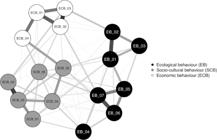
Figure 1 shows the nodes (indicators) and their various edges (connections) among them. The thickness and intensity of the edge correspond to the strength of that relationship. In this regard, the relationship between the nodes “I am interested in learning about the local culture” (SCB_02) and “I engage in activities that benefit the local community” (SCB_03) stand out. The relationships between the nodes “I avoid using plastic or disposable products” (EB_01) and “I avoid using personal care products that are harmful to the environment” (EB_02), and between “I buy products or services at fair prices” (ECB_01) and “I buy food from local establishments” (ECB_02) also appeared as important.
Continuing with the analysis, the level of importance of each node was determined through centrality metrics: betweenness, closeness, strength, and expected influence (Borsboom et al., 2021; Epskamp et al., 2018). The centrality metrics are presented as standardized values (z-scores) (Table 4; Figure 2). Betweenness measures how often a node acts as a bridge between two other nodes. Thus, a node with high betweenness is crucial for communication within the network. The node “I interact respectfully with other (residents and other tourists)” (SCB_05) has the highest value, followed by “I purchase local souvenirs and crafts” (ECB_03) and “I dispose of waste properly” (EB_07). However, the nodes “I avoid taking plants or animals from the destination” (EB_04) and “I avoid disturbing or harming the local flora and fauna” (EB_03), due to their negative values, do not facilitate connection between other behaviours in the network.
-
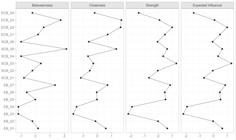
Closeness measures how close a node is to other nodes in the network, calculated as the inverse of the sum of the shortest distances from a node to all others. In this case, it is observed that the nodes “I buy food from local establishments” (ECB_02), “I purchase local souvenirs and crafts” (ECB_03), and “I interact respectfully with other (residents and other tourists)” (SCB_05) have the highest values, suggesting that these nodes are closely connected throughout the network. In contrast, the node “I avoid disturbing or harming the local flora and fauna” (EB_03) is the most isolated in the network.
The strength metric is the sum of the magnitudes of all connections of a node, reflecting the total intensity of its relationships. As seen, “I engage in activities that benefit the local community” (SCB_03) and “I buy food from local establishments” (ECB_02) have the highest strength, indicating that they are strongly connected with many other nodes. Additionally, expected influence considers not only the strength of the connections but also their direction, helping to identify whether a node has a positive or negative impact on the network. As observed, the same nodes (SCB_03 and ECB_02) have the highest values, suggesting they have considerable positive influence on the network.
The nodes “I avoid disturbing or harming the local flora and fauna” (EB_03), “I avoid taking plants or animals from the destination” (EB_04), and “I contribute financially or make donations to help maintain the destination” (ECB_04) have negative values, which could indicate that these nodes exert negative influence on the network. This result reveals a fundamental tension: tourists prioritise visible actions, such as recycling, over those they perceive as restrictive, such as limiting interaction with nature, or economically costly, such as donations. This highlights a bias towards “comfortable” sustainability. This suggests that although certain sustainable practices are valued in theory, they are the first to be sacrificed when they conflict with the desired tourist experience. This phenomenon may be attributed to characteristics inherent to the sample or the specific context, or to the complex interaction of these behaviours with other nodes in the network.
4.2 Confirmatory Factor Analysis (CFA)
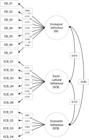
Regarding validation from the latent variable model approach, a Confirmatory Factor Analysis (CFA) was first applied to verify the fit between the empirical data and the proposed theoretical model (Rogers, 2024). In this sense, the Kaiser-Meyer-Olkin (KMO) test yielded a value of 0.954 (Kaiser, 1974), while Bartlett's sphericity test was significant (χ² = 5,128.088; df = 136; p < 0.001) (Bartlett, 1950). The KMO value is considered excellent, indicating high sample adequacy and consistent underlying patterns. The significance of Bartlett's test shows that the correlation matrix is not an identity matrix, which statistically justifies the feasibility of factor analysis. Thus, the structure confirmed the existence of three dimensions in the scale: ecological behaviour, sociocultural behaviour, and economic behaviour (Figure 3).
Cronbach's alpha (α) and McDonald's omega (ω) were utilised for the reliability analysis. As demonstrated in Table 4, the coefficients α and ω exceeded 0.700 (Table 5), thereby signifying that there is internal consistency and stability among the indicators that constitute each dimension (Cronbach, 1951; McDonald, 1970). Moreover, the criterion for convergent validity was met, as each dimension obtained an Average Variance Extracted (AVE) value greater than 0.500 (Table 5); this means that more than 50% of the variance of the items is explained by the underlying construct (Hair et al., 2018). Discriminant validity was reviewed using both the Fornell-Larcker criteria and the Heterotrait-Monotrait Ratio (HTMT). In the first instance, it was observed that the square root of the Average Variance Extracted (AVE) was higher than the correlation values (Table 5). In the second case, the values were found to remain below 0.900 (Table 5), ensuring that each construct of the scale is effectively distinct from the others (Hair et al., 2017). Therefore, the data presented indicate that the dimensions of the sustainable tourist behaviour scale have high reliability and good convergent and discriminant validity.
To select the statistical technique for evaluating the structural model, the normality of the data was first reviewed through skewness and kurtosis. The indicators show a normal approximation as their skewness and kurtosis values fell within the range of -2 to +2 (Table 5). Thus, Covariance-Based Structural Equation Modelling (CB-SEM) was selected. Covariance-Based Structural Equation Modelling (CB-SEM) is preferred to Partial Least Squares Structural Equation Modelling (PLS-SEM) when the aim is to validate an established theory using reflective indicators, since it prioritises the overall fit of the model by employing robust indices. This ensures that the proposed structure accurately reproduces the observed covariance matrix. Unlike Partial Least Squares Structural Equation Modelling (PLS-SEM), which takes a predictive approach, Covariance-Based Structural Equation Modelling (CB-SEM) is confirmatory and assumes normality, correcting for measurement error. This makes it possible to offer more accurate estimates of factor loadings and relationships between constructs. Therefore, it is a robust and widely recommended method for validating scales in behavioural research, particularly when the aim is to evaluate the psychometric quality of an instrument based on a robust theory.
Three models were compared: the unidimensional AFC model, the three-dimensional AFC model, and the three-dimensional AFC via CB-SEM model (Table 6). A chi-square difference test was performed between the unidimensional and three-dimensional AFC models, revealing a significant difference (Δχ²(3) = 400.182; p < 0.001). This indicates that the three-dimensional AFC model significantly better fits the data, while the unidimensional AFC model was rejected due to its poor fit. Regarding the comparison between the three-dimensional AFC model and its structural version (CB-SEM), they have the same degrees of freedom. Therefore, the chi-square difference test was not applied. However, the fit indices favour the CFA via CB-SEM model, which has superior values for CFI (0.949), TLI (0.940) and RMSEA (0.073), among others. This provides stronger evidence that the chosen structure is the best representation of the data among reasonable alternatives.
In evaluating the structural model, Maximum Likelihood (ML) estimation was employed in conjunction with the Satorra-Bentler correction (Satorra & Bentler, 2010). Although the data showed an approximately normal distribution, this strategy was employed to enhance the robustness of the fit and inference statistics, particularly in the event of slight deviations from normality or heteroscedasticity, which could impact the precision of the results in large samples. Consequently, the ratio of chi-square to degrees of freedom (χ²/df) indicated an adequate model fit, with a value below 3. Additionally, the GFI, CFI, TLI, NNFI, NFI, RFI, IFI, and RNI indexes were all > 0.900, and the RMSEA and SRMR were < 0.080, indicating that the model fits the data correctly (Table 6) (Hair et al., 2017; Hu & Bentler, 1999). On the other hand, Hoelter's critical N suggests that with a confidence level of 99% (α = 0.010), a minimum sample size of 175 observations is required to consider the model adequate. In this case, the criterion is met as the sample exceeds the calculated value (n = 421).
Continuing with the Covariance-Based Structural Equation Modelling (CB-SEM) analysis, it is observed that the lambda (λ) values of the indicators reflecting the first and second-order variables are highly significant (z > 2.580; p < 0.001) and exceed the recommended minimum of 0.700 (Table 7), evidencing a greater proportion of explained variance (Hair et al., 2018). Moreover, the determination coefficients (R2) of all indicators are greater than 0.500 (Table 7), demonstrating fidelity in measurement (Hair et al., 2018). Based on these results, the structure of the second-order model can be confirmed (Figure 4).

In order to facilitate replication and comparison in future research, Table 8 presents the covariance and correlation matrices between the observable indicators of the instrument applied. These matrices reflect the statistical relationships between the indicators included in the model and constitute a useful basis for comparative structural analysis, whether through structural equation modelling or factor analysis. It is important to note that the values presented in this section are not subject to interpretation. Their inclusion is solely for the purposes of methodological transparency and to support scientific reproducibility.
5 DISCUSSION
Sustainable tourist behaviour is a complex and multidimensional psychological aspect. The combined use of Psychological Network Analysis (PNA) and Confirmatory Factor Analysis (CFA) allowed for the validation and deepening of understanding of the measurement scale for sustainable behaviour. The decision to employ both approaches stems from the need for a more comprehensive view of the structure and validity of the construct. In this sense, the complexity of the construct was approached from the network perspective, where it was possible to observe that each node or component of sustainable behaviour has various interactions with the rest of the nodes. For instance, the node related to the proper disposal of waste represents a fundamental pro-environmental action that interconnects with other sustainable behaviours, such as waste reduction, the use of environmentally friendly transport, respect for flora and fauna, preservation of cultural heritage, and support for the local economy (Butnaru et al., 2022; MacInnes et al., 2022; Gomes & Lopes, 2024). This finding is consistent with other research, where more basic environmental behaviours facilitate the development of more complex behaviours (Holmes et al., 2021; Juvan & Dolnicar, 2016; Li et al., 2023; MacInnes et al., 2022; Schönherr, 2024).
Furthermore, respectful treatment of residents and the purchase of local crafts are essential sociocultural behaviours that serve as bridges to other sustainable actions. In this regard, the results converge with Li et al. (2022) and Wang et al. (2023) as respect and other values towards communities enable greater interest in learning about the local culture and participating in altruistic activities (Holmes et al., 2021). Meanwhile, nodes with greater closeness refer to economic contributions to the locality, and thus are closely connected and can be considered influential behaviours (Chandran et al., 2020; Di Vaio et al., 2022; Holmes et al., 2021; John, 2020). However, it is identified that the behaviour with the greatest strength and expected influence in the network revolves around tourists' active participation in activities with positive impacts on the community (Dodds & Holmes, 2023; Li et al., 2022; Li et al., 2024). Therefore, the social aspect prevails over the economic aspect, as it is capable of directly and indirectly modifying the state of many other nodes.
On the other hand, Confirmatory Factor Analysis (CFA) supported the construct's multidimensionality. At this point, it is observed that sustainable behaviour is a second-order variable, composed of three dimensions (first-order variables) referring to ecological, socio-cultural, and economic components. In terms of hierarchy, it is found that sociocultural behaviour reflects the greatest explained variance; this result affirms the need to continue exploring sustainable behaviours related to tourists' interactions with residents and local culture (Li et al., 2022; Li et al., 2024; Wang et al., 2023). Another finding is that, within the sample of Mexican tourists, environmental behaviour appears to be more prevalent than socio-economic and cultural behaviours, a trend that has also been observed in other studies (Chandran et al., 2020; Di Vaio et al., 2022; John, 2020).
Concerning cross-validation, it was found that the behaviours identified as important (e.g., EB_07, SCB_03, and ECB_02) by strength and expected influence in the Psychological Network Analysis (PNA) were indicators that showed high factorial loadings (λ) and determination coefficients (R2) during the Confirmatory Factor Analysis (CFA), suggesting that they are faithful and central representations of the sustainable tourist behaviour construct. Moreover, the high centrality of these behaviours in the network also reinforces their importance in the confirmed factorial structure, indicating that these behaviours are not only central from a network perspective but are also fundamental to the latent structure.
From a theoretical perspective, this research contributes to consolidating existing frameworks. The proposed scale aligns with the Value-Belief-Norm Theory, as it links personal values and beliefs with internal norms that drive individuals to act sustainably (Stern et al., 1999). For instance, items such as “I avoid using plastic or disposable products” and “I purchase local souvenirs and crafts” reflect biospheric and altruistic values, prioritising environmental and social well-being. Similarly, items such as “I avoid wasting resources” and “I dispose of waste properly” can be interpreted as expressions of beliefs, as they indicate that individuals act based on their perception that their behaviour can mitigate negative impacts. Finally, items such as “I interact respectfully with other” and “I avoid disturbing or harming the local flora and fauna” reflect a moral commitment to respecting the surrounding environment.
The scale is also aligned with the Theory of Planned Behaviour, as it facilitates the analysis of sustainable behaviour through the lens of attitudes, social norms, and perceived behavioural control (Ajzen, 1985; 1991). For example, items such as “I avoid using plastic or disposable products” and “I respect local culture” represent positive attitudes towards environmental conservation, support for the local economy, and cultural respect. Several items reflect the influence of social and cultural norms in the adoption of sustainable practices. For instance, “I engage in activities that benefit the local community” and “I contribute financially or make donations to help maintain the destination” highlight the role of social expectations in shaping behaviour. The scale also incorporates indicators that relate to perceived behavioural control, addressing the feasibility of adopting sustainable practices. Examples include “For transportation, I prefer walking, biking, or other low-impact options” and “I avoid using personal care products that are harmful to the environment”.
The practical implications of measuring sustainable behaviour lie in controlling the actions of tourists to avoid affecting residents and destroying the environment. The results offer valuable insights for decision-makers, tourism managers, and local stakeholders interested in promoting sustainable tourism. Clearly, intervention strategies should prioritise promoting respectful interactions with local communities and strengthening cultural ties between tourists and residents. Encouraging the purchase of handicrafts, participation in community activities, and cultural education for visitors can foster other sustainable practices by acting as catalysts for change. Additionally, basic pro-environmental behaviours, such as proper waste disposal, should be actively promoted as they facilitate the adoption of more complex practices.
Sustainable behaviours that involve greater effort, cost or restriction (such as protecting flora and fauna or making financial contributions) are often the first to be sacrificed. This reflects the tension between sustainability principles and the hedonistic expectations inherent in the holiday experience. To overcome this barrier, tourism designers must reimagine their approach and transform these “sacrificial practices” into opportunities for visitors to connect with the destination emotionally and morally, while incorporating principles of environmental co-responsibility and social justice. At the level of public policy, these results could inform campaigns to promote behaviours that are more central and influential, thus maximising the systemic impact on sustainable tourism behaviour as a whole.
6 CONCLUSION
Studying sustainable tourism behaviour is essential for identifying practices that minimise environmental impact, strengthen social cohesion and support local economies. This study successfully validated the Sustainable Tourism Behaviour Scale (STBS), a valuable instrument for gauging and encouraging responsible tourism practices. This is important because sustainable tourism is a strategic global objective aimed at mitigating negative impacts and promoting responsible practices in tourism destinations. However, achieving this was not without its methodological and conceptual challenges, particularly due to the inherent complexity of human behaviour. Human behaviour involves intricate relationships between variables. While a scale can capture important patterns, it cannot fully account for all the interactions and subtleties present in various contexts. Conversely, the study aimed to develop a more robust, broader scale capable of capturing different cultural and geographical realities for future comparisons. To this end, the instrument was tested in a specific Mexican context. To extrapolate the results to other contexts, the scale must be replicated and adjusted to ensure its validity and cross-cultural comparability. Therefore, the statistical results must be interpreted with caution, recognising the model's and the context of application's inherent limitations.
6.1 Lines of future research
In contrast to more established disciplines such as psychology or neuroscience, sustainable tourism research is in urgent need of adopting innovative methodological approaches that capture the multidimensional complexity of tourism behaviour. The integration of Psychological Network Analysis (PNA) with Confirmatory Factor Analysis (CFA) via Structural Equation Modelling (CB-SEM) represents a significant advance, as it allows for the simultaneous examination of the internal structure of the construct and the relational dynamics between specific behaviours, as opposed to traditional approaches that focus exclusively on latent indicators. While the cross-validation establishes a solid starting point, further work is required to consolidate the psychometric properties of the scale.
In this regard, future research endeavours should adopt longitudinal designs to assess the temporal stability of indicators. These designs should be complemented by objective behavioural measures, such as geolocation data or ecological footprint calculations, to enhance the rigour of the research methods and to go beyond the limits of self-reporting. Furthermore, it is imperative to examine the factorial invariance of the scales across diverse cultural contexts and levels of tourism development. This would facilitate the identification of which dimensions of sustainable behaviour are universal and which are culturally mediated.
A particularly promising field of study involves the provision of more extensive explanations regarding the correlation between sustainable behaviour, individual tourist factors (personal values and subjective norms) and contextual variables (such as available sustainable infrastructure, implemented public policies or communication campaigns) with a view to shaping differential behavioural patterns. Furthermore, the analysis of how socio-demographic characteristics (age, educational level, purchasing power) of tourists moderate the adoption of sustainable practices should be considered, which would require comparative studies with stratified samples.
A systemic perspective on sustainable tourism necessitates an expansion of the research focus beyond the tourist, encompassing the study of other key actors, from service providers to regulatory authorities. This would facilitate the assessment of the extent to which public policies and institutional practices facilitate or inhibit individual sustainable behaviours, thus closing the loop between micro and macro levels of analysis. It is only through the implementation of such a multi-level approach that a comprehensive theory of sustainable tourism can be developed, which can in turn inform effective interventions.
6.2 Research limitations
This research has its limitations. Although the study included 421 respondents, the non-probabilistic sampling method and regional focus mean that the results cannot be generalised to other geographical or cultural contexts. Non-random selection may introduce bias, and focusing on a single region prevents assessment of whether the scale works equally well in tourist destinations with different economic, regulatory, or social realities. To address these limitations, it is recommended that the scale be applied to probabilistic and diversified samples, and Multi-Group Analysis using Structural Equation Modelling (MGA-SEM) be employed to evaluate its validity across various types of tourists, cultures, and management models. This would enable the cross-cultural robustness of the scale to be verified and adapted for broader contexts.
On the other hand, while the study proposes a scale with a second-order variable (sustainable behaviour) composed of three dimensions (ecological, sociocultural and economic), it does not include the measurement of theoretically related external variables such as environmental awareness, frugality or corporate social responsibility. This would allow the nomological validity of the scale to be evaluated. Without these measurements, it is impossible to verify whether the dimensions have the expected relationships with related constructs. Therefore, nomological validation is recommended to provide a stronger theoretical basis and greater capacity to explain or predict behaviours linked to sustainability.
-
How to cite:
Delgado-Cruz, A., Valdés-Nava, M., & Gómez-Vázquez, R. (2025). Sustainable Tourist Behaviour Scale (STBS): A Proposal. Revista Brasileira de Pesquisa em Turismo, São Paulo, 19, e-3161, 2025. https://doi.org/10.7784/rbtur.v19.3161
Data Availability Statement
Data must be requested from the author at the email adelgadoc@uaemex.mx
REFERENCES
-
Ajzen, I. (1985). From intentions to actions: A Theory of Planned Behavior. In J. Kuhl and J. Beckmann (Eds.), Action Control. SSSP Springer Series in Social Psychology (pp. 11-39). Springer. https://doi.org/10.1007/978-3-642-69746-3_2
» https://doi.org/10.1007/978-3-642-69746-3_2 -
Ajzen, I. (1991). The Theory of Planned Behavior. Organizational Behavior and Human Decision Processes, 50(2), 179-211. https://doi.org/10.1016/0749-5978(91)90020-t
» https://doi.org/10.1016/0749-5978(91)90020-t -
Alreahi, M., Bujdosó, Z., Lakner, Z., Pataki, L., Zhu, K., Dávid, L. D., & Kabil, M. (2023). Sustainable tourism in the post-COVID-19 era: Investigating the effect of green practices on hotels attributes and customer preferences in Budapest, Hungary. Sustainability, 15(15), 11859. https://doi.org/10.3390/su151511859
» https://doi.org/10.3390/su151511859 -
APA (2019). Publication Manual of the American Psychological Association (7th ed.). American Psychological Association. https://doi.org/10.1037/0000165-000
» https://doi.org/10.1037/0000165-000 -
Bartlett, M. S. (1950). Tests of significance in factor analysis. British Journal of Statistical Psychology, 3(2), 77-85. https://doi.org/10.1111/j.2044-8317.1950.tb00285.x
» https://doi.org/10.1111/j.2044-8317.1950.tb00285.x -
Boateng, G. O., Neilands, T. B., Frongillo, E. A., Melgar-Quiñonez, H. R., & Young, S. L. (2018). Best practices for developing and validating scales for health, social, and behavioral research: A primer. Frontiers in Public Health, 6, 149. https://doi.org/10.3389/fpubh.2018.00149
» https://doi.org/10.3389/fpubh.2018.00149 -
Borsboom, D., Deserno, M. K., Rhemtulla, M., Epskamp, S., Fried, E. I., McNally, R. J., Robinaugh, D. J., Perugini, M., Dalege, J., Costantini, G., Isvoranu, A., Wysocki, A. C., Van Borkulo, C. D., Van Bork, R., & Waldorp, L. J. (2021). Network analysis of multivariate data in psychological science. Nature Reviews Methods Primers, 1(1). https://doi.org/10.1038/s43586-021-00055-w
» https://doi.org/10.1038/s43586-021-00055-w -
Buckley, R. (2019). Measuring sustainability of individual tourist behavior. Journal of Travel Research, 58(4), 709-710. https://doi.org/10.1177/0047287518765694
» https://doi.org/10.1177/0047287518765694 -
Budeanu, A. (2007). Sustainable tourist behaviour – a discussion of opportunities for change. International Journal of Consumer Studies, 31(5), 499-508. https://doi.org/10.1111/j.1470-6431.2007.00606.x
» https://doi.org/10.1111/j.1470-6431.2007.00606.x -
Burger, J., Isvoranu, A., Lunansky, G., Haslbeck, J. M. B., Epskamp, S., Hoekstra, R. H. A., Fried, E. I., Borsboom, D., & Blanken, T. F. (2023). Reporting standards for psychological network analyses in cross-sectional data. Psychological Methods, 28(4), 806-824. https://doi.org/10.1037/met0000471
» https://doi.org/10.1037/met0000471 -
Butnaru, G. I., Niţă, V., Melinte, C., Anichiti, A., & Brînză, G. (2022). The nexus between sustainable behaviour of tourists from generation Z and the factors that influence the protection of environmental quality. Sustainability, 14(19), 12103. https://doi.org/10.3390/su141912103
» https://doi.org/10.3390/su141912103 -
Chandran, A., Mandal, S., Shanmugeshwari, M., Nair, G., Das, P., Ramachandran, N., & John, E. (2021). Sustainable tourist behaviour: Developing a second order scale based on three destinations. International Journal of Tourism Research, 23(6), 984-1005. https://doi.org/10.1002/jtr.2458
» https://doi.org/10.1002/jtr.2458 -
Cialdini, R. B., Kallgren, C. A., & Reno, R. R. (1991). A focus Theory of Normative Conduct: A theoretical refinement and reevaluation of the role of norms in human Behavior. Advances in Experimental Social Psychology, 24, 201-234. https://doi.org/10.1016/s0065-2601(08)60330-5
» https://doi.org/10.1016/s0065-2601(08)60330-5 -
Clayton, S. (2003). Environmental identity: A conceptual and an operational definition. In S. Clayton, and S. Opotow (Eds.), Identity and the natural environment: The psychological significance of nature (pp. 45-65). MIT Press. https://doi.org/10.7551/mitpress/3644.003.0005
» https://doi.org/10.7551/mitpress/3644.003.0005 -
Cronbach, J. (1951). Coefficient alpha and the internal structure of the test. Psychometrika, 16(3), 297-334. https://doi.org/10.1007/BF02310555
» https://doi.org/10.1007/BF02310555 -
Devkota, N., Gajdka, K., Siwakoti, R., Klimova, M., & Dhakal, K. (2023). Promoting sustainable tourist behavior through promotional marketing. Journal of Tourism and Services, 14(26), 219–241. https://doi.org/10.29036/jots.v14i26.512
» https://doi.org/10.29036/jots.v14i26.512 -
Di Vaio, A., López-Ojeda, A., Manrique-De-Lara-Peñate, C., & Trujillo, L. (2022). The measurement of sustainable behaviour and satisfaction with services in cruise tourism experiences. An empirical analysis. Research in Transportation Business & Management, 45, 100619. https://doi.org/10.1016/j.rtbm.2021.100619
» https://doi.org/10.1016/j.rtbm.2021.100619 -
Dodds, R., & Holmes, M. R. (2023). At home and abroad: Comparing sustainable behaviour and willingness to pay across contexts. Tourism and Hospitality Research, 25(3), 421-431. https://doi.org/10.1177/14673584231221967
» https://doi.org/10.1177/14673584231221967 -
Epskamp, S., Borsboom, D., & Fried, E. I. (2018). Estimating psychological networks and their accuracy: A tutorial paper. Behavior Research Methods, 50(1), 195-212. https://doi.org/10.3758/s13428-017-0862-1
» https://doi.org/10.3758/s13428-017-0862-1 -
Fenn, J., Tan, C., & George, S. (2020). Development, validation and translation of psychological tests. BJPsych Advances, 26(5), 306-315. https://doi.org/10.1192/bja.2020.33
» https://doi.org/10.1192/bja.2020.33 -
Fermani, A., Sergi, M. R., Carrieri, A., Crespi, I., Picconi, L., & Saggino, A. (2020). Sustainable tourism and facilities preferences: The Sustainable Tourist Stay Scale (STSS) validation. Sustainability, 12(22), 9767. https://doi.org/10.3390/su12229767
» https://doi.org/10.3390/su12229767 -
Fishbein, M., & Ajzen, I. (1975). Belief, attitude, intention and behavior. Addison-Wesley. https://people.umass.edu/aizen/f&a1975.html
» https://people.umass.edu/aizen/f&a1975.html -
Gomes, S., & Lopes, J. M. (2023). Insights for pro-sustainable tourist behavior: The role of sustainable destination information and pro-sustainable tourist habits. Sustainability, 15(11), 8856. https://doi.org/10.3390/su15118856
» https://doi.org/10.3390/su15118856 -
Hair, J. F., Babin, B. J., & Krey, N. (2017). Covariance-based structural equation modeling in the Journal of Advertising: Review and recommendations. Journal of Advertising, 46(1), 163-177. https://doi.org/10.1080/00913367.2017.1281777
» https://doi.org/10.1080/00913367.2017.1281777 -
Hair, J. F., Black, W. C., Babin, B. J., & Anderson, R. E. (2018). Multivariate data analysis (8th ed.). CENGAGE. https://www.cengage.com/c/multivariate-data-analysis-8e-hair-babin-anderson-black/9781473756540/
» https://www.cengage.com/c/multivariate-data-analysis-8e-hair-babin-anderson-black/9781473756540/ -
Hevey, D. (2018). Network analysis: A brief overview and tutorial. Health Psychology and Behavioral Medicine, 6(1), 301-328. https://doi.org/10.1080/21642850.2018.1521283
» https://doi.org/10.1080/21642850.2018.1521283 -
Holmes, M. R., Dodds, R., & Frochot, I. (2021). At home or abroad, does our behavior change? Examining how everyday behavior influences sustainable travel behavior and tourist clusters. Journal of Travel Research, 60(1), 102-116. https://doi.org/10.1177/0047287519894070
» https://doi.org/10.1177/0047287519894070 -
Hu, L., & Bentler, P. M. (1999). Cutoff criteria for fit indexes in covariance structure analysis: Conventional criteria versus new alternatives. Structural Equation Modeling a Multidisciplinary Journal, 6(1), 1-55. https://doi.org/10.1080/10705519909540118
» https://doi.org/10.1080/10705519909540118 -
Ingaldi, M., & Dziuba, S. T. (2021). Sustainable tourism: Tourists’ behaviour and their impact on the place visited. Visions for Sustainability, 17, 8-38. http://dx.doi.org/10.13135/2384-8677/5828
» https://doi.org/10.13135/2384-8677/5828 -
John, E. (2020). Do tourists behave in a sustainable manner at destinations? Empirical evidence from Munnar. Materials Today: Proceedings, 33, 4866-4875. https://doi.org/10.1016/j.matpr.2020.08.399
» https://doi.org/10.1016/j.matpr.2020.08.399 -
Juvan, E., & Dolnicar, S. (2016). Measuring environmentally sustainable tourist behaviour. Annals of Tourism Research, 59, 30-44. https://doi.org/10.1016/j.annals.2016.03.006
» https://doi.org/10.1016/j.annals.2016.03.006 -
Kaiser, H. F. (1974). An index of factorial simplicity. Psychometrika, 39(1), 31-36. https://doi.org/10.1007/bf02291575
» https://doi.org/10.1007/bf02291575 -
León, C. J., & Araña, J. E. (2020). Tourist sustainable behaviour and personal communication. Annals of Tourism Research, 85, 102897. https://doi.org/10.1016/j.annals.2020.102897
» https://doi.org/10.1016/j.annals.2020.102897 -
Li, J., Coca‐Stefaniak, J. A., Nguyen, T. H. H., & Morrison, A. M. (2023). Sustainable tourist behavior: A systematic literature review and research agenda. Sustainable Development, 32(4), 3356–3374. https://doi.org/10.1002/sd.2859
» https://doi.org/10.1002/sd.2859 -
Li, J., Hong, T., Nguyen, H., Morrison, A., & Coca-Stefaniak, J. A. (2022). A measurement framework for socially sustainable tourist behaviour. Journal of Responsible Tourism Management, 2(1), 18-31. https://doi.org/10.47263/jrtm.02-01-03
» https://doi.org/10.47263/jrtm.02-01-03 -
Li, J., Morrison A. M., Nguyen T. H. H., & Coca-Stefaniak, J. A. (2024). Socially sustainable tourist behaviour – Bridging the gap between scholarly research and real-world issues. In C. Maxim, A. M. Morrison, J. Day and J. A. Coca-Stefaniak (Eds.), Handbook of Sustainable Urban Tourism (pp. 102-115). Edward Elgar. https://doi.org/10.4337/9781803926742.00016
» https://doi.org/10.4337/9781803926742.00016 -
Lind, H. B., Nordfjærn, T., Jørgensen, S. H., & Rundmo, T. (2015). The value-belief-norm theory, personal norms and sustainable travel mode choice in urban areas. Journal of Environmental Psychology, 44, 119-125. https://doi.org/10.1016/j.jenvp.2015.06.001
» https://doi.org/10.1016/j.jenvp.2015.06.001 -
MacInnes, S., Grün, B., & Dolnicar, S. (2022). Habit drives sustainable tourist behaviour. Annals of Tourism Research, 92, 103329. https://doi.org/10.1016/j.annals.2021.103329
» https://doi.org/10.1016/j.annals.2021.103329 -
McDonald, R. P. (1970). Theoretical foundations of principal factor analysis and alpha factor analysis. British Journal of Mathematics and Statistical Psychology, 23(1), 1-21. https://doi.org/10.1111/j.2044-8317.1970.tb00432.x
» https://doi.org/10.1111/j.2044-8317.1970.tb00432.x -
Miller, G., & Torres-Delgado, A. (2023). Measuring sustainable tourism: A state of the art review of sustainable tourism indicators. Journal of Sustainable Tourism, 31(7), 1483-1496. https://doi.org/10.1080/09669582.2023.2213859
» https://doi.org/10.1080/09669582.2023.2213859 -
Nickerson, N. P., Jorgenson, J., & Boley, B. B. (2016). Are sustainable tourists a higher spending market? Tourism Management, 54, 170-177. https://doi.org/10.1016/j.tourman.2015.11.009
» https://doi.org/10.1016/j.tourman.2015.11.009 -
Nieto-García, M., Acuti, D., & Viglia, G. (2024). Consumer hypocrisy and researcher myopia: A scrutiny of the intention-behaviour gap in sustainable tourism. Annals of Tourism Research, 104, 103678. https://doi.org/10.1016/j.annals.2023.103678
» https://doi.org/10.1016/j.annals.2023.103678 -
Passafaro, P. (2020). Attitudes and tourists’ sustainable behavior: An overview of the literature and discussion of some theoretical and methodological issues. Journal of Travel Research, 59(4), 579-601. https://doi.org/10.1177/0047287519851171
» https://doi.org/10.1177/0047287519851171 -
Passafaro, P., Cini, F., Boi, L., D’Angelo, M., Heering, M. S., Luchetti, L., Mancini, A., Martemucci, V., Pacella, G., Patrizi, F., Sassu, F., & Triolo, M. (2015). The “sustainable tourist”: Values, attitudes, and personality traits. Tourism and Hospitality Research, 15(4), 225-239. https://doi.org/10.1177/1467358415576086
» https://doi.org/10.1177/1467358415576086 -
Pinho, M., & Gomes, S. (2023). What role does sustainable behavior and environmental awareness from civil society play in the planet’s sustainable transition. Resources, 12(3), 42. https://doi.org/10.3390/resources12030042
» https://doi.org/10.3390/resources12030042 -
Rios, J., & Wells, C. (2014). Validity evidence based on internal structure. Psychothema, 26(1), 108-116. https://doi.org/10.7334/psicothema2013.260
» https://doi.org/10.7334/psicothema2013.260 -
Rocco, C. M., Barker, K., Moronta, J., & González, A. D. (2024). A psychological network analysis of the relationship among component importance measures. Applied Network Science, 9(20). https://doi.org/10.1007/s41109-024-00631-5
» https://doi.org/10.1007/s41109-024-00631-5 -
Rogers, P. (2024). Best practices for your confirmatory factor analysis: A JASP and lavaan tutorial. Behavior Research Method, 56, 6634-6654. https://doi.org/10.3758/s13428-024-02375-7
» https://doi.org/10.3758/s13428-024-02375-7 -
Satorra, A., & Bentler, P. M. (2010). Ensuring positiveness of the scaled difference chi-square test statistic. Psychometrika, 75(2), 243-248. https://doi.org/10.1007/s11336-009-9135-y
» https://doi.org/10.1007/s11336-009-9135-y -
Schönherr, S. (2024). Tourism actors’ responsible behavior: A systematic literature review. Journal of Hospitality & Tourism Research, 48(4), 671-683. https://doi.org/10.1177/10963480231171330
» https://doi.org/10.1177/10963480231171330 -
Schönherr, S., & Pikkemaat, B. (2023). Young peoples’ environmentally sustainable tourism attitude and responsible behavioral intention. Tourism Review, 79(4), 939-952. https://doi.org/10.1108/tr-01-2023-0022
» https://doi.org/10.1108/tr-01-2023-0022 -
Schwartz, S. H. (1977). Normative influences on altruism. Advances in Experimental Social Psychology, 10, 221-279. https://doi.org/10.1016/s0065-2601(08)60358-5
» https://doi.org/10.1016/s0065-2601(08)60358-5 -
Schwartz, S. H., Cieciuch, J., Vecchione, M., Davidov, E., Fischer, R., Beierlein, C., Ramos, A., Verkasalo, M., Lönnqvist, J., Demirutku, K., Dirilen-Gumus, O., & Konty, M. (2012). Refining the theory of basic individual values. Journal of Personality and Social Psychology, 103(4), 663-688. https://doi.org/10.1037/a0029393
» https://doi.org/10.1037/a0029393 -
Sharma, K. (2024). Sustainable behaviour: Endorsing Happiness. In S. Kanojia (Ed.), Bridging Health, Environment, and Legalities: A Holistic Approach (pp. 205-216). IGI Global. https://doi.org/10.4018/979-8-3693-1178-3.ch010
» https://doi.org/10.4018/979-8-3693-1178-3.ch010 -
Sireci, S., & Benítez, I. (2023). Evidence for test validation: A guide for practitioners. Psicothema, 35(3), 217-226. https://doi.org/10.7334/psicothema2022.477
» https://doi.org/10.7334/psicothema2022.477 -
Stern, P. C., Dietz, T., Abel, T. D., Guagnano, G. A., & Kalof, L. (1999). A Value-Belief-Norm Theory of support for social movements: The case of environmentalism. Human Ecology Review, 6(2), 81-97. https://www.humanecologyreview.org/pastissues/her62/62sternetal.pdf
» https://www.humanecologyreview.org/pastissues/her62/62sternetal.pdf -
Taherdoost, H. (2019). What is the best response scale for survey and questionnaire design; review of different lengths of rating scale, attitude scale, Likert scale. International Journal of Academic Research in Management (IJARM), 8(1), 1-12. https://elvedit.com/journals/IJARM/wp-content/uploads/What-is-the-Best-Response-Scale-for-Survey-and-Questionnaire-Design_-Review-of-Different-Lengths-of-Rating-Scale-Attitude-Scale-Likert-Scale-1.pdf
» https://elvedit.com/journals/IJARM/wp-content/uploads/What-is-the-Best-Response-Scale-for-Survey-and-Questionnaire-Design_-Review-of-Different-Lengths-of-Rating-Scale-Attitude-Scale-Likert-Scale-1.pdf -
UN Tourism (2024). Sustainable development. UN Tourism. https://www.unwto.org/sustainable-development
» https://www.unwto.org/sustainable-development -
Van Bork, R., Rhemtulla, M., Waldorp, L. J., Kruis, J., Rezvanifar, S., & Borsboom, D. (2019). Latent variable models and networks: statistical equivalence and testability. Multivariate Behavioral Research, 56(2), 175-198. https://doi.org/10.1080/00273171.2019.1672515
» https://doi.org/10.1080/00273171.2019.1672515 -
Vargas, E. E., Sánchez, A., & Delgado, A. (coords.) (2022). Vectores de innovación sustentable. Organizaciones y destinos turísticos inteligentes. Editorial EÓN, Universidad Autónoma del Estado de México. http://ri.uaemex.mx/handle/20.500.11799/113284
» http://ri.uaemex.mx/handle/20.500.11799/113284 -
Wang, Z., Nie, L., Jeronen, E., Xu, L., & Chen, M. (2023). Understanding the environmentally sustainable behavior of Chinese university students as tourists: An integrative framework. International Journal of Environmental Research and Public Health, 20(4), 3317. https://doi.org/10.3390/ijerph20043317
» https://doi.org/10.3390/ijerph20043317 -
Weiner, B. (1985). An attributional theory of achievement motivation and emotion. Psychological Review, 92(4), 548-573. https://doi.org/10.1037/0033-295x.92.4.548
» https://doi.org/10.1037/0033-295x.92.4.548 -
World Commission on Environment and Development (WCED) (1987). Report of the World Commission on Environment and Development: “Our Common Future” General Assembly document A/42/427. https://digitallibrary.un.org/record/133790?ln=es#record-files-collapse-header
» https://digitallibrary.un.org/record/133790?ln=es#record-files-collapse-header -
Wut, T. M., Lee, D., & Lee, S. W. (2023). Does attitude or intention affect behavior in sustainable tourism? A review and research agenda. Sustainability, 15(19), 14076. https://doi.org/10.3390/su151914076
» https://doi.org/10.3390/su151914076
Edited by
-
Publisher
Glauber Eduardo de Oliveira Santos.

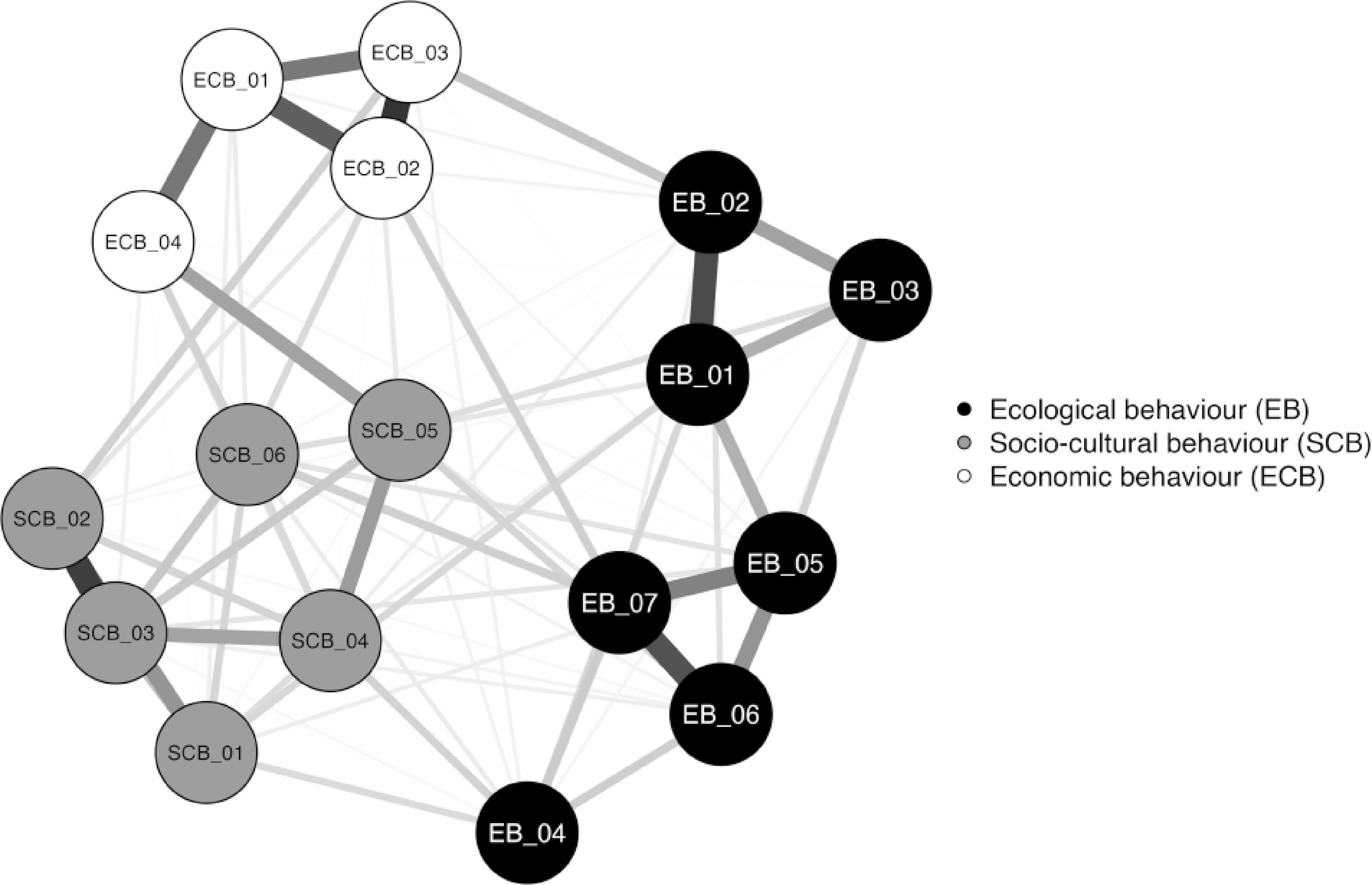 Note: The thickne ss and intensity of the edge correspond to the strength of that relationship. Source: Own elaboration.
 Source: Own elaboration.
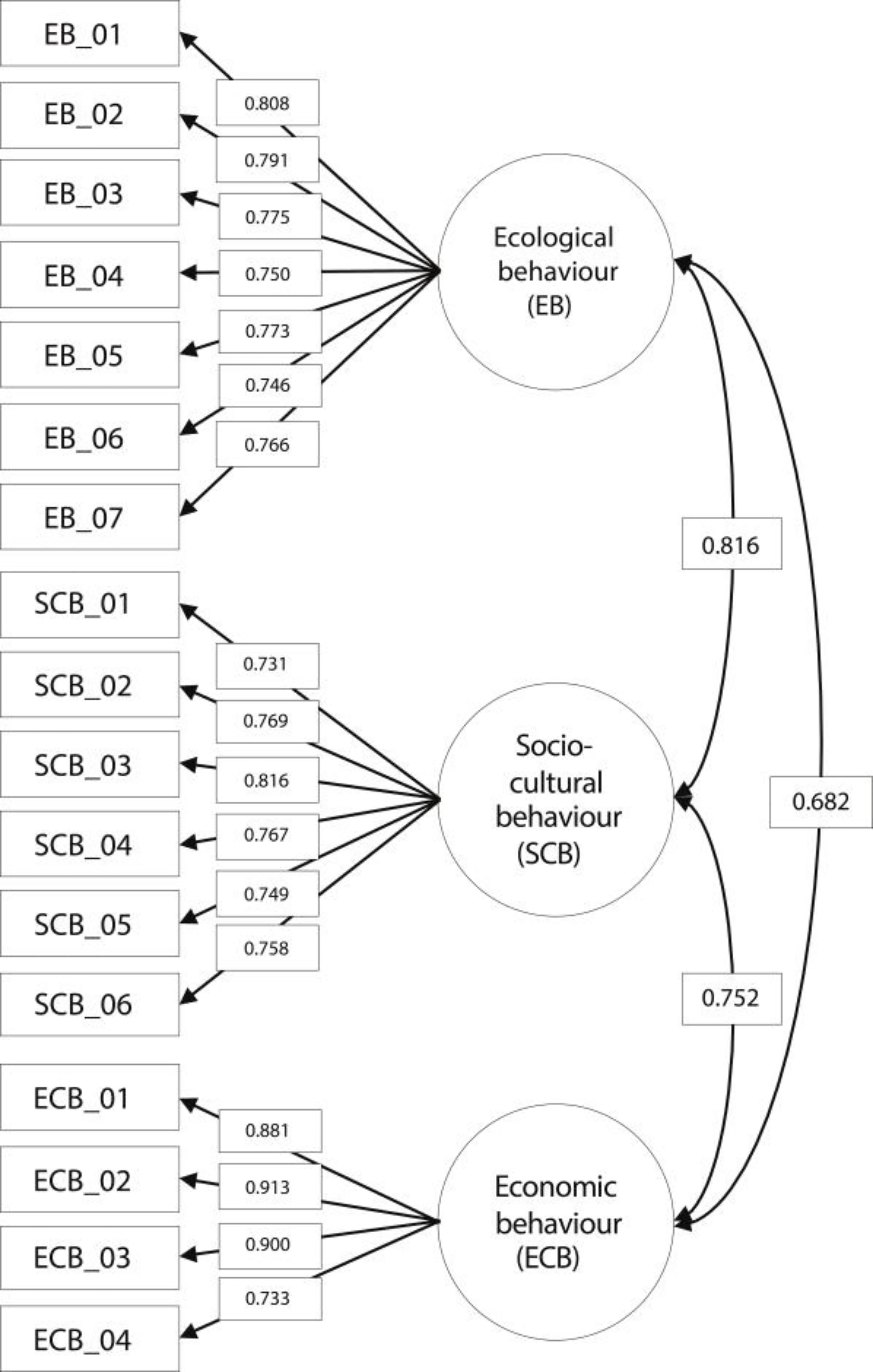 Source: Own elaboration.
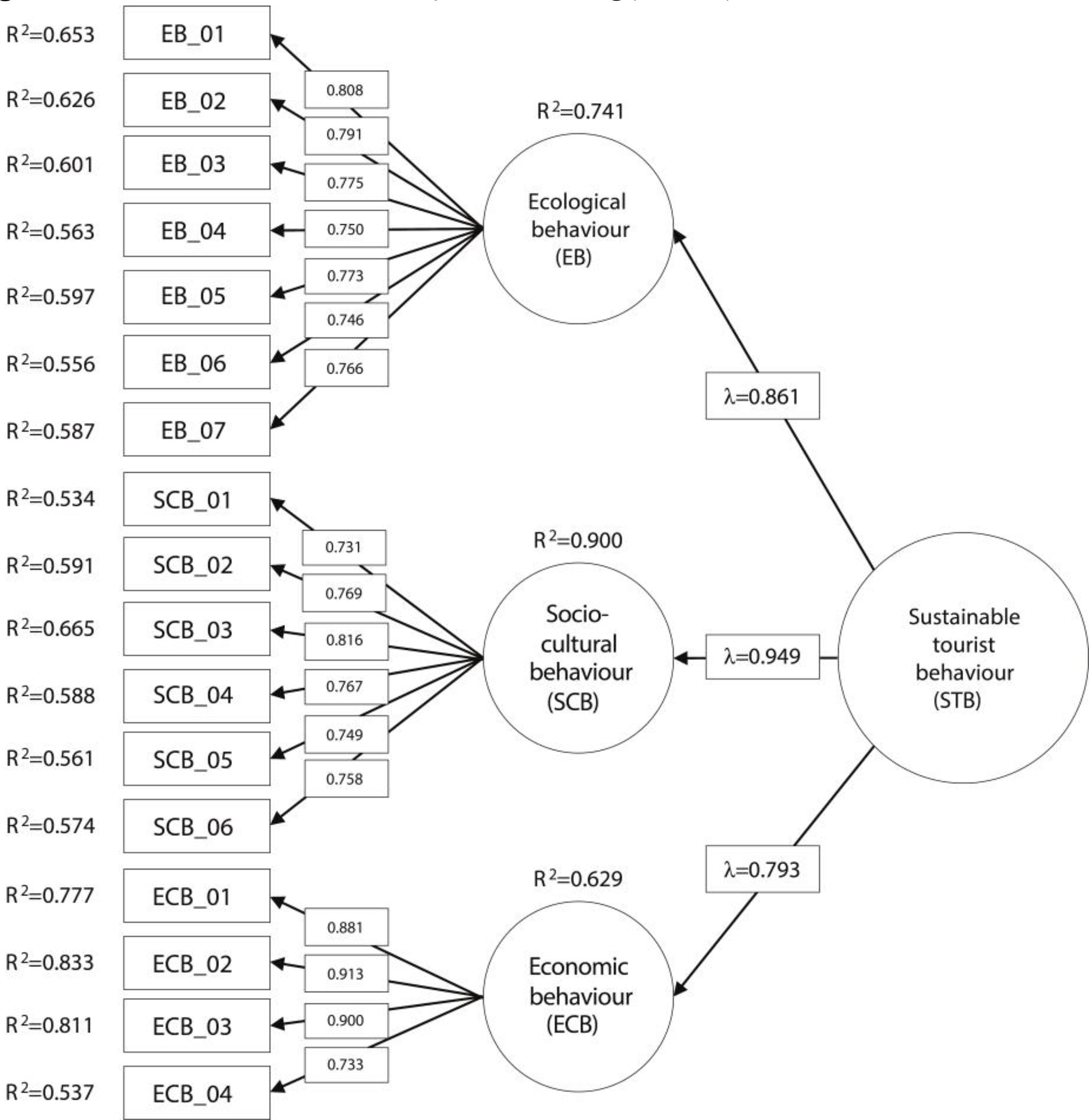 Source: Own elaboration.