Species diversity influences water availability and nutrient-related strategies in native and exotic Cerrado plants
ABSTRACT
Acid phosphatase activity in roots and root association with mycorrhizal fungi enhance nutrient extraction from the soil. However, environmental changes, such as drought and biodiversity loss, can significantly influence these mechanisms. In this study, we investigated how water availability in pots, with varying numbers of species, influences acid phosphatase activity and mycorrhizal colonization. We conducted an experiment in a greenhouse with three herbaceous species found in the Cerrado biome: Melinis repens (a naturalized grass), Urochloa decumbens (an invasive exotic grass), and Calopogonium mucunoides (a native legume). The experiment followed a completely randomized design, using a replacement-series approach, with a constant plant density per pot and variation in species composition and richness. We determined total biomass, root acid phosphatase activity, and mycorrhizal colonization in monocultures and combinations of two and three species. Our results highlight that: (1) as biodiversity increases, there is a decrease in water mass, indicating the effect of niche complementarity on water use; (2) water depletion positively affects root acid phosphatase activity, suggesting that severe droughts may disrupt the phosphorus cycle; (3) biodiversity promotes an increase in mycorrhizal colonization across all three species, indicating the importance of species diversity in supporting mycorrhizal associations; (4) the naturalized grass Melinis repens utilizes alternative strategies for nutrient acquisition, evidencing its phenotypic plasticity; (5) the highly invasive grass Urochloa decumbens benefits from higher biodiversity, showing increased mycorrhizal colonization, and invests acid phosphatase production into biomass. These results are essential for understanding the impacts of biodiversity on water availability and biological invasions in the Cerrado.
Keywords:
Biodiversity; Mycorrhiza; Phosphatase; Productivity; Water availability.
RESUMO
Atividade de fosfatase ácida e associação com micorrizas são fundamentais para a extração de nutrientes do solo. Esses mecanismos podem ser influenciados por mudanças ambientais, como seca e perda de biodiversidade. Neste estudo, investigamos como a disponibilidade de água em vasos com diferentes números de espécies influencia a atividade da fosfatase ácida e a colonização micorrízica. O experimento foi conduzido em casa de vegetação com três espécies herbáceas do Cerrado: Melinis repens (gramínea naturalizada), Urochloa decumbens (gramínea exótica invasora) e Calopogonium mucunoides (leguminosa nativa). O experimento seguiu um delineamento inteiramente casualizado, utilizando uma abordagem de séries de substituição, com densidade constante de plantas por vaso e variação na composição e na riqueza de espécies. Determinamos a biomassa total, a atividade da fosfatase ácida nas raízes e a colonização micorrízica. Nossos resultados revelam que: (1) com o aumento da biodiversidade, há uma diminuição na massa de água, indicando o efeito da complementaridade no uso da água; (2) o esgotamento hídrico aumenta a atividade da fosfatase ácida radicular, sugerindo que secas severas comprometem o ciclo do fósforo; (3) a biodiversidade promove aumento na colonização micorrízica em todas as espécies;
(4) a gramínea naturalizada Melinis repens utiliza estratégias alternativas para aquisição de nutrientes, evidenciando sua plasticidade fenotípica; (5) a gramínea invasora Urochloa decumbens se beneficia da maior biodiversidade, apresentando aumento na colonização micorrízica e investindo a fosfatase ácida em biomassa. Esses resultados são importantes para elucidar efeitos da biodiversidade sobre a disponibilidade de água e sobre invasões biológicas no Cerrado.
Palavras-chave:
Biodiversidade; Micorriza; Fosfatase; Produtividade; Disponibilidade hídrica.
INTRODUCTION
The Brazilian Cerrado is a biodiversity hotspot characterized by distinct rainfall seasonality and natural fire events. The remarkable vegetation variation is supported by its physiognomic mosaic and the distinct biological functioning of the soil in each physiognomy (LIRA-MARTINS et al., 2022). These factors foster a high degree of endemism within this biome (STRASSBURG et al., 2017).
To survive the seasonal climate, dystrophic soils, and fire events, Cerrado plants exhibit adaptations such as nutrient reabsorption before senescence, release substances that stimulate the breaking of soil organic molecules, and turn them into inorganic nutrients (OLDE VENTERINK, 2011; SCALON et al., 2022), change root morphology and benefit from mutualistic associations, establishing mycorrhizal relationships, which increase root contact surface area and expand nutrient use efficiency (ABRAHÃO et al., 2019; FRESCHET et al., 2021).
Cerrado soils are acidic, nutrient-poor, and particularly deficient in inorganic phosphorus but rich in organic phosphorus (OLIVEIRA et al., 2023). Plants in this biome commonly exude acid phosphatase enzymes to hydrolyze organic phosphorus into inorganic forms, potentially favoring the establishment of exotic species (HACKER et al., 2015), especially in highly diverse communities where interspecific competition promotes greater root development (LANNES et al., 2020). The symbiotic association with mycorrhizal fungi is determinant in dystrophic environments such as Cerrado soils and benefits plants and ecosystem services provisioning in several functions, including water uptake, nutrient cycling, and biodiversity maintenance (HACKER et al., 2015).
Excessively wet or dry soil conditions can negatively impact microbial and enzymatic activity, as limited oxygen in wet soils can affect microbial processes. However, soils with specific moisture percentages benefit from the increased fungal biomass due to better water and nutrient availability. This situation contrasts with acid phosphatase activity. The activity of acid phosphatase enzyme, which is associated with microorganisms such as mycorrhizae, tends to be higher in rainy seasons due to phosphorus carryover and low soil availability (HUANG et al., 2011).
Land-use changes, inefficiencies in protected areas, and the introduction of exotic species (e.g., Urochloa spp.) have caused significant biodiversity loss and habitat decline in the Cerrado (PIVELLO; SHIDA; MEIRELLES, 1999; TEIXEIRA; REZENDE; LANNES, 2019; ALENCAR et al., 2000). Moreover, climate change has intensified drought frequency and duration (SLETTE et al., 2019), potentially affecting root acid phosphatase activity through altered biomass decomposition (HUANG et al., 2011) and reducing mycorrhizal colonization due to declining biodiversity.
This study aimed to investigate the effect of plant species diversity on water availability, root acid phosphatase activity, mycorrhizal colonization, and biomass production in experimental Cerrado communities, as well as any potential interactions among these variables. We hypothesize that communities with higher species diversity exhibit lower water content, higher root acid phosphatase activity, increased biomass, and higher mycorrhizal colonization.
MATERIAL AND METHODS
We selected three common herbaceous species found in the Cerrado: a naturalized non-invasive grass (Melinis repens (Willd.) Zizka), a non-native invasive grass (Urochloa decumbens Stapf.), and a legume (Calopogonium mucunoides Desv). The experiment was conducted in a greenhouse at Campus II of the São Paulo State University (UNESP), Ilha Solteira, São Paulo State, Brazil (20°25'05.9" S, 51°20'29.9" W, 375 m above sea level).
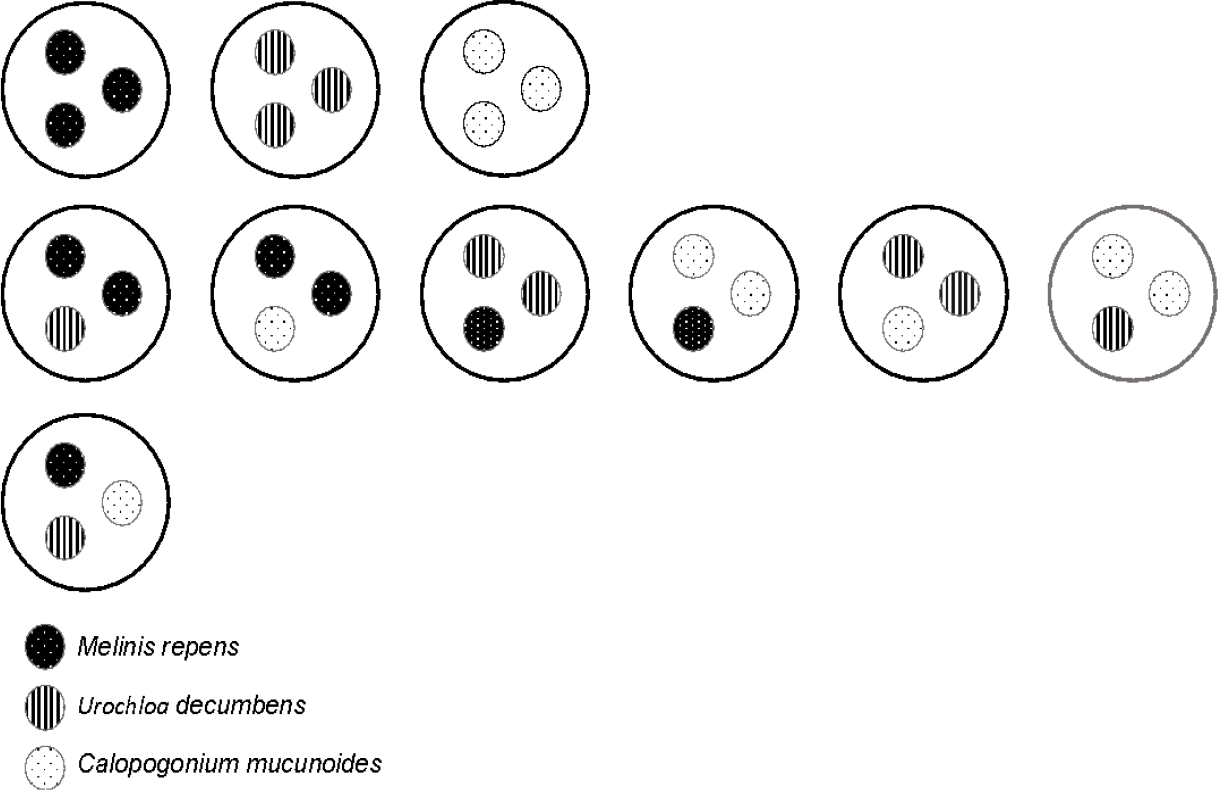
We collected seeds of these three species in a natural grassland area in Selvíria, Mato Grosso do Sul State, Brazil. After six weeks of germination, we set up the experiment in 380 mL polypropylene pots with a substrate composed of two parts of Cerrado soil and one part of washed sand. The experiment followed a completely randomized design, using a replacement-series approach, with a constant plant density per pot and variation in species composition and richness. In each pot, three specimens were planted, consisting of communities composed of one, two, or three species, following the design shown in Figure 1: (1) three pots with three individuals of the same species, (2) six pots with two identical and one different species, and (3) one pot with three individuals of different species. Five replicates were set up for each combination, totaling 50 pots and 150 individuals (Figure 1).
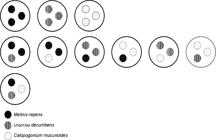
Experimental design with three individuals in each pot in 10 combinations: three combinations with the same species (monocultures), six combinations with two individuals from one species and one individual from another species, and one combination with one individual per species.
For 90 days, the pots were weighed and watered daily with water amounts varying between 50, 80, and 100 mL, depending on the relative humidity of the day. We recorded the results daily to determine the moisture content in the pots. We hasvested the pots at the end of 90 days, and the biomass was stored in a paper bag conditioned in a circulation oven at 60 ºC for 72 hours and weighed. Although there were 50 pots and 150 individuals at the beginning, four specimens in four pots died throughout the experiment, and the pots were discarded. Thus, we hasvested 46 pots and measured 69 on the first day and 69 on the second day, totaling 138 plant individuals.
We separated 100 mg of root/individual to determine root acid phosphatase activity and mycorrhizal colonization. The harvest of the experiment was performed over two consecutive days. Samples for mycorrhiza determination were immediately stored in 70% alcohol, and the root acid phosphatase activity measurements were all performed on the same day. Root acid phosphatase was determined using the nitrophenyl phosphate method (adapted from Olde Venterink (2011)). Mycorrhizal colonization was determined by light microscopy after roots were discolored and stained. Root discoloration was done through a 10% KOH solution in a water bath (90 ºC) for up to three hours, and then the roots were washed with hydrochloric acid (5% HCl) and water to interrupt the discoloration. For the staining process, we used a solution of pen ink and acetic acid. The solution was placed enough to cover the roots in the test tube, and then the roots returned to the water bath and were kept for 20 minutes. After this procedure, the roots were washed and put in test tubes with glycerin for preservation and subsequent analysis. Gridded slides used for microscopic analysis were mounted individually to analyze the mycorrhizal colonization of the root of each species. A total of 128 individuals were analyzed. This number differs from the other measurements because some individuals did not have enough roots for the mycorrhizal analysis.
Although biodiversity is defined as a multidimensional concept, here we use the term in a restricted sense, referring to it as a synonym for species richness. This approach is justified by the controlled experimental design, in which total plant density per pot was kept constant, and communities included functionally distinct species when all three species were present. To determine the effect of biodiversity on root acid phosphatase activity, mycorrhizal colonization, water mass, and plant biomass, we applied the analysis of variance (ANOVA) and Tukey's test using the R statistical language (version 4.0.4). We used structural equation models (SEM) to verify the integrated effects of biodiversity on water availability, root acid phosphatase activity, and mycorrhizal colonization as determinants of plant biomass, analyzed using Stata 16 (64-bit).
RESULTS AND DISCUSSION
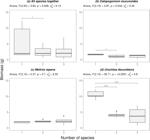
Biodiversity influenced water consumption differently among the tested species. When all individuals were pooled according to their corresponding biodiversity treatment (Figure 2a), pots with higher species richness showed significantly lower water mass (ANOVA, p = 0.031), with three-species communities consuming more water than monocultures (Tukey, p = 0.024). Mean water mass decreased from 36.2 ± 17.1 g (median = 39.9) to 31.3 ± 9.83 g in two-species communities (median = 32.3) and 23.1 ± 12.7 g in three-species communities (median = 21.0). This pattern was driven by the two grasses: Melinis repens exhibited a significant decrease in water mass in three-species communities compared to monocultures (ANOVA, p = 0.015), with means of 46.3 ± 10.9 g in monocultures, 40.7 ± 7.51 g in two-species communities, and 23.4 ± 14.6 g in three-species communities (Figure 2c). Urochloa decumbens showed a similar effect (ANOVA, p = 0.006), with means of 46.4 ± 5.73, 32.2 ± 7.85, and 23.4 ± 14.6 (Figure 2d). In contrast, the legume Calopogonium mucunoides (Figure 2b) did not significantly change water consumption (ANOVA, p = 0.32).
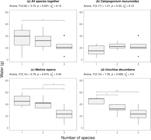
Effect of the number of species on total water mass in pots with the focal plants Calopogonium mucunoides, Melinis repens, and Urochloa decumbens in monocultures (N=15) and combinations of two species (N=17) or three species (N=14). The horizontal bars above the graph show the significance between groups * p ≤ 0.05; **p ≤ 0.01.
These results suggest that grasses increase water uptake in more diverse communities, likely due to niche complementarity where species root at different soil layers and access water from specific strata (CEULEMANS et al., 2017), optimizing the overall water uptake by the community. Recent studies in arid and semi-arid ecosystems further support this mechanism, showing that plant functional diversity plays a dominant role in regulating ecosystem functioning along soil water gradients (LI et al., 2025). Similar patterns were reported by O’Keefe, Nippert and Mcculloh (2019), who observed that roots in more diverse ecosystems occupy different soil layers compared to monocultures. Taken together, these findings suggest that increasing diversity enhances water use efficiency in grass species, while legumes may maintain water use independent of community composition.
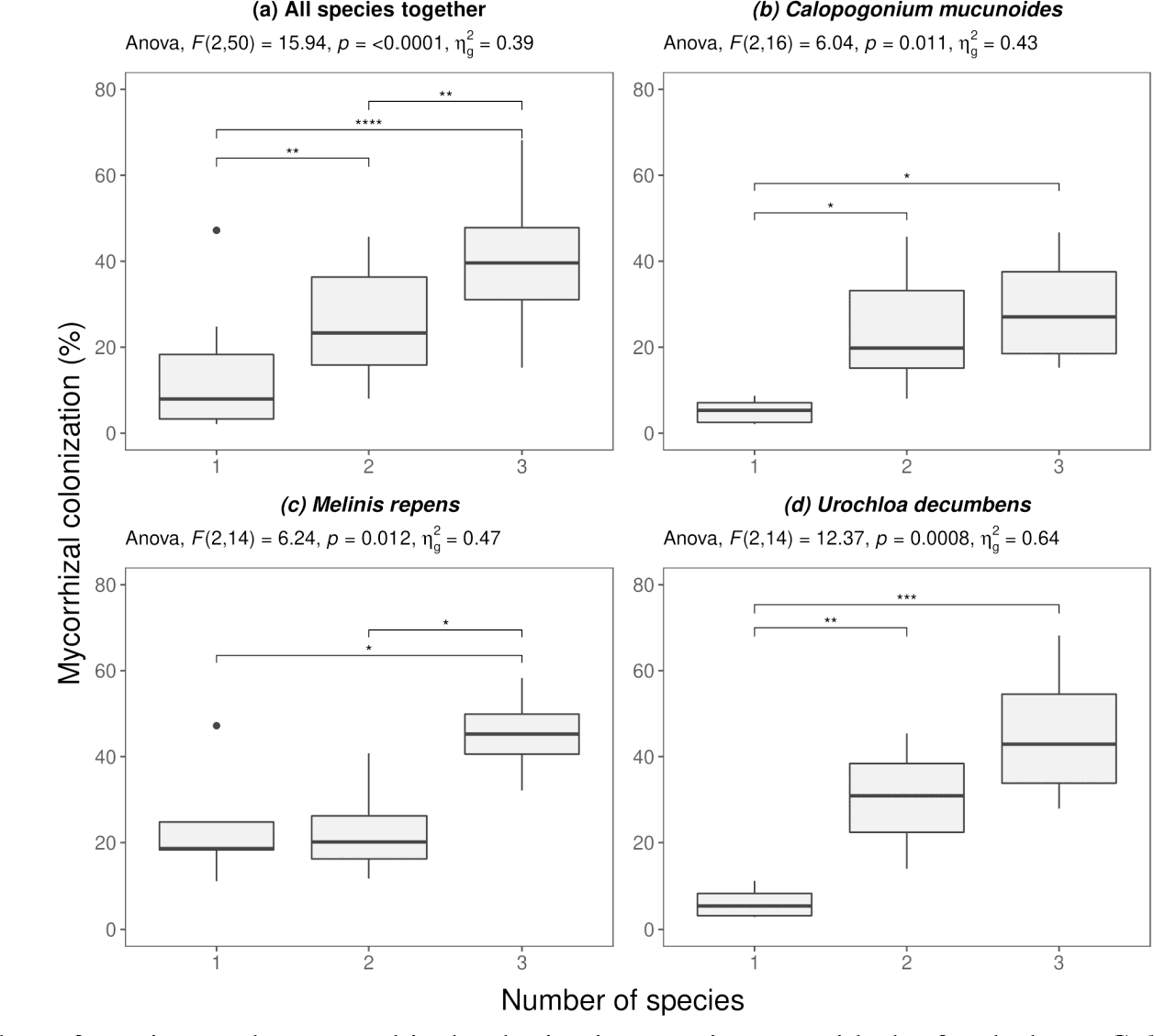
We detected strong positive effects of biodiversity on mycorrhizal colonization rates for all species (Figures 3 and 6). Plant diversity increased mycorrhizal colonization rates in all species. The literature has already described a positive relationship between these two variables. However, in the previous studies, the causality was the length of mycorrhizal hyphae with a concomitant decrease in the phosphorus soil availability and an increase in leaf phosphorus, indicating efficient exploitation of phosphorus in the soil and enabling higher biodiversity of plant species (VAN DER HEIJDEN et al., 1998). In the present study, the causality occurs in the opposite direction: the manipulated higher plant diversity generates higher rates of mycorrhizal colonization. This pattern is consistent with recent global syntheses indicating that plant diversity itself can promote mycorrhizal fungal richness and activity, thereby enhancing nutrient cycling and water regulation at the ecosystem scale (VAN NULAND et al., 2025). A possible explanation for this phenomenon could be the plants' remarkable capacity to evolve essential traits across generations. These traits likely enable their survival in regions abundant in biodiversity but deficient in crucial resources (potentially in nutrients), as is the case for the Cerrado.
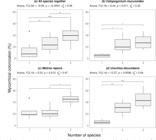
Effect of the number of species on the mycorrhizal colonization rate in pots with the focal plants Calopogonium mucunoides, Melinis repens, and Urochloa decumbens in monocultures (N=15) and combinations of two species (N=17) or three species (N=14). The horizontal bars above the graph indicate the significance between groups: p > 0.05; * p ≤ 0.05; **p ≤ 0.01; *** p ≤ 0.001.
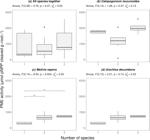
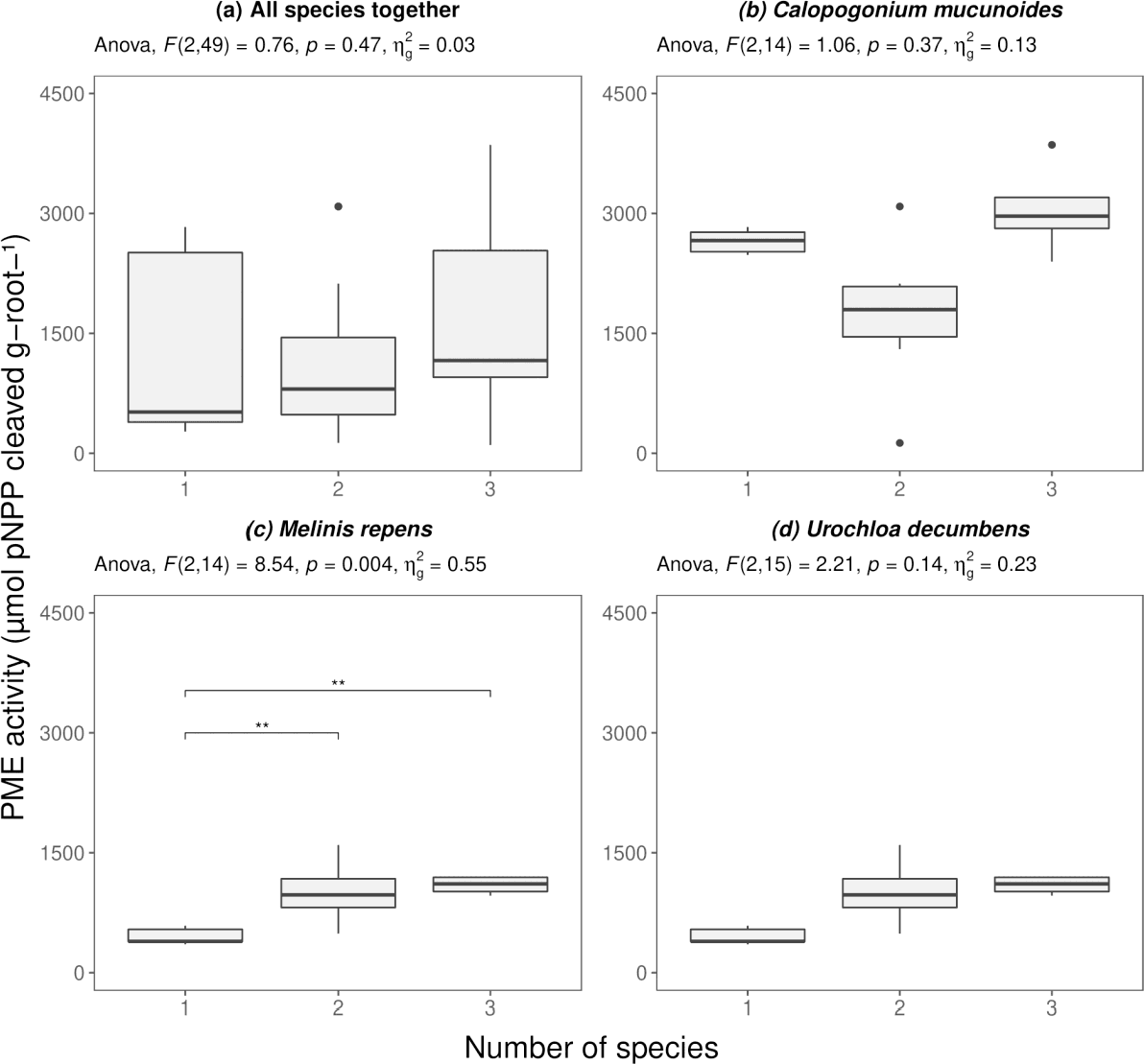
Effect of the number of species on acid phosphatase activity in pots with the focal plants Calopogonium mucunoides, Melinis repens, and Urochloa decumbens in monocultures (N=15) and combinations of two species (N=17) or three species (N=14). The horizontal bars above the graph show the significance between groups p > 0.05; * p ≤ 0.05; **p ≤ 0.01.
When comparing the focal species in monocultures, Melinis repens demonstrated a higher mycorrhizal colonization rate (mean = 24.0; median = 18.6; SD = 13.9) than the invasive grass Urochloa decumbens (mean = 6.12; median = 5.25; SD = 3.84), and the legume Calopogonium mucunoides (mean = 5.14; median = 5.30; SD = 2.86). These species' different nutrient acquisition strategies may explain this difference (p = 0.011). The invasive grass has an aggressive root structure, effectively absorbing nutrients and water in the soil, making it less dependent on mycorrhizal fungi. On the other hand, the legume is less dependent on the association with mycorrhizae because it can fix atmospheric nitrogen. This suggests that the legume can acquire nutrients such as phosphorus and nitrogen independently, with less reliance on mycorrhizae. Additionally, the lack of effect of biodiversity on water availability in the pots further supports the idea of the legume's nutrient acquisition strategy. Leguminous species benefit from the association with microorganisms, and exude a large amount of nitrogen into the soil through their roots due to their association with nitrogen-fixing bacteria. Once the legumes absorb soil nitrogen, they can invest it in the activity of phosphatase, a nitrogen-rich enzyme (HOULTON et al., 2008; LOPES E SILVA et al., 2023; OLDE VENTERINK, 2011).
The naturalized grass Melinis repens showed higher root acid phosphatase activity (Figure 4c) values in polycultures (mean = 1.513; SD = 0.83) than in monocultures (mean = 0.776; SD = 0.24), which did not occur with the invasive grass (Figure 4d) (monoculture mean = 0.702; SD = 0.16; polyculture mean = 1.245; SD = 0.68) or legume (monoculture mean = 0.911 SD = 0.075; polyculture mean = 1.265; SD = 0.69) (Figure 4b). Root acid phosphatase activity positively affected the biomass of the invasive grass Urochloa decumbens (Figure 6).
These positive effects of diversity upon root acid phosphatase activity and mycorrhizal colonization for Melinis repens is supported by Lannes et al. (2020) for other species found in the Cerrado. Changes in root morphology, such as the proliferation of root tips and expansion of root surface area, might be a response to the recognition of nearby species as potential competitors (LANNES et al., 2020).
More biodiverse pots promoted lower biomasses for the species investigated, except for Melinis repens (Figure 5), which showed an inverse relationship between root phosphatase activity and mycorrhizal colonization (Figure 6c). Average biomass values (aerial part and root) were calculated separately for each species, considering the different community types. For Melinis repens, the average values were 1.83 (SD = 0.63) in monoculture and 2.20 (SD = 1.26) in polyculture. For Calopogonium mucunoides, the average biomass was 1.68 (SD = 0.83) in monoculture and 1.06 (SD = 0.73) in polyculture. Similarly, Urochloa decumbens showed an average biomass of 10.55 (SD = 1.37) in monoculture and 3.83 (SD = 2.94) in polyculture.
Effect of number of species on total biomass in grams in pots with the focal plants Calopogonium mucunoides, Melinis repens, and Urochloa decumbens in monocultures (N=15) and combinations of two species (N=17) or three species (N=14). The horizontal bars above the graph indicate the significance between groups: p > 0.05; * p ≤ 0.05; **p ≤ 0.01; *** p ≤ 0.001.

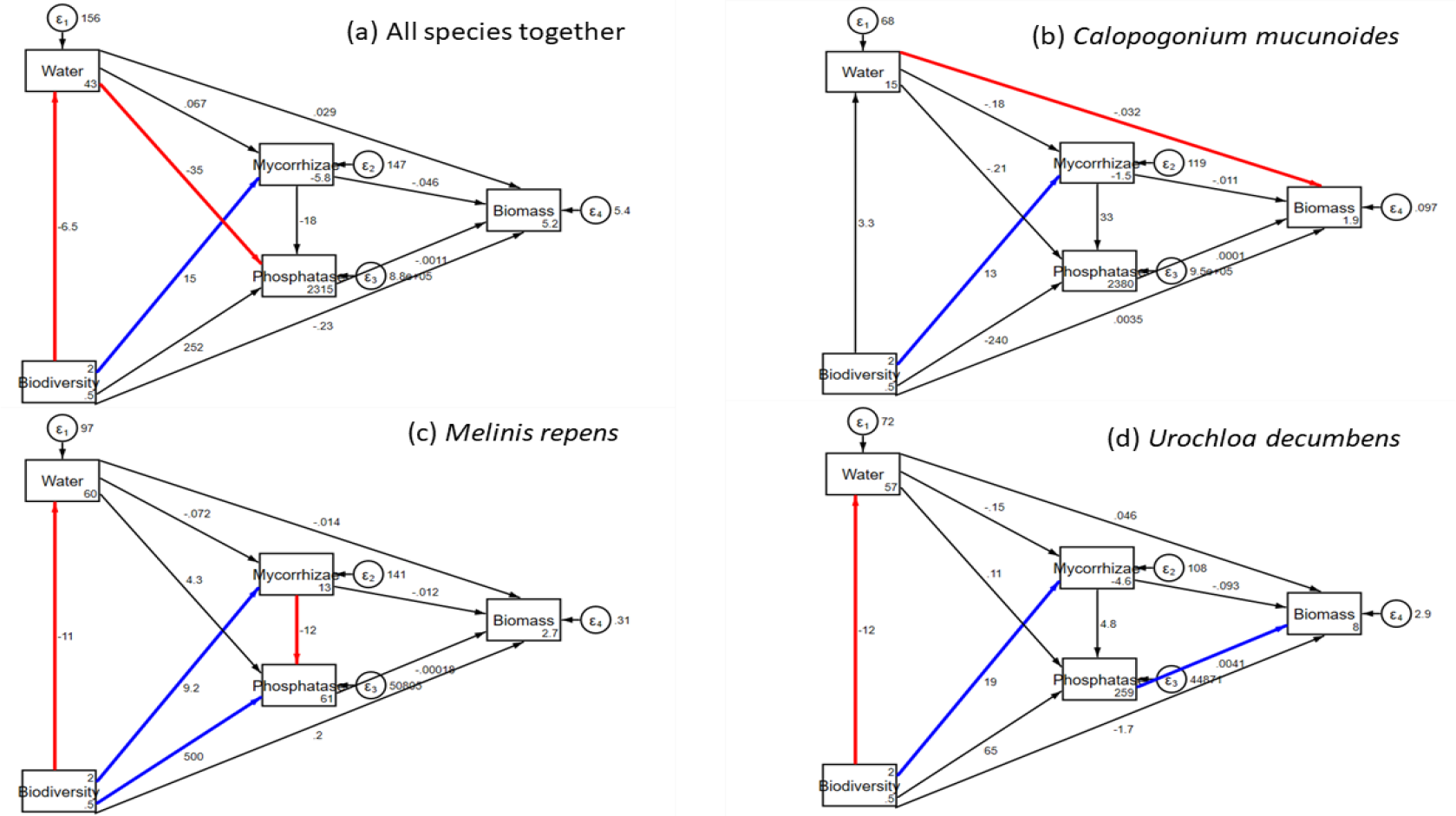
Structural equation modeling (SEM) showing the effects of water content and biodiversity on root acid phosphatase activity, mycorrhizal colonization, and biomass of Calopogonium mucunoides, Melinis repens, and Urochloa decumbens, separated and together. The numbers after the arrows indicate the standardized values (scaled by the standard deviations of the variables). Blue and red arrows, respectively, indicate positive and negative significant relationships. Good fit of all SEM models: p χ2>0.05 (a good model fit suggests that the fit is not different from the theoretical model).
Figure 6 presents, in an integrated way, the interaction between the variables selected in this study. The analysis of the behavior of the species in the community indicates the existence of an inversely proportional relationship between biodiversity and soil moisture. Similarly, low levels of soil moisture negatively influence acid phosphatase activity. Conversely, higher levels of biodiversity are associated with an increase in the mycorrhizal colonization process, including when each species is analyzed focally. When each species is put into perspective, the correlation between diversity and soil moisture is only significant for grasses, which is not observed for legumes.
Regarding acid phosphatase activity, significant values were observed only in the interactions analyzed for the grass Melinis repens (Figure 6c). In this species, increased community diversity showed a direct relationship with increased phosphatase activity. On the other hand, an inverse relationship was found between increased mycorrhizal colonization and acid phosphatase activity, since higher levels of mycorrhization were associated with a reduction in this enzymatic activity. Recent meta-analyses and theoretical advances indicate that common mycorrhizal networks influence plant phosphorus and water acquisition through physiological and functional adjustments in host plants, often generating trade-offs with alternative phosphorus-acquisition strategies (LEHMANN; TANG; RILLIG, 2025).
Mycorrhiza and root acid phosphatase activity were positively influenced by biodiversity but negatively related in Melinis repens (as shown by SEM in Figure 6c). This implies that this grass species alternates between these two acquisition strategies while benefiting from a more biodiverse environment. The alternation of strategy may give the individual remarkable phenotypic plasticity in resource-scarce environments, making the species a good colonizer. This species is widely distributed in natural and degraded areas in the Cerrado and is sometimes considered an invasive species (HIDALGO-TRIANA et al., 2022).
The naturalized grass Melinis repens was the only species that showed the opposite pattern of root acid phosphatase activity and moisture, i.e., moisture decreased, and acid phosphatase increased with increasing biodiversity in the pots. The increase in root length, and, especially, fine roots, raises the contact with the soil and allows water and nutrient uptake by the plant in less moist areas, which is observed in field studies comparing fine root production between the dry and rainy seasons. Studies on the response of fine root production in experimental communities to water constraint demonstrate that the pattern can vary and depends on the type of competitors, whether in monocultures or interspecific competition (LUDOVICI; MORRIS, 1997). This study supports the hypothesis that species diversity generates lower moisture and increases root acid phosphatase activity for the naturalized grass.
The SEM confirmed the effect of biodiversity on mycorrhizal colonization and root acid phosphatase activity, but these were rarely translated into biomass increase. Root physiological, morphological, and anatomical adjustments and association with microorganisms are common for water and nutrient uptake (HACKER et al., 2015). However, the plant individual may invest resources in other structures and functions besides biomass, such as defense and reproduction.
The invasive grass Urochloa decumbens is the only species in this experiment with significant values regarding the route "species number effect → increase in mycorrhizal colonization" and "root acid phosphatase activity → biomass increase.” This species has a high invasive capacity (PIVELLO; SHIDA; MEIRELLES, 1999) and benefits from root acid phosphatase and association with mycorrhizal fungi for its development. Its success, even in natural areas, can be explained because the species uses as a strategy the absorption of phosphorus available by acid phosphatase exuded from native plants (LANNES et al., 2020) and privileges itself with the high diversity, amplifying the chances of mycorrhizal colonization.
In summary, we highlight the importance of diversity for ecosystem functioning and the maintenance of diversity itself. With the gradual increase of species richness in the plant communities, mycorrhizal colonization rates increased. Natural areas in the Cerrado are indicated to experience more severe droughts because of changes in hydrological patterns driven by increases in temperature due to increases in the concentration of greenhouse gases in the atmosphere (IPCC, 2014). This change in rainfall patterns, increasing the frequency and intensity of droughts, may influence the phosphorus cycle by increasing phosphatase activity, which in turn may promote invasions of exotic plants in the Cerrado (DAMASCENO et al., 2018; LEITE; CASSIOLATO; LANNES, 2019) and consequently generate a loss of diversity, which can lead to a loss of functionality and a greater likelihood of exotic species invasion, boosting the strength of this cycle.
CONCLUSIONS
We highlight the pivotal role of species diversity in influencing soil moisture. The importance of Urochloa decumbens as a dominant species underscores the need for continued investigation into its adaptability and influence in plant communities.
Furthermore, we reinforce the positive relationship between mycorrhizal associations and species diversity, presenting insights into the ecological mechanisms that drive these interactions. These findings expand our understanding of ecosystem dynamics and offer valuable implications for biodiversity conservation in light of global ecological changes, especially climate change.
ACKNOWLEDGMENTS
We thank the staff of the UNESP Experimental Farm (FEPE) and Laboratory of Plant Ecology for field assistance. São Paulo Research Foundation (FAPESP grant 2016/22468-2) is acknowledged for the scholarship to ARP.
Data Availability:
The data that support the findings of this study can be made available, upon reasonable request, from the corresponding author.
REFERENCES
- ABRAHÃO, A. et al. Soil types select for plants with matching nutrient-acquisition and -use traits in hyperdiverse and severely nutrient-impoverished campos rupestres and cerrado in Central Brazil. Journal of Ecology, 107: 1302-1316, 2019.
- ALENCAR, A. et al. Mapping three decades of changes in the Brazilian savanna native vegetation using Landsat data. Remote Sensing, 12: 924, 2020.
- CEULEMANS, T. et al. Phosphorus resource partitioning shapes phosphorus acquisition and plant species abundance in grasslands. Nature Plants, 3: 1-7, 2017.
- DAMASCENO, G. et al. Impact of invasive grasses on Cerrado under natural regeneration. Biological Invasions, 20: 3621-3629, 2018.
- FRESCHET, G. T. et al. Root traits as drivers of plant and ecosystem functioning: current understanding, pitfalls and future research needs. New Phytologist, 232: 1123-1158, 2021.
- HACKER, N. et al. Plant diversity shapes microbe-rhizosphere effects on P mobilisation from organic matter in soil. Ecology Letters, 18: 1356-1365, 2015.
- HIDALGO-TRIANA, N. et al. Melinis repens (Willd.) Zizka subsp. repens (Poaceae) in Europe: distribution, ecology and potential invasion. Botany Letters, 169: 390-399, 2022.
- HOULTON, B. Z. et al. A unifying framework for dinitrogen fixation in the terrestrial biosphere. Nature, 454: 327-330, 2008.
- HUANG, W. et al. Effects of precipitation on soil acid phosphatase activity in three successional forests in southern China. Biogeosciences, 8: 1901-1910, 2011.
- IPCC - Intergovernmental Panel on Climate Change. Contribution of Working Groups I, II and III to the Fifth Assessment Report of the Intergovernmental Panel on Climate Change. In: PACHAURI, R. K.; MEYER, L. A. (Eds.). Climate change 2014: synthesis report. Geneva: IPCC, 2014. 151 p.
- LANNES, L. S. et al. Species richness both impedes and promotes alien plant invasions in the Brazilian Cerrado. Scientific Reports, 10: 1-9, 2020.
- LEHMANN, A.; TANG, B.; RILLIG, M. C. Meta-analysis of effects of common mycorrhizal networks formed by arbuscular mycorrhizal fungi on plant and fungal parameters. Functional Ecology, 39: 2758-2771, 2025.
- LEITE, M. R.; CASSIOLATO, A. M. R.; LANNES, L. S. Urochloa decumbens has higher mycorrhizal colonization in degraded than in pristine areas in the Brazilian Cerrado. Floresta e Ambiente, 26: e20190060, 2019.
- LI, Y. et al. Plant functional diversity regulates ecosystem multifunctionality along soil water gradients in arid ecosystems. Science of the Total Environment, 928: 172365, 2025.
- LIRA-MARTINS, D. et al. Soil properties and geomorphic processes influence vegetation composition, structure, and function in the Cerrado Domain. Plant and Soil, 476: 549-588, 2022.
- LOPES E SILVA, L. et al. Potential of root acid phosphatase activity to reduce phosphorus fertilization in maize cultivated in Brazil. PLOS ONE, 18: e029254, 2023.
- LUDOVICI, K. H.; MORRIS, L. A. Competition-induced reductions in soil water availability reduced pine root extension rates. Soil Science Society of America Journal, 61: 1196-1202, 1997.
- O’KEEFE, K.; NIPPERT, J. B.; MCCULLOH, K. A. Plant water uptake along a diversity gradient provides evidence for complementarity in hydrological niches. Oikos Advancing Ecology, 128: 1748-1760, 2019.
- OLDE VENTERINK, H. Legumes have a higher root phosphatase activity than other forbs, particularly under low inorganic P and N supply. Plant and Soil, 347: 137-146, 2011.
- OLIVEIRA, V. A. et al. Soils of Cerrados, the Brazilian Savannas. In: SCHAEFER, C. E. G. R. (Ed.). The soils of Brazil Switzerland: Springer Cham, 2023. cap. 5, p. 129-173.
- PIVELLO, V. R.; SHIDA, C. N.; MEIRELLES, S. T. Alien grasses in Brazilian savannas: a threat to the biodiversity. Biodiversity and Conservation, 8: 1281-1294, 1999.
- SCALON, M. C. et al. Contrasting strategies of nutrient demand and use between savanna and forest species in the Brazilian Cerrado. Biogeosciences, 19: 3649-3665, 2022.
- SLETTE, I. J. et al. How ecologists define drought, and why we should do better. Global Change Biology, 25: 3193-3200, 2019.
- STRASSBURG, B. B. N. et al. Moment of truth for the Cerrado hotspot. Nature Ecology & Evolution, 1: 0099, 2017.
- TEIXEIRA, D. S.; REZENDE, A. A.; LANNES, L. S. Response of vegetation to sheep dung addition in a degraded Cerrado area. Revista Brasileira de Engenharia Agrícola e Ambiental, 23: 47-52, 2019.
- VAN DER HEIJDEN, M. G. A. et al. Mycorrhizal fungal diversity determines plant biodiversity, ecosystem variability and productivity. Nature, 396: 69-72, 1998.
- VAN NULAND, M. E. et al. Global hotspots of mycorrhizal fungal richness and their importance for ecosystem functioning. Nature, 628: 94-101, 2025.
Edited by
-
Editor in Chief:
Aurélio Paes Barros Júnior
-
Section Editor:
Erika Valente de Medeiros