Comparison between pure-tone thresholds and modulated tone thresholds
Purpose: The purpose of this study was to verify if there is any whether difference exists between pure-tone thresholds and modulated tone thresholds.
Methods: Research was done in Säo Paulo city, with 40 normal-hearing subjects normalhearing (20 were male and 20 were female) who ranged between in age from 20 to 35 years, and that who undergone the air-conduction threshold. Relation between right ear and left ear and relation between male and female were statistically measured to verify whether these factors could influence the comparison between pure-tone thresholds and modulated. tone thresholds.
Results:
Results
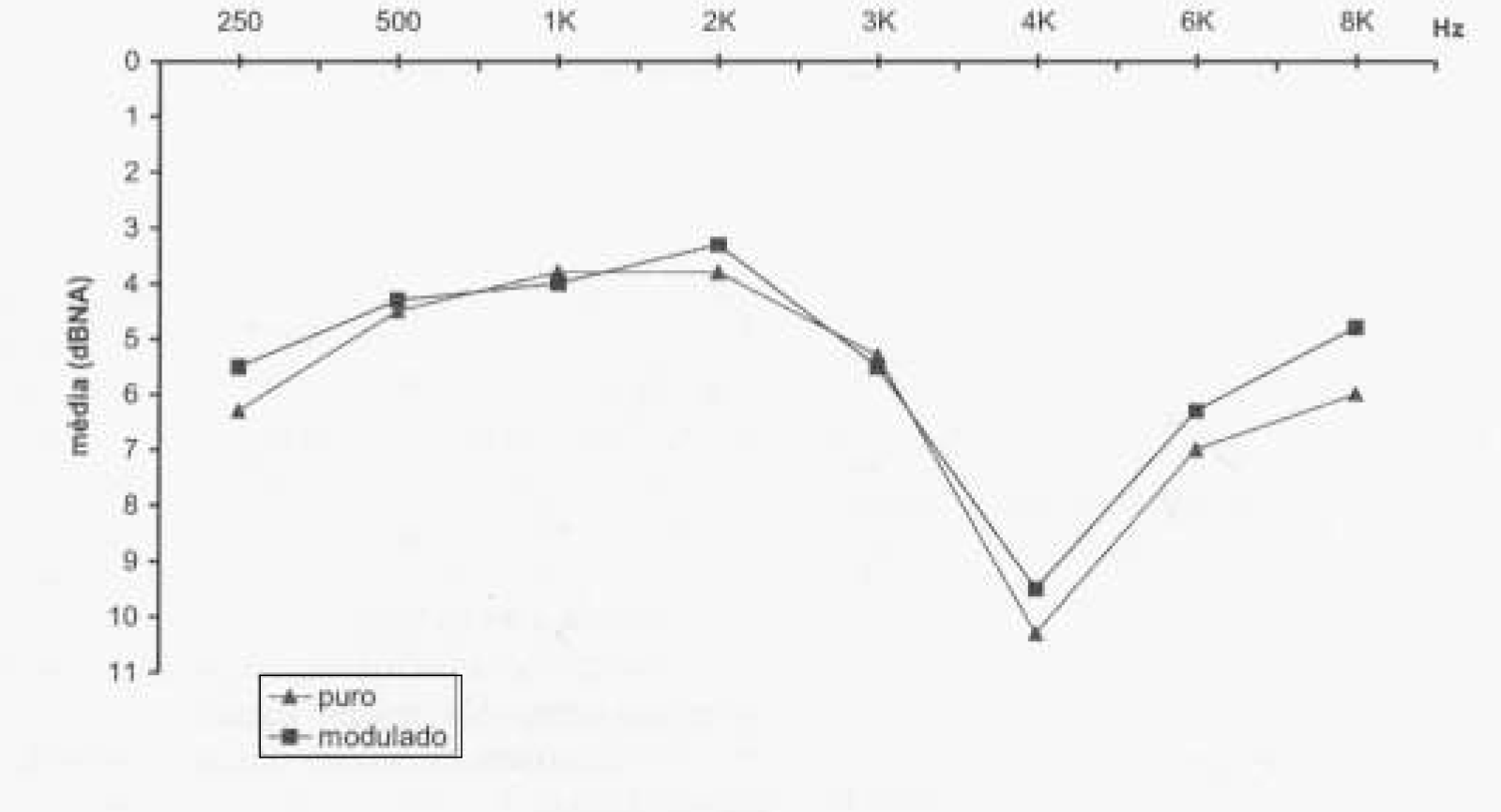
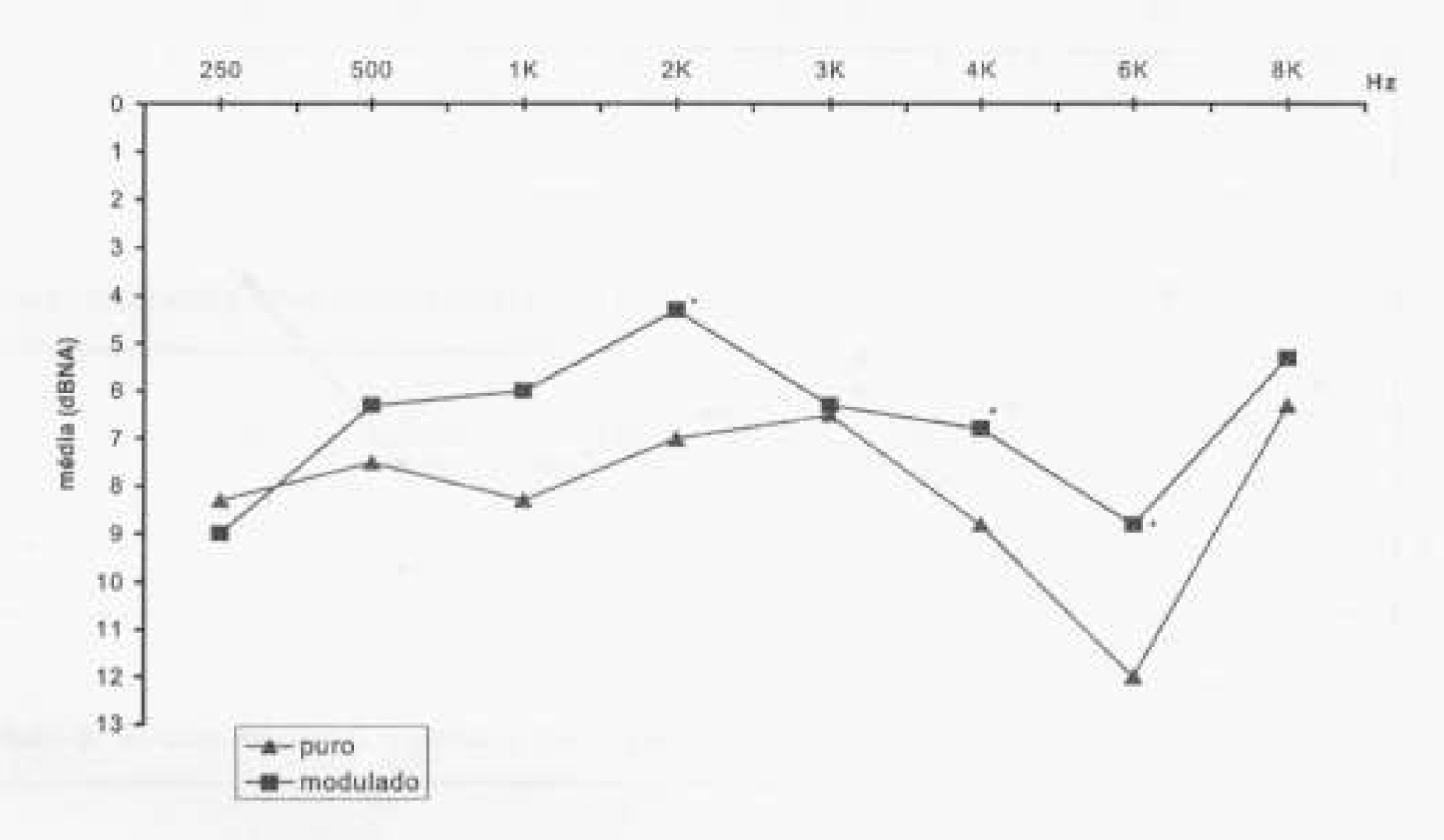
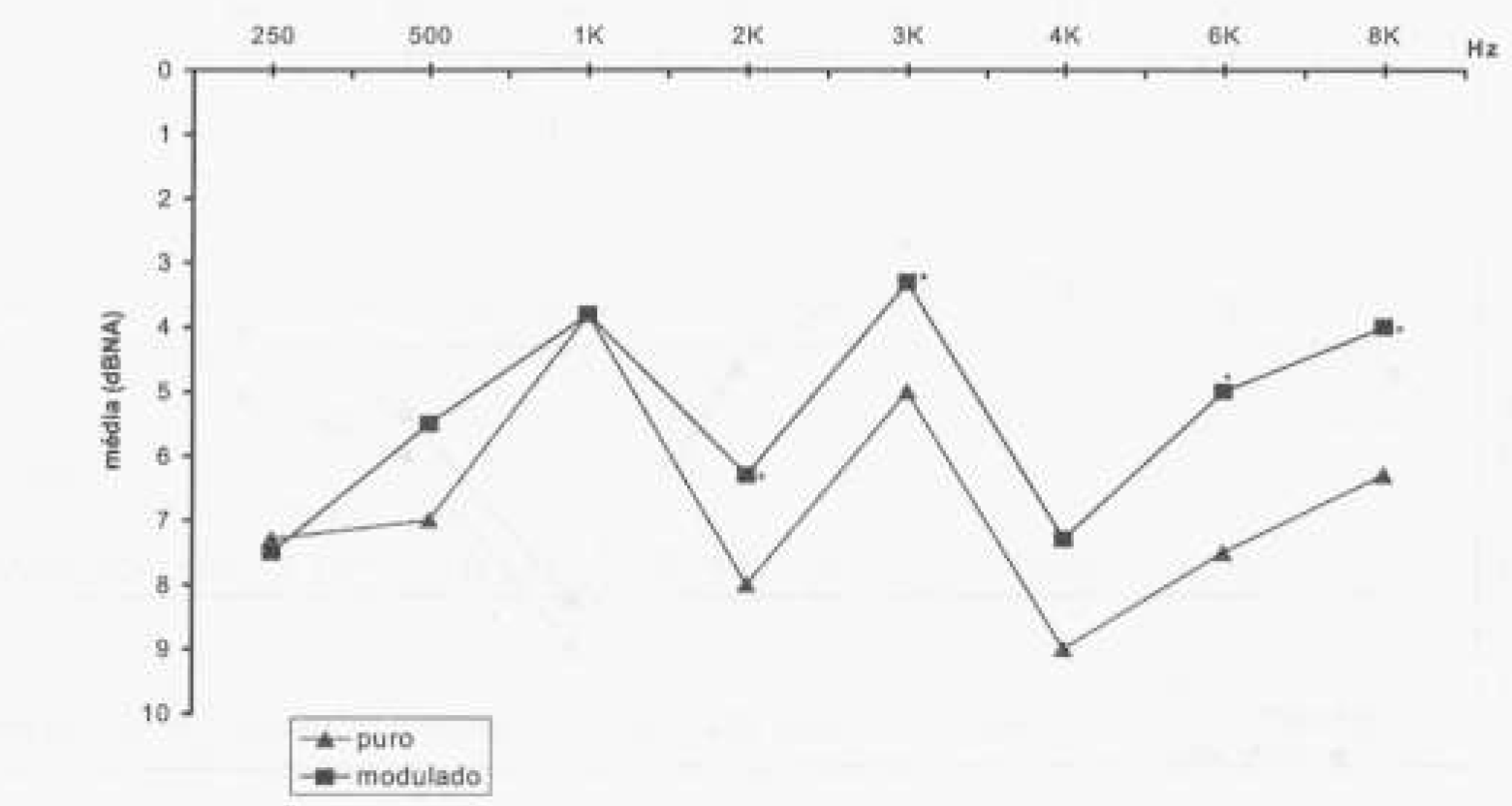
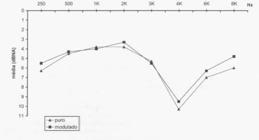
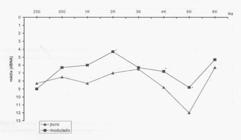
of the statistic analysis showed statistically significant differences ior left ear and male. However, when pure-tone thresholds and modulatedtone thresholds were measured between male and female, the results showed statistic ally significant difference for female. The results indicate statistically significant statistic differences for modulatedtone thresholds, specifically at frequency 8000 kHz , in the right ear in male and in female, at frequencies 2000 kHz, 4000 kHz and 6000 kHz in the right ear and at frequencies 2000 kHz, 3000 kHz, 6000 kHz and 8000 kHz in the left ear.
Conclusion: Although modulatedtone thresholds are better than pure-tone thresholds, a good criterion of usage should be selected for obtaining accurate results and consequently, for precise diagnosis.
KEYWORDS:
Auditory threshold; Audiometry; pure-tone; Auditory perception; Acoustic Stimulation; Hearing loss; sensorineural
 Thumbnail
 Thumbnail
 Thumbnail
 Thumbnail