
 Legal Disputes and the Effects of Anti-Gender Discourse in the 56th Legislature of the Brazilian National Congress (2019-2023)
This article aims to analyze the effects of the discourse present in the anti-gender bills of the 56th Legislature (2019-2023) of the National Congress. As a space of contestation over legal definitions regarding fundamental rights, citizenship, and democracy, the Legislative Branch constitutes one of the main arenas for anti-gender offensives, which seek to delineate the contours of the rights-bearing subject based on a conservative moral grammar. The guiding research question is: what are the effects of anti-gender discourse in the bills of the 56th Legislature of the National Congress? Through content analysis, the anti-gender bills were mapped and coded according to thematic categories: (i) education; (ii) gender identity; (iii) sexual and reproductive health rights; (iv) religious freedom; (v) events, exhibitions, and advertising; and (vi) other gender and sexuality-related rights. As a political state management project, the discourse of protecting children, the family, and the nation against the “dangers of gender” within the heterocispatriarchal structure permeates all the initiatives analyzed, defining the rights-bearing subject by excluding those who do not conform to its norms.
Keywords
Discourse; National Congress; anti-gender ofensives; bills; gender and sexuality rights
 Thumbnail
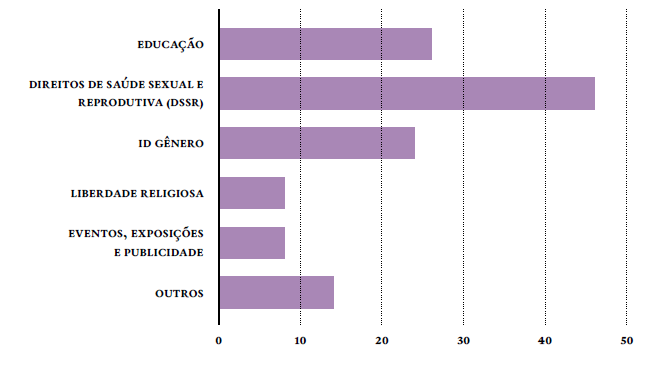 Fonte: Elaboração própria a partir de levantamento realizado nos sites da Câmara dos Deputados e do Senado Federal, 2025.