 Navigating the boardroom jungle: observations on bi-directional applications of animal archetypes as a metaphor for understanding current management perceptions – a systematic literature review
ABSTRACT
Purpose The study explores comparative metaphors involving animal archetypes and their impact on contemporary management and leadership roles, advancing their use for business communication, understanding, and leadership development.
Motivation Despite numerous management theories, there remains limited clarity on complex managerial functions within organizational hierarchies. Figurative designations provide simpler and more relatable insights for understanding these functions.
Design/methodology/approach This study employs Gareth Morgan’s theoretical framework and lie theory to review the literature connecting organizational culture with metaphorical interpretation. Four of the five executive traits, including visioning, discernment, diligence, teamwork, and creativity, were linked to distinct animal archetypes based on qualitative symbolism and attributes.
Results A five-class category model emerged, where the lion represents authority and strategic vision, the owl symbolizes discernment, the ant and bee signify diligence and cooperation, the sheepdog depicts teamwork, and the dolphin embodies innovation and flexibility. Collectively, these archetypes form a coherent model of management behavior.
Practical implications The model offers a valuable framework for leadership and management development, enhancing cross-cultural understanding, role clarity, team efficiency, and succession planning.
Originality/Value By aligning metaphorical symbolism with management theory, the study introduces a novel lens for exploring managerial dynamism and bridging theory with practice. The typology-based approach enriches theoretical discourse and highlights practical pathways for effective leadership in organizations.
Keywords
Leadership development; Organizational behavior; Management training; Role clarity; Symbolic representation; Team dynamics
RESUMO
Objetivo O estudo explora metáforas comparativas envolvendo arquétipos animais e seu impacto nos papéis contemporâneos de gestão e liderança, promovendo seu uso na comunicação empresarial, na compreensão e no desenvolvimento da liderança.
Motivação Apesar de inúmeras teorias de gestão, ainda há clareza limitada sobre as funções gerenciais complexas nas hierarquias organizacionais. Designações figurativas fornecem insights mais simples e relacionáveis para compreender essas funções.
Design/metodologia/abordagem Este estudo emprega o quadro teórico de Gareth Morgan e a teoria da mentira para revisar a literatura que relaciona a cultura organizacional à interpretação metafórica. Quatro dos cinco traços executivos, visão, discernimento, diligência, trabalho em equipe e criatividade, foram associados a arquétipos animais distintos com base no simbolismo e em atributos qualitativos.
Resultados Um modelo de cinco categorias emergiu, em que o leão representa autoridade e visão estratégica, a coruja simboliza discernimento, a formiga e a abelha significam diligência e cooperação, o cão de pastor retrata trabalho em equipe e o golfinho incorpora inovação e flexibilidade. Coletivamente, esses arquétipos formam um modelo coerente de comportamento gerencial.
Implicações práticas O modelo oferece uma estrutura valiosa para o desenvolvimento de liderança e gestão, aprimorando a compreensão intercultural, a clareza de papéis, a eficiência da equipe e o planejamento de sucessão.
Originalidade/Valor Ao alinhar o simbolismo metafórico à teoria da gestão, o estudo introduz uma nova perspectiva para explorar o dinamismo gerencial e conectar teoria e prática. A abordagem baseada em tipologia enriquece o discurso teórico e destaca caminhos práticos para uma liderança eficaz nas organizações.
Palavras-chave
Desenvolvimento de liderança; Comportamento organizacional; Treinamento gerencial; Clareza de papéis; Representação simbólica; Dinâmica de equipe
1 INTRODUCTION
Understanding organizations through a systems lens is not a straightforward process. The inner workings are too complex to be captured in purely technical descriptions or overly simple terms. That is why scholars and practitioners often rely on metaphors; they provide a fresh way of seeing organizations, demonstrating that work life can be made more human and easier to grasp. Cornelissen (2020) notes that metaphors are handy because they make theories more accessible to managers, teachers, and students alike. Morgan’s classic “Images of Organization” (Morgan, 2006) demonstrated this power by showing how metaphorical language can shed light on strategy, leadership, and communication. More recent work suggests that metaphors act as a “sense-making device,” helping people develop shared meanings and a deeper understanding of organizational life (Oswick & Montgomery, 2020). Beard (2020) notes that metaphors spark imagination, prompting empathy and creativity, skills that professionals need when navigating uncertain and rapidly changing environments.
Leaders, in particular, depend on metaphors and symbols to inspire their teams. They use figurative language to unite people around a shared vision or to make change less threatening. Fairhurst and Connaughton (2020) show that strong leaders often frame organizational transitions as “journeys” or even “battles,” which provide memorable stories that encourage perseverance. Animal imagery is especially compelling: calling middle managers “sheepdogs,” for example, conveys their role in protecting and guiding their teams. Such comparisons make organizational roles easier to envision, while also reminding us of the challenges they present.
Metaphors also shape organizational culture and identity. They influence how employees perceive themselves, their responsibilities, and their position within the hierarchy (Brown, 2019). The meanings of metaphors, however, are not universal. Cross-cultural research shows that local traditions shape interpretation (Tsoukas, 2020). For instance, in individualistic societies, metaphors often draw on powerful animals like “eagles” or “lions,” while in collectivist societies, metaphors may draw on bees or ants to stress cooperation and harmony. These symbolic references reinforce organizational identity and help strengthen teamwork (Alvesson & Spicer, 2018).
1.1 Purpose and objectives
Traditional management models often feel too abstract or distant for practitioners (Kendall & Kendall, 2020). Metaphors bridge this gap. They tie complex theories to familiar images, making leadership, communication, and collaboration easier to understand. For example, senior executives might be portrayed as “eagles” who see the big picture, while middle managers may be described as “sheepdogs” guiding their teams. Such representations highlight not only structural differences but also the hidden dynamics of power and cooperation (Stokes & Gabriel, 2019; Heracleous & Jacobs, 2022). The goals of this study are to:
-
Describe the traits and functions of different management levels using animal archetypes.
-
Demonstrate how metaphor can enhance communication, training, and organizational learning.
-
Explain the symbolic side of what managers do in practice.
1.2 Significance of the Study
The significance of using metaphors is apparent in both education and organizational practice. In classrooms, they make theories memorable and encourage critical thinking. In organizations, leaders employ metaphors that resonate emotionally and culturally with their teams, helping them feel included rather than excluded. Animal imagery, in particular, offers a vivid bridge between theory and lived experience, facilitating discussions and establishing a shared language for organizational life.
2 LITERATURE REVIEW
The literature on metaphorical thinking confirms its value. Cornelissen (2020) and Oswick & Montgomery (2020) emphasize that metaphors are not merely rhetorical flourishes, but also analytical tools. Morgan’s work remains a central example, showing how different metaphors (machine, organism, network) reveal different truths about organizations. More recent studies argue that metaphors like “ecosystems” and “living organisms” capture the need for resilience, interdependence, and agility in today’s digital era (Heracleous & Jacobs, 2022).
Metaphors do more than simplify; they shift assumptions and open up new ways of thinking. Seeing organizations as “networks” rather than “hierarchies” draws attention to knowledge flows, collaboration, and power relations in new ways (Brown, 2019). For educators, metaphors encourage reflection, engagement, and creativity (Beard, 2020). For practitioners, they help reframe challenges, offering fresh strategies for leadership and organizational design.
Taken together, these insights show why metaphorical thinking is central to organizational studies. It not only connects the abstract with the concrete but also fosters imagination and shared meaning—qualities essential for making sense of complexity in contemporary organizations. Metaphors serve as explanations, communication tools, and drivers of innovation. Their capacity to transcend cognitive, cultural, and hierarchical boundaries makes them valuable resources for understanding management roles and enhancing both academic research and practical training.
2.1 Management Levels in Contemporary Organizations
The traditional three-tier organizational structure, comprising top, middle, and lower management, has evolved in response to influences such as globalization, digital transformation, and network collaboration. Scholars and industry experts now reconsider managerial roles in more detailed ways (Beard, 2020; Jackson, 2020). Modern organizations often recognize five interconnected levels: strategic, tactical, operational, agile or team-based, and innovation-focused management. These levels not only reflect structural differences but also emphasize the growing importance of adaptability, creativity, and relational leadership in dynamic and unpredictable settings.
At the strategic level, managers are responsible for developing vision, shaping organizational culture, and ensuring long-term sustainability. They act as sensegivers by influencing the organization’s identity and legitimizing its role within broader societal and market contexts (Brown, 2019). Their focus tends to be outward-looking, involving engagement with external stakeholders, environmental analysis, and driving transformational change. The tactical level functions as a critical bridge, translating strategic plans into organized programs and ensuring alignment between strategic objectives and operational practices. Managers here emphasize coordination, resource distribution, and maintaining consistency across different units (Kendall & Kendall, 2020).
Operational management is crucial for organizational continuity, as it ensures the efficiency and reliability of daily operations. Operational managers supervise frontline staff, track productivity, and maintain compliance with standards (Tsoukas, 2020). Although their work is often overlooked, it is vital for consistent performance. The growth of agile or team-based management reflects the shift toward knowledge economies, prioritizing collaboration, adaptability, and continuous learning. Agile managers promote cross-functional teamwork, empower their teams, and adapt quickly to market changes, emphasizing participative decision-making and fostering psychological safety (Stokes & Gabriel, 2019). Ultimately, the innovation-focused level underscores the growing expectation that managers actively foster creativity and experimentation. Leaders in this area champion organizational learning, create spaces for ideation, digital innovation, and entrepreneurial ventures (Boussebaa & Tienari, 2021).
Metaphorical and symbolic frameworks deepen this nuanced view of management. Animal metaphors specifically offer relatable imagery that encapsulates core managerial functions. For example, the eagle often stands for strategic leaders, emphasizing vision and oversight. The owl signifies tactical wisdom, prudent judgment, and balanced choices. At the operational level, ants or bees symbolize diligence, productivity, and teamwork. For agile or team-oriented managers, the sheepdog illustrates loyalty, protection, and coordination among diverse groups. The dolphin serves as a powerful metaphor for innovation-driven managers, embodying intelligence, adaptability, and inventive communication (Heracleous & Jacobs, 2022). These symbolic images simplify complex managerial concepts and promote cross-cultural understanding, enabling diverse audiences to grasp organizational ideas through familiar symbols.
The contemporary approach to management levels, paired with metaphorical visuals, provides a robust foundation for organizational research and practice. It bridges analytical rigor with straightforward communication, enabling management education and leadership training to move past technical jargon and embrace more engaging and memorable frameworks.
2.2 Previous Use of Animal Symbolism in Management Studies
The use of animals as archetypes in organizational and leadership discourse is deeply embedded in both cultural traditions and educational practices. Animals have historically served as narrative vehicles in mythology, folklore, and moral instruction, and management studies have consistently appropriated this symbolic reservoir to illustrate roles, behaviors, and ethical responsibilities (Stokes & Gabriel, 2019). The strength of animal metaphors lies in their ability to simplify organizational meaning without oversimplifying it. The metaphors are nothing but practical tools of thought and theoretical filters. Recent studies have reignited interest in animal symbolism as a means of understanding managerial identity and leadership in the face of increasing organizational uncertainty. Typical emblems include the lion, representing courage, strength, and dominance, and the owl, symbolizing wisdom, prudence, and forethought. The wolf metaphor is particularly paradoxical because it represents both aggression and predation, as well as teamwork and loyalty, within a pack (Smith, 2019). This dialectic indicates how animal metaphors can illuminate a leader’s strengths as well as her excesses or dysfunctions.
According to Jackson (2020), these metaphors function as evaluative shortcuts. They remove the cognitive load of understanding managers’ characteristics while retaining the richness of organizational life. Since students often struggle to apply theoretical knowledge to real-world business settings, these findings are particularly relevant for management education. Through combining modern animal iconography with metaphor, abstractions such as authority, trust, or cooperation are rendered concrete and tangible. Moreover, no less important, such metaphors are culturally sensitive. Collectivist cultures would see ants or bees as representing cooperation, self-discipline, and duties towards others. Conversely, in more individualistic cultures, eagles and lions are frequently seen as symbols of autonomy, vision, and authoritative leadership (Tsoukas, 2020).
Outside academia, animal metaphors are frequently used in discussions about organizational communication and leadership. Leaders often use terms like “guardian,” “shepherd,” and “navigator” to strengthen their moral authority, build trust among followers, and ensure loyalty (Fairhurst & Connaughton, 2020). However, these terms are more than just rhetoric; they serve as metaphorically rich symbols of emotion, enabling political leaders to create an intimate symbolic connection with the people. In all levels of leadership and management, employing animal imagery in training, team building, and professional development fosters an environment that encourages empathy, creativity, and insight.
As reviewed in the existing literature, animal symbolism is more than just rhetoric. As a tool for cognition, culture, and communication, it enhances the portrayal of management. The long-standing usefulness of the BD test for both clinical and investigative purposes is not surprising, as it is inherently adaptable. However, significant gaps remain. While comparisons to animals are a recurring theme in leadership, cross-cultural studies, and education, they are rarely integrated into a framework that consistently connects specific archetypes to managerial levels. Furthermore, their exploration has not been well documented in the literature on management education and corporate training.
2.3 Synthesis and Research Gap
Three conclusions are deduced from the literature review. First, metaphorical logic serves as a cognitive tool that helps us understand organizational complexity more effectively, enabling better understanding and communication. Second, modern management structures must address agility, strategy, operations, and innovation, in addition to hierarchy. Third, among the animal metaphors used to represent aspects of managers, animals serve as flexible and culturally symbolic metaphors.
Today, animal metaphors are being studied individually from a variety of disciplines, including cultural studies, education, and leadership communication, as well as a theory capable of integrating them into an analysis of multilevel management. This is the gap that this paper seeks to address, and consequently contributes to theory development and practical applications by developing a model with a graphical representation that links animal archetypes to management levels and their relationships.
3 METHODOLOGY
The author employs a qualitative research design, beginning with a conceptual analysis and figurative reasoning to explain how animal archetypes provide insights into managerial prototypes. The approach emphasizes interpretation over statistical generalization, focusing on how individuals perceive their environment (Creswell & Poth, 2018; Braun & Clarke, 2021). Therefore, qualitative methods are suitable for understanding cultural and organizational symbolic frameworks. Additionally, this approach implies broader frameworks and discourses that reinforce stereotypes. It provides details on key management practices, such as visioning, coordination, cooperation, supervision, and leading innovation, as well as clarifying the cognitive and emotional aspects of animals (Cornelissen, 2020). The selection of animals was based on two criteria: (a) the symbolic meaning of the animal (related to a symbol, culture, or history, as seen with the owl [wisdom] and the lion [authority]) and (b) behavioral similarities (observable animal traits that relate to managerial behavior, such as dolphins [innovation, adaptability] and ants and bees [industriousness]) (Smith, 2019; Heracleous & Jacobs, 2022). Because it promotes reflexive creativity, allows for greater flexibility than positivism typically predicts, and simplifies complex managerial phenomena without losing important details, this metaphorical qualitative approach is justified (Oswick & Montgomery, 2020).
3.1 Population and sampling
The study explores management work across various organizational settings. Because of its qualitative and conceptual focus, the population is defined by prototypes and manager behaviors rather than firm size. Purposeful sampling was employed to identify transparent and representative archetypes and features, adhering to established best practices and previous research. It also ensured the inclusion of relevant, current organizations.
3.2 Philosophical Foundation
This study is grounded in a constructivist epistemology, which posits that organizational meaning is constructed through language, narrative, and symbols. Metaphors act as cognitive instruments for sensemaking, aligning with Weick’s theory of organizational sensemaking and Gioia’s (2017) work on identity construction. The researcher adopts the view that leadership is a socially constructed phenomenon, continuously negotiated through symbols and discourse. This philosophical stance justifies the use of metaphor as a methodological lens that bridges perception and practice.
3.3 Analytical Strategy
A thematic analytical process was used to interpret the symbolic and behavioral data. Following Braun and Clarke (2021), the study applied three analytical phases: (1) initial identification of metaphorical representations of leadership traits, (2) categorization of animal archetypes into managerial levels and functions, and (3) alignment of these categories with dominant leadership paradigms, including transformational, servant, distributed, and adaptive leadership. Each coding phase maintained reflexive awareness to minimize cultural bias and interpretive distortion.
3.4 Validation of Symbolic Mapping
To strengthen validity, the mapping of animals to managerial roles was cross-checked using triangulation across management literature, leadership development frameworks, and cultural anthropology texts. This ensured that each metaphor carried both universal and context-specific resonance. The interpretive process thus balanced conceptual rigor with cultural sensitivity. The author maintained a reflexive journal to document interpretive decisions, acknowledging personal bias and cultural influence. This transparency aligns with Tracy’s (2020) criteria for qualitative rigor, enhancing credibility and trustworthiness in interpretive work.
3.5 Reliability and Validity
The research is based on qualitative, interpretive inquiry and uses metaphor and analytical concepts to study managerial work and animal archetypes. Although statistical generalizations do not directly apply to the qualitative approach, methodological rigor, systematic analysis, and transparency in the analytical process all improve the credibility of the study. In this context, the stability and predictability of the analytical methods used are referred to as reliability. The manuscript ensures the study’s robustness by providing a clear example of how to select the animals, their important characteristics, and how to match their behavior. This allows for the fair application of such interpretive reasoning to other management attributes in the future. For example, traits such as vision, diligence, judgment, collaboration, and creativity are consistently linked to archetypes like lions, ants, bees, owls, and sheepdogs, respectively, based on both their symbolic meanings and observed organizational behaviors. Furthermore, the use of established literature in management, organizational behavior, and leadership studies (e.g., Judge & Piccolo, 2004; MacDuffie, 1995; Mumford et al., 2002) to anchor interpretations strengthens the reliability of the findings, as the study relies on widely recognized empirical evidence to guide metaphorical mapping.
Validity concerns the credibility, accuracy, and meaningfulness of the findings. In this study, validity is ensured through several methods. First, construct validity is supported by linking each animal archetype to clearly defined managerial functions, as supported by empirical literature. Second, methodological triangulation is employed by combining multiple sources of evidence, including organizational studies, leadership research, and behavioral analyses, thereby ensuring that interpretations are not based on a single perspective. Third, by requiring the researcher to critically analyze their own biases regarding the connections between archetypal traits and constructs on the meso level in management and in relation to the alternative interpretations created before the conceptual model, a reflexive presentation enhances internal validity. Additionally, the study discusses the issue of conceptual external validity. The methodology of the study is statistically generalizable to all businesses, even though the results may not be. By examining how managers behave in diverse organizational and cultural contexts, new insights can be gained regarding management training and leadership development.
Together, these methods provide a robust and credible research design for developing an interpretive model that is thorough, reliable, and valid for how leaders engage in the complex processes of collaboration, diligence, judgment, and innovation within an organizational context. The framework is important because it combines theoretical foundations with evidence based on images to provide a rigorous empirical and conceptual tool that can be applied to management research and practice.
4 RESULTS AND DISCUSSION
Using animal totems as indicators of specific management roles is an intriguing approach to system analysis. Besides their instructional value, they help clarify the cultural, symbolic, and emotional dimensions of management and leadership (Cornelissen, 2020; Oswick & Montgomery, 2020). Linking organizational roles to animal archetypes creates a universal yet flexible language that improves communication, fosters leadership development, and guides employees. Importantly, animal metaphors also serve as reflective tools, helping managers recognize both the strengths and limitations of their positions (Stokes & Gabriel, 2019).
4.1 Top-level management – Lion
The lion serves as a powerful emblem of top leadership, symbolizing courage, authority, and strategic foresight. As the “kings” of the organizational jungle, lions represent leaders’ roles in guiding direction, safeguarding values, and displaying strength during uncertainty (Smith, 2019). Their commanding presence reflects the expectations for CEOs, directors, and board members to craft a long-term vision, uphold their reputation, and motivate a shared purpose. Nevertheless, recent research cautions against over-reliance on dominance, as authoritarian leadership risks damaging trust and disrupting teamwork (Stokes & Gabriel, 2019). The lion metaphor imparts a dual lesson: power and vision are vital, but should be tempered with empathy, inclusion, and ethical conduct. Leadership training centered on this archetype encourages senior managers to reflect critically on their use of authority, cultural influence, and responsibilities in maintaining organizational integrity (Heracleous & Jacobs, 2022). Ultimately, the lion reminds leaders that strength must be balanced with wisdom and accountability to foster lasting, positive change.
4.2 Middle-level (tactical) management – Owl
Owls represent prudence, balance, and discernment—qualities that characterize middle-level management. These managers play a crucial tactical role, transforming strategy into practical programs and making judgments about resource allocation, conflict resolution, and stakeholder engagement (Jackson, 2020). The owl metaphor emphasizes reflective judgment and the ability to manage competing priorities, highlighting the stabilizing influence of middle managers in chaotic organizational environments. Owls see in the dark, symbolically illustrating their ability to spot opportunities and risks that may be hidden from others. Recent studies portray middle managers not merely as passive implementers but as active sensemakers and brokers of meaning, bridging top leadership visions with operational realities (Brown, 2019). This archetype highlights their role as organizational stabilizers, whose wisdom and discretion ensure coherence while promoting adaptability and flexibility.
4.3 Operational management – Ant and Bee
Ants and bees, traditionally symbols of diligence and cooperation, aptly represent operational managers. These managers supervise frontline operations, ensure efficiency, and maintain quality standards, embodying discipline and accountability in daily organizational functions. Similar to ants and bees, they operate within structured routines, coordinating collective efforts toward common objectives (Stokes & Gabriel, 2019). Their roles form the vital but often unseen foundation of organizational success. Nonetheless, the metaphor also reveals potential issues such as the underappreciation of operational contributions, employee fatigue, or the risk of workers being viewed as mere “cogs” (Tsoukas, 2020). Using this comparison helps organizations emphasize values such as reliability and teamwork, while also highlighting the importance of recognition, support, and burnout prevention. Overall, the metaphor humanizes routine tasks and highlights their strategic significance in sustaining productivity and service quality.
4.4 Agile and team-based management – Sheepdog
The sheepdog metaphor illustrates the core of agile, team-centered management, where leaders serve as protectors and mentors, fostering a collaborative environment. Sheepdogs are attentive, adaptable, and loyal, symbolizing the cooperative spirit of modern organizational teams. This role of protection emphasizes the importance of leaders building trust, listening to diverse perspectives, and actively creating a safe work environment (Fairhurst & Connaughton, 2020). While the lion asserts authority, the sheepdog moves among the sheep, providing counsel, reminders, and encouragement of servant leadership. This metaphor conveys the broader shift from traditional, top-down, bureaucratic management to more flexible and agile approaches centered on teams. Metaphors are used to distinguish situations that previously lacked connection, which itself is a form of unarchiving, as Boussabaa and Tienari (2021) describe.
A metaphor is a linguistic construct, and one of the most subtle yet powerful ways we signal how we see the world is through the metaphors we use to describe not only our observations but also ourselves and others. Additionally, the manager of this enterprise should adopt the approach of a “shepherd-eating” type, by leading, watching, and hunting to maximize snow group interests, and adopt a leading-from-the-back leadership style. This highlights a dialogical nature of agile leadership in terms of practice-based communication, empathy, and trust for dynamic environments.
4.5 Innovation-focused management: The Dolphin
Dolphins are known for their sociability and playfulness, typically choosing social interaction over solitary play, researchers noted. These are the kind of leaders that promote an organizational culture where creativity is stimulated, informed risks are taken, and change is warmly embraced. Dolphins can thrive in complex social networks because they play, work out problems, and rub their bodies against one another. These are precisely the abilities required to lead an innovation leadership domain within the context of digital transformation and the information economy (Heracleous & Jacobs, 2022). To keep a competitive edge, the “dolphin” metaphor emphasizes the necessity of creativity, curiosity, and teamwork. Innovation pipelines must not only generate ideas but also secure the resources necessary to bring them to fruition, illustrating the delicate balance between exploration and exploitation (Boussebaa & Tienari, 2021). Leaders with a vision that recognizes that people, passion, and yes, collaboration, bring the spirit of the dolphin to life in organizations poised to succeed will be rewarded for their creativity, adaptability, and dedication in the face of uncertainty. In other words, where possible, unlink the leader from the dolphin.
4.6 Integrative value of the framework
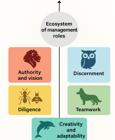
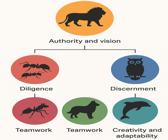
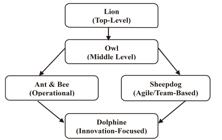
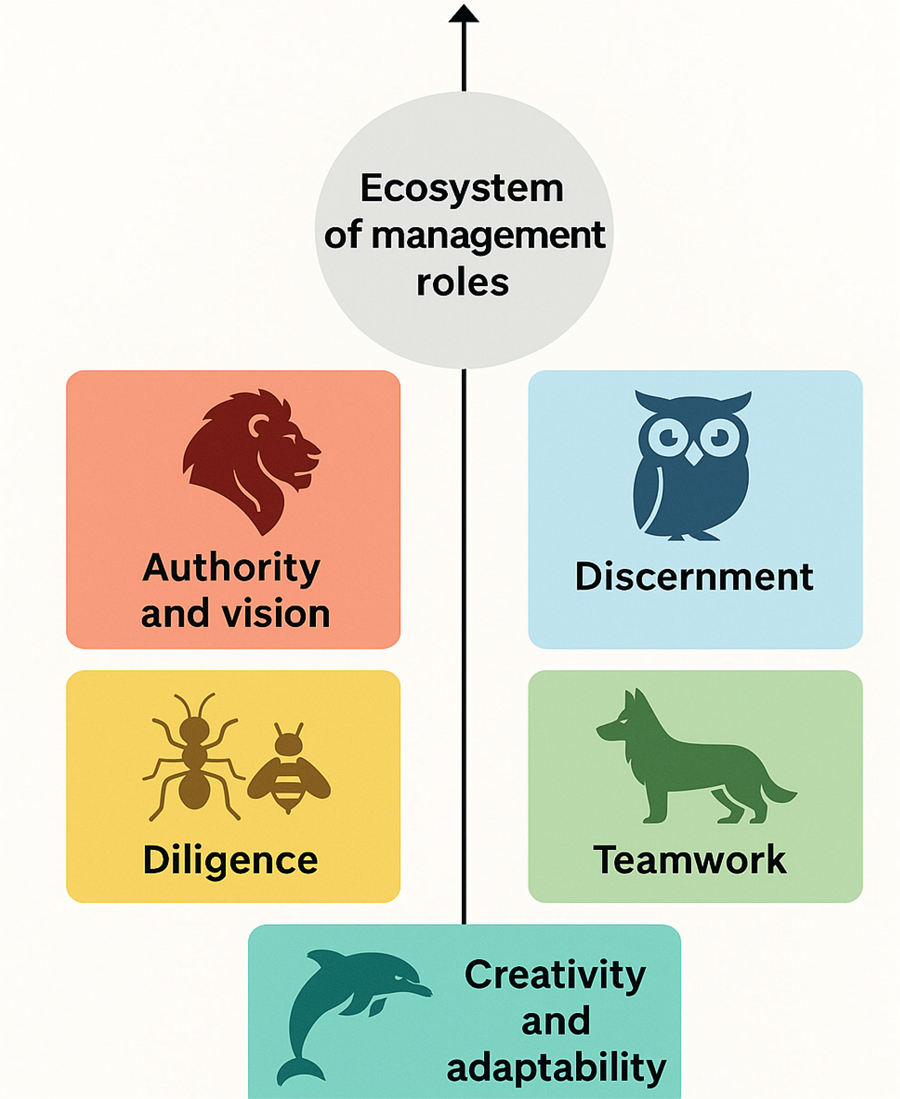
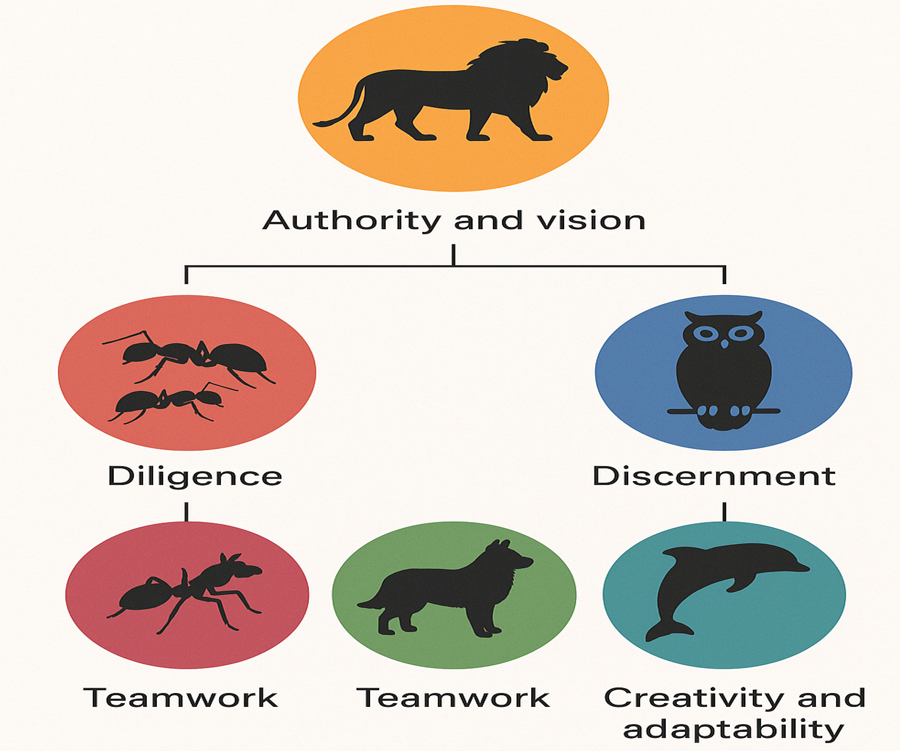
Combining the five archetypes of the lion, the owl, the ant/bee, the sheepdog, and the dolphin, one could create a more complex image of leadership at different levels of the organization. Each of these metaphors corresponds to different skills: collaboration represented by an agile work style, vision by senior leadership, strategy by middle management, operations by staff itself, and creativity by innovative leadership. The lion takes the lead, the owls interpret the direction and offer specific steps, the ants and bees provide necessary services, the dolphins provide the organization’s creativity and agility, and the sheepdogs maintain order and care. Instead of working against one another, the stereotypes complement one another. This layering mimics the corporate workplace, where a diverse range of skills collaborate to support the organization’s operations (Brown, 2019; Stokes & Gabriel, 2019). Animal symbols can emotionally and intellectually connect workers with otherwise abstract representations of workplace behavior, provided they are motivating and engaging.
Animal symbolism can be effectively incorporated into leadership or onboarding training programs, as well as change management initiatives, since it is a universal language that transcends national and organizational cultures. Furthermore, it raises ethical, social, and practical questions (Heracleous & Jacobs, 2022; Tsoukas, 2020). The intended archetypal model, which provides a better understanding of which phenomena should be recorded initially, has generally shown itself to be a practical and adaptable tool in the field of diverse organizations.
4.7 Contribution of Animal Archetypes to Management Productivity
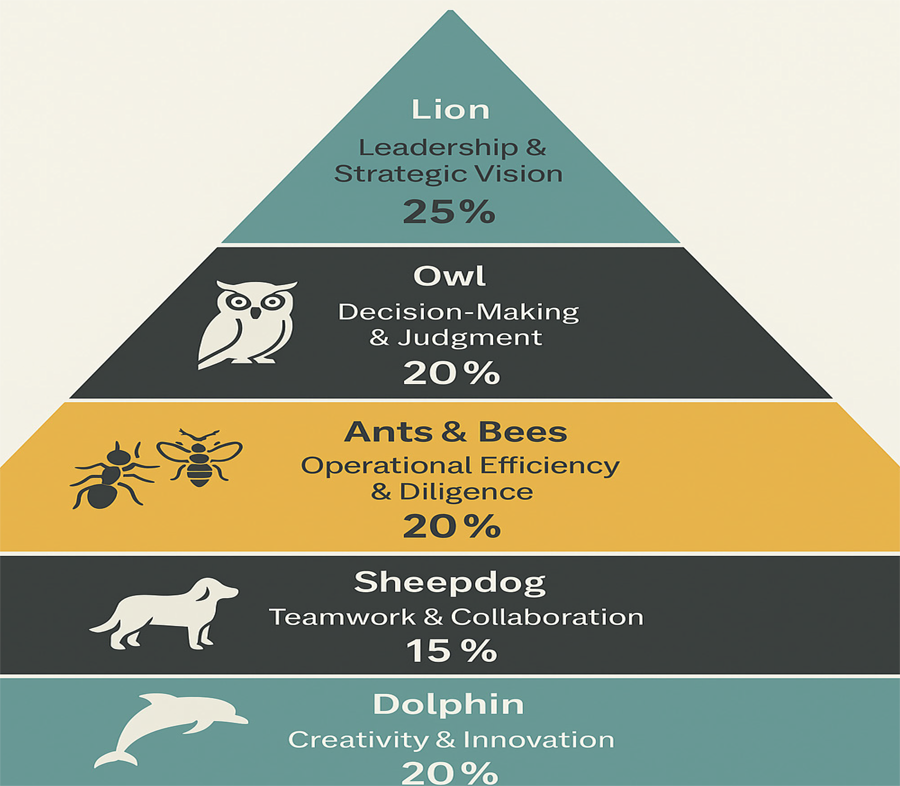
While the archetypes are inherently interpretive, they can be mapped to empirically studied managerial roles to approximate their relative contribution to overall productivity. The Lion, embodying authority and strategic vision, is associated with leadership effectiveness, a factor shown to account for approximately 20 to 25 percent of organizational performance outcomes. Research has demonstrated that transformational and transactional leadership significantly enhance employee engagement, goal achievement, and overall productivity (Judge & Piccolo, 2004). This strategic influence underscores the slightly higher contribution of the Lion archetype in guiding organizational direction.
The Owl archetype, symbolizing discernment and judgment, corresponds to decision-making quality in organizations, which accounts for an estimated 15 to 20 percent of productivity. Effective decision-making, guided by cognitive rigor and foresight, is crucial for reducing risks, optimizing resource allocation, and ensuring long-term sustainability (Lovallo & Kahneman, 2003). Similarly, the Ants and Bees, representing diligence and operational consistency, contribute approximately 20 to 25 percent to overall productivity. Empirical studies in manufacturing and operations management show that disciplined, structured processes are strongly linked to efficiency improvements and organizational performance outcomes (MacDuffie, 1995).
Teamwork and collaboration, symbolized by the Sheepdog, account for about 10 to 15 percent of productivity. Strong collaborative dynamics improve problem-solving, coordination, and conflict resolution, thereby boosting group output and overall effectiveness (Salas, Sims, & Burke, 2005). Ultimately, the Dolphin archetype, which signifies creativity, innovation, and adaptability, contributes an estimated 15-20% to management productivity. Organizational research consistently shows that innovation and adaptive capabilities are key drivers of competitive advantage, especially in rapidly changing environments (Mumford, Scott, Gaddis, & Strange, 2002).
It is critical to note that the sum of these contributions equals 100 percent; however, the model inherently assumes interdependency among the archetypes. No single role functions in isolation, and the highest levels of productivity emerge when all archetypes are actively engaged and balanced within the organizational ecosystem. The slightly higher weighting of the Lion reflects the strategic leverage of visionary leadership. At the same time, the contributions of diligence, discernment, collaboration, and innovation are equally essential to sustaining operational success and adaptability. Collectively, these archetypes provide a comprehensive framework for understanding how diverse managerial behaviors interact to drive productivity, offering both theoretical insights and practical guidance for leadership development, management training, and organizational design.
4.8 Integration of Metaphors with Leadership Theories
The developed archetypes resonate with and enrich contemporary leadership frameworks. The Lion embodies transformational leadership (Bass & Riggio, 2006), reflecting a vision, charisma, and moral conviction that inspire collective purpose. The Owl aligns with servant and ethical leadership (Greenleaf, 1977), symbolizing prudence, moral judgment, and empathetic stewardship. The Ant and Bee correspond to distributed or participative leadership models, emphasizing collective efficacy and interdependence within teams (Bandura, 1997). The Sheepdog exemplifies relational and agile leadership (Uhl-Bien, 2006), where influence is relational and adaptive, rather than positional. Finally, the Dolphin represents adaptive and innovative leadership (Heifetz, 1994), symbolizing resilience, creativity, and psychological safety in navigating uncertainty.
This interpretive design positions metaphor as a bridge between symbolic cognition and formal leadership theory. By translating abstract leadership constructs into vivid archetypes, the study moves beyond description to theoretical integration. The animal metaphors serve as heuristic mirrors for leadership paradigms, illustrating how vision (lion), wisdom (owl), collaboration (bee/ant), empathy (sheepdog), and innovation (dolphin) collectively form a balanced ecosystem of leadership capabilities. In this sense, metaphor becomes both analytical and pedagogical, a dual lens that reveals how leaders think, feel, and act across diverse cultural and organizational contexts.
4.9 Practical Organizational Applications
Integrating animal archetypes into organizational practices offers practical methods to enhance leadership, boost employee engagement, and strengthen organizational resilience. This approach goes beyond simple theory, equipping managers and trainers with flexible tools for effective communication, self-reflection, and skill-building. Leadership training can benefit from animal archetypes by turning abstract management ideas into clear, relatable images. These older men are idolized as role models of morality, strength, and vision; therefore, they are like lions, senior lions. When I ask her back, after she replies, I mean to ask, “Whose name then shall we take in vain?” When they think of themselves as herding dogs, nimble managers prioritize loyalty, safety, and teamwork. Leaders can use this symbolism to portray the spiritual warfare that is waged between the ‘follow me’ theory of leadership and the complex dynamics of empathy and vision, of getting things done and staying the course, of preserving the best of the past while moving into what is new, and respecting authority even when you disagree. It also enables role differentiation (Heracleous & Jacobs, 2022; Smith, 2019).
Employee induction: Metaphors provide a vital means for new employees to become oriented to the culture and work practices of their workplace. When illustrating tactical prudence (the owl) and operational diligence (ant or bee), the abstract nature of these two concepts is made definable and therefore more memorable. Such a procedure increases the likelihood of achieving value resonance and accelerates the process of more efficient integration of employees into the organization’s culture (Boussebaa & Tienari, 2021).
Controlling change: In transitional periods, metaphors serve as stories that everyone can understand, facilitating collective work on shared concerns. When effective, this imagery counteracts ‘relational distancing’ for leaders by connecting with employees on a visceral level, thereby energizing change efforts. For example, dolphins symbolize adaptability and curiosity in new settings; sheepdogs convey security in uncertain environments. “Narrative-based framing can also help to facilitate the types of institutional change that are shaped by trust development and increased coherence in action” (Fairhurst & Connaughton, 2020, p. 439; Stokes & Gabriel, 2019).
Cross‐cultural approaches: The field and industrial animal paradigms are not culturally or historically neutral; instead, they reflect social standards, industrial practices, and personal interpretations of these contexts. When we attempt to ensure that metaphoric systems are applicable, helpful, and healthy across different cultural settings, we need to recognize the distinctions between these terms. Additionally, the impact caused by animal metaphors is heavily influenced by cultural differences.
In Western individualistic cultures, the lion symbolizes courage, strength, and visionary leadership. In many Asian and African cultures, the elephant symbolizes leadership and embodies the qualities of wisdom, patience, and collective responsibility (Tsoukas, 2020). I would wager that ants and bees hold a more prominent place in the lore of cultures that value collective action over rugged individualism. The analogy of leadership and communication serves as a vessel for organizational expressions of timeless themes such as power, wisdom, and the cherished values of friendship. This reflects indigenous ways of thought and existence and may help bridge cultural gaps (Boussebaa & Tienari, 2021).
4.10 Applications Tailored to Specific Sectors
Certain animals may sometimes better represent particular industries due to industry-specific priorities that go beyond cultural associations. In tech fields, the owl, representing insight, adaptability, and strategic foresight, may be linked to innovation and knowledge management. In contrast, manufacturing or logistics sectors might prefer the cheetah, symbolizing speed, agility, and operational responsiveness (Heracleous & Jacobs, 2022). Service sectors could choose dolphins to highlight communication, creativity, and relational skills. This demonstrates the versatility of the metaphorical framework, enabling organizations to customize archetypes that mirror both cultural differences and industry-specific characteristics.
These insights suggest that while animal archetypes offer a universal symbolic language for management, their practical efficacy depends on meticulous contextualization and application. Employing a culturally and sectorally informed approach enhances not only the educational and communicative utility of the framework but also its credibility across global and industry-specific environments.
Animal archetypes provide a clear and engaging way to understand managerial roles; however, it is essential to acknowledge their limitations and the critiques of using metaphors. Metaphors naturally simplify complex realities, emphasizing some aspects of organizational life while hiding others (Oswick & Montgomery, 2020). This focused framing can be helpful, yet it can also be potentially problematic.
Rare situation. In specific organizational contexts, the misuse of metaphor can serve to obscure the complexities of management work. For example, the term “lion” might lead to a less focused approach on the collaborative, consultative, and ethical type of leadership required for long-term organizational health (Stokes & Gabriel, 2019). Discourse over imagery can be better grounded by linking visual metaphor to explicit role descriptions and models of competence, which help position imagery as not more important than professional practice.
Alternative Perspective. Related Coverage Opinion Richard Sennett Keeping Metaphors in Their Place Jan. 26, 2019 Critics claim that although “[m]etaphors can be very clever,” they run the risk of constraining thought in the cramped quarters of Artificial Functions. Dioma’s suggestion that strong adherence to models in organizational management may suppress the use of metaphor and restrict leadership flexibility is undoubtedly an important one. Accordingly, this calls for a reflexive methodology that scrutinizes metaphoric usage critically as a countervailing mode of argumentation. Metaphor-based programs should focus on the interpretation of metaphors rather than providing direction, as they are shaped to avoid resistance and enable flexibility and openness among managers (Brown, 2019).
Awards. It is essential to maintain this perspective to keep metaphors agile and creative. Wise uses of metaphor, in concert with other methods of expression, play a role in expanding comprehension without impoverishing sense, thereby bridging formality with grace.
5 CONCLUSION
In doing so, this paper aimed to: (a) identify the attributes and roles or natures of management levels through animal metaphors, (b) discuss how such images help set role expectations among people at different organizational levels, and (c) analyze how these metaphors reinforce organizational structure, communication, training, and learning. Animal archetypes appear to have the capacity to “dumb down” the overburdened leadership role to some extent, while still preserving the significance of myth and culture.
In research, metaphors serve as conceptual tools to illustrate various levels of management and their related activities. We depict the (higher) manager as a lion, the (middle) manager as an owl, the (operational) manager as ants or bees, the (agile) manager as a shepherd dog, and the manager of innovation as a dolphin. Together, they form an ecosystem of leadership that emphasizes the importance of aligning vision, self-investment, engagement, and innovation within a collective.
Additionally, the importance of thinking metaphorically is highlighted in learning and practice. It fosters a shared understanding between leaders and employees regarding the somewhat ambiguous aspects of leadership, encourages leaders to exhibit leadership behaviors, and serves as a repository of stories for purposes such as new employee orientation or change management. One of its more interesting features is that the framework can be adapted across different cultures and sectors, but it also serves as a warning against those who might misuse it to “dumb things down.”
This article enhances our understanding of the symbolic elements in management education, organizational communication, and the concept of cosmic elbows. It demonstrates how the careful use of animal metaphors can facilitate the understanding and teaching of the paradoxes that underpin managerial work in today’s organizations.
6 RECOMMENDATIONS
Based on the results and conclusions of this study, the following recommendations are proffered for academic and practical consideration:
Effective leadership development programs should focus on using animal archetypes to help managers gain insight into their responsibilities and leadership behavior. For example, a CEO might develop himself into the lion role and cultivate the symbolic qualities of the powerful, yet empathic leader, or an executive takes on the owl role to become more effective as a hiring influencer and judge of character.
Some of these metaphors are also continued in a newcomer induction, which intensifies the brand’s personality and roles, creating a perfect fit. Animal metaphors can be used in HR to help define a brand, make roles more concrete, or even describe the desired competencies in a candidate. This attitude fosters awareness of abstract hierarchies and diverse local cultural forms, making management more perspective-oriented towards the individual and the present moment.
Leaders, as caretakers of an organization, can create conditions during transformation that enable the use of archetypes to ease resistance and increase acceptance of change. For instance, dolphins represent creativity and adaptability, whereas playing the sheepdog role can also convey safety and the spirit of teamwork when the going gets tough.
International organizations could gain significantly by identifying local tropes to enhance the effectiveness and value of their programs. It can be more potent in some cultures, for example, to use the metaphor of a bee or an elephant when referring to leadership than it is to use the lion, which is a symbol so familiar to us.
Metaphors can also help soften the inflexibility of job stereotypes and provide a more nuanced understanding of roles. In this way, the transparency of managerial behavior comes about as a process of learning rather than an externally imposed constraint.
Other industries may develop their own archetypes to meet their needs. For example, the dolphin might be better suited for occupations that require strong interpersonal skills, such as those involving relationships and communication. At the same time, the cheetah might represent speed in the fast-paced world of logistics.
6.1 Academic and Policy Ramifications
The study’s findings have significant implications for academia and policy. Therefore, policymakers and professional associations should consider incorporating metaphor-based approaches into organizational training and leadership development policy documents. HR policies and national and industry training organizations can use metaphor-style archetypes to communicate managerial expectations in a way that is easy for users to remember and culturally relevant. If workers find the formal language of management to be dry, aloof, and alienating, metaphors provide a more relatable language.
Teaching management concepts in the classroom can be made more interesting by using animal fables. Summary: Through the use of metaphorical models of organizations, students in business school and university courses on organizational behavior, leadership, and management communication can relate what they learn in the classroom to real-world management practice. These strategies not only train technical skills but also encourage critical and relevant reflection (Cornelissen, 2020; Heracleous & Jacobs, 2022). For instance, conversations concerning the versatility and universality of symbolic communication in business may result from the extensive cross-cultural research on metaphorical mappings.
At the intersection of policy and educational practice, collaboration among academic institutions, practitioners, and industry can promote the development of metaphors in teacher preparation. These partnerships ensure that theoretical metaphors are relevant and applicable to the industry. Finally, incorporating animal archetypes into academic and policy discussions can help guide today’s managers toward a more perceptive and compassionate perspective based on an intuitive, targeted, and culturally acceptable worldview.
7 LIMITATIONS AND ETHICAL CONSIDERATIONS
Regardless of whether the manager’s story is true, archetypes are inherently limited in their applicability. They are not suitable for statistical generalization and are qualitative and metaphorical. Instead, these archetypes are best viewed as lenses through which to explore and understand ideas, rather than as predictions (since prophecy is better used as perspective, not as foretelling). They illuminate concepts that might hinder rather than support or guide effective management practices in different organizational settings. We also note that the relational aspect of archetypes as representational qualities should not be considered universal or applied on a global scale.
Furthermore, the meaning may be culture-dependent, and symbols are often culture-bound. We have overlooked the arbitrariness of the relationships that can be generalized from the behaviorist and symbolic contexts. For example, a divine eagle might, for someone from a culture that does not revere eagles, be associated with an eagle that merely symbolizes power or vision, or could be interpreted as a mundane symbol rather than a divine figure by someone from a different culture. As much as it serves as a valuable tool for analysis and explanation, it can also be a blunt instrument, especially when one tries to reduce interactions to ‘just’ abstract patterns and labels.
The investigation was conducted in accordance with established ethical principles. It focused on literature (a pulled study) with a clear purpose, concept analysis, and secondary data collection. Nevertheless, a strong commitment to academic standards regarding citation and honest representation of others’ work was observed, upholding the core values of reporting facts and respecting the deceased. According to the American Psychological Association (2020), these criteria are the same for management research conducted today. I was proud that I presented these results honestly, avoiding oversimplification or broad generalizations, and I included footnotes for every citation, interpretation, and theoretical perspective borrowed from others’ work.
While striving to be prudent as a scholar and to interpret the question with a sympathetic perspective on intention and ethics, there was also a struggle to balance these competing pressures. This perspective is highly beneficial for understanding the historical context and cultural background of the work. Moreover, it helps keep an otherwise strong and empirically viable model intact for consideration by future scholars, as “we need not risk having a potentially beneficial model,” like one that is highly valued, “become untrustworthy to the point that it loses its ground,” by managers, leadership groups, or organization scientists, “because researchers are unaware of” or fail to use correctly available information (Weick, 2000).
REFERENCES
- Alvesson, M., & Spicer, A. (2018). Metaphors we lead by: Understanding leadership in the real world Routledge.
-
Alvesson, M., & Spicer, A. (2018). Neo-institutional theory and organization studies: A conversation with metaphor. Organization Studies, 39(1), 123-145. https://doi.org/10.1177/0170840617708003
» https://doi.org/10.1177/0170840617708003 - American Psychological Association. (2020). Publication manual of the American Psychological Association (7th ed.). American Psychological Association.
- Bandura, A. (1997). Self-efficacy: The exercise of control W. H. Freeman.
- Bass, B. M., & Riggio, R. E. (2006). Transformational leadership (2nd ed.). Lawrence Erlbaum Associates.
- Beard, C. (2020). The experiential learning handbook: Turning theory into practice. Kogan Page.
-
Beard, C. (2020). Metaphor as pedagogy in management education. Management Learning, 51(1), 92-108. https://doi.org/10.1177/1350507619840707
» https://doi.org/10.1177/1350507619840707 -
Beard, C. (2020). Metaphor as a tool for organizational learning and reflection. Management Learning, 51(4), 431-447. https://doi.org/10.1177/1350507620909998
» https://doi.org/10.1177/1350507620909998 -
Boussebaa, M., & Tienari, J. (2021). Englishization and the politics of knowledge production in management studies. Journal of Management Inquiry, 30(1), 59-67. https://doi.org/10.1177/1056492620934069
» https://doi.org/10.1177/1056492620934069 -
Boussebaa, M., & Tienari, J. (2021). Global management education and cultural metaphors: Rethinking pedagogy for a connected world. Academy of Management Learning & Education, 20(2), 250-267. https://doi.org/10.5465/amle.2019.0106
» https://doi.org/10.5465/amle.2019.0106 -
Braun, V., & Clarke, V. (2021). One size fits all? What counts as quality practice in (reflexive) thematic analysis? Qualitative Research in Psychology, 18(3), 328-352. https://doi.org/10.1080/14780887.2020.1769238
» https://doi.org/10.1080/14780887.2020.1769238 - Braun, V., & Clarke, V. (2021). Thematic analysis: A practical guide Sage Publications.
-
Brown, A. D. (2019). Identities in organization studies. Organization Studies, 40(1), 7-24. https://doi.org/10.1177/0170840618765014
» https://doi.org/10.1177/0170840618765014 - Cornelissen, J. P. (2020). Corporate communication: A guide to theory and practice (6th ed.). Sage Publications.
- Creswell, J. W., & Poth, C. N. (2018). Qualitative inquiry and research design: Choosing among five approaches (4th ed.). Sage Publications.
-
Fairhurst, G. T., & Connaughton, S. L. (2020). Leadership: A communicative perspective. Leadership, 16(1), 3-27. https://doi.org/10.1177/1742715019882831
» https://doi.org/10.1177/1742715019882831 -
Gioia, D. A. (2017). On identity, image, and reputation in organizations: Clarifications and comments. Academy of Management Review, 42(3), 341-344. https://doi.org/10.5465/amr.2016.0509
» https://doi.org/10.5465/amr.2016.0509 - Greenleaf, R. K. (1977). Servant leadership: A journey into the nature of legitimate power and greatness. Paulist Press.
- Heifetz, R. A. (1994). Leadership without easy answers Harvard University Press.
-
Heracleous, L., & Jacobs, C. D. (2022). Crafting strategy: Embodied metaphors in practice. Organization Studies, 43(4), 511-530. https://doi.org/10.1177/01708406211031988
» https://doi.org/10.1177/01708406211031988 -
Heracleous, L., & Jacobs, C. D. (2022). Organizational symbolism and leadership: Metaphors in practice. Academy of Management Perspectives, 36(1), 78-95. https://doi.org/10.5465/amp.2019.0142
» https://doi.org/10.5465/amp.2019.0142 -
Heracleous, L., & Jacobs, C. D. (2022). Strategic leadership through metaphoric communication. Journal of Business Strategy, 43(4), 253-263. https://doi.org/10.1108/JBS-02-2021-0031
» https://doi.org/10.1108/JBS-02-2021-0031 -
Jackson, B. (2020). Reimagining leadership metaphors in management education. Management Learning, 51(5), 579-596. https://doi.org/10.1177/1350507620924162
» https://doi.org/10.1177/1350507620924162 -
Jackson, T. (2020). Animal archetypes in organizational behavior: Symbolism, leadership, and culture. Journal of Management Inquiry, 29(4), 423-437. https://doi.org/10.1177/1056492620923147
» https://doi.org/10.1177/1056492620923147 -
Judge, T. A., & Piccolo, R. F. (2004). Transformational and transactional leadership: A meta-analytic test of their relative validity. Journal of Applied Psychology, 89(5), 755-768. https://doi.org/10.1037/0021-9010.89.5.755
» https://doi.org/10.1037/0021-9010.89.5.755 -
Kendall, J. E., & Kendall, K. E. (2020). Storytelling as a teaching tool: An exploration of metaphors in management education. Decision Sciences Journal of Innovative Education, 18(2), 127-145. https://doi.org/10.1111/dsji.12206
» https://doi.org/10.1111/dsji.12206 - Kendall, K. E., & Kendall, J. E. (2020). Systems analysis and design (10th ed.). Pearson.
- Lovallo, D., & Kahneman, D. (2003). Delusions of success: How optimism undermines executives' decisions. Harvard Business Review, 81(7), 56-63.
-
MacDuffie, J. P. (1995). Human resource bundles and manufacturing performance: Organizational logic and flexible production systems in the world auto industry. Industrial and Labor Relations Review, 48(2), 197-221. https://doi.org/10.1177/001979399504800201
» https://doi.org/10.1177/001979399504800201 - Morgan, G. (2006). Images of organization (Updated ed.). Sage Publications
-
Mumford, M. D., Scott, G. M., Gaddis, B., & Strange, J. M. (2002). Leading creative people: Orchestrating expertise and relationships. The Leadership Quarterly, 13(6), 705-750. https://doi.org/10.1016/S1048-9843 (02)00158-3
» https://doi.org/10.1016/S1048-9843 (02)00158-3 -
Oswick, C., & Montgomery, D. (2020). Metaphor and organization: Beyond a new old idea. Organization Studies, 41(6), 843-867. https://doi.org/10.1177/0170840619893745
» https://doi.org/10.1177/0170840619893745 -
Oswick, C., & Montgomery, J. (2020). Metaphor in organizational research: Past, present, and future. International Journal of Management Reviews, 22(2), 171-190. https://doi.org/10.1111/ijmr.12236
» https://doi.org/10.1111/ijmr.12236 -
Salas, E., Sims, D. E., & Burke, C. S. (2005). Is there a "big five" in teamwork? Small Group Research, 36(5), 555-599. https://doi.org/10.1177/1046496405277134
» https://doi.org/10.1177/1046496405277134 -
Smith, A. (2019). Animal symbolism in management and leadership studies: A conceptual framework. Journal of Management and Organization, 25(3), 345-362. https://doi.org/10.1017/jmo.2019.25
» https://doi.org/10.1017/jmo.2019.25 -
Smith, J. (2019). Leadership metaphors and animal archetypes in organizational practice. Leadership, 15(5), 565-582. https://doi.org/10.1177/1742715018793748
» https://doi.org/10.1177/1742715018793748 -
Smith, P. (2019). The use of animal metaphors in leadership and organizational studies. Journal of Management Inquiry, 28(1), 45-59. https://doi.org/10.1177/1056492618803250
» https://doi.org/10.1177/1056492618803250 -
Smith, R. (2019). Wolves, lions, and owls: Animal metaphors and the construction of managerial identity. Organization, 26(3), 377-396. https://doi.org/10.1177/1350508418812589
» https://doi.org/10.1177/1350508418812589 -
Stokes, P., & Gabriel, Y. (2019). Animals and symbolic representation in management discourse. Journal of Management Inquiry, 28(3), 298-310. https://doi.org/10.1177/1056492618773958
» https://doi.org/10.1177/1056492618773958 - Tracy, S. J. (2020). Qualitative research methods: Collecting evidence, crafting analysis, communicating impact (2nd ed.). Wiley-Blackwell.
-
Tsoukas, H. (2020). Culture and metaphor in organization studies: A relational perspective. Organization Theory, 1(1), 1-19. https://doi.org/10.1177/2631787720914213
» https://doi.org/10.1177/2631787720914213 -
Uhl-Bien, M. (2006). Relational leadership theory: Exploring the social processes of leadership and organizing. The Leadership Quarterly, 17(6), 654-676. https://doi.org/10.1016/j.leaqua.2006.10.007
» https://doi.org/10.1016/j.leaqua.2006.10.007 -
Weick, K. E. (2000). Emergent change as a universal in organizations. Organizational Science, 11(6), 679-681. https://doi.org/10.1287/orsc.11.6.679.8070
» https://doi.org/10.1287/orsc.11.6.679.8070 - Weick, K. E. (1995). Sensemaking in organizations Sage Publications.
-
Plagiarism Check:
The ReA/UFSM maintains the practice of submitting all documents approved for publication to the plagiarism check, using specific tools, e.g.: Turnitin.
-
Data availability statement:
Data will be available upon request
Edited by
-
Edited by:
Jordana Marques Kneipp
Data will be available upon request

 Source: the author
 Source: the author
 Source: the authors
 Source: the author