 Preparation of polyacrylonitrile mixed matrix ultrafiltration membranes doped with aminated MIL-125(Ti) and evaluation of their anti-fouling performance in oil-water separation
ABSTRACT
Mixed matrix ultrafiltration membranes based on polyacrylonitrile (PAN) and aminated MIL-125(Ti) (NH₂-MIL-125(Ti)) were fabricated by non-solvent induced phase separation for the treatment of oil-in-water emulsions. NH₂-MIL-125(Ti) nanoparticles with disc-like morphology and high crystallinity were successfully synthesized and incorporated into PAN at loadings of 0.5–5.0 wt%. Structural, chemical, wetting, mechanical, and thermal analyses confirmed successful MOF incorporation and showed that membrane hydrophilicity, porosity, surface area, and tensile strength improved up to an optimal filler loading of 2.0 wt%, whereas excessive loading caused partial aggregation and pore blockage. The optimized M3 membrane exhibited a water contact angle of 45.1°, BET surface area of 43.7 m²/g, tensile strength of 5.2 MPa, and pressure-normalized pure water flux of 552.1 ± 18.4 L·m⁻²·h⁻¹·bar⁻¹. During filtration of a 1000 mg/L soybean-oil-in-water emulsion, M3 maintained 99.7 ± 0.2% oil rejection, retained approximately 68% of its normalized flux after 60 min, achieved a first-cycle flux recovery ratio of 96.2%, and showed an irreversible fouling ratio of only 3.8%. The improved performance is attributed to the combined effects of enhanced surface hydration, additional water-transport pathways, and weaker oil adhesion at the hydrated MOF-containing interface. These results indicate that NH₂-MIL-125(Ti) is an effective functional filler for constructing high-flux and fouling-resistant PAN membranes for oily wastewater treatment.
Keywords:
Polyacrylonitrile membrane; NH₂-MIL-125(Ti); Mixed matrix membrane; Oil-water emulsion separation; Antifouling
1. INTRODUCTION
The escalating global issue of water contamination, driven by industrialization and population growth, poses a significant threat to both ecological balance and human health. Oily wastewater, a pervasive and persistent byproduct of industries such as petroleum refining, petrochemicals, metallurgy, and food processing, is a particularly challenging form of pollution. These wastewaters often exist as stable oil-in-water emulsions, where microscopic oil droplets are dispersed throughout an aqueous phase, making their separation by conventional methods like gravity settling or coalescence highly inefficient. Consequently, there is an urgent and growing demand for advanced, cost-effective, and environmentally benign technologies for the remediation of oily wastewater.
Among the various separation technologies, membrane-based processes, particularly ultrafiltration (UF), have garnered substantial attention due to their distinct advantages, including high separation efficiency, operational simplicity, low energy consumption, and a compact footprint. Polyacrylonitrile (PAN) is a widely utilized polymer for fabricating UF membranes owing to its excellent thermal stability, chemical resistance (especially to solvents), and robust mechanical properties [1]. However, the inherently hydrophobic nature of the PAN polymer surface makes it susceptible to severe membrane fouling when treating oily wastewater. The adsorption and deposition of oil droplets and other organic foulants on the membrane surface and within its pores lead to a rapid decline in permeate flux, an increase in operational pressure, and a reduction in membrane lifespan, thereby compromising the economic viability and sustainability of the process.
To address this critical challenge, significant research efforts have been directed toward modifying membrane properties, with a primary focus on enhancing surface hydrophilicity. The creation of a hydrophilic surface can promote the formation of a tightly bound hydration layer, which acts as a physical and energetic barrier to repel hydrophobic oil droplets, thus mitigating fouling. One of the most promising strategies to achieve this is the development of mixed matrix membranes (MMMs), where functional nanomaterials are incorporated into a polymer matrix to create a composite material with synergistic properties [2]. This approach combines the processability of polymers with the unique functionalities of inorganic or organic fillers.
In recent years, Metal-Organic Frameworks (MOFs), a class of crystalline porous materials constructed from metal ions or clusters coordinated to organic ligands, have emerged as exceptional candidates for use as fillers in MMMs. Their unparalleled structural diversity, ultrahigh porosity, large specific surface area, and tunable functionality make them highly attractive for various applications, including separation processes [3]. Among the vast family of MOFs, MIL-125(Ti), a titanium-based MOF, is particularly noteworthy due to the inherent hydrophilicity and photocatalytic activity of its titanium-oxo clusters. Furthermore, its organic linker, terephthalic acid, can be readily functionalized. By using 2-aminoterephthalic acid (NH2-BDC) as the organic linker, an aminated derivative, NH2-MIL-125(Ti), can be synthesized [4]. The presence of pendant amine (–NH2) functional groups not only enhances the hydrophilicity of the MOF but also provides active sites for potential chemical interactions with the polymer matrix, improving the compatibility and dispersion of the filler [5]. The incorporation of hydrophilic, porous NH2-MIL-125(Ti) nanoparticles into a PAN matrix is hypothesized to simultaneously enhance the membrane’s permeability by introducing additional water transport channels and augment its anti-fouling properties by increasing surface hydrophilicity.
Recent literature also highlights the importance of integrating porous or hydrophilic nanofillers into polymeric ultrafiltration membranes to balance permeability, selectivity, fouling resistance, and processability. Materials-based remediation of oily wastes remains an active topic in Matéria, including nanomaterial-assisted treatment of oily sludge [6]. Closely related membrane studies have reported Al-MOF/SPANI-PES membranes with improved hydrophilicity and antifouling behavior [7], amino-functionalized TiO2 nanotube/polysulfone membranes with enhanced flux recovery [8], Mg-MOF-PANI/SPANI/PES membranes in which polymer-filler interactions improved pore morphology and antifouling performance [9], PAN/PVDF electrospun nanofiber membranes for oil/water separation [10], and hydroxylated amino-functionalized TiO2 nanotube membranes for superior water filtration [11]. These reports confirm that hydrophilic functionality, filler dispersion, and interfacial compatibility are decisive factors in next-generation antifouling membranes, but they also show that each polymer-filler system requires separate optimization because excessive filler loading can increase surface heterogeneity and mass-transfer resistance. Despite these advances, studies focusing specifically on the direct incorporation of aminated titanium-based MOFs, such as NH2-MIL-125(Ti), into a PAN matrix for pressure-driven oil-water emulsion ultrafiltration remain limited. In particular, the relationship among filler concentration, phase-inversion morphology, surface hydration, oil rejection, flux recovery, and irreversible fouling has not been systematically clarified for PAN/NH2-MIL-125(Ti) membranes. Therefore, this study was designed to fabricate PAN/NH2-MIL-125(Ti) mixed matrix ultrafiltration membranes with different filler loadings (0, 0.5, 1.0, 2.0, and 5.0 wt%) by NIPS, characterize their morphology, chemistry, crystalline structure, surface properties, and mechanical and thermal stability, and evaluate their separation and antifouling performance toward a model oil-in-water emulsion. The goal is to establish a structure-property-performance relationship that identifies both the beneficial role of NH2-MIL-125(Ti) and the performance penalty associated with excessive filler loading.
2. MATERIALS AND METHODS
2.1. Materials
Polyacrylonitrile (PAN, average Mw ≈ 150,000 g/mol) was purchased from Sigma-Aldrich (St. Louis, MO, USA). N,N-dimethylformamide (DMF, 99.8%) and methanol (MeOH, 99.8%) were procured from Fisher Scientific (Hampton, NH, USA). The precursors for the MOF synthesis, Titanium(IV) butoxide (Ti(OBu)4, 97%) and 2-aminoterephthalic acid (NH2-BDC, 99%), were supplied by Alfa Aesar (Haverhill, MA, USA). Soybean oil was purchased from a local supermarket, and Tween 80 (polyoxyethylene sorbitan monooleate) was used as a surfactant, obtained from Merck (Darmstadt, Germany). Non-woven polyester fabric, used as a support layer for the membranes, was supplied by Freudenberg (Weinheim, Germany). Deionized (DI) water with a resistivity of 18.2 MΩ·cm was produced by a Milli-Q system (Millipore, Billerica, MA, USA) and used throughout all experiments. All chemicals were of analytical grade and were used as received without further purification.
2.2. Synthesis of NH2-MIL-125(Ti) nanoparticles
The NH2-MIL-125(Ti) nanoparticles were synthesized using a modified solvothermal method reported in the literature [12–13]. In a typical synthesis, 1.81 g (10 mmol) of 2-aminoterephthalic acid was dissolved in a mixed solvent of 60 mL of DMF and 10 mL of methanol in a 250 mL beaker under magnetic stirring. Subsequently, 2.45 mL (7.2 mmol) of Titanium(IV) butoxide was added dropwise to the solution under vigorous stirring. The mixture was stirred continuously for 30 minutes until a homogeneous yellow solution was formed. This solution was then transferred into a 100 mL Teflon-lined stainless-steel autoclave and heated in an oven at 150 °C for 48 hours [14]. After the reaction, the autoclave was allowed to cool naturally to room temperature. The resulting yellow powder was collected by centrifugation at 8000 rpm for 15 minutes and washed thoroughly with fresh DMF three times and then with fresh methanol three times to remove any unreacted precursors and residual solvent. Finally, the synthesized NH2-MIL-125(Ti) nanoparticles were dried in a vacuum oven at 80 °C for 12 hours before characterization and use.
2.3. Fabrication of PAN/NH2-MIL-125(Ti) membranes
A series of PAN/NH2-MIL-125(Ti) mixed matrix membranes were fabricated via the non-solvent induced phase separation (NIPS) technique [15]. First, five separate casting solutions were prepared. For the pristine PAN membrane (designated M0), 15 g of PAN powder was dissolved in 85 g of DMF and stirred at 60 °C for 12 hours to form a homogeneous, transparent solution. For the mixed matrix membranes, predetermined amounts of the synthesized NH2-MIL-125(Ti) powder were first dispersed in 40 g of DMF using an ultrasonic bath for 2 hours to ensure a uniform dispersion. The required filler loadings were 0.5, 1.0, 2.0, and 5.0 wt% with respect to the mass of PAN. This MOF suspension was then added to a solution containing 15 g of PAN in 45 g of DMF. The resulting mixture was stirred at 60 °C for another 12 hours to form a homogeneous casting dope. The prepared membranes were designated M1 (0.5 wt%), M2 (1.0 wt%), M3 (2.0 wt%), and M4 (5.0 wt%), respectively [16].
Prior to casting, the dopes were degassed in an ultrasonic bath for 30 minutes to remove any trapped air bubbles. The homogeneous dope was then uniformly cast onto a clean glass plate with a non-woven polyester fabric support using a casting knife with a gate height of 200 μm. Immediately after casting, the entire assembly was immersed into a coagulation bath containing DI water at room temperature (25 ± 1 °C). The nascent membrane was allowed to undergo phase inversion for approximately 10 minutes until it detached from the glass plate. The fabricated membranes were then thoroughly washed with DI water to remove any residual DMF and stored in a DI water bath at 4 °C for at least 24 hours before any testing or characterization.
2.4. Membrane performance evaluation
Membrane performance was evaluated using a laboratory-scale cross-flow filtration setup with an effective membrane area of 42 cm2. Before each test, the membranes were pre-compacted with DI water at 0.15 MPa for 30 minutes until a stable flux was achieved. The pressure-normalized pure water flux (PWF, Jw) was then measured at 0.1 MPa (approximately 1 bar) and 25 °C, and the values are reported as L·m−2·h−1·bar−1 to allow comparison with literature data. The flux was calculated using the equation: Jw = V / (A × Δt × ΔP), where V is the volume of permeate (L), A is the effective membrane area (m2), Δt is the filtration time (h), and ΔP is the transmembrane pressure (bar) [17].
A synthetic oil-in-water emulsion was prepared by mixing soybean oil (1000 mg/L) and Tween 80 (100 mg/L) in DI water, followed by vigorous stirring for 2 hours and ultrasonication for 30 minutes to form a stable, milky white emulsion. The oil concentration in the feed (Cf) and permeate (Cp) was determined using a UV-Vis spectrophotometer (Shimadzu UV-2600) at a wavelength of 210 nm. The oil rejection (R) was calculated as: R (%) = (1 – Cp / Cf) × 100% [18].
The anti-fouling property of the membranes was investigated through a three-cycle filtration experiment [19]. Each cycle consisted of three steps: (1) filtering DI water for 60 min to obtain the initial pure water flux (Jw1); (2) filtering the 1000 mg/L oil-in-water emulsion for 60 min to record the permeate flux (Jp); (3) cleaning the fouled membrane by flushing with DI water for 30 min. After cleaning, the pure water flux of the cleaned membrane (Jw2) was measured again. The Flux Recovery Ratio (FRR) was calculated as: FRR (%) = (Jw2 / Jw1) × 100%. To further quantify the fouling behavior, the total fouling ratio (Rt), reversible fouling ratio (Rr), and irreversible fouling ratio (Rir) were calculated using the following equations [20]: Rt (%) = (Jw1 - Jp) / Jw1 × 100%; Rir (%) = (Jw1 - Jw2) / Jw1 × 100%; Rr (%) = Rt - Rir = (Jw2 - Jp) / Jw1 × 100%.
3. RESULTS AND DISCUSSION
3.1. Characterization of NH2-MIL-125(Ti) nanoparticles
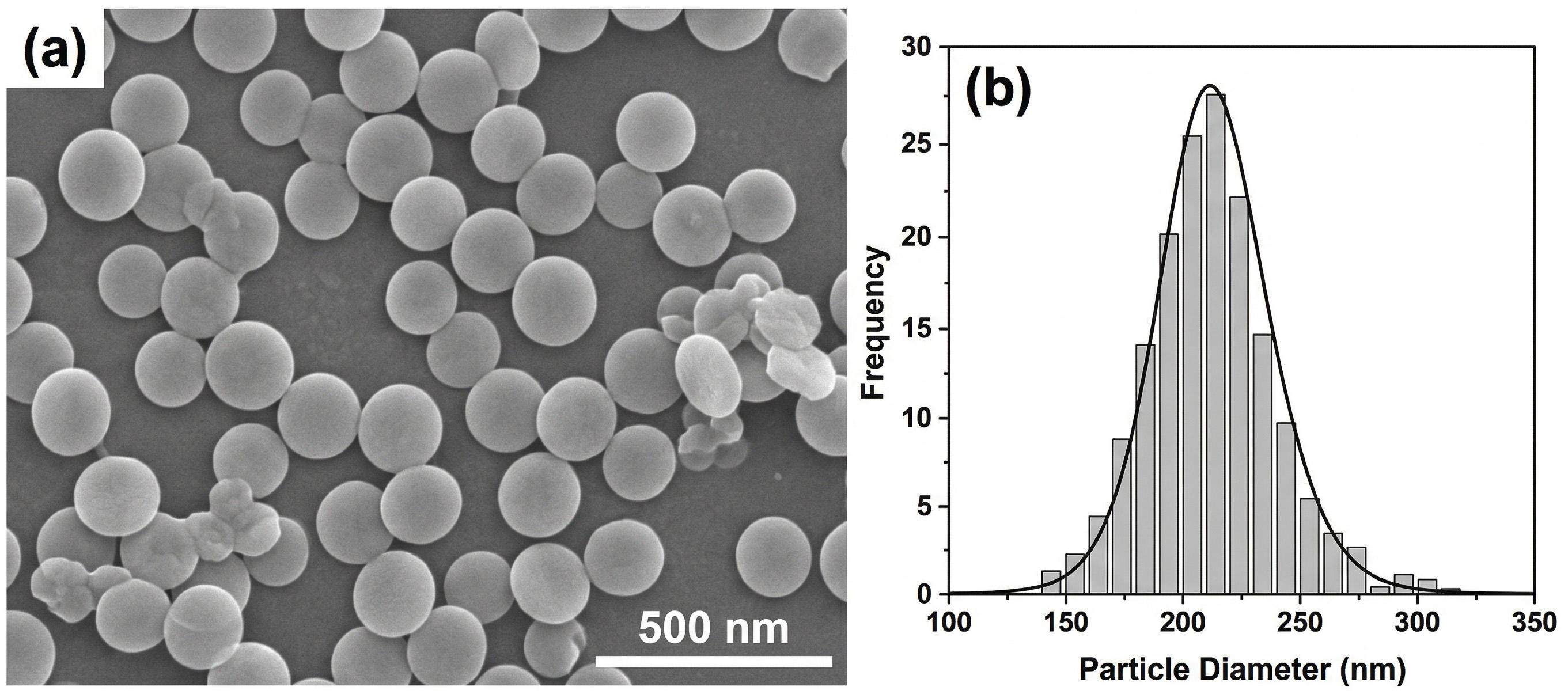
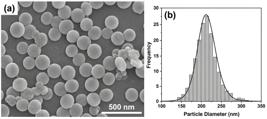
The successful synthesis of the NH2-MIL-125(Ti) nanoparticles is a prerequisite for the fabrication of high-performance mixed matrix membranes. The morphology and structure of the synthesized MOF were therefore thoroughly characterized. Figure 1 presents the SEM image and particle size distribution of the as-synthesized NH2-MIL-125(Ti). The image reveals that the nanoparticles exhibit a uniform, disc-like morphology with a relatively smooth surface. The particle size distribution analysis, conducted by measuring over 100 particles from multiple SEM images, indicates a narrow size distribution with an average diameter of 215 ± 30 nm. This uniform and well-defined nanoscale dimension is highly advantageous for achieving homogeneous dispersion within the polymer matrix and minimizing the formation of non-selective defects at the polymer-filler interface.
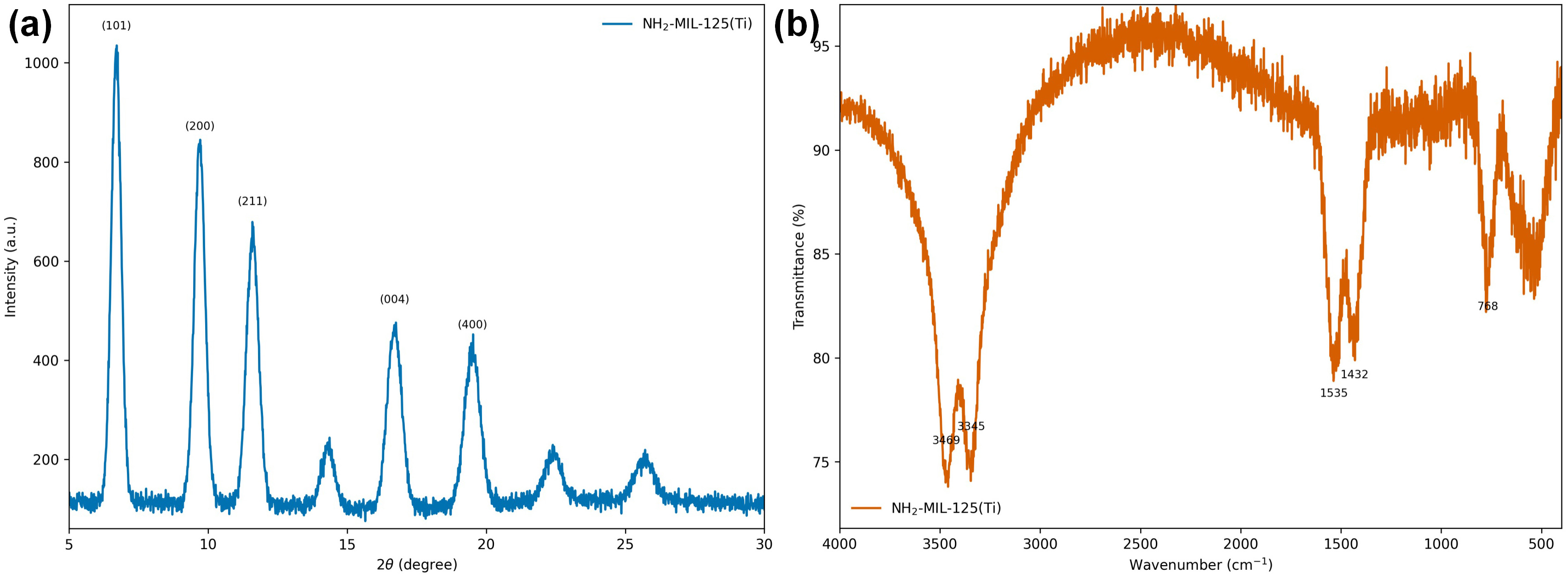
The crystallinity and phase purity of the synthesized NH2-MIL-125(Ti) were confirmed by XRD analysis, as shown in Figure 2a. The diffractogram displays a series of sharp and intense diffraction peaks, indicating the highly crystalline nature of the material. The prominent peaks observed at 2θ values of 6.7°, 9.7°, 11.6°, 16.7°, and 19.5° correspond to the (101), (200), (211), (004), and (400) crystal planes, respectively. These peak positions are in excellent agreement with the simulated pattern and previously reported experimental data for the tetragonal structure of NH2-MIL-125(Ti), confirming the successful formation of the desired crystalline phase without any detectable impurities [21–22].
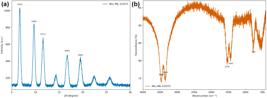
Structural characterization of the synthesized NH2-MIL-125(Ti) nanoparticles: (a) XRD pattern confirming the crystalline phase and purity; (b) FTIR spectrum showing the characteristic functional groups of the aminated titanium-based metal-organic framework.
The chemical structure of the NH2-MIL-125(Ti) was further investigated by FTIR spectroscopy, with the resulting spectrum presented in Figure 2b. The spectrum exhibits several characteristic absorption bands that validate the coordination of the 2-aminoterephthalic acid linkers with the titanium-oxo clusters. The broad band centered around 3400 cm−1 is attributed to the O-H stretching vibrations of adsorbed water molecules. Crucially, the two distinct sharp peaks at 3469 cm−1 and 3345 cm−1 are assigned to the asymmetric and symmetric stretching vibrations of the primary amine (-NH2) groups, respectively, confirming the successful incorporation of the amino-functionalized linker [23]. The strong absorption bands observed in the 1600-1300 cm−1 region are characteristic of the carboxylate groups. Specifically, the peaks at 1535 cm−1 and 1432 cm−1 correspond to the asymmetric and symmetric stretching vibrations of the O-C-O in the carboxylate groups coordinated to the titanium centers. The band appearing at approximately 768 cm−1 is related to the C-H bending vibrations of the benzene ring. Furthermore, the broad absorption in the lower wavenumber region, specifically around 650-450 cm−1, is attributed to the vibration of the Ti-O bonds within the inorganic titanium-oxo clusters, which form the secondary building units of the MOF structure [24]. These collective XRD and FTIR results unequivocally confirm the successful synthesis of highly crystalline, phase-pure NH2-MIL-125(Ti) nanoparticles with the intended chemical functionality.
3.2. Characterization of PAN/NH2-MIL-125(Ti) membranes
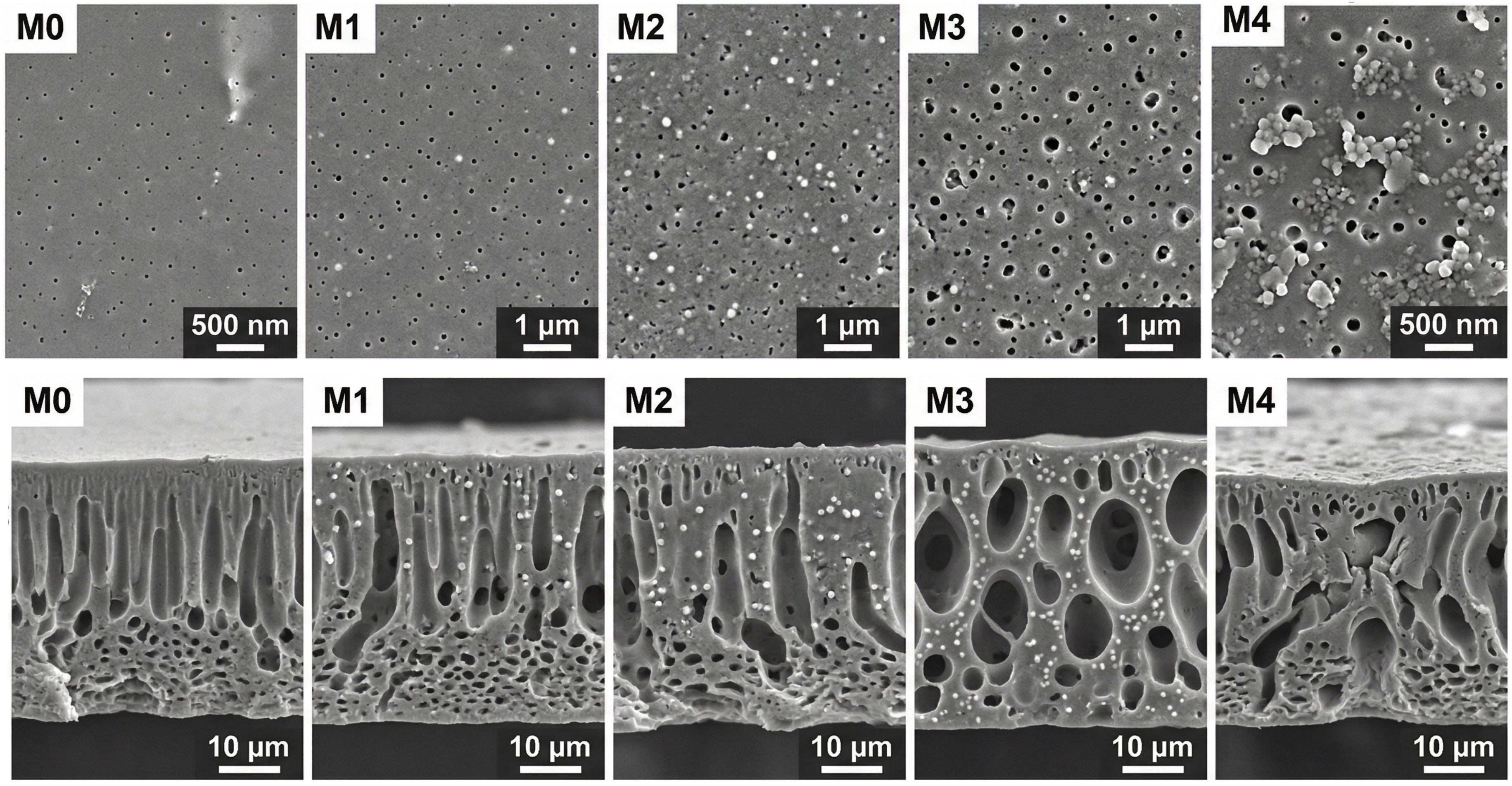
The morphology of the fabricated membranes, a critical factor influencing their separation performance, was examined by FE-SEM. Figure 3 displays the surface and cross-sectional images of the pristine PAN membrane (M0) and the composite membranes with varying NH2-MIL-125(Ti) content. The surface images (top row) reveal that all membranes exhibit a porous structure. The pristine M0 membrane shows a smooth surface with uniformly distributed pores. With the introduction of NH2-MIL-125(Ti) (M1, M2, M3), the surface porosity appears to increase, and the nanoparticles are generally well-dispersed and embedded within the polymer matrix. The hydrophilic nature of the MOF nanoparticles is known to accelerate the solvent/non-solvent exchange rate during the phase inversion process, which can lead to the formation of a more porous and open surface structure [25]. However, at the highest loading of 5.0 wt% (M4), some visible agglomeration of the nanoparticles on the membrane surface is observed. This aggregation can potentially block some surface pores and create a more heterogeneous surface, which may adversely affect membrane performance.
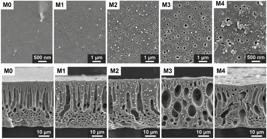
SEM images of the pristine and composite membranes: surface morphology (top row) and cross-sectional morphology (bottom row) of M0, M1, M2, M3, and M4 membranes with different NH2-MIL-125(Ti) loadings.
The cross-sectional images (bottom row) reveal that all membranes possess a typical asymmetric structure, consisting of a dense selective top layer and a porous sub-layer with finger-like macrovoids extending towards a sponge-like bottom layer. This structure is characteristic of membranes prepared via the NIPS method. For the pristine M0 membrane, the finger-like pores are well-defined and elongated. The incorporation of NH2-MIL-125(Ti) appears to influence this macrovoid structure. For instance, in membrane M3, the macrovoids become more pronounced and interconnected, suggesting a more permeable sub-structure that could contribute to higher water flux. This phenomenon is also attributed to the accelerated demixing process during phase inversion caused by the hydrophilic MOF filler. The uniform distribution of nanoparticles within the cross-section of M3 further confirms the good compatibility between the PAN matrix and the MOF at this loading.
Taken together, the SEM results indicate that NH2-MIL-125(Ti) does not merely act as an inert porous additive, but also alters the phase inversion kinetics of the PAN casting solution. At low to moderate loading, the hydrophilic filler accelerates the solvent/non-solvent exchange and promotes the formation of a more open substructure, which is favorable for water transport. Once the loading becomes excessive, however, local viscosity heterogeneity and particle-particle interactions become dominant, leading to aggregate-rich domains that interrupt the continuity of transport channels. This explains why membrane optimization depends on a balance between filler functionality and dispersion quality rather than on filler content alone.
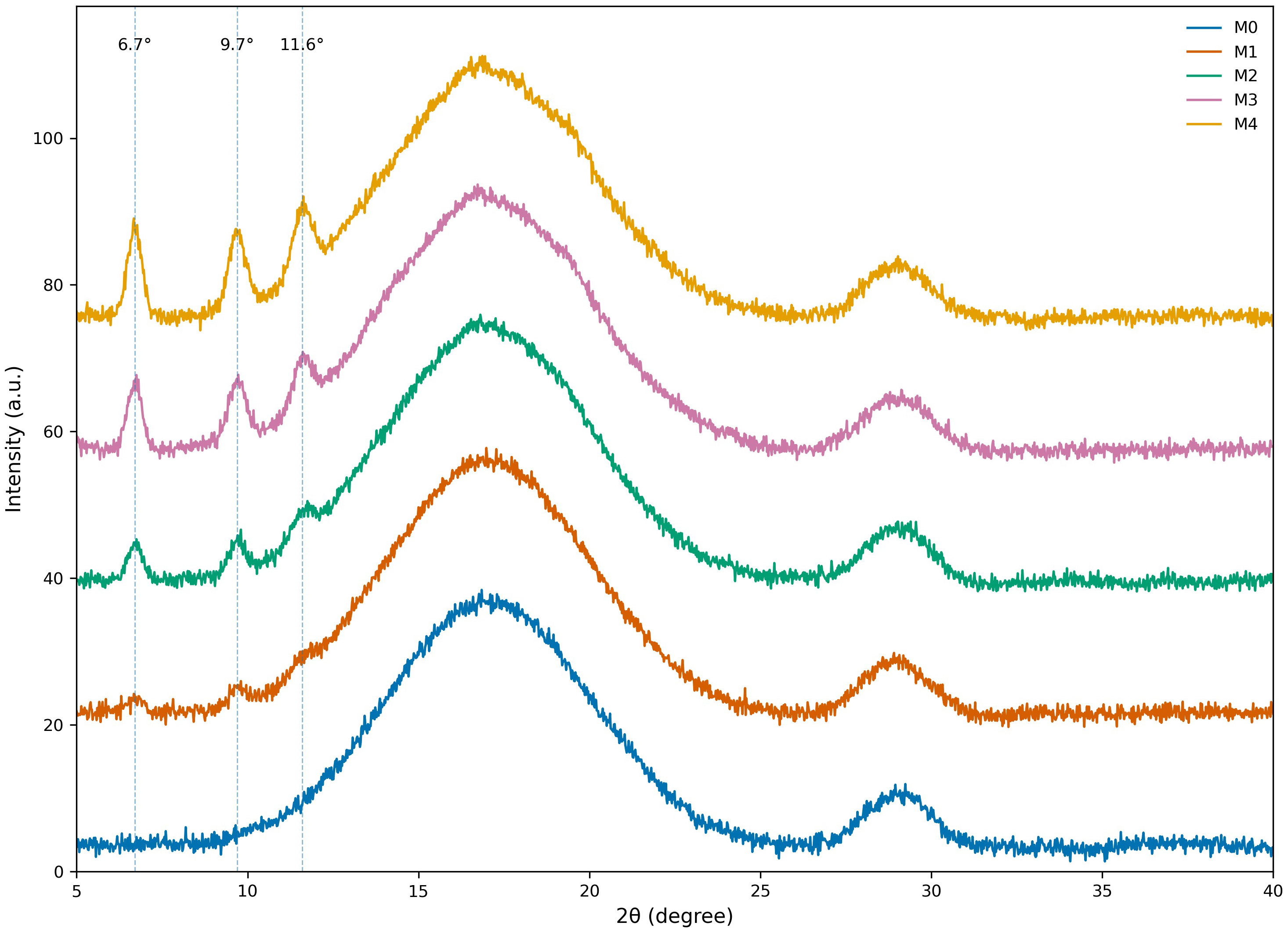
The successful incorporation of NH2-MIL-125(Ti) into the PAN matrix was further verified by XRD and FTIR analysis of the membranes. The XRD patterns of the membranes are shown in Figure 4. The pristine PAN membrane (M0) exhibits a broad diffraction halo centered at a 2θ value of approximately 17°, which is characteristic of the amorphous nature of polyacrylonitrile, along with a minor crystalline peak around 29°. As the NH2-MIL-125(Ti) content increases from M1 to M4, new diffraction peaks begin to emerge. Notably, for membranes M2, M3, and M4, the characteristic peaks of NH2-MIL-125(Ti) at 6.7°, 9.7°, and 11.6° become progressively more distinct. The intensity of these peaks correlates directly with the MOF loading concentration. This observation confirms that the crystalline structure of the MOF was preserved during the membrane fabrication process and that the nanoparticles were successfully embedded within the PAN matrix [26].
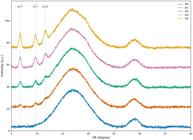
XRD patterns of pristine PAN membrane (M0) and PAN/NH2-MIL-125(Ti) mixed matrix membranes (M1–M4), showing the gradual appearance of characteristic NH2-MIL-125(Ti) diffraction peaks with increasing filler content.
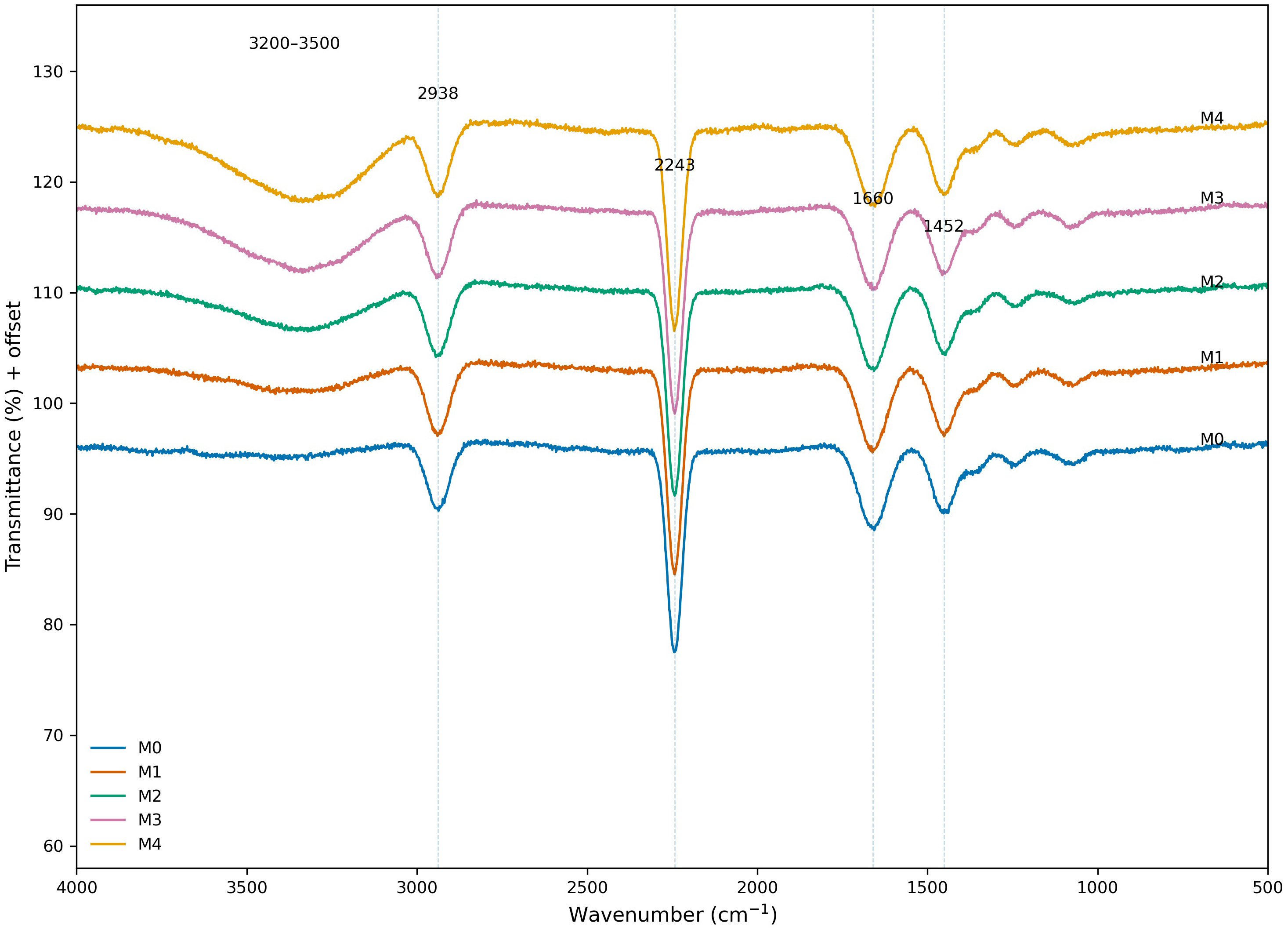
FTIR spectra of the membranes, presented in Figure 5, provide further evidence of the composite nature of the MMMs. All spectra display the characteristic absorption peaks of the PAN polymer. The sharp peak at 2243 cm−1 corresponds to the stretching vibration of the nitrile group (C≡N) [27]. The peaks at 2938 cm−1 and 1452 cm−1 are attributed to the C-H stretching and bending vibrations of the polymer backbone, respectively. A peak around 1660 cm−1 is likely due to C=O stretching from the partial hydrolysis of nitrile groups or residual DMF solvent. Upon the addition of NH2-MIL-125(Ti), the overall spectra of the composite membranes remain dominated by the PAN signals due to the relatively low filler content. However, careful inspection reveals subtle changes. A very broad band appears in the region of 3200–3500 cm−1, which becomes more prominent with increasing MOF loading. This band is an overlap of the N-H stretching vibrations from the MOF’s amine groups and O-H stretching from adsorbed water attracted to the hydrophilic filler, indicating the successful incorporation of the functional MOF.
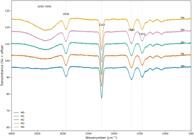
FTIR spectra of pristine PAN membrane (M0) and PAN/NH2-MIL-125(Ti) mixed matrix membranes (M1–M4), indicating the characteristic PAN bands and the contribution of hydrophilic NH2-MIL-125(Ti) functional groups.
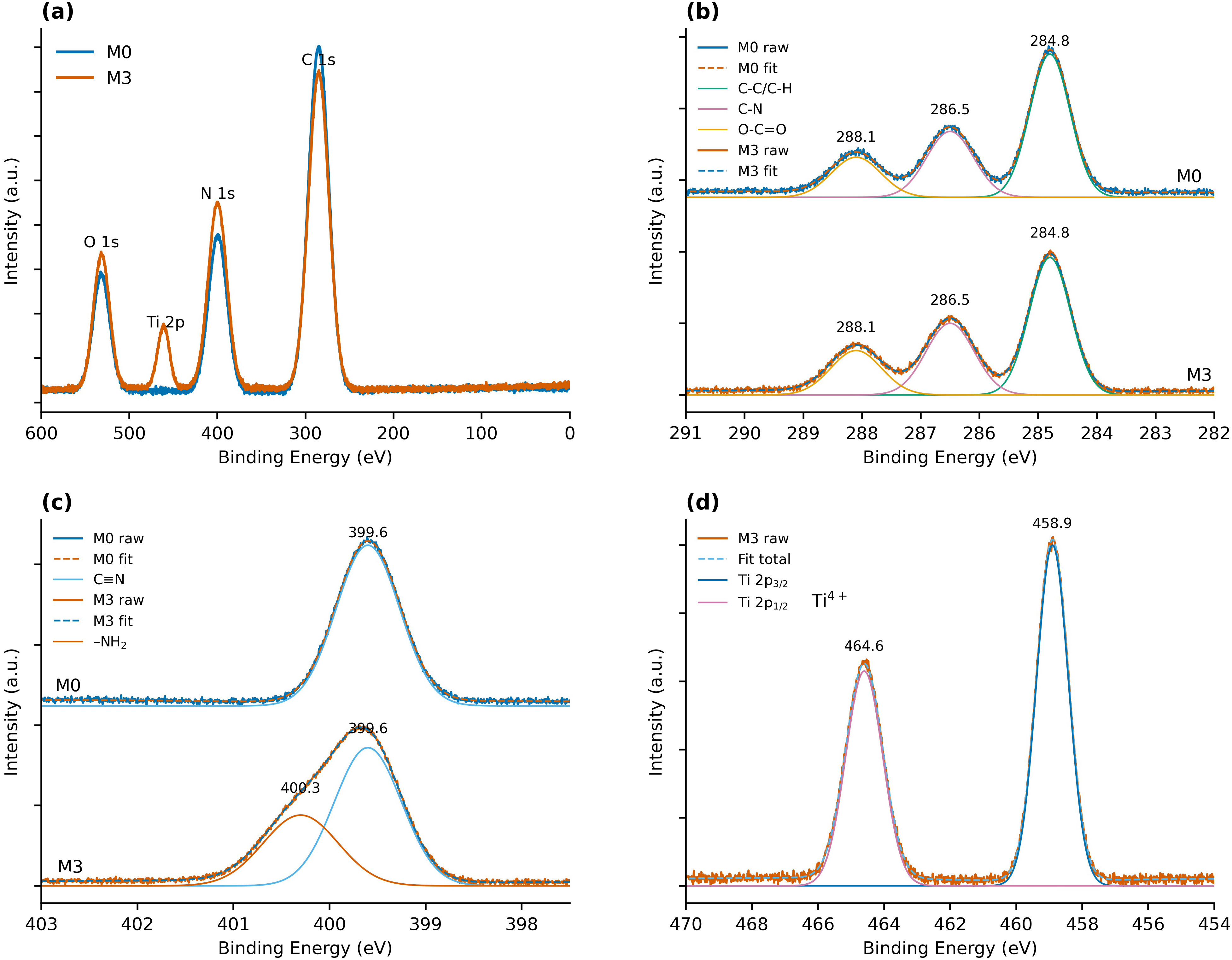
To obtain more detailed information about the surface chemistry, XPS analysis was conducted on the pristine M0 and the optimized M3 membranes. The survey spectra (Figure 6a) confirm the presence of C, N, and O on the surface of M0. For M3, an additional distinct peak corresponding to Ti 2p appears, providing direct evidence of the presence of NH2-MIL-125(Ti) on the membrane’s active surface. The high-resolution C 1s spectra (Figure 6b) for both membranes can be deconvoluted into three main peaks at binding energies of 284.8 eV (C-C/C-H), 286.5 eV (C-N from the nitrile group), and 288.1 eV (O-C=O or adventitious carbon). The high-resolution N 1s spectrum of M0 (Figure 6c) shows a single peak at 399.6 eV, corresponding to the nitrile (C≡N) groups of PAN. In contrast, the N 1s spectrum for M3 is broader and can be fitted with two peaks: the original nitrile peak at 399.6 eV and a new peak at a higher binding energy of 400.3 eV, which is attributed to the amine (-NH2) groups from the NH2-MIL-125(Ti) linker [28]. The most direct evidence comes from the high-resolution Ti 2p spectrum for M3 (Figure 6d), which shows two characteristic peaks at 458.9 eV and 464.6 eV, corresponding to Ti 2p3/2 and Ti 2p1/2, respectively. This doublet, with a spin-orbit splitting of 5.7 eV, is characteristic of the Ti4+ oxidation state in titanium-oxo clusters, confirming the chemical integrity of the MOF on the membrane surface [29].
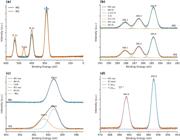
XPS analysis of membrane surface chemistry: (a) survey spectra of M0 and M3 membranes; (b) high-resolution C 1s spectra; (c) high-resolution N 1s spectra; and (d) high-resolution Ti 2p spectrum of M3 membrane, confirming the presence of NH2-MIL-125(Ti) on the membrane surface.
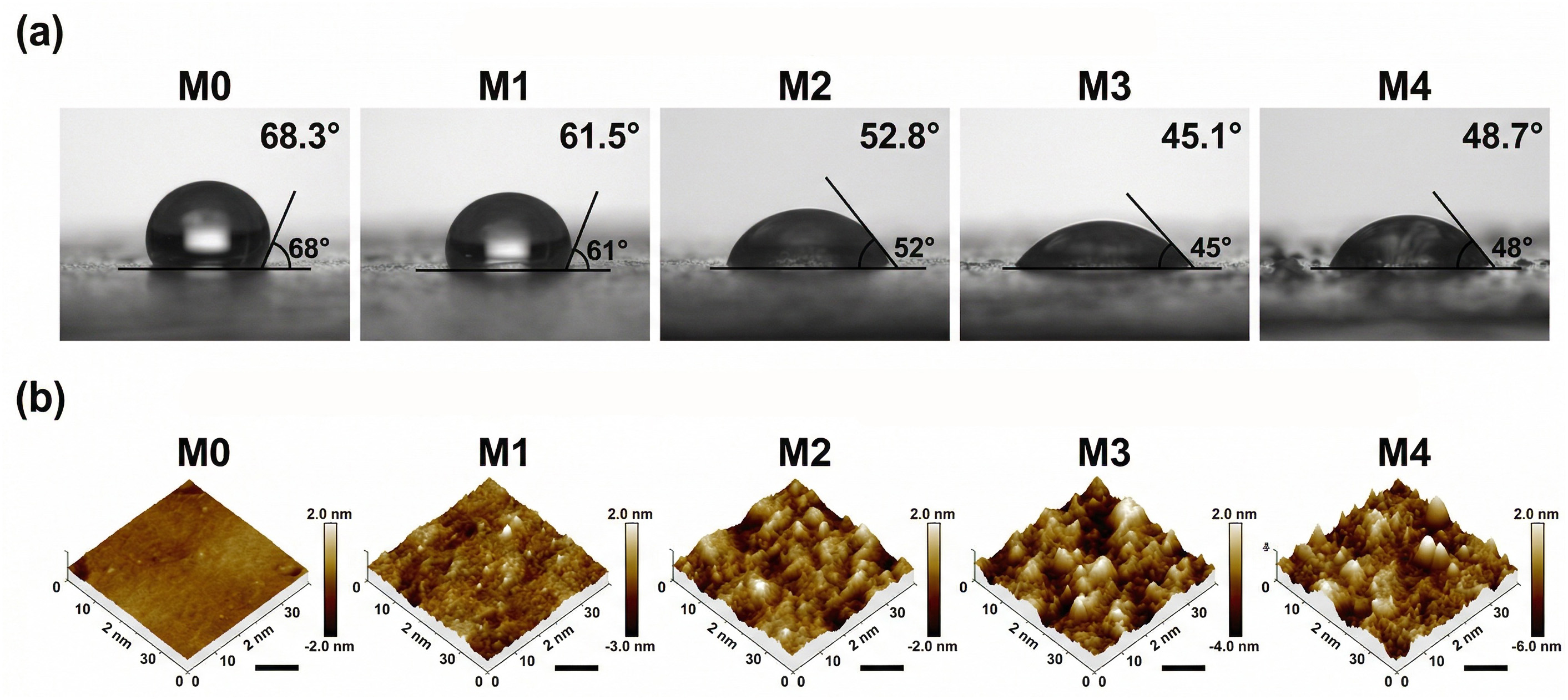
The surface hydrophilicity of the membranes, a key factor for anti-fouling performance, was evaluated by water contact angle (WCA) measurements. As shown in Figure 7a, the pristine PAN membrane (M0) exhibited a WCA of 68.3°, indicating its relatively hydrophobic nature. Upon the incorporation of NH2-MIL-125(Ti), the WCA of the composite membranes decreased significantly. The WCA progressively dropped to 61.5°, 52.8°, and 45.1° for M1, M2, and M3, respectively. This marked enhancement in hydrophilicity is attributed to the presence of the hydrophilic NH2-MIL-125(Ti) on the membrane surface. The abundant polar amine (-NH2) and carboxylate groups, along with the porous structure of the MOF, can attract and bind water molecules through hydrogen bonding, leading to a more wettable surface [30]. Interestingly, the WCA of the M4 membrane slightly increased to 48.7°. This can be explained by the nanoparticle aggregation observed in the SEM images at high loadings, which can increase surface roughness and lead to a less uniform distribution of hydrophilic sites, slightly diminishing the wetting effect.
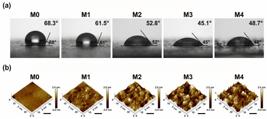
Surface wettability and topography of the fabricated membranes: (a) water contact angle of M0, M1, M2, M3, and M4 membranes; (b) AFM three-dimensional surface images and corresponding roughness analysis.
The surface topography and roughness of the membranes were analyzed by AFM, with 3D images and roughness parameters shown in Figure 7b. The pristine M0 membrane has a relatively smooth surface with an average roughness (Ra) of 15.2 nm. The introduction of NH2-MIL-125(Ti) led to a noticeable increase in surface roughness. The Ra values increased to 21.8 nm, 28.5 nm, and 33.1 nm for M1, M2, and M3, respectively. This increase is caused by the embedded MOF nanoparticles creating “hills” and “valleys” on the polymer surface. Increased surface roughness can, in some cases, enhance permeate flux by increasing the effective surface area for filtration. The M4 membrane showed the highest Ra value of 36.5 nm, which is consistent with the observed nanoparticle agglomeration creating larger surface protrusions.
Importantly, the antifouling response cannot be interpreted from roughness alone. Although the roughness continuously increased from M0 to M4, the best fouling resistance was observed for M3 rather than the roughest membrane. This suggests that the chemical contribution of surface hydration dominated over the topographical effect at moderate loading, whereas excessive roughness produced by aggregated particles in M4 created heterogeneous sites that could facilitate local oil entrapment. Therefore, the simultaneous control of hydrophilicity and nanoscale roughness is critical for achieving a favorable wetting state during oily water filtration.
The porous properties of the membranes were investigated using N2 adsorption-desorption analysis. The results are summarized in Table 1. The pristine PAN membrane (M0) had a BET specific surface area of 25.4 m2/g and a total pore volume of 0.041 cm3/g. With the incorporation of NH2-MIL-125(Ti), which itself possesses a high intrinsic surface area (measured at 1510 m2/g for the powder), the overall specific surface area and pore volume of the composite membranes increased. The BET surface area rose steadily with MOF content, reaching a maximum of 43.7 m2/g for the M3 membrane. Similarly, the total pore volume increased to 0.068 cm3/g for M3. This enhancement in porosity is attributed to two factors: the intrinsic porosity of the MOF filler and the aforementioned effect of the hydrophilic filler on accelerating phase inversion, which leads to a more porous polymer matrix. The slight decrease in surface area and pore volume for M4 (40.9 m2/g and 0.063 cm3/g) is likely due to pore blockage caused by the MOF aggregates. The average pore diameter, calculated using the Guerout–Elford–Ferry equation from pure water flux data, also showed an increasing trend up to M3, which is consistent with the morphological observations.
The porosity data also provide a structural explanation for the flux trend observed later. The simultaneous increase in BET surface area, pore volume, and average pore diameter up to M3 indicates that the MOF contributes both intrinsic microporosity and a more open membrane morphology generated during demixing. The slight decline for M4 demonstrates that the benefit of the porous filler can be partially offset by aggregate-induced dead ends or blocked pore entrances. In other words, permeability enhancement in this system arises from synergistic structural evolution rather than from the simple addition of a porous solid.
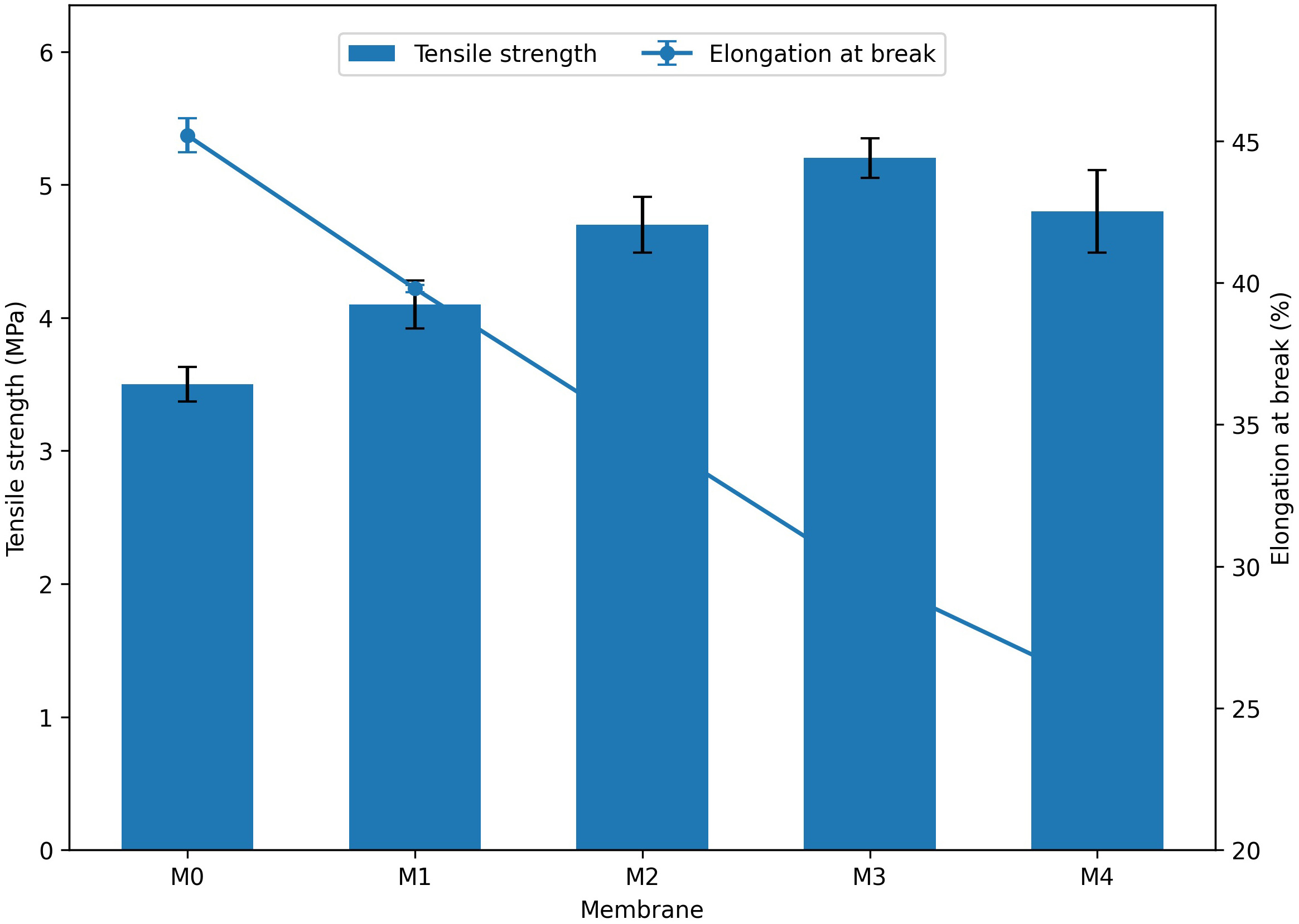
The mechanical integrity of the membranes is crucial for their practical application. Figure 8 presents the tensile strength and elongation at break for the prepared membranes. The pristine M0 membrane exhibited a tensile strength of 3.5 MPa and an elongation at break of 45.2%. The incorporation of NH2-MIL-125(Ti) nanoparticles as a reinforcing filler led to an improvement in mechanical strength. The tensile strength increased with MOF loading, reaching a maximum value of 5.2 MPa for the M3 membrane, which is a 48% improvement over the pristine membrane. This enhancement is due to the strong interfacial interactions between the well- dispersed rigid MOF nanoparticles and the flexible PAN polymer chains, which allows for efficient stress transfer. However, when the loading was further increased to 5.0 wt% (M4), the tensile strength slightly decreased to 4.8 MPa. This is a common phenomenon in nanocomposites, where excessive filler loading leads to agglomeration, creating stress concentration points that weaken the material [31]. In contrast, the elongation at break showed a decreasing trend with increasing MOF content, from 45.2% for M0 to 25.8% for M4. This indicates that the addition of the rigid MOF filler makes the membrane matrix stiffer and less ductile [32].
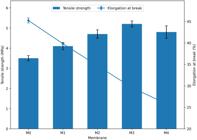
Mechanical properties of the fabricated membranes, including tensile strength and elongation at break of M0, M1, M2, M3, and M4 membranes.
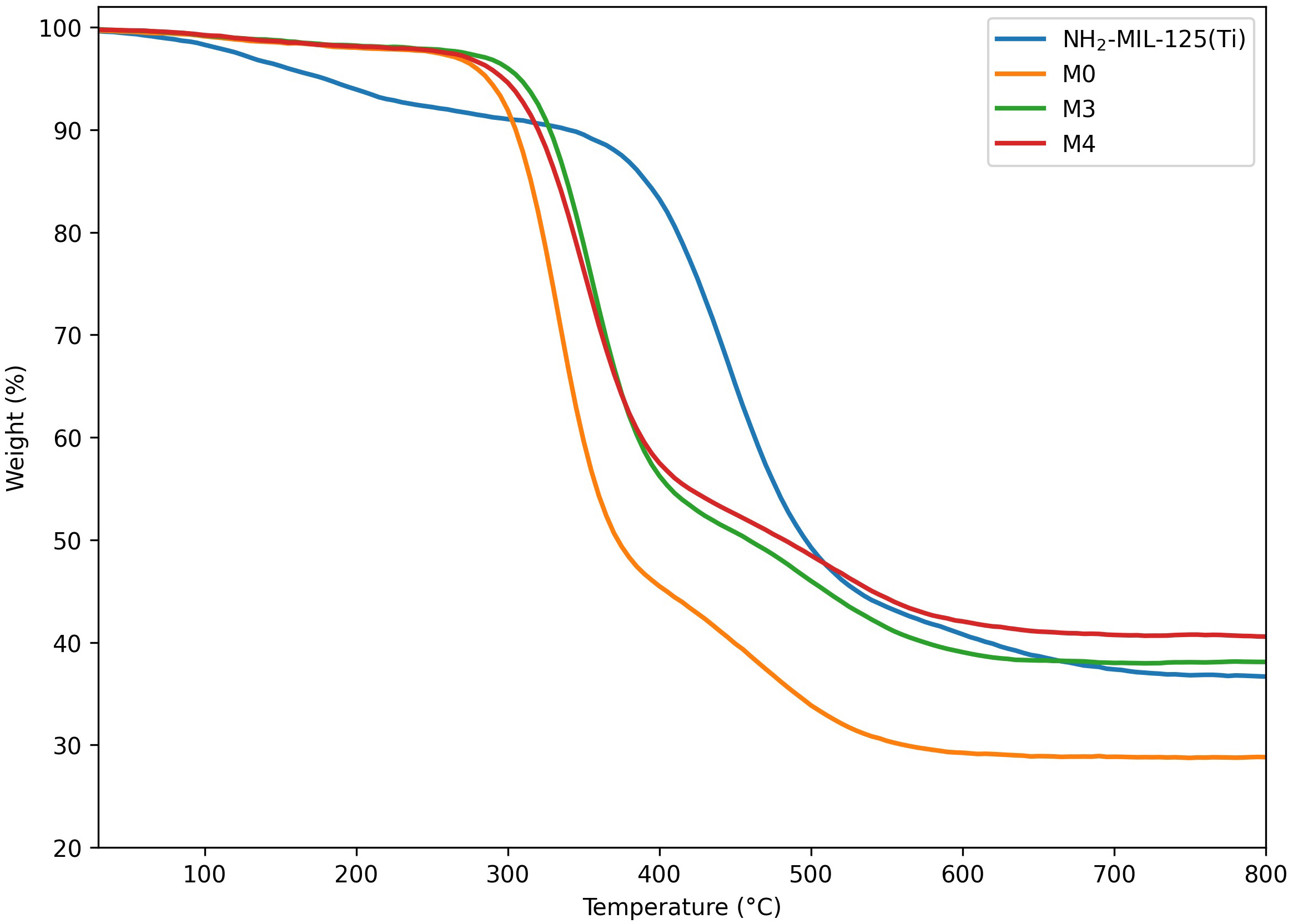
The thermal stability of the membranes was evaluated by TGA, and the results are shown in Figure 9. The TGA curve for the pure NH2-MIL-125(Ti) powder shows an initial weight loss of about 9% up to 300 °C, attributed to the removal of adsorbed water and solvent molecules from its pores [33]. The main decomposition of the organic linker occurs above 380 °C. The pristine PAN membrane (M0) is stable up to approximately 300 °C, after which it undergoes a sharp weight loss due to polymer degradation. The composite membranes (M3 and M4) exhibit enhanced thermal stability compared to M0. The onset decomposition temperature for M3 is shifted to around 325 °C. This improvement is due to the “nanoconfinement effect,” where the polymer chains in close proximity to the thermally stable MOF nanoparticles have restricted thermal motion. Furthermore, the residual mass at 800 °C, which corresponds to the inorganic content, increases with the MOF loading, from 29% for M0 to 38% for M3, consistent with the incorporation of the thermally stable titanium-based MOF.

TGA curves of NH2-MIL-125(Ti) powder, pristine PAN membrane (M0), and representative composite membranes, showing the effect of MOF incorporation on membrane thermal stability.
From an application standpoint, the mechanical and thermal data are significant because high-flux separation membranes must tolerate pressure fluctuations, repeated washing, and extended wet operation. The M3 membrane offers the most balanced profile: it is stronger than pristine PAN without the pronounced brittleness associated with excessive filler loading, and it exhibits improved thermal resistance that may be beneficial during drying or moderate-temperature cleaning. This balance reinforces the choice of 2.0 wt% as the most practical loading for subsequent performance evaluation.
3.3. Membrane separation and anti-fouling performance
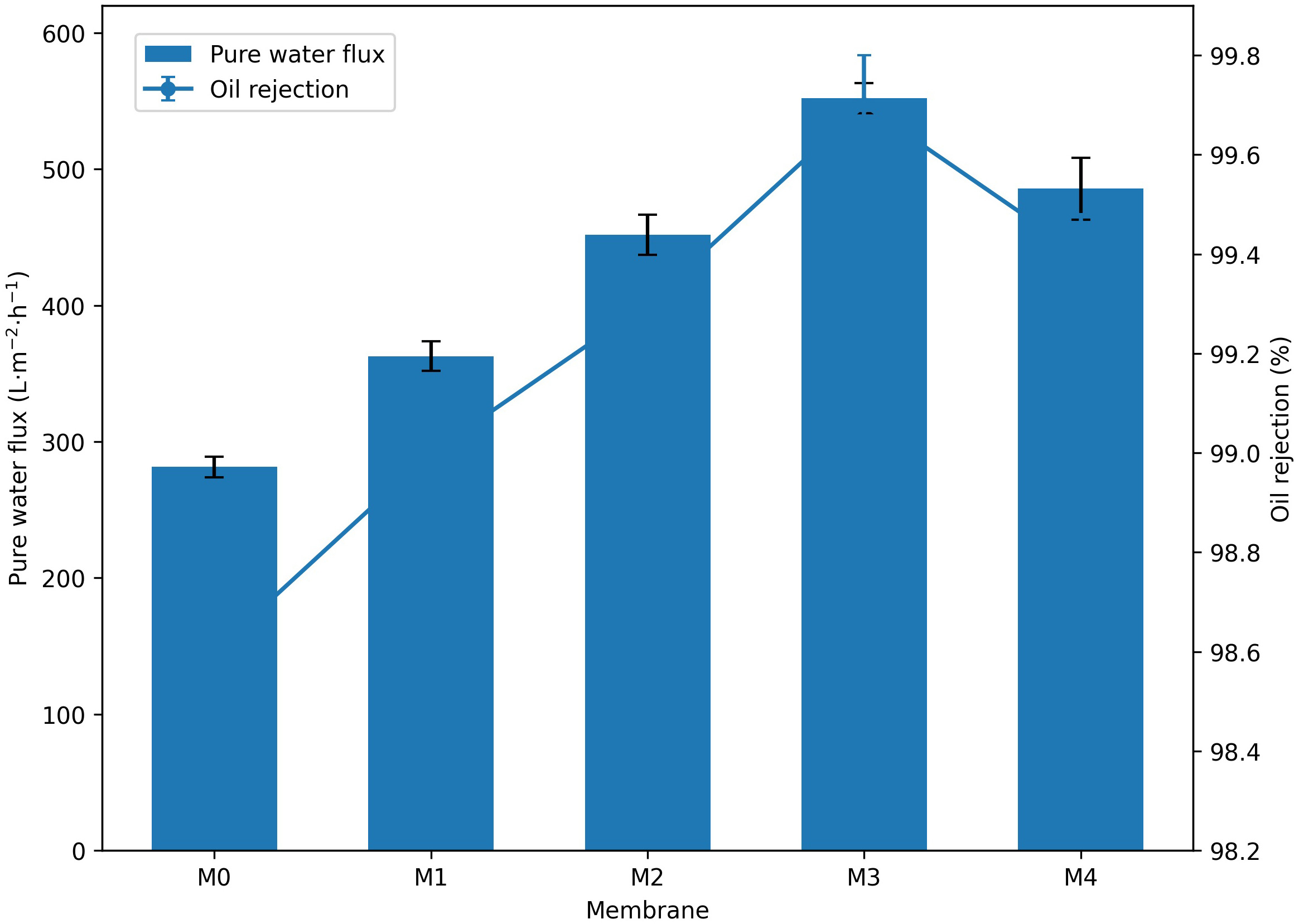
The performance of the membranes in oil-water separation was evaluated in terms of pressure-normalized pure water flux (PWF) and oil rejection. As depicted in Figure 10, the incorporation of NH2-MIL-125(Ti) had a pronounced impact on permeability. The PWF of the pristine M0 membrane was 281.4 ± 9.6 L·m−2·h−1·bar−1. The PWF increased with MOF content and reached a maximum of 552.1 ± 18.4 L·m−2·h−1·bar−1 for M3, nearly twice that of pristine PAN. This enhancement is attributed to the combined effects of increased surface hydrophilicity, higher porosity, and a more interconnected pore structure. However, the PWF decreased to 485.6 ± 15.7 L·m−2·h−1·bar−1 for M4, which indicates that excessive NH2-MIL-125(Ti) loading can partially offset the benefit of the porous filler by promoting nanoparticle aggregation, pore narrowing, and local mass-transfer resistance.
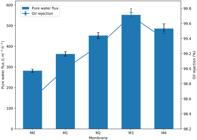
Separation performance of the fabricated membranes in oil-water emulsion filtration: pressure-normalized pure water flux and oil rejection of M0, M1, M2, M3, and M4 membranes.
In terms of selectivity, all membranes demonstrated excellent oil rejection. The M0 membrane showed a high oil rejection of 98.6%, whereas the composite membranes maintained or slightly improved rejection, with M3 reaching 99.7 ± 0.2%. This improvement is primarily associated with the enhanced hydrophilicity and underwater oleophobicity of the composite membrane surface. The hydration layer formed around polar amine, carboxylate-coordinated, and Ti-O-containing sites acts as an interfacial barrier that reduces direct oil-surface contact and limits oil passage through the pores. The combination of high flux, high rejection, and low irreversible fouling makes M3 the most balanced membrane in this series.
Comparison with representative literature further clarifies the position of the present membrane system (Table 2). Some superwetting or electrospun PAN-based systems can report higher fluxes, such as thiol-functionalized PAN/PVDF nanofiber membranes and alkaline-induced PAN membranes [10, 34]. However, these systems rely on strong surface reconstruction, electrospinning, or highly specialized surface chemistry. MOF-containing membranes such as NH2-MIL-125@PAA/PVDF and PANI/NH2-MIL-125@HPAN can also achieve excellent rejection and, in some cases, much higher permeability [28–29]. By contrast, the present M3 membrane integrates NH2-MIL-125(Ti) directly into a pressure-driven PAN ultrafiltration matrix through a one-step NIPS route, while maintaining high oil rejection, improved mechanical integrity, low irreversible fouling, and stable flux recovery. Therefore, although its flux is lower than that of some highly porous nanofiber or surface-reconstructed membranes, its performance is competitive when fabrication simplicity, pressure-driven operation, and antifouling durability are considered together. From a scalability perspective, the NIPS route used here is compatible with conventional casting equipment and does not require a separate surface grafting, electrospinning, or post-assembly step. The main practical cost comes from NH2-MIL-125(Ti) synthesis and filler dispersion; therefore, the optimal loading of 2.0 wt% is advantageous because it delivers the best performance without the material waste and aggregation penalty observed at 5.0 wt%. Future process development should focus on solvent recovery, continuous dope dispersion, and pilot-scale module testing to evaluate the economic feasibility of the PAN/NH2-MIL-125(Ti) system under realistic oily wastewater conditions.
Comparison of the oil-water separation performance of the M3 membrane with representative membranes from the literature.
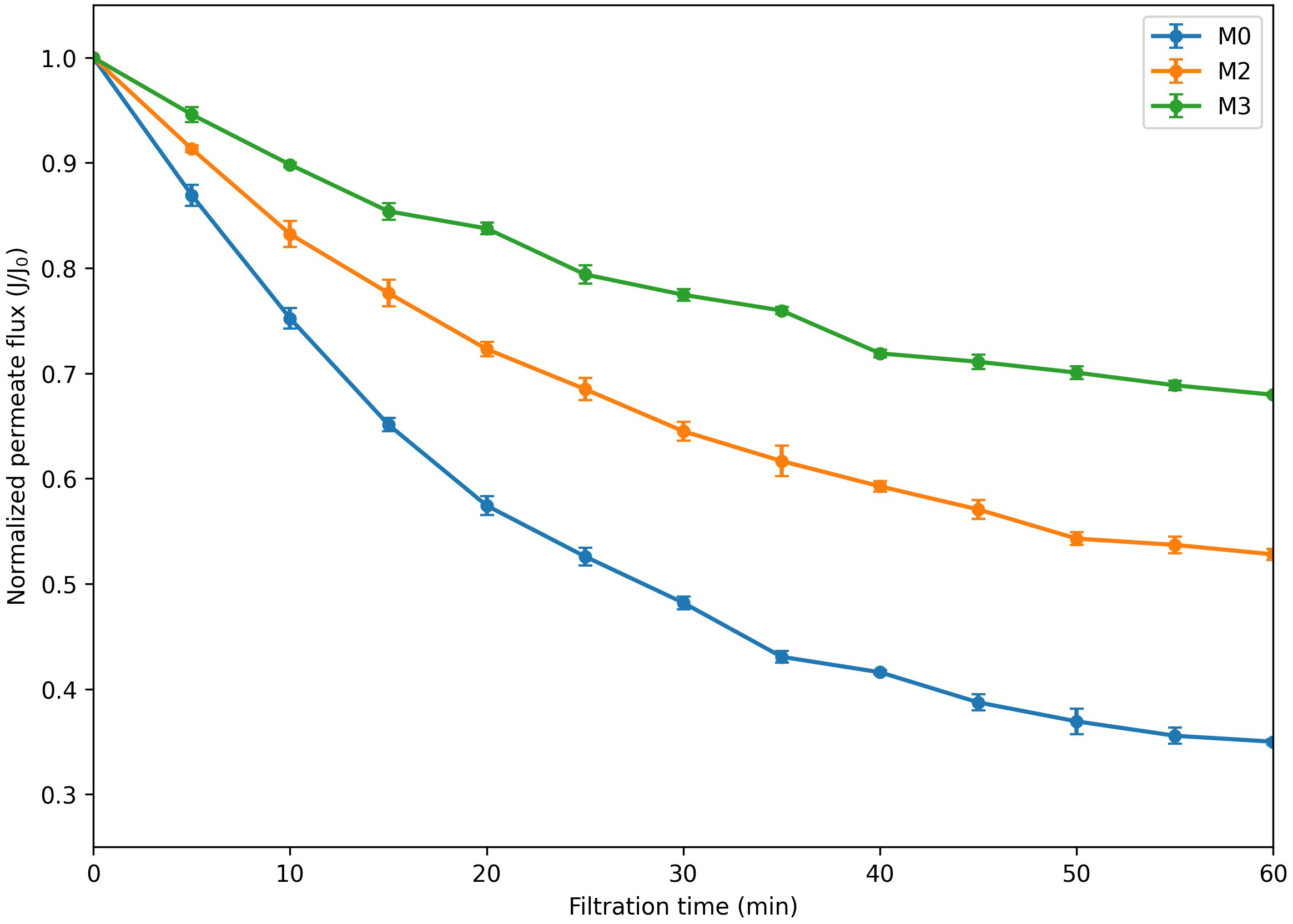
To evaluate the anti-fouling properties, a dynamic fouling test was conducted using the oil-in-water emulsion. Figure 11 shows the time-dependent normalized flux for membranes M0, M2, and M3 during the filtration of the oily feed. Upon switching from DI water to the oil emulsion, all membranes experienced a flux decline due to concentration polarization and the deposition of oil droplets on the surface. However, the extent of this decline varied significantly. The pristine M0 membrane suffered a severe flux drop, retaining only 35% of its initial flux after 60 minutes of filtration. In stark contrast, the M3 membrane demonstrated remarkable fouling resistance, maintaining about 68% of its initial flux under the same conditions. This superior performance is a direct result of the highly hydrophilic surface of the M3 membrane, which effectively repels the oil droplets and mitigates foulant adhesion.
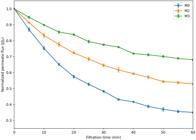
Time-dependent normalized permeate flux during oil-in-water emulsion filtration for M0, M2, and M3 membranes, illustrating the differences in fouling resistance.
The normalized-flux profiles also suggest that the dominant fouling mode changes after MOF incorporation. For M0, the rapid decline is consistent with strong oil adhesion, partial pore blockage, and the formation of a compact foulant layer. By contrast, the slower flux decay of M3 indicates weaker droplet-membrane interaction and a looser deposit structure that offers lower hydraulic resistance. This behavior is consistent with the lower contact angle and the presence of polar surface groups that stabilize an aqueous interfacial film between the membrane and the oil droplets.
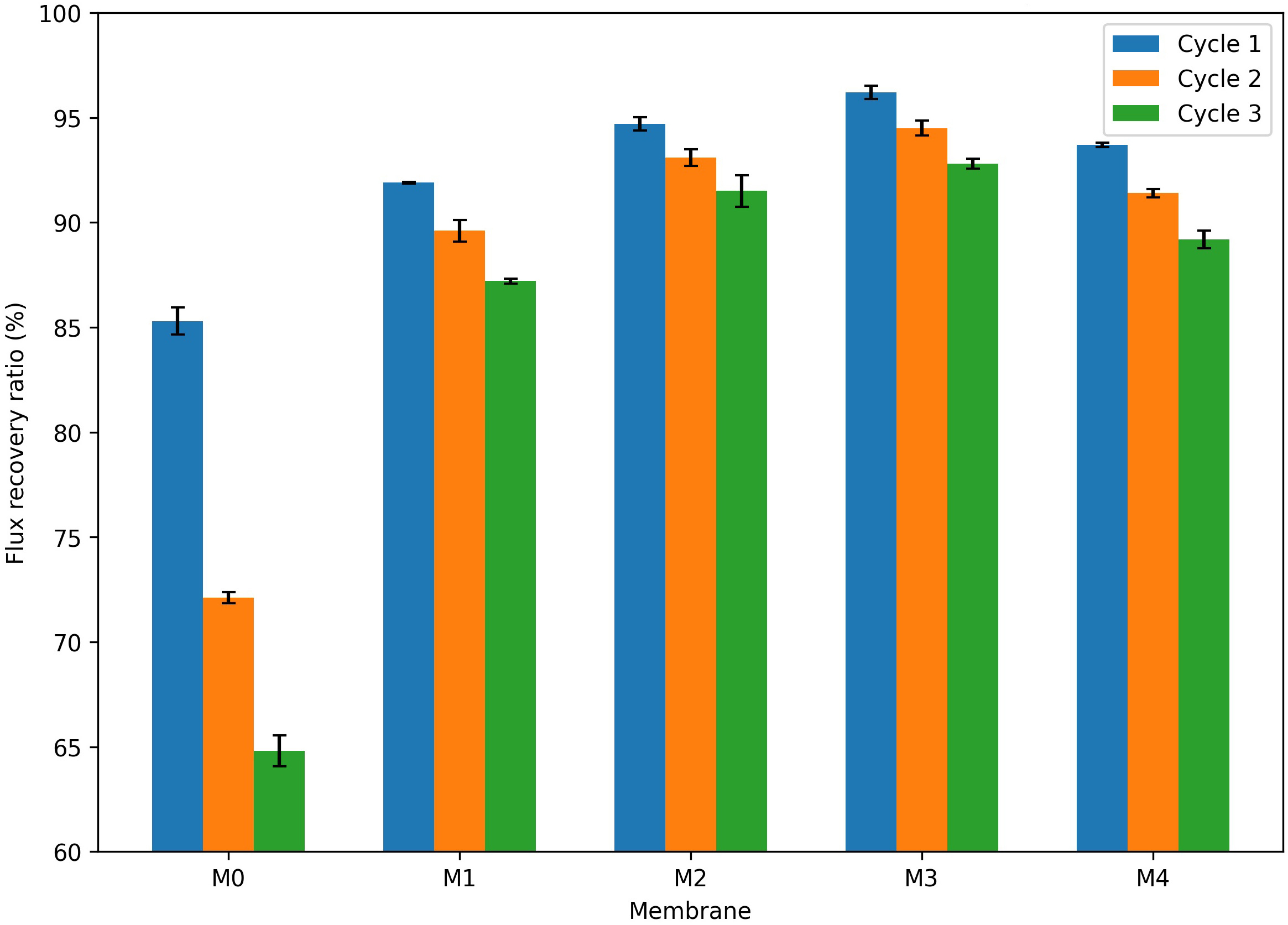
The reusability and cleaning efficiency of the membranes were assessed through three consecutive filtration-cleaning cycles, with the results for the flux recovery ratio (FRR) presented in Figure 12. The FRR of the pristine M0 membrane was initially 85.3% after the first cycle but progressively deteriorated to 72.1% and 64.8% in the second and third cycles, respectively. This indicates that a significant amount of irreversible fouling occurred, which could not be removed by simple hydraulic washing. In contrast, all the composite membranes exhibited much higher and more stable FRRs. The optimized M3 membrane showed an outstanding FRR of 96.2% in the first cycle, which remained high at 94.5% and 92.8% in the subsequent cycles. This demonstrates the excellent anti-fouling and self-cleaning ability of the PAN/NH2-MIL-125(Ti) membrane, where most of the foulants are loosely attached and easily washed away.
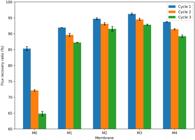
Flux recovery ratio (FRR) of the fabricated membranes over three consecutive filtration-cleaning cycles, demonstrating the reusability and anti-fouling performance of the membranes.
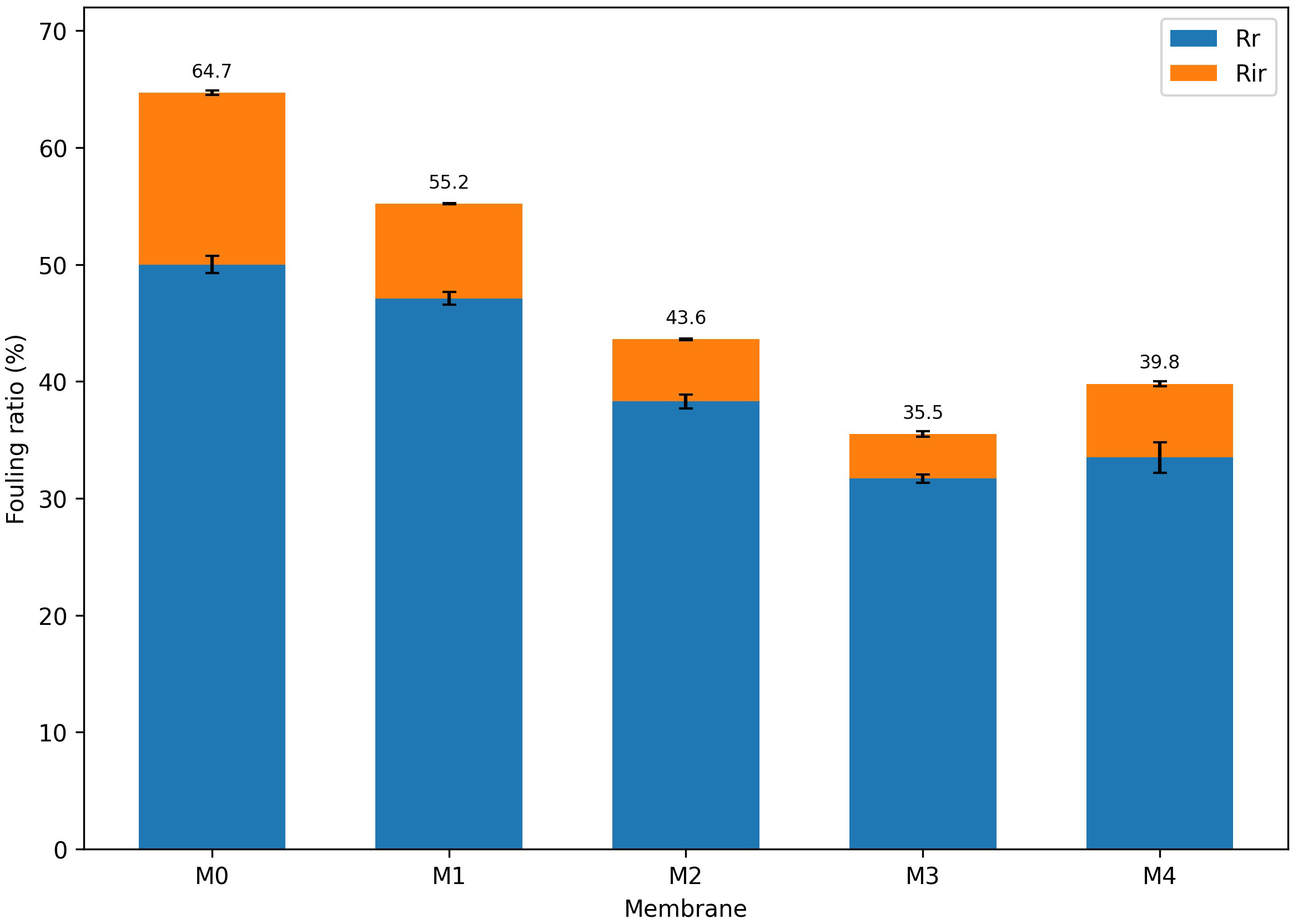
To further analyze the nature of the fouling, the total (Rt), reversible (Rr), and irreversible (Rir) fouling ratios were calculated and are displayed in Figure 13 and Table 3. For pristine M0, Rt was 64.7%, with Rir contributing 14.7%, confirming the strong and persistent adhesion of oil to the relatively hydrophobic PAN surface. For the composite membranes, Rir values were markedly lower. M3 showed the most favorable behavior, with Rt, Rr, and Rir values of 35.5%, 31.7%, and 3.8%, respectively. In contrast, M4 showed a higher Rt (39.8%) and Rir (6.3%) than M3. The increase in Rt for M4 is attributed to excessive MOF loading, which promotes particle aggregation, rougher heterogeneous domains, partial pore blockage, and local oil entrapment. Thus, further filler addition beyond the optimum does not continuously improve antifouling behavior; instead, it can create new fouling-prone sites.
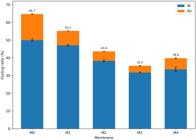
Fouling analysis of the fabricated membranes, showing the total fouling ratio (Rt), reversible fouling ratio (Rr), and irreversible fouling ratio (Rir) after the first filtration cycle.
The fouling partition results are particularly important because they reveal not only how much fouling occurs, but also how strongly it is bound. For M3, most of the flux loss is reversible, which implies that the deposited oil droplets are mainly retained as a weakly attached surface layer rather than penetrating deeply into the pore network. This is consistent with a hydrated, underwater-oleophobic interface that shifts the fouling mechanism away from persistent pore blocking and toward a removable cake layer. The marked reduction in Rir is therefore the clearest evidence that NH2-MIL-125(Ti) improves practical cleanability instead of merely delaying the initial flux decline.
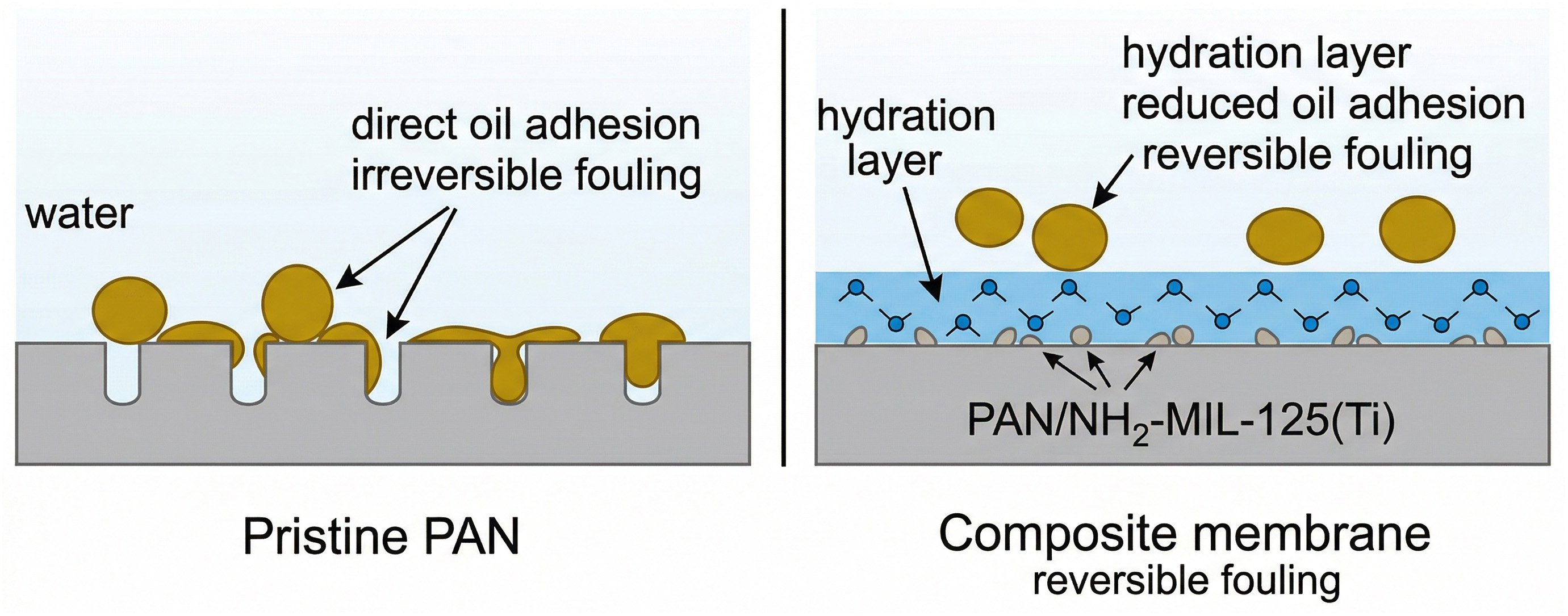
The remarkable anti-fouling performance of the PAN/NH2-MIL-125(Ti) membranes can be explained by the hydrophilic modification mechanism, as schematically illustrated in Figure 14. For pristine PAN, oil droplets can directly contact and adhere to the membrane surface through hydrophobic and van der Waals interactions, leading to severe and often irreversible fouling. In the composite membranes, exposed NH2-MIL-125(Ti) nanoparticles introduce polar -NH2 groups, coordinated carboxylate groups, and Ti-O clusters that bind water molecules and help form a stable hydration layer. Although zeta-potential measurements were not performed in the present study, the XPS and FTIR results indicate that these polar surface groups can increase the density of hydrophilic interaction sites and may also influence the local surface charge environment in water. The hydrated interface reduces direct oil-membrane contact, weakens foulant adhesion, and facilitates removal of deposited droplets by cross-flow shear or hydraulic washing.
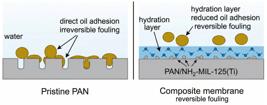
Schematic illustration of PAN/NH2-MIL-125(Ti) membrane fabrication and anti-fouling mechanism during oil-water separation, highlighting MOF dispersion in the PAN matrix, polar -NH2/Ti-O-containing hydration sites, reduced oil adhesion, and reversible foulant removal.
Finally, a 24-hour long-term stability test was performed on the M3 membrane to assess its durability for continuous operation, with the results summarized in Table 4. Over the 24-hour period, the permeate flux showed a gradual decline from its initial value, stabilizing at around 345 L·m−2·h−1 after 12 hours, while the oil rejection remained consistently high at over 99.5%. This demonstrates the good operational stability of the M3 membrane, making it a robust and reliable candidate for practical applications in oily wastewater treatment.
Long-term operational stability of the M3 membrane filtering the 1000 mg/L oil-in-water emulsion.
Even so, the 24-hour experiment should be viewed as an initial durability demonstration rather than a complete industrial validation. Real oily wastewater may contain salts, proteins, suspended solids, natural organic matter, and mixed surfactants that can intensify competitive adsorption, surface-charge screening, and structural aging. In addition, this work used hydraulic washing to evaluate cleaning recovery; resistance to chemical cleaning agents such as dilute acid, dilute alkali, oxidants, or surfactant-assisted cleaning should be examined before industrial deployment. Future work should therefore extend the operating time, test real wastewater matrices, and evaluate repeated chemical cleaning cycles to verify the long-term robustness of the PAN/NH2-MIL-125(Ti) system.
4. CONCLUSION
In this study, anti-fouling PAN-based mixed matrix ultrafiltration membranes were fabricated by incorporating synthesized NH2-MIL-125(Ti) nanoparticles through the NIPS method. Characterization confirmed the formation of crystalline NH2-MIL-125(Ti) nanoparticles and their successful incorporation into the PAN matrix at suitable loadings. The optimized filler content improved hydrophilicity, porosity, mechanical strength, and thermal stability, while excessive loading caused aggregation and a partial decline in transport and fouling performance.
For oil-water emulsion separation, the optimized M3 membrane containing 2.0 wt% NH2-MIL-125(Ti) exhibited a pressure-normalized pure water flux of 552.1 ± 18.4 L·m−2·h−1·bar−1 and an oil rejection of 99.7 ± 0.2%. It also displayed strong antifouling behavior, with a first-cycle FRR of 96.2%, an FRR above 92% after three filtration-cleaning cycles, and an irreversible fouling ratio of only 3.8%. The results show that NH2-MIL-125(Ti) improves PAN membrane performance mainly by creating a hydrated, polar, and more permeable interface that shifts fouling from persistent oil adhesion toward more reversible deposition. The membrane is therefore promising for oily wastewater treatment, although future work should include real wastewater feeds, longer operation, chemical cleaning resistance, and pilot-scale evaluation before industrial application.
5. ACKNOWLEDGEMENTS
This study was supported by Shanxi Scholarship Council of China (No.2025-045).
6. DATA AVAILABILITY
The full dataset supporting the findings of this study is available uponrequest to the corresponding author.
7. BIBLIOGRAPHY
-
[1] WANG, Z.-G., WAN, L.-S., XU, Z.-K., “Surface engineerings of polyacrylonitrile-based asymmetric membranes towards biomedical applications: an overview”, Journal of Membrane Science, v. 304, n. 1–2, pp. 8–23, Nov. 2007. doi: https://doi.org/10.1016/j.memsci.2007.05.012.
» https://doi.org/10.1016/j.memsci.2007.05.012 -
[2] CHUNG, T.-S., JIANG, L.Y., LI, Y., et al, “Mixed matrix membranes (MMMs) comprising organic polymers with dispersed inorganic fillers for gas separation”, Progress in Polymer Science, v. 32, n. 4, pp. 483–507, Apr. 2007. doi: https://doi.org/10.1016/j.progpolymsci.2007.01.008.
» https://doi.org/10.1016/j.progpolymsci.2007.01.008 -
[3] LI, X., LIU, Y., WANG, J., et al, “Metal-organic frameworks based membranes for liquid separation”, Chemical Society Reviews, v. 46, n. 23, pp. 7124–7144, 2017. doi: https://doi.org/10.1039/C7CS00575J. PubMed PMID: 29110013.
» https://doi.org/10.1039/C7CS00575J. -
[4] DAN-HARDI, M., SERRE, C., FROT, T., et al, “A new photoactive crystalline highly porous titanium(iv) dicarboxylate”, Journal of the American Chemical Society, v. 131, n. 31, pp. 10857–10859, Aug. 2009. doi: https://doi.org/10.1021/ja903726m. PubMed PMID: 19621926.
» https://doi.org/10.1021/ja903726m. -
[5] FU, Y., SUN, D., CHEN, Y., et al, “An Amine‐functionalized titanium metal-organic framework photocatalyst with visible‐light‐induced activity for CO2 reduction”, Angewandte Chemie International Edition in English, v. 51, n. 14, pp. 3364–3367, Apr. 2012. doi: https://doi.org/10.1002/anie.201108357. PubMed PMID: 22359408.
» https://doi.org/10.1002/anie.201108357. -
[6] CHEN, X., WANG, L., WANG, X., et al., “Effect of nano-metal oxides types on oil sludge during microwave pyrolysis”, Matéria (Rio de Janeiro), v. 28, n. 2, pp. e20230072, 2023. doi: https://doi.org/10.1590/1517-7076-rmat-2023-0072.
» https://doi.org/10.1590/1517-7076-rmat-2023-0072 -
[7] ALSOHAIMI, I.H., “A highly permeable Al-based MOF-sulfonated polyaniline/polyethersulfone composite UF membrane with prominent antifouling properties”, Separation and Purification Technology, v. 357, n. May, pp. 130240, 2025. doi: https://doi.org/10.1016/j.seppur.2024.130240.
» https://doi.org/10.1016/j.seppur.2024.130240 -
[8] ALRASHIDI, A.N., ALWAEL, H., ALSOHAIMI, I.H., et al., “Development of high-performance polysulfone ultrafiltration membranes with enhanced permeability and antifouling properties via amino-functionalized TiO2 nanotube incorporation”, Journal of Environmental Chemical Engineering, v. 13, n. 2, pp. 115798, Apr. 2025. doi: https://doi.org/10.1016/j.jece.2025.115798.
» https://doi.org/10.1016/j.jece.2025.115798 -
[9] ALSOHAIMI, I.H., AL-REHAILI, S.S., ALENAZI, R.A., et al., “Role of covalent and non-covalent Mg-MOF-PANI/SPANI interactions in enhancing PES ultrafiltration membrane morphology and antifouling performance”, Desalination, v. 620, pp. 119638, Feb. 2026. doi: https://doi.org/10.1016/j.desal.2025.119638.
» https://doi.org/10.1016/j.desal.2025.119638 -
[10] EL-AASSAR, M.R., ALOLAIMI, R.F., ALZAID, M., et al., “Oil/Water separation using thiol-functionalized mesoporous silica-impregnated polyacrylonitrile/polyvinylidene fluoride electrospun nanofiber hybrid nanostructures”, Separation and Purification Technology, v. 362, n. Part 1, pp. 131651, Jul. 2025. doi: https://doi.org/10.1016/j.seppur.2025.131651.
» https://doi.org/10.1016/j.seppur.2025.131651 -
[11] ALSOHAIMI, I.H., ALHUMAIMESS, M.S., ALRASHIDI, A.N., et al., “Engineering antifouling polysulfone membranes enhanced with hydroxylated amino-functionalized TiO2 nanotubes for superior water filtration”, Polymers, v. 18, n. 9, pp. 1096, 2026. doi: https://doi.org/10.3390/polym18091096. PubMed PMID: 42122723.
» https://doi.org/10.3390/polym18091096. -
[12] HOU, C., XU, Q., WANG, Y., et al, “Synthesis of Pt@NH2-MIL-125(Ti) as a photocathode material for photoelectrochemical hydrogen production”, RSC Advances, v. 3, n. 43, pp. 19820, 2013. doi: https://doi.org/10.1039/c3ra43188f.
» https://doi.org/10.1039/c3ra43188f -
[13] KAUR, M., MEHTA, S.K., KANSAL, S.K., “Amine-functionalized titanium metal-organic framework (NH2-MIL-125(Ti)): A novel fluorescent sensor for the highly selective sensing of copper ions”, Materials Chemistry and Physics, v. 254, pp. 123539, Nov. 2020. doi: https://doi.org/10.1016/j.matchemphys.2020.123539.
» https://doi.org/10.1016/j.matchemphys.2020.123539 -
[14] GUO, F., GUO, J.H., WANG, P., et al, “Facet-dependent photocatalytic hydrogen production of metal-organic framework NH2-MIL-125(Ti)”, Chemical Science (Cambridge), v. 10, n. 18, pp. 4834-4838, 2019. doi: https://doi.org/10.1039/C8SC05060K. PubMed PMID: 31160958.
» https://doi.org/10.1039/C8SC05060K. -
[15] DONG, G., LI, H., CHEN, V., “Challenges and opportunities for mixed-matrix membranes for gas separation”, Journal of Materials Chemistry. A, Materials for Energy and Sustainability, v. 1, n. 15, pp. 4610, 2013. doi: https://doi.org/10.1039/c3ta00927k.
» https://doi.org/10.1039/c3ta00927k -
[16] KADHOM, M., HU, W., DENG, B., “Thin film nanocomposite membrane filled with metal- organic frameworks UiO-66 and MIL-125 nanoparticles for water desalination”, Membranes (Basel), v. 7, n. 2, pp. 31, Jun. 2017. doi: https://doi.org/10.3390/membranes7020031. PubMed PMID: 28613247.
» https://doi.org/10.3390/membranes7020031. -
[17] MA, D., PEH, S.B., HAN, G., et al, “Thin-Film Nanocomposite (TFN) Membranes Incorporated with Super-Hydrophilic Metal-Organic Framework (MOF) UiO-66: toward enhancement of water flux and salt rejection”, ACS Applied Materials & Interfaces, v. 9, n. 8, pp. 7523–7534, Mar. 2017. doi: https://doi.org/10.1021/acsami.6b14223. PubMed PMID: 28186405.
» https://doi.org/10.1021/acsami.6b14223. -
[18] ZHU, Y., WANG, D., JIANG, L., et al, “Recent progress in developing advanced membranes for emulsified oil/water separation”, NPG Asia Materials, v. 6, n. 5, pp. e101–e101, May. 2014. doi: https://doi.org/10.1038/am.2014.23.
» https://doi.org/10.1038/am.2014.23 -
[19] ISMAIL, N.H., SALLEH, W.N.W., ISMAIL, A.F., et al, “Hydrophilic polymer-based membrane for oily wastewater treatment: A review”, Separation and Purification Technology, v. 233, pp. 116007, Feb. 2020. doi: https://doi.org/10.1016/j.seppur.2019.116007.
» https://doi.org/10.1016/j.seppur.2019.116007 -
[20] TANUDJAJA, H.J., HEJASE, C.A., TARABARA, V.V., et al, “Membrane-based separation for oily wastewater: a practical perspective”, Water Research, v. 156, pp. 347–365, Jun. 2019. doi: https://doi.org/10.1016/j.watres.2019.03.021. PubMed PMID: 30928529.
» https://doi.org/10.1016/j.watres.2019.03.021. -
[21] AWWAD, M., BILAL, M., SAJID, M., et al, “MOF-based membranes for oil/water separation: Status, challenges, and prospects”, Journal of Environmental Chemical Engineering, v. 11, n. 1, pp. 109073, Feb. 2023. doi: https://doi.org/10.1016/j.jece.2022.109073.
» https://doi.org/10.1016/j.jece.2022.109073 -
[22] WANG, L., HUANG, J., LI, Z., et al, “Review of synthesis and separation application of metal-organic framework-based mixed-matrix membranes”, Polymers, v. 15, n. 8, pp. 1950, Apr. 2023. doi: https://doi.org/10.3390/polym15081950. PubMed PMID: 37112097.
» https://doi.org/10.3390/polym15081950. -
[23] SONG, L., “Flux decline in crossflow microfiltration and ultrafiltration: mechanisms and modeling of membrane fouling”, Journal of Membrane Science, v. 139, n. 2, pp. 183–200, Feb. 1998. doi: https://doi.org/10.1016/S0376-7388(97)00263-9.
» https://doi.org/10.1016/S0376-7388(97)00263-9 -
[24] RUBIO, J., SOUZA, M.L., SMITH, R.W., “Overview of flotation as a wastewater treatment technique”, Minerals Engineering, v. 15, n. 3, pp. 139–155, Mar. 2002. doi: https://doi.org/10.1016/S0892-6875(01)00216-3.
» https://doi.org/10.1016/S0892-6875(01)00216-3 -
[25] CHEN, W., PENG, J., SU, Y., et al, “Separation of oil/water emulsion using Pluronic F127 modified polyethersulfone ultrafiltration membranes”, Separation and Purification Technology, v. 66, n. 3, pp. 591–597, May. 2009. doi: https://doi.org/10.1016/j.seppur.2009.01.009.
» https://doi.org/10.1016/j.seppur.2009.01.009 -
[26] LIU, Z., XU, Z., LIU, C., et al, “Polydopamine nanocluster embedded nanofibrous membrane via blow spinning for separation of oil/water emulsions”, Molecules (Basel, Switzerland), v. 26, n. 11, pp. 3258, May. 2021. doi: https://doi.org/10.3390/molecules26113258. PubMed PMID: 34071526.
» https://doi.org/10.3390/molecules26113258. -
[27] ZHAO, J., CAO, L., WANG, X., et al, “MOF@Polydopamine-incorporated membrane with high permeability and mechanical property for efficient fouling-resistant and oil/water separation”, Environmental Research, v. 236, n. Pt 2, pp. 116685, Nov. 2023. doi: https://doi.org/10.1016/j.envres.2023.116685. PubMed PMID: 37467944.
» https://doi.org/10.1016/j.envres.2023.116685. -
[28] ZHU, X., YU, Z., LIU, Y., et al, “NH2-MIL-125@PAA composite membrane for separation of oil/water emulsions and dyes”, Colloids and Surfaces. A, Physicochemical and Engineering Aspects, v. 630, pp. 127542, Dec. 2021. doi: https://doi.org/10.1016/j.colsurfa.2021.127542.
» https://doi.org/10.1016/j.colsurfa.2021.127542 -
[29] WU, Z., XUE, J., ZHANG, J., et al, “Photocatalytic self-cleaning membrane with polyaniline/NH2-MIL-125 heterojunction for highly oil-water/seawater separation and bacterial inactivation”, Separation and Purification Technology, v. 323, pp. 124412, Oct. 2023. doi: https://doi.org/10.1016/j.seppur.2023.124412.
» https://doi.org/10.1016/j.seppur.2023.124412 -
[30] WANG, J., HOU, L., YAN, K., et al, “Polydopamine nanocluster decorated electrospun nanofibrous membrane for separation of oil/water emulsions”, Journal of Membrane Science, v. 547, pp. 156–162, Feb. 2018. doi: https://doi.org/10.1016/j.memsci.2017.10.028.
» https://doi.org/10.1016/j.memsci.2017.10.028 -
[31] YU, L., HAN, M., HE, F., “A review of treating oily wastewater”, Arabian Journal of Chemistry, v. 10, pp. S1913–S1922, May. 2017. doi: https://doi.org/10.1016/j.arabjc.2013.07.020.
» https://doi.org/10.1016/j.arabjc.2013.07.020 -
[32] SU, Z., CHEN, J.H., SUN, X., et al, “Amine-functionalized metal organic framework (NH2-MIL-125(Ti)) incorporated sodium alginate mixed matrix membranes for dehydration of acetic acid by pervaporation”, RSC Advances, v. 5, n. 120, pp. 99008-99017, 2015. doi: https://doi.org/10.1039/C5RA21073A.
» https://doi.org/10.1039/C5RA21073A -
[33] KULAK, H., THÜR, R., VANKELECOM, I.F.J., “MOF/Polymer mixed-matrix membranes preparation: effect of main synthesis parameters on CO2/CH4 separation performance”, Membranes (Basel), v. 12, n. 4, pp. 425, Apr. 2022. doi: https://doi.org/10.3390/membranes12040425. PubMed PMID: 35448395.
» https://doi.org/10.3390/membranes12040425. -
[34] ZHANG, F., GAO, S., ZHU, Y., et al, “Alkaline-induced superhydrophilic/underwater superoleophobic polyacrylonitrile membranes with ultralow oil-adhesion for high-efficient oil/water separation”, Journal of Membrane Science, v. 513, pp. 67-73, Sep. 2016. doi: https://doi.org/10.1016/j.memsci.2016.04.020.
» https://doi.org/10.1016/j.memsci.2016.04.020