 Plasticity of xylem vessel traits in Ocotea indecora (Lauraceae) wood along an altitudinal gradient in dense montane Atlantic Forest
Abstract
We investigated the plasticity of vessel features in Ocotea indecora wood along a 300 m altitude gradient in dense montane rainforest. Our results showed that wood of trees at 1,000 m presented higher potential hydraulic conductivity (kp), which is consistent with wood that invests more in efficient water transport. These results stand in contrast to those from wood of trees at 1,200 and 1,300 m, which presented vessel indices consistent with wood that invests more in the safety of water transport. Comparison between trees with higher kp at 1,000 m and trees with lower kp at 1,200 m showed that vessel-grouping index, vulnerability index, and mesomorphy index were all lower at 1,000 m, while vessel multiple fraction was higher at 1,000 m. At elevations from 1,000 to 1,300 m, we can infer two different relief compartments, plateau and escarpment, both have steep slopes with shallow soils, but on the plateau, they tend to be deeper. Considering the evidence of vessel features, vessel indices and hydraulic conductivity, together with soil traits, climate and landscape relief, we concluded that the difference in investment of water transport vs. safety between trees at 1,000 m vs. 1,200-1,300 m represents vessel plasticity consistent with adaptations that allow the growth, development and reproduction of this species in these different environments.
Key words:
Canela;ecological wood anatomy;potential hydraulic conductivity;tropical woods;vessel índices
Introduction
In Angiosperms, vascular tissue, consisting of specialized water-conducting cells, is key to their long-distance water transport (Carlquist 2001). Quantitative assessment of vessel features offers an indirect method of determining hydraulic strategies (Tyree & Zimmermann 2002). Similarly, calculating indices, e.g., vulnerability and mesomorphy indices, based on the dimensions and frequency of vessels allows more understanding of adaptive strategies in the face of different and/or challenging soil and climatic conditions (Carlquist 2001; Scholz et al. 2013). Recently, Ewers et al. (2023) concluded that the indices developed by Carlquist (1977, 2001) continue to be important as we connect plant anatomy to its function.
The study of wood anatomy is a powerful source of data about tree growth in relation to climate and xylem plasticity of tree species in response to contrasting environments (Diaconu et al. 2017). Studies dating back 100 years provide support for today’s studies of secondary xylem from an ecological perspective (Martínez-Cabrera & Cevallos-Ferriz 2008). Although anatomical xylem features are hereditary, plasticity allows adaptive responses to environmental variations, which justifies the study of wood anatomy as a tool for understanding plant adaptation.
Thus, over the decades, in addition to direct measurements of vessel element length, diameter and frequency, some vessel indices are based on original vessel data. For example, the vessel-grouping index (Carlquist 2001). Vulnerability index and mesomorphy index (Carlquist 1977). Solitary vessel index (Wheeler et al. 2005) multiple vessel fraction. An alternative parameter for the vessel-grouping index has been suggested by Mencuccini et al. (2010) and Martínez-Vilalta et al. (2012), who measured connectivity on transverse sections using a point pattern analysis and a piecewise Geyer model. Additionally, based on the Hagen-Poiseuille law, it is also possible to estimate hydraulic conductivity in plants using vessel measurements (Tyree & Zimmermann 2002). Scholz et al. (2013) explain all these indices in detail.
Altitude causes changes in environmental factors, such as precipitation, related to climate change, greatly altering the anatomy of plants (Saima et al. 2021). Therefore, plants adaptations to different environments are closely related to wood anatomical features (Nascimento et al. 2024).
The Atlantic Forest is a heterogeneous biome comprised of different phytophysiognomies with contrasting microclimatic and edaphic characteristics (Xavier et al. 2023), depending on elevation. It is well known that the anatomical characteristics of wood are hereditary (Carlquist 2012). However, depending on the plasticity of secondary xylem, trees can adapt to local edaphoclimatic variations, continue to survive, and reproduce. Thus, a detailed analysis of the anatomical characteristics of xylem can expand our understanding of the structural adaptations of wood and the hydraulic functioning of plants in tropical environments (Carvalho et al. 2023).
Forests are vital ecosystems, increasingly threatened by environmental changes, so exploring the potential trade-off between safety and hydraulic efficiency in plant xylem is key to understanding environmental adaptation strategies (Li et al. 2023). The hydraulic performance of angiosperms is strongly influenced by vessel diameter, with vessels widening with distance from the stem apex in all orders, habits, and habitats of angiosperms (Olson et al. 2014). Additionally, species with vessel groupings often have less embolism resistance than species with isolated conduits, which is probably due to inter-vessel connectivity (Johnson et al. 2018). Also, larger-diameter vessels are associated with greater hydraulic efficiency compared with narrower vessels (Hacke et al. 2017).
Although there are recent studies evaluating wood anatomy at different altitudes (Noshiro et al. 2010; Saima et al. 2021; Nascimento et al. 2024), few studies have focused on how vessel features respond specifically to environmental variation caused by altitude and soil properties. This gap hinders our understanding of xylem plasticity in montane Atlantic Forests. Therefore, we herein aimed to 1) determine the physicochemical characteristics of the soil; 2) measure vessel element length, diameter, and frequency; 3) estimate vessel-grouping index, vulnerability index, mesomorphy index, solitary vessel index, and vessel multiple fraction; and 4) estimate potential hydraulic conductivity. The key novelty of this work arises in investigating whether there are correlations between the altitudinal gradient and vessel features of Ocotea indecora (Schott) Mez (Lauraceae) in the context of their adaptation to elevation and soil conditions. Since the plasticity of the secondary xylem responds, we expect to see differences in the vessel features and indices, mentioned above, of O. indecora wood along a 300 m altitudinal gradient of Atlantic Forest biome. As such, we anticipate that our results will provide sufficient generalized data to explain anatomical variations in other species, depending on differences in altitude.
Accordingly, the present study aimed to evaluate vessel variations in O. indecora along a 300 m altitude gradient. Popularly known as canela, O. indecora is a native, not endemic, species of Brazil. Its successional stage is late secondary, and it is a species found in the Atlantic Forest biome and Pampa (seasonal semi-deciduous forest, ombrophilous forest, and restinga forest) (Embrapa 2024; Flora e Funga do Brasil 2024, continuously updated).
Material and Methods
Experimental area
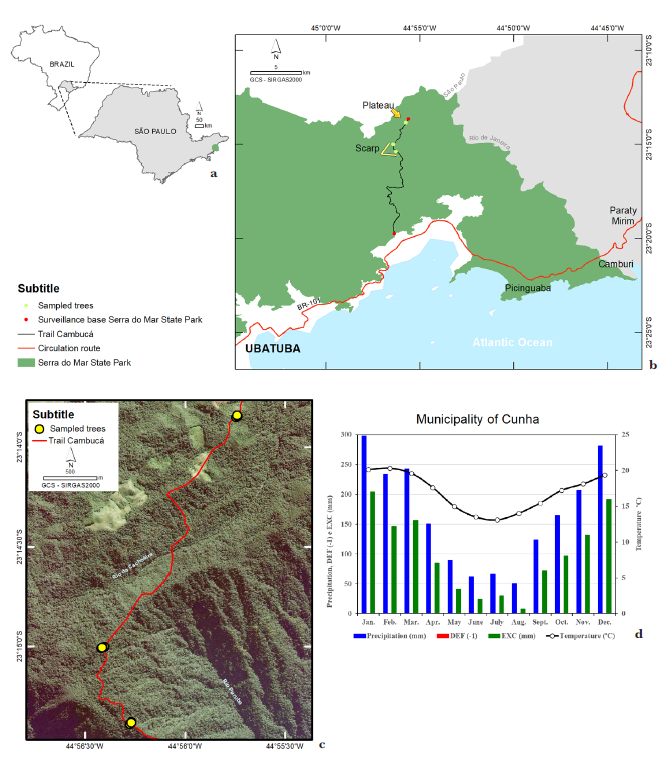
The study area is in the northern sector of the Serra do Mar State Park, Cunha Nucleus, within the hydrographic basin of the Puruba River along the Cambucá Trail, connecting plateau to coastal plain. In the present study, all collections were carried out in Vegetation of Ombrophylous Dense Montane Atlantic Rainforest (from 1,000 to 1,300 m in altitude) (Fig. 1a-c), occurring on plateaus and mountain ranges, they contain shallower soils that limit tree growth, forming a forest structure with a uniform canopy (around 20 m).
Climatic characterization
The biogeographic region of Cunha was chosen as the study area because it represents different altitudes (Fig. 1d). The meteorological data of the municipality of Cunha were obtained from Laboratório de Hidrologia Florestal Walter Emmerich (Walter Emmerich Forest Hydrology Laboratory). This data will help in understanding the anatomical variations induced in response to temperature, water deficit, precipitation, and water surplus.
Soil sampling and analyses
We collected soil samples at depths between 0 and 20 cm in the vicinity (less than 3 m apart) of the sampled trees from three altitudes (1,300, 1,100 and 1,000 meters). We performed physical analyses according to Embrapa (Teixeira et al. 2017). For texture analysis, we determined the percentages of sand, clay and silt.
Air-dried soil samples were analyzed for Phosphorus (P); Aluminum (Al); H+Al; Aluminum saturation (m%); basic cations, including Potassium (K), Calcium (Ca), and Magnesium (Mg); sum of base cations Ca, Mg and K (SB); pH; base saturation (V%); the micronutrients Boron (B), Copper (Cu), Iron (Fe), Manganese (Mn) and Zinc (Zn); cation exchange capacity (CEC) and total organic matter (O.M). Chemical soil analysis was carried out in the Universidade Estadual Paulista, Botucatu campus, according to the procedures described by the Agronomic Institute of Campinas (Raij et al. 1996; Raij et al. 2001).
Wood sampling
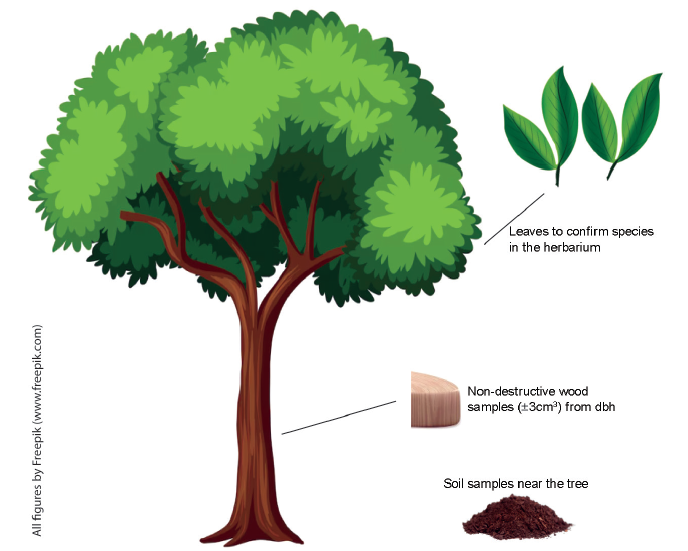
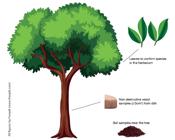
Along a 300 m altitudinal gradient, non-destructive samples (± 3 cm3) were collected at breast height (i.e., 1.30 m above ground) (Fig. 2) from 15 trees of Ocotea indecora with five trees at each altitude. Diameter at breast height (DBH) (1.3 m from the ground) was measured in all trees (Tab. 1). Crowns of sampled trees were situated at the highest part of the canopy; however, owing to local conditions, such as nearby trees of different species, or some areas with steep slopes, it was not possible to precisely determine the tree heights. To identify species, herbarium specimens (i.e., branches with leaves, flowers, or fruits) were collected and compared with specimens available at the SPSF herbarium of the Instituto de Pesquisas Ambientais in São Paulo City. To facilitate the presentation of results and later the discussion, altitudes were approximated with the following values: 1,000 and 1,200 m (scarp) and 1,300 m (plateau). The sampled trees were located at different altitudes and georeferenced using Garmin Global Position System (GPS) equipment (model 76CSx) with precision around 7 m; the UTM projection system and Datum SAD 69 were also used. Subsequently, the location of each tree was entered into a digitalized IBGE 1: 50,000 chart to obtain its altimetric elevation. It is estimated that this method allowed for an accuracy of ± 5 m for the altitudes.
Wood anatomy
Blocks of 1.5 cm³ were cut from each sample. The blocks were softened in boiling water and glycerin (4:1), and 15-20 µm thick sections were prepared on a sliding microtome. Transverse and longitudinal sections (a) were bleached with sodium hypochlorite (60%), washed in water, and stained with safranin (1%) (Johansen 1940). Macerations (b) were prepared according to the Franklin method (Berlyn & Miksche 1976). The a and b were stained with aqueous safranin and mounted in a solution of water and glycerin (1:1). Terminology followed the IAWA list (IAWA Committee 1989). Slides were prepared for the analysis and measurement of the following anatomical features: vessel element length (VEL) in macerated samples, and vessel diameter (VD) and vessel frequency (VF) in transverse sections. We also measured the proportion of vessel grouping for solitary vessels, multiples of two, multiples of three and multiples of four or more vessels. For each feature n = 25 was used initially. The slides were subsequently examined using an Olympus CX 31 research microscope, and notable findings were documented using a digital camera (Olympus Evolt E330). Measurements were performed utilizing image analysis software (Image-Pro Plus 6.3).
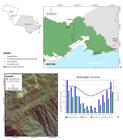
a-d. Map showing the collection area - a-c. topography and hydrography of the entire altitudinal gradient; sampled trees were indicated as yellow points; d. climatic variations in the municipality of Cunha are shown as precipitation (blue), water deficit (brown), water surplus (green) and average temperature (black). Walter Emmerich Forest Hydrology Laboratory (LHFWE), Serra do Mar State Park (PESM) (coordinates 45º02’W and 23º25’S); data from 1980 to 2016.
Vessel indices
Some vessel indices were calculated from values of vessel element length, diameter and frequency. The vessel-grouping index (VG) followed Carlquist (2001). The vulnerability index (VI) and mesomorphy index (MI) also followed Carlquist (1977). The solitary vessel index (VS) followed Wheeler et al. (2005), and vessel multiple fraction (VMF) followed Mencuccini et al. (2010) and Martínez-Vilalta et al. (2012).
Diameter at breast height (DBH) (cm) (1.3 m from the ground) of Ocotea indecora trees along a 300 m altitude gradient from the Serra do Mar State Park (Cunha Nucleus), São Paulo, Brazil.
where VG is vessel-grouping index, which corresponds to the total number of vessels divided by the total number of vessel groupings (Scholz et al. 2013).
is calculated using vessel diameter (D) and vessel density (VD) (Carquist 2001).
is calculated by multiplying vulnerability index (VI) by vessel element length (LVE) (Carquist 2001).
where VS is the ratio of total number of solitary vessels to total number of vessel groupings (including solitary and grouped vessels) (Wheeler et al. (2005).
where FVM is the ratio of vessel groupings to the total number of vessels Mencuccini et al. (2010) and MartínezVilalta et al. (2012).
Potential hydraulic conductivity
Potential hydraulic conductivity was calculated using values of vessel diameter and vessel frequency (Eq 6 above), according to the Hagen-Poiseuille equation, as described by Sterck et al. (2008) and Poorter et al. (2010).
where Kp is potential hydraulic conductivity (in kg x m x MPa-1 x s-1), ρw is water density at 20 °C (998.2 kg m-3), η is the viscosity index of water (1.002 x 10⁻³ MPa x s-1 at 20°C), VF is vessel frequency (cells x m-2), and Dh is vessel hydraulic diameter (m).
Since vessels are not exactly circular, we calculate vessel hydraulic diameter by applying Eq. 7 from the diameter of each vessel as the mean of the minimum and maximum diameters. Average Dh was calculated according to Sterck et al. (2008) and Poorter et al. (2010).
where n is the number of vessels, and d is vessel diameter.
Data analyses
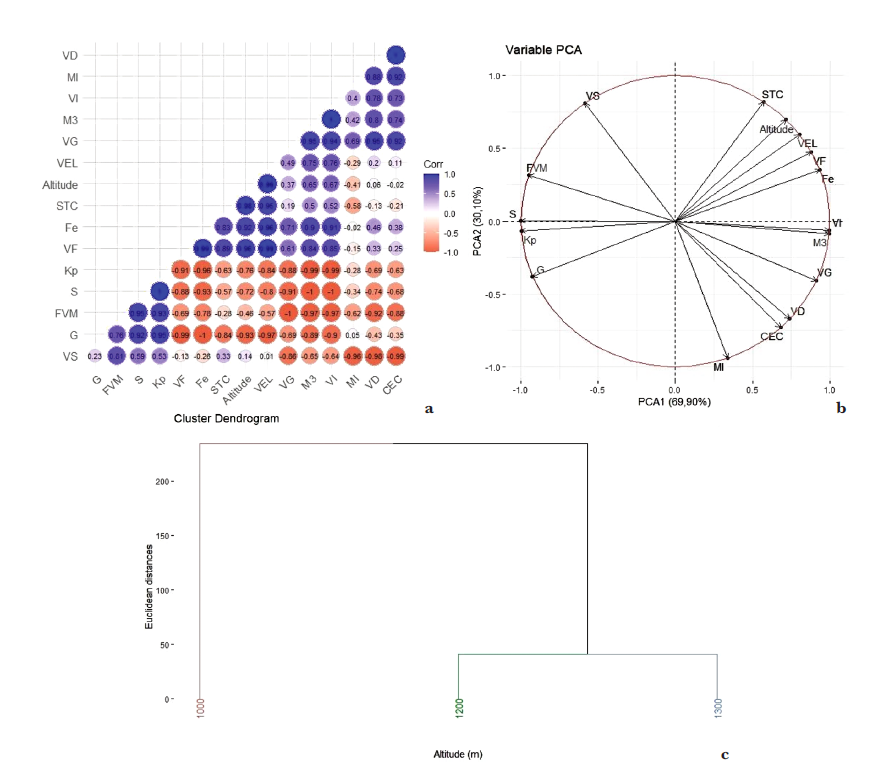
The results were evaluated using analysis of variance (ANOVA) and the DMS-Fisher test at a 5% probability to detect variations between altitudinal gradients. A multivariate analysis of the data was also conducted. A grouping analysis of altitudinal gradients was also carried out, and for this purpose, a cluster dendrogram was used. To determine which properties had the most influence on the grouping of altitudinal gradients, a principal component analysis (PCA) was performed. The Pearson correlation test was also conducted. Descriptive statistics were also used in data analysis. Statistical analyses were performed using R software and SigmaPlot 14.5 (R Core Team 2019; SigmaPlot 2023).
Results
The difference in diameter among trees was small, but on mean values, trees with the widest DBH were observed at 1,000 m, while trees with the narrowest DBH were observed at 1,200 m (Tab. 1).
In general, soils are defined as medium textural class; nonetheless, clay and silt concentrations and soil texture class varied somewhat among the three altitudes (Tab. 2). Among the chemical attributes, we highlight the differences by comparing 1,000 m to 1,200 m and 1,300 m (Tab. 3). All soils presented here are dystrophic, i.e., poor in nutrients, which is demonstrated by the very low saturation values for bases (V%) and aluminum (m%). Notably, micronutrients are available in greater proportions at 1,200 and 1,300 m.
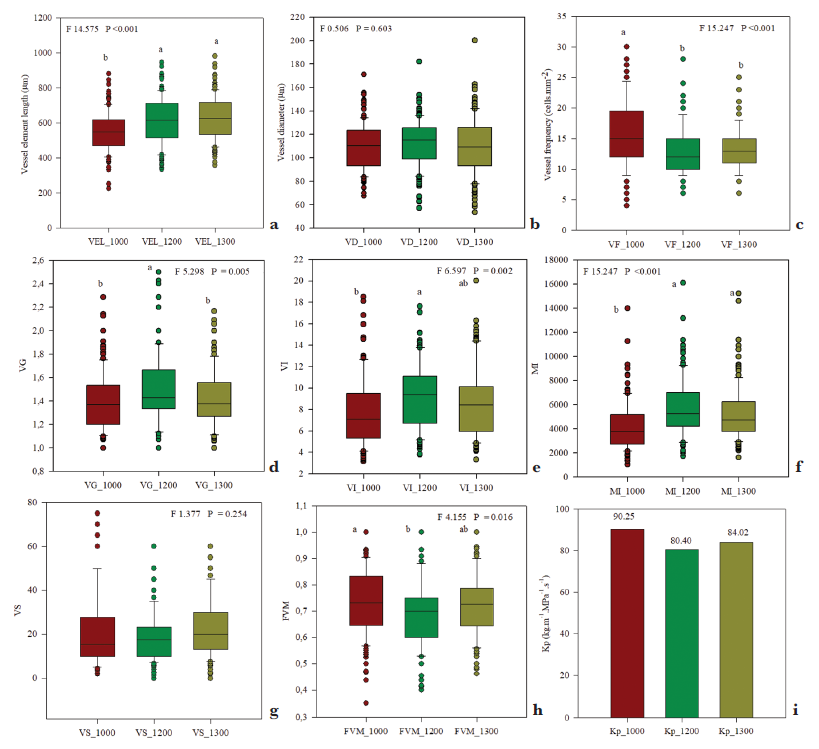
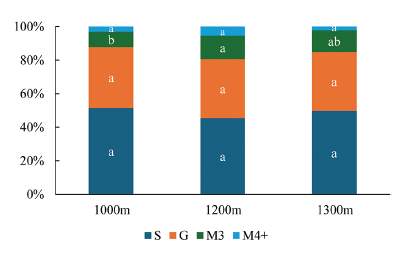
Shorter and more frequent vessel elements were observed at 1,000 m (Fig. 3a and c). Vessel-grouping index, and vulnerability index were highest at 1,200 m, but VI did not differ between 1,200 and 1,300 m (Fig. 3d and e). Mesomorphy index was lower at 1,000 m and did not differ between 1,200 and 1,300 m (Fig. 3f). Vessel multiple fraction was highest at 1,200 m and did not differ between 1,200 and 1,300 m (Fig. 3h). Potential hydraulic conductivity was highest at 1,000 m and lowest at 1,200 m (Fig. 3i). Other variables did not show statistical differences (Fig. 3). For vessel grouping index, we observed a higher percentage of multiple three vessels at 1,200 m, but no difference at 1,300 m and 1,000 m (Fig. 4).
The range of correlation values used in the present study are as follows: (0.01-0.20 very weak), (0.21-0.40 weak), (0.41-0.60 moderate), (0.61-0.80 strong) and (0.81-0.99 very strong) (Lopes 2016). Here we only consider the results of correlations with strong or very strong values, the variables of which were used in the calculations and would, therefore, give significant correlations (e.g., vessel features and vessel indices) were not considered. Among the correlations, altitude presented a very strong positive correlation with vessel element length, vessel frequency, soil texture class and iron content. Altitude was also strongly correlated with multiple vessels of three (M3) and vulnerability index with the highest values observed at 1,200 and 1,300 m. On the other hand, altitude had a strong negative correlation with geminate vessels and a strong correlation with solitary vessels and potential hydraulic conductivity, the highest values of which were found at 1,000 m. Potential hydraulic conductivity showed a very strong positive correlation with solitary and geminate vessels and vessel multiple fraction. On the other hand, potential hydraulic conductivity showed strong and very strong negative correlations with variables whose highest values occurred at 1,200 and 1,300 m (Fig. 5a).
Variation in physical attributes of soil (0-20 cm layer) along a 300 m altitude gradient from the Serra do Mar State Park (Cunha Nucleus), São Paulo, Brazil.
According to PCA results, as shown in Figure 5b, smaller angles correlated with stronger relationship between the variables. However, in our case, all vectors showed high significance, and the highest variation captured by the first axis at 69.90% was explained by characteristics most correlated to solitary vessel, M3 vessels, vulnerability index and potential hydraulic conductivity. Axis 2 contributed 30.10% of variation, and those variables with higher correlation coefficients were altitude, solitary vessel index, mesomorphy index and soil texture class (Tab. 4). Here we see the difference between conductivity vectors and solitary vessels with high positive correlation, as shown by the smaller angles in Figure 5b, and the vectors of M3 vessels, vulnerability index, and vessel grouping, both corroborating and expanding what was shown in the negative correlations, highlighting the opposition of conductivity vectors and solitary vessels (with high correlation, seen from the small angle) with the vectors of M3 vessels, vulnerability index and vessel grouping index (Fig. 5b).
In the cluster dendrogram, considering all analyzed variables, 1,000 m was considered a separate group, while 1,200 m and 1,300 m are grouped together, but as two subgroups, highlighted by the difference in color of the lines (Fig. 5c).
Discussion
This study investigated the plasticity of vessel features in Ocotea indecora wood along a 300 m altitude gradient. In general, our results showed that wood of trees at 1,000 m presents higher potential hydraulic conductivity, proving to be a wood that invests more in water transport efficiency in comparison to wood from trees at 1,200 and 1,300 m which presented vessel indices consistent with wood that invests more in safety than water transport efficiency. In the present study, with only one vegetation type, from 10 parameters determined, we found differences in eight parameters in O. indecora wood.
Variation in chemical attributes of soil (0-20 cm layer) along a 300 m altitude gradient from the Serra do Mar State Park (Cunha Nucleus), São Paulo, Brazil.
Pearson’s correlation coefficient and PCA analyses reinforce this finding. In comparing trees with higher kp at 1,000 m with those with lower kp at 1,200 m, we found that vessel-grouping index, vulnerability index, and mesomorphy index were all lower at 1,000 m, while vessel multiple fraction was higher at 1,000 m. Despite the relatively short distance between trees at the three altitudes, it is still possible to infer an intraspecific capacity such that variations in vascular anatomical characteristics would allow trees to live and reproduce in different situations (soil and water availability), as suggested by Pritzkow et al. (2020).
Although the DBH of trees showed slight variations across altitudes, individuals at 1,000 m exhibited, on average, slightly higher values. This pattern may be related to the higher potential hydraulic conductivity observed at 1,000 m, suggesting a possible association between increased stem size and conductive efficiency. However, this relationship should be interpreted with caution, as DBH may also reflect other factors, such as plant age or specific microenvironmental conditions. According to Olson et al. (2018), taller plants have wider vessels, which are more vulnerable to embolism than narrower vessels. The lowest conductivity was observed at 1,200 m where trees, on average, had narrower stem diameters. A tree’s trunk diameter, especially diameter at breast height (DBH), is a crucial measurement in forest inventories and tree growth studies. The relationship between DBH and tree height is generally straight forward: taller trees tend to have thicker trunks, and vice versa. Rosell et al. (2017) conclude that the length of the conducting path is, by far, the main determining factor in the variation in the mean vessel diameter. Consequently, in the hydraulic conductivity.
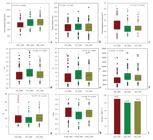
a-i. Variation in the vessel features, vessel indices and potential hydraulic conductivity in Ocotea indecora along a 300 m altitude gradient. VEL = vessel element length; VD = vessel diameter; VF = vessel frequency; VG = vessel-grouping index; VI = vulnerability index; MI = mesomorphy index; VS = solitary vessel index; FVM = vessel multiple fraction; Kp = potential hydraulic conductivity. Distinct letters differ statistically by Holm-Sidak test. F and p values are presented in each graph.
From a comparative dataset that included measurements of vessel and stem diameters of 237 species from more than 40 orders of Angiosperms in a wide range of habits and habitats, it was possible to infer that stem diameter was a predictor of vessel diameter in self-sustaining plants. In turn, plant size is related to climate, indirectly leading to a vessel-climate nexus in which it can be concluded that vessels are probably narrower in drier communities because plants with less water availability are, on average, smaller, not because their narrow vessels are correlated with the girth of stems (Olson & Rosell 2013). Thus, the small difference in trunk diameter among the three altitudes may explain the lack of variation in vessel diameter in our study. This, in turn, suggests that the frequency of the vessels and their different groupings, i.e., solitary, multiples of 2, 3 or 4, must be responsible for the differences in conductivity and related indices among the three altitudes studied. Narrower and more interconnected vessels may confer greater hydraulic safety, which in turn is an important selective factor in xylem evolution
Another study demonstrated that the variation in characteristics of different plant structures, such as leaves and wood, within a species has direct implications for survival strategies in each environmental condition of light and water availability. It is also argued that different sets of functional traits are responsible for allocation strategies, leading to specific tradeoffs that allow the species to exhibit site-specific responses to survive (Xavier et al. 2023). It is well known that anatomical features can regulate the hydraulic architecture of a plant (Poorter et al. 2010).
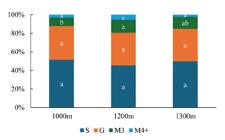
Variation in vessel grouping in Ocotea indecora along a 300 m altitude gradient. Distinct letters differ statistically by Holm-Sidak test. S = Solitary vessel; G = geminate vessels; M3 = multiple vessels of three; M4+ = multiple vessels of four or more vessels.
Thus, given the conditions of soil, relief and light in the present study, we can infer that the plasticity in the wood of trees at 1,000 m allows for shorter vessel elements and more frequent vessels with resultant differences in some calculated indices. Noshiro et al. (2010) studied altitudinal trends in Rhododendron arboreum Sm. (Ericaceae) wood from two areas in Nepal. The authors found significant correlations between altitude and vessel element length, fiber length and several multiseriate ray characteristics. For example, fewer M3 vessels were observed in wood from trees at 1,000 m when compared to the wood of trees at 1,200 m, which, in turn, was more similar to M3 vessels of wood from trees at 1,300 m. Relative to rainforest species, we generally found that dry forest trees had combinations of traits that show adaptations to aridity, such as more storage tissue and greater vessel connectivity, which may provide alternative pathways for transport of water if vessel embolism occurs (Apgaua et al. 2022).
Saima et al. (2021) investigated structural modifications, measured from macerated material, in several species growing in contrasting habitats along altitudinal (410-2,941 m) and precipitation gradients in Pakistan, across five climatic forest types. It is noteworthy that in our study, only trees in one vegetation type were investigated. Saima et al. (2021) determined that shorter vessel element and fibers were found in regions of higher altitude, while longer vessel element were recorded in subtropical montane plateau forest, and other wood characteristics did not differ between altitudes. Accordingly with Carlquist’s study, Echeverría et al. (2023) founded that vessel element length is a variable of functional relevance, in which species with vessel elements that are exceptionally short tend to grow in drylands, whereas those with vessel elements that are exceptionally long tend to grow in moist climates. In our study, we found a difference between vessel element length, which were longer at 1,300 and 1,200 m and shorter at 1,000 m. At the latter altitude, we also observed a higher vessel frequency and higher conductivity. Thus, shorter and more frequent vessel are associated with higher hydraulic conductivity.
Nascimento et al. (2024) determined anatomical features in several species and in three areas of the Atlantic Forest biome. In general, Montane Forest communities had lower conductivity and greater hydraulic security than the Lowland Forest community.
In our study, we do not have situations of extreme weather, but a higher percentage of M3 vessels was noted at 1,200 m, an altitude with lower kp, a finding from which we can conclude that the differences between vessel indices and kp could partly result from the relief and physicochemical conditions of the soil. The area of wood collections is located on a plateau in the relief of hills with the highest quota trees (1,300 m) and escarpment dominion (quota above 1,000 m), according to physiographic compartmentalization (Rossi et al. 2005). This escarpment has a northwest-southeast orientation with a slope ranging from 30 to 90%.
In tropical forests, tree height and above-ground biomass decrease at higher altitudes. The causes of this phenomenon are not yet fully understood but may include temperature differences in carbon acquisition and investment, adverse soil conditions and poor supply of nutrients (Leuschner et al. 2007), which can influence the growth and development of trees and, consequently, their wood.
The soils herein studied in this sector are poor in nutrients with very low base saturation values. High levels of exchangeable aluminum with high saturation (m% above 50%) dominate the soil assortative complex. Micronutrients show high levels of iron, high to medium levels of manganese and zinc, medium levels of boron and low levels of copper. Based on our analyses, the levels of macro- and micronutrients suggested that they are not decisive in establishing significant differences in the structures and characteristics of the wood. However, the highest micronutrient contents were observed at 1,200 and 1,300 m, altitudes with lower potential hydraulic conductivity and safer wood according to the vessel indices. Theoretically, a higher nutrient content could contribute to better growth, taller and wider trees and consequently wider vessel diameters and greater conductivity. However, this relationship is not linear and is influenced by other soil and climatic characteristics. It is also possible that higher micronutrient values could hinder plant growth, especially at 1,200 m. Some studies indicate that values between 300-500 mg kg-1 of iron in the leaves of rice (Oryza sativa L.) and Echinochloa crus-galli (L.) P.Beauv. (Poaceae) reduced plant growth (Dobermann & Fairhurst 2001). It can therefore be questioned if this greater availability of micronutrients in the soil and their potential absorption could influence the plasticity of the vessels and water conduction of wood in trees at 1,200 m.
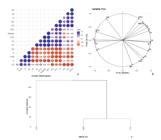
a. Pearson’s correlation coefficient. b. Principal components analysis. c. Cluster dendrogram for Ocotea indecora along a 300 m altitude gradient. Altitude; S = solitary vessel; G = geminate vessels; M3 = multiple vessels of three; VG = vessel-grouping index; VS = solitary vessel index; FVM = vessel multiple fraction; VI = vulnerability index; MI = mesomorphy index; Kp = potential hydraulic conductivity; VEL = vessel element length; VD = vessel diameter; VF = vessel frequency; STC = soil texture class; CEC = cation exchange capacity; Fe = iron content.
Pearson’s correlation with ordination axes among altitude, vessels features and indices, and some soil features.
According to Rossi & Kanashiro (2022), shallow soils dominate throughout the study area. Thus, in the region on the back of the escarpment, we observed the presence of Inseptsoils with variations in the accumulation of organic matter on the surface and beneath the surface from shallow (0.50 to 1.00 m) to deep (1.0 to 2.0 m) levels, owing to inclination of the slope. Carvalho et al. (1990) reported deep soils, such as Oxisols, to shallow depths (Inseptsoils) in the Serra do Mar State Park, Cunha Nucleus, near the sites studied, which have similar attributes to the collection points on the reverse side of the escarpment, (collection points above 1,200 meters of altitude). In this area, deeper soils have also been found (around 2 meters) with a clayey or medium texture (Rossi 2017; Rossi & Kanashiro 2022). In the sampled points at altitudes of 1,000 to 1,300 meters, the clay contents are around 20% with silt contents of 18 to 30%, while in the escarpments, the tendency is for shallower soils, but also with the same textures (clayey and medium). In the escarpments, the clay contents found are variable, but all are within the medium texture class between 17 and 25% clay, while the silt contents are more homogeneous, within 14 to 15%.
The area contains granitic and gneissic rocks that may present bands or pockets with a predominance of quartz minerals or even concentrate this element in the alteration material because of its high resistance to weathering. These soil characteristics can establish different water availability conditions, according to the texture and structure of the soil, despite the region having high rainfall levels throughout the year, in addition to receiving moisture from dense fogs and mists. However, these conditions also mask the effects of soils on the attributes of wood; therefore, more studies should be carried out to detect their variations. On the other hand, slopes are exposed to changes in luminosity, along with greater or lesser exposure to rain or fog and greater or lesser thickening of the soil. These factors also influence water availability with consequences for plant development, as manifested, for example, in DBH or height. Thus, the results found here reflect a mix of factors that can influence the wood of trees at 1,000 m toward more efficiency in conductivity, while the wood of trees at 1,200 and 1,300 m might tend more towards safety in transporting water. This is an interesting finding since these trees are most likely part of the same population by gene flow yet differ in elevation by only 300 m. It is well known that intraspecific variation can be driven by genetic diversity or phenotypic plasticity by environmental heterogeneity, which synergistically promotes plant-environment interactions (Albert et al. 2011).
Additionally, the collection areas vary in relation to the exposure of slopes: 1) on the plateau or back of the escarpment, 2) on slopes in a north/northwest position, or 3) with high insolation, mainly from the west, and high humidity. On the escarpment, at altitudes of 1,000 to 1,200 m, slopes were exposed to sunlight from the east and direct exposure to winds from the sea. Such conditions result in variations in the energy input to plants and soil, inducing, in turn, microclimatic variations and, hence, variations in plant attributes. Thus, the slopes facing southeast and northwest present greater insolation and capture of direct solar energy, while the others tend to reduce this incidence. Therefore, different hydraulic strategies of trees are expected along environmental gradients, depending on water availability in the environment (Gleason et al. 2016), and plants, correspondingly, can change their functional characteristics along such environmental gradient (Pfautsch et al. 2016).
We studied the wood characteristics of Ocotea indecora trees, such as vessels, vessel indices, and hydraulic conductivity, along an altitudinal gradient. We also analyzed these characteristics in association with soil, climate and relief data. As a result, we hypothesized a tendency towards investment in water transport efficiency in trees at 1,000 m and greater hydraulic safety at 1,200 and 1,300 m. We found two different relief compartments, plateau and escarpment, both have high slopes, exceeding the cliff, and exhibit slopes that tend to be a little deeper into the plateau. These characteristics imply different water distribution and availability. The difference in diameter among trees was small, but on mean values, trees with the widest DBH were observed at 1,000 m, while trees with the narrowest DBH were observed at 1,200 m. In general, trees with larger trunk diameters are taller, so on average, taller trees are expected at 1,000 m. Additionally, it is reported in the literature that larger trees have wider vessels (taking into account the increase in vessel diameter from the top to the base of the tree), but we observed no difference in vessel diameter among trees at the three altitudes studied. Thus, the trees studied here, despite a small difference in altitudinal gradient, showed plasticity of wood vessel features that allow them to adapt to and persist and reproduce in the environment found at each collection site.
Acknowledgements
We are grateful to Juliano de Carvalho Oliveira and Ivail Roberto de Toledo, for sampling the wood; and Sonia Regina Godoi Campião, for laboratory assistance. We also thank the National Council for Scientific and Technological Development (CNPq), for granting a Research Productivity Scholarship to Eduardo Luiz Longui (Process 312145/2021-7).
Data availability statement
In accordance with Open Science communication practices, the authors inform that all data are available within the manuscript.
References
-
Albert CH, Grassein F, Schurr FM, Vieilledent G & Violle C (2011) When and how should intraspecific variability be considered in trait-based plant ecology? Perspectives in Plant Ecology, Evolution and Systematics 13: 217-225. DOI: 10.1016/j.ppees.2011.04.003
» https://doi.org/10.1016/j.ppees.2011.04.003 -
Apgaua DMG, Tng DYP & Laurance SGW (2022) Tropical wet and dry forest tree species exhibit contrasting hydraulic architecture. Flora 291: 152072. DOI: 10.1016/j.flora.2022.152072
» https://doi.org/10.1016/j.flora.2022.152072 - Berlyn GP & Miksche JP (1976) Botanical microtechnique and cytochemistry. State University Press, Ames. 326p.
- Carlquist S (1977) Ecological factors in wood evolution: a floristic approach. American Journal of Botany 64: 887-896.
- Carlquist S (2001) Comparative wood anatomy - systematic, ecological, and evolutionary aspects of dicotyledon wood, 2nd ed. Springer Verlag, Berlin. 448p.
-
Carlquist S (2012) How wood evolves: a new synthesis. Botany 90: 901-940. DOI: 10.1139/B2012-048
» https://doi.org/10.1139/B2012-048 -
Carvalho ECD, Souza BC, Silva MS, Menezes BS, Martins FR, Araújo FS & Soares AA (2023) Xylem anatomical traits determine the variation in wood density and water storage of plants in tropical semiarid climate. Flora 298: 152185. DOI: 10.1016/j.flora.2022.152185
» https://doi.org/10.1016/j.flora.2022.152185 -
Diaconu D, Hackenberg J, Stangler DF, Kahle HP & Spiecker H (2017) Simulation study to determine necessary sample sizes for image analysis-based quantitative wood anatomy of vessels of beech (Fagus sylvatica). Dendrochronologia 45: 35-38. <https://doi.org/10.1016/j.dendro.2017.07.002>.
» https://doi.org/10.1016/j.dendro.2017.07.002 - Dobermann A & Fairhurst T (2001) Rice: nutrient disorders & nutrient management. International Rice Research Institute, Los Baños. 191p.
-
Echeverría A, Petrone-Mendoza E, Anfodillo T, Brodribb T, Torres-San Miguel CR, Rueda Arreguín JL & Olson ME (2023) Testing Carlquistian hypotheses on the functional significance of vessel element length. IAWA Journal 44: 399-428. DOI: 10.1163/22941932-bja10126
» https://doi.org/10.1163/22941932-bja10126 -
EMBRAPA (2024) Ocotea indecora. Available at <https://www.embrapa.br/documents/1355054/26025431/SITE+ARVORES_FICHA_59_Ocotea+elegans.pdf/2ac60504-d1cd-0b80-7aae-aae6144d328b>. Access on 7 March 2024.
» https://www.embrapa.br/documents/1355054/26025431/SITE+ARVORES_FICHA_59_Ocotea+elegans.pdf/2ac60504-d1cd-0b80-7aae-aae6144d328b -
Ewers FW, Jacobsen AL & López-Portillo J (2023) Carlquist’s indices for vulnerability and mesomorphy of wood: are they relevant today?. IAWA Journal 44: 355-367. DOI: 10.1163/22941932-bja10113
» https://doi.org/10.1163/22941932-bja10113 -
Flora e Funga do Brasil (2024 continuously updated) Ocotea indecora in Flora e Funga do Brasil. Jardim Botânico do Rio de Janeiro. Available at <https://floradobrasil.jbrj.gov.br/FB8463>. Access on 22 March 2024.
» https://floradobrasil.jbrj.gov.br/FB8463 - Gleason SM, Westoby M, Jansen S, Choat B, Hacke UG, Pratt RB, Bhaskar R, Brodribb TJ, Bucci SJ, Cao KF, Cochard H, Delzon S, Domec JC, Fan ZX, Field TS, Jacobsen AL, Johnson DM, Lens F, Maherali H, Martínez-Vilalta J, Mayr S, McCulloh KA, Mencuccini M, Mitchell PJ, Morris H, Nardini A, Pittermann J, Plavcová L, Schreiber SG, Sperry JS, Wright IJ & Zanne AE (2016) Weak tradeoff between xylem safety and xylem-specific hydraulic efficiency across the world’s woody plant species. New Phytol 209: 123-136.
-
Hacke UG, Spicer R, Schreiber SG & Plavcová L (2017) An ecophysiological and developmental perspective on variation in vessel diameter. Plant, Cell & Environment 40: 831-845. DOI: 10.1111/pce.12777
» https://doi.org/10.1111/pce.12777 - IAWA Committee (1989) IAWA list of microscopic features for hardwood identification. IAWA Bulletin n.s. 10: 219-332.
- Johansen D (1940) Plant microtechnique. McGraw Hill, London. 523p.
-
Johnson DM, Domec JC, Carter Berry Z, Schwantes AM, McCulloh KA, Woodruff DR, Wayne Polley H, Wortemann R, Swenson JJ & Scott Mackay D (2018) Co-occurring woody species have diverse hydraulic strategies and mortality rates during an extreme drought. Plant, Cell & Environment 41: 576-588. DOI: 10.1111/pce.13121
» https://doi.org/10.1111/pce.13121 -
Leuschner C, Moser G, Bertsch C, Röderstein M & Hertel D (2007) Large altitudinal increase in tree root/shoot ratio in tropical mountain forests of Ecuador. Basic and Applied Ecology 8: 219-230. DOI: 10.1016/j.baae.2006.02.004
» https://doi.org/10.1016/j.baae.2006.02.004 -
Li S, Wang J, Lu S, Salmon Y, Liu P & Guo J (2023) Trade-off between hydraulic safety and efficiency in plant xylem and its influencing factors. Forests 14: 1817. DOI: 10.3390/f14091817
» https://doi.org/10.3390/f14091817 - Lopes LFD (2016) Métodos quantitativos. Universidade Federal de Santa Maria, Santa Maria. 154p.
-
Martínez-Cabrera HI & Cevallos-Ferriz SRS (2008) Palaeoecology of the Miocene El Cien Formation (Mexico) as determined from wood anatomical characters. Review of Palaeobotany and Palynology 150: 154-167. DOI: 10.1016/j.revpalbo.2008.01.010
» https://doi.org/10.1016/j.revpalbo.2008.01.010 - Martínez-Vilalta J, Mencuccini M, Alvarez X, Camacho J, Loepfe L & Piñol J (2012) Spatial distribution and packing of xylem conduits. American Journal of Botany 99: 1-8.
- Mencuccini M, Martínez-Vilalta J, Piñol J, Loepfe L, Burnat M, Alvarez X, Camacho J & Gil D (2010) A quantitative and statistically robust method for the determination of xylem conduit spatial distribution. American Journal of Botany 97: 1247-1259.
-
Nascimento LB, Brandes AFN, Ferreira GC, Albuquerque RP, Borja BF, Costa WS, Rodrigues PJFP, Iguatemy MA, Negreiros FF, Lima HC & Barros CF (2024) Montane forest tree species have lower hydraulic efficiency and vulnerability than lowland forest species in the Atlantic Forest. Rodriguésia 75: e01372023. DOI: 10.1590/2175-7860202475033
» https://doi.org/10.1590/2175-7860202475033 -
Noshiro S, Ikeda H & Joshi L (2010) Distinct altitudinal trends in the wood structure of Rhododendron arboreum (Ericaceae) in Nepal. IAWA Journal 31: 443-456. DOI: 10.1163/22941932-90000034
» https://doi.org/10.1163/22941932-90000034 - Olson ME & Rosell JA (2013) Vessel diameter-stem diameter scaling across woody angiosperms and the ecological causes of xylem vessel diameter variation. New Phytologist 197: 1204-1213.
-
Olson ME, Anfodillo T, Rosell JA, Petit G, Crivellaro A, Isnard S, León-Gómez C, Alvarado-Cárdenas LO & Castorena M (2014) Universal hydraulics of the flowering plants: vessel diameter scales with stem length across angiosperm lineages, habits and climates. Ecology Letters 17: 1-10. DOI: 10.1111/ele.12302
» https://doi.org/10.1111/ele.12302 -
Olson ME, Soriano D, Rosell JA, Anfodillo T, Donoghue MJ, Edwards EJ, León-Gómez C, Dawson T, Camarero Martínez JJ, Castorena M, Echeverría A, Espinosa CI, Fajardo A, Gazol A, Isnard S, Lima RS, Marcati CR & Méndez-Alonzo R (2018) Plant height and hydraulic vulnerability to drought and cold. Proceedings of the National Academy of Sciences 115: 7551-7556. DOI: 10.1073/pnas.1721728115
» https://doi.org/10.1073/pnas.1721728115 - Pfautsch S, Harbusch M, Wesolowski A, Smith R, Macfarlane C, Tjoelker MG, Reich PB, Adams MA & Lloret F (2016) Climate determines vascular traits in the ecologically diverse genus Eucalyptus. Ecology Letters 19: 240-248.
- Poorter L, Mcdonald I, Alarcón A, Fichtler E, Licona J, Peña-Claros M & Sterck F (2010) The importance of wood traits and hydraulic conductance for the performance and life history strategies of 42 rainforest tree species. New Phytologist 185: 481-492.
-
Pritzkow C, Williamson V, Szota C, Trouvé R & Arndt SK (2020) Phenotypic plasticity and genetic adaptation of functional traits influences intra-specific variation in hydraulic efficiency and safety, Tree Physiology 40: 215-229. DOI: 10.1093/treephys/tpz121
» https://doi.org/10.1093/treephys/tpz121 - R CORE TEAM (2019) R: a language and environment for statistical computing. R Foundation for Statistical Computing, Vienna.
- Raij BV, Andrade JC, Cantarella H & Quaggio JA (2001) Análise química para avaliação da fertilidade de solos tropicais. Instituto Agronômico, Campinas. 285p.
- Raij BV, Cantarella H, Quaggio JA & Furlani AMC (1996) Recomendações de adubação e calagem no estado de São Paulo. 2a ed. Instituto Agronômico, Campinas. 285p.
- Rossi M & Kanashiro MM (2022) O mapa de solos. In: Rossi M, Nalon MA & Kanashiro M (eds.) Atlas de suscetibilidades dos solos do estado de São Paulo. Instituto de Pesquisas Ambientais (IPA) / Secretaria de Infraestrutura e Meio Ambiente (SIMA), São Paulo. Pp. 4-21.
-
Rosell J, Olson M & Anfodillo T (2017) Scaling of xylem vessel diameter with plant size: causes, predictions, and outstanding questions. Current Forestry Reports 3: 46-59. DOI: 10.1007/s40725-017-0049-0
» https://doi.org/10.1007/s40725-017-0049-0 - Rossi M (2017) Mapa pedológico do estado de São Paulo: revisado e ampliado. Instituto Florestal, São Paulo. 118p.
- Rossi M, Moraes JFL & Donzelli PL (2005) Levantamento do Meio Biofísico. Relatório Técnico da “Plantec - Planejamento e Engenharia Agrícola Ltda”. Projeto de Preservação da Mata Atlântica PPMA - Fase II, São Paulo. 220p.
-
Saima S, Saeed A, Iqbal M, Waheed M, Fatima K & Arshad F (2021) Changes in anatomical features along the altitudinal and rainfall gradients in Pakistan. The Journal of Animal and Plant Sciences 31: 1107-1115. DOI: 10.36899/JAPS.2021.4.0308
» https://doi.org/10.36899/JAPS.2021.4.0308 - Scholz A, Klepsch M, Karimi Z & Jansen S (2013) How to quantify conduits in wood? Frontiers in Plant Science 4: 1-11.
- SigmaPlot (2023) SigmaPlot-Version 14.5. Systat Software, San Jose.
- Sterck FJ, Zweifel R, Sass-Klaassen U & Chowdhury Q (2008) Persisting soil drought reduces leaf specific conductivity in Scots pine (Pinus sylvestris) and pubescent oak (Quercus pubescens). Tree Physiology 28: 529-536.
- Teixeira PC, Donagemma GK, Fontana A & Teixeira WG (2017) Manual de métodos de análise de solo. 3a ed. rev. Embrapa, Brasília. 574p.
- Tyree MT & Zimmermann MH (2002) Xylem structure and the ascent of sap. 2nd ed. Springer Series in Wood Science. Springer Verlag, Berlin. 283p.
- Wheeler JK, Sperry JS, Hacke UG & Hoang N (2005) Inter-vessel pitting and cavitation in woody Rosaceae and other vesselled plants: a basis for a safety versus efficiency trade-off in xylem transport. Plant, Cell & Environment 28: 800-812.
-
Xavier V, Pireda S, Oliveira DS, Vitória AP & Cunha M (2023) Leaf and wood functional traits explain the strategies developed by Byrsonima sericea (Malpighiaceae) to survive in Atlantic Forest ecosystems under water and light variations. Flora 308: 152386. DOI: 10.1016/j.flora.2023.152386
» https://doi.org/10.1016/j.flora.2023.152386