 Time, Space and Death in Familiar Places: New York’s Lower East Side in a Time of HIV/AIDS
Resumo
O meu objetivo neste artigo é desenvolver um método pragmático para explorar e compreender a urgência vivida do HIV/AIDS, considerando como a subjetividade, a experiência e a memória emergem como parte da atividade prática das pessoas e do envolvimento com o seu ambiente. Para William James, o pragmatismo tem origem na palavra grega πρᾶγμα e sua referência à ação, à prática e ao movimento. Isto destaca como a nossa interação contínua e a consciência do mundo estão num processo constante de diferenciação: um fluxo em constante mudança que constitui a nossa experiência e o nosso ser a cada momento. Em resposta a isso, o artigo detalha uma tentativa de desenvolver um contexto etnográfico pragmático e performativo para a compreensão dos sentidos emergentes do eu e dos domínios subjetivos de emoção e memória que surgem através das atividades práticas contínuas e do engajamento com os ambientes materiais familiares.
Palavras-chave:
Pragmatismo; Métodos experimentais; Cidade de Nova York; Morte; Memória
Abstract
My aim in this article is to develop a pragmatic method to explore and understand the lived immediacy of HIV/AIDS by considering how subjectivity, experience, and memory emerge as part of people’s practical activity and engagement with their surroundings. For William James, pragmatism finds its origins in the Greek word πρᾶγμα and its reference to action, practice, and movement. This highlights how our ongoing interaction with, and consciousness of, the world is in a constant process of differentiation: an ever-changing stream that constitutes our experience and being from moment to moment. In response, the article details an attempt to develop a pragmatic and performative ethnographic context for understanding the emergent senses of self and subjective realms of emotion and memory that arise through people’s ongoing practical activities and engagements with their familiar material surroundings.
Keywords:
Pragmatism; Experimental methods; New York City; Death; Memory
Introduction
Anthropology has a close and complicated relationship with philosophy insofar as it explores fundamental questions about human existence—for example, in relation to life, death, and religion; knowledge, language, and belief; morality and ethics—but does so as a pragmatic and performative endeavour that involves working alongside people and participating in their social lives and practical activities. As such, anthropology can be conceptualised as a fieldwork science/documentary art (Davis, 2000) whose methods are based on the anthropologist’s ongoing linguistic, bodily, and practical interactions with people in the field with the aim of generating new knowledge and understandings about the commonalities, differences, and specificities of human experience. It then relies on written texts, and to a far lesser extent images, objects, and recordings, to document its findings and communicate its theories.
One of the earliest considerations of anthropology as a philosophical and pragmatic discipline was Kant’s course on anthropology that he taught from 1772 until 1796. Anthropology was a new discipline, and Kant’s course and resulting book, Anthropology: From a Pragmatic Point of View (Kant, 2006), was one of the earliest attempts at developing a sustained pragmatic approach to understanding human beings. Kant saw anthropology as a means for understanding the individual and collective basis of people’s thoughts and actions in different social and cultural contexts and in light of our status as unfinished beings with partial knowledge about ourselves, others, and the world. Although Kant’s anthropology mostly remained a way of observing and theorising people’s actions, as opposed to a fieldwork science in the modern sense, his attempt to devise a pragmatic approach to understanding humanity, at a time of rapid social, cultural, and political change, offered a way of thinking about how individual and collective subjectivity is formed through people’s ongoing practical and moral interactions in the world.
For Kant, the “I” that forms a person’s subjectivity and sense of self is partly perception and partly constructed representation: a synthesis that comes into being through speech, language, and action. Consciousness, self, and subjectivity, therefore, do not have a pre-existing or defined form but emerge and become articulated in the moment through people’s activities and relations with others and their environment. Consequently, while self and consciousness might be divided and fragmented in relation to different social activities and over someone’s life course, they are unitary at the level of the person given “the fact that the human being can have the ‘I’ in his representations” which makes him a person who “through all changes that happen to him, [is] one and the same person” (Kant, 2006, pp. [1798], 15).
Kant’s interest in devising a pragmatically grounded and humanistic approach to knowledge was conceived as an alternative to the theological understanding of the nature of humankind and that the most appropriate study for human beings was other human beings rather than God (Kuehn, 2006). As such, although closely related to Kant’s philosophical project, anthropology was its own discipline that studied how people act in their everyday lives and used empirical observations of social life and practice, defined as
[a] doctrine of knowledge of the human being, systematically formulated (anthropology), can exist either in a physiological or in a pragmatic point of view. —Physiological knowledge of the human being concerns the investigation of what nature makes of the human being; pragmatic, the investigation of what he as a free-acting being makes of himself, or can and should make of himself. (Kant, 2006, p. [1798], xx)
Kant’s commitment to a pragmatic and grounded understanding of humanity meant avoiding “futile inquiries as to the manner in which bodily organs are connected with thought” (Kant apud Wood, 1999, p. 197) or other overly speculative or deterministic explanations of people and their activities. Instead, Kant thought of anthropology as a “knowledge of the world” (Weltkenntnis) based in participation (mitgespielt) rather than theoretical speculation and abstraction, which he maintained were of limited use unless informed by practical action and understanding. For Kant, a further obstacle to the development of a pragmatic approach to understanding of humanity, following Augustine, was how to conceptualise the relationship between the sensus interior of personal subjectivity and the sensus communis of people’s public observable actions in social life.
Accordingly, Kant’s Anthropology: From a Pragmatic Point of View is organised, thus, in part one: “Anthropological didactic: on the way of cognising the interior as well as the exterior of the human being” and part two: “Anthropological characteristic: on the way of cognising the interior of the human being from the exterior”.
By approaching the anthropological project along the lines of interiority and exteriority, Kant foregrounds the epistemological and practical problem of how to relate people’s perceptions, thoughts, and experiences to their public utterances and observable actions. It is telling that over two hundred years since Kant attempted to devise a means of observing and theorising the human subject in action, a major problem persists for anthropologists carrying out fieldwork in terms of understanding other people’s thoughts, intentions, and actions. The existence of a subjective, interior lifeworld beyond third-party observation and knowledge is an empirical but ultimately unobservable presence in the field. People’s internally represented thoughts and expressions might even be diametrically opposed to their observable public expressions. An experience no doubt familiar to many anthropologists in the field and their own social lives — recalling Jane Austen’s heroine Emma, who “denied none of it aloud, and agreed to none of it in private” ((1833), 315) — undermining the evidential grounds for making truth claims based on the ethnographic interpretation of extrinsic forms, including language and action.
This required Kant to establish epistemological and evidential grounds for making claims about people’s perceptions and moral understandings — including how these might be deduced from the observation and analysis of one’s own and other people’s daily practices — and highlighting the thorny problem of how to relate “the interior of the human being” to those forms of extrinsic expression that are available to the eye and ear and which make social life open to anthropological observation. Kant acknowledged that his own attempt at developing a reliable method of observation remained limited, noting how self-consciousness and awareness, as potential accompaniments of action, not only means that people perform and act differently when being observed but that the observer themselves can never fully participate in any social situation if they are simultaneously observing and analysing it. For Kant, the problem is exacerbated because there is no objective understanding of, or unmediated access, even to one’s own consciousness insofar as when someone observes “his inner self [he] can only recognise himself as he appears to himself, not as he absolutely is” (Kant, 2006 [1798), 30]. Kant regarded the modes of self-knowledge and understanding that derive from introspection and the sensus interior as unreliable and subject to self-deception and misrepresentation and thereby offered an insufficient basis for establishing knowledge about oneself, other people, and the world. Not only are human beings subject to what Kant termed “internal illusions” and are “psychologically opaque” to ourselves (Wood, 2003) but are inherently unreliable narrators who are constrained by the limits of perception and self-understanding. In outlining the partial and provisional grounds of knowledge, Kant offers a critique of naive empiricism and reinforces how knowledge and understanding are formed through our practical and moral interactions among others or “acting in or having a world” (Welt haben).
In his Introduction to logic, Kant summarises his approach in the form of four questions:
-
What can I know?
-
What should I do?
-
What can I hope for?
-
What is a human being?
In response, Kant suggests:
-
“What can I know?” is answered in the realm of metaphysics.
-
“What should I do?” is answered in the realm of ethics.
-
“What can I hope for?” is answered in the realm of religion.
-
“What is a human being?” is answered in the realm of anthropology.
However, Kant went on to argue that, in fact, all four questions pertain to anthropology because “in reality… all these might be reckoned under anthropology, since the first three questions refer to the last” (Kant, 1963 [1800), 15]. In trying to understand what constitutes a human being, rather than seeing human nature as something fixed and predetermined, Kant saw it as “an evolving and emergent combination of technical, pragmatic and moral predispositions” (Fischer, 2009, p. 220): a position that influenced Foucault who wrote his secondary doctoral thesis on Kant’s Anthropology: From a Pragmatic Point of View in 1961, and later translated the text for publication in 1964. Foucault argued that Kant was formulating a radically new model of human nature that is not fixed or determined by divine, immutable essences but enacted and constructed through action and practice as part of an ongoing historical process through which humankind has a capacity to change itself. For Kant, human nature is therefore not a static essence but a pragmatic activity that is situated, emergent, and bound up with the use of language and practice. By suggesting that human nature is emergent and open to intervention, action, and agency, Foucault argues that Kant was developing a radical new inquiry into an “ontology of the present, and ontology of ourselves” (Foucault, 1994, p. 148) and was asking a completely different kind of question from anything that had been asked before, namely: “The question of the present, the question of what is happening now; What is happening today? What is happening now? And what is this ‘now’ within which all of us find ourselves; and who defines the moment at which I am writing” (Foucault, 1994, p. 139)?
This is not the kind of question that could be found in Descartes for example—whose model Kant criticised for its implication of an observer who stands outside of nature rather than an actor situated within it (Kant, 1996: 3) — but instead directly relates to how (i) perception and understanding of the world is constituted from moment to moment through practical and pragmatic activity, and (ii) how elements of the present are recognised, distinguished, and interpreted to the formation of our lived experience and which thereby make it open to action, intervention, and reflection, leading Foucault to suggest that Kant’s inquiry revolves around the question “What precisely, then, is this present to which I belong?” (Foucault, 1994, p. 140).
Adventures in New York City
By drawing on Kant’s situated and processual conceptualisation of the self and by rethinking his anthropological project in terms of its ethnographic implications in the field, my aim in this article is to develop a pragmatic method to explore and understand the lived immediacy of HIV/AIDS by considering how subjectivity, experience and memory emerge as part of people’s ongoing activities and engagement with their surroundings. For William James (2000), the pragmatic method finds its origins in the Greek word πρᾶγμα and its reference to action, practice, and movement. In doing so, James notes how our interaction with, and consciousness of, the world is in a constant process of differentiation: an ever-changing stream that constitutes our experience and being. If so, then how might we respond ethnographically to better understand the emergent and ever-changing realms of lived experience, expression and imagery that comprise our being-in-the-world?
Given that there is no objective access to the minds, bodies, and experiences of other people, this presents a substantial challenge to anthropology and the social and humanistic sciences more generally. Understanding people’s emergent and situated modes of thinking and being is first and foremost a practical and methodological problem to be worked on in the field rather than a conceptual one. Moreover, many existing social scientific methods and measures are often too static to research and represent the complex assemblages of internally represented speech, perception, and imagery that constitute action or are expressed in consciousness. Although these are central to social life and the human condition, they are rarely, if ever, the ethnographic focus of journal articles and monographs, and means anthropology risks only telling half the story of human life.
In response, the following section uses co-creative ethnography to bring to life, explore and understand the complex streams of thought, experience, and memory that constitute living with HIV/AIDS in terms of a person’s everyday interactions with their familiar surroundings: in this case, New York’s Lower East Side. My intention is to create a pragmatic and performative ethnographic context for understanding emergent senses of self and subjective realms of emotion and memory that arise through movement and action when passing personal landmarks, familiar buildings, and shared public spaces. In particular, I am interested in understanding the relationship between the materiality of the city and the layers of “deep” memory that can be found in the minds and bodies of New York’s citizens.
The following method combines movement, performance, and photography to investigate how experiences of urban space are mediated by complex trajectories of thought, memory, and expression that emerge in response to one’s daily interactions and material surroundings. It regards fieldwork as a type of performative and pragmatic activity that can be used to craft contexts of perception, experience, and memory that are lived in daily life but are not usually externalized or made public. Combining ideas of free association and the development of new, practical approaches to theorising, knowing, and representing people’s experiences and understandings, my aim is to create an ethnographic context for the generation of speech, memory, and imagery by establishing a different kind of pragmatic relationship between people, their bodies, and their familiar surroundings.
A person is asked to walk around their local neighbourhood while narrating their stream of thought, consciousness, and memory as they emerge in the present-tense into a voice-recorder, while a second person (who is previously unknown to the first) interjects, asks questions, and takes photographs, thereby creating a moving, performative dialogue in which transient thoughts and memories emerge, are articulated, and then reflected upon in the public domain. The externalisation of the person’s thoughts and memories is carried out in the actual locations in which the original events and experiences occurred. As such, the method plays upon the capacity of familiar places to elicit interior lifeworlds and create a context for verbal testimonies and storytelling, including the emergent and associative properties of thought and expression.
For this method, I asked Neil Greenberg, an HIV+ dancer and choreographer to walk around his local neighbourhood while narrating events from his life into a tape recorder, and I invited another participant, Frank Jump (whom Neil did not know and also HIV+), to be the interlocutor/photographer who accompanied Neil. As I was interested in capturing the historical nuances and collective deep memory of HIV/AIDS, it was important for this particular fieldwork encounter that the two persons were strangers to each other and thus were required to articulate themselves without relying on shared, often unspoken understandings that exist between persons who are familiar with each other’s lives and history.
Although I knew both Frank and Neil well and had worked with them independently, they were meeting each other for the first time. This meant not only that they had to establish a sense of each other during their journey around the neighbourhood but also that the ethnographic content and direction of the research depended upon Frank and Neil’s sharing of life experiences and their interactive reflections as they emerged in the ethnographic moment. Most image production in the field is to some extent collaborative but for Neil and Frank, the choices of what to represent extends the collaborative aspect by actively creating and shaping the ethnographic, thematic, and aesthetic content. Frank (b. 1960) is in the same age group as Neil (b. 1959) and both were among the generation of gay men that came of age during the brief window of social and sexual liberation after Stonewall but before the arrival of HIV/AIDS, and both men were diagnosed in their twenties. This meant Frank could ask questions of Neil’s life experience and memories that I could not even conceive of as someone without HIV. This not only created a fieldwork dialogue that emerged out of Frank’s and Neil’s embodied experiences of living with HIV but also allowed for the ethnographic site to be defined from moment to moment through the action and dialogue that emerged between Neil and Frank as they discussed issues that were relevant and important in their lives. The process was designed to be as straightforward as possible to facilitate rather than impede, and encompassed the following stages:
-
1)
outlining the nature of the project, separately, to both participants and identifying a set of ideas and themes;
-
2)
taking Neil’s life history (that is, separately, without Frank);
-
3)
drawing a map of the neighbourhood with Neil, whereby I asked Neil to locate a number of key locations and events taken both from his routine, everyday life in the neighbourhood and his longer history of living there;
-
4)
walking the shape of Neil’s life biography with Frank as the key interlocutor and myself accompanying, while being open to the various new routes, detours, and trajectories that emerged in response to Frank’s questions, comments, and conversation.
I met Frank at the subway station and we proceeded to Neil’s place on East 2nd Street. When Neil invited us in, Frank began to look at the photographs on display around the apartment to see if he recognised anyone. Frank did not know any of the faces, but after Neil mentioned their names, Frank realized some of those pictured were mutual acquaintances and he was familiar with their life stories. Neil said that out of the fifteen photographs in the room, fourteen were dead but added that the photographs were not intended to be memorials; they were simply snaps of his friends he put up when he first moved into the apartment. Neil explained that they were the type of friends he made in his late-teens and early-twenties that often go on to become the close, intimate friends that someone carries throughout adult life, to which Frank, identifying with the experience of having lost many friends, observed “but not since AIDS.” One by one the young faces in the photographs had died and the images thereafter became memorials, illustrating the extent to which HIV/AIDS decimated a generation of significant relationships.
The way a shared realm of experience and memory had already begun to open up—before the journey around the neighbourhood actually commenced—reminded me of how the first lines of a play, film, or novel already presuppose a series of events that have taken place before it has started. When the Countess of Roussillon opens Shakespeare’s All’s Well that Ends Well with the lines, “In delivering my son from me, I bury a second husband,” it gestures toward events, emotions that have already happened, and are set in motion. In our case, what existed “beforehand” was a particular experience and understanding of New York that was common to both Neil’s and Frank’s lives. At this point, I took a passive role, only occasionally interrupting to ask a question or to obtain some background information.
The following excerpt begins at the point where Neil, Frank, and I were trying to track down the very building where Neil caught HIV.

“This is Lucky Cheng’s, an Asian restaurant with drag waiters. But Lucky Cheng’s isn’t really Lucky Cheng’s. To me, Lucky Cheng’s is still the Club Baths, a bathhouse chain that had baths in every major city. When I first moved into my apartment I used to say I lived right between the Club Baths and St. Mark’s Baths, which is now Kim’s Video, a video store I use on East Eighth Street. I frequented both baths a lot. At the Club Baths there was shag carpet everywhere. St. Mark’s was much more cushy, streamlined, and had younger guys. There was a whole thing going on: orgies, anonymous sex, and when AIDS arrived, I was in a group of men who all assumed they had been put at high risk. One of these places will be the place where I caught HIV.”

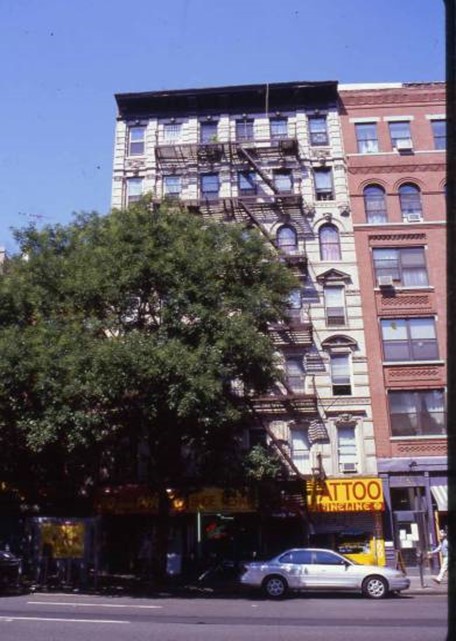
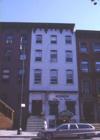
“So, well, here it is: my brother’s apartment building, right across the street from Lucky Cheng’s and just round the corner from mine and also a fifth-floor walk-up. Jon was three years older than me, gay. Actually, I got him the apartment. A friend of mine died there from AIDS and afterward my brother ended up moving in. And then my brother died from AIDS. My brother actually died in the hospital but this is where he was for the couple of months before. There was a lot of vomiting, a lot of diarrhoea. He lived in apartment twenty-five, I’m almost certain. How do you forget things like that? And his friend Risa lived across the hall. First my friend died in that apartment, and then when my brother moved in, he died too. This is my path to the subway station. Very often I’ll pass right by here. And I almost always glance over to see if I’m passing his building and very often I’m not. I’ve already passed his building by . . .”

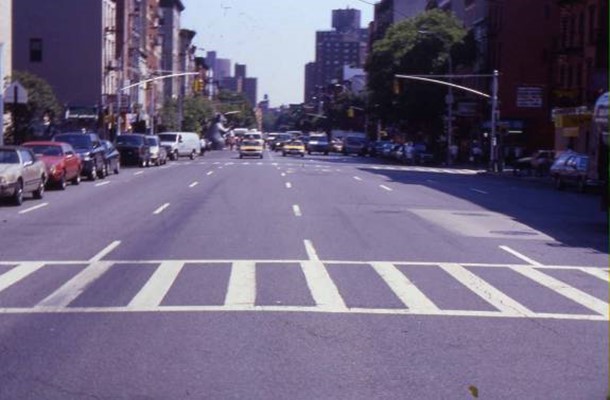
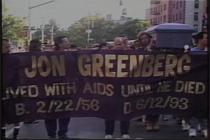
“My brother had this weird discrepancy and probably contradiction in his own mind… He wanted a public funeral without being political. He wanted us to burn him in the street and for people to eat his flesh. His friends wanted to try and come up with a public funeral that was as close to his wishes as was possible. And the closest thing that would cover his wishes was that the body should be visible and that it should be public. The funeral started somewhere near here. . . . It was Friday, July 16th, and people congregated by the park by the subway station. His body was in a van because it is illegal to do something like this in New York. It was a nonviolent political action, it was peaceful. Then four or five of us took my brother out of the van and carried the coffin up First Avenue.”

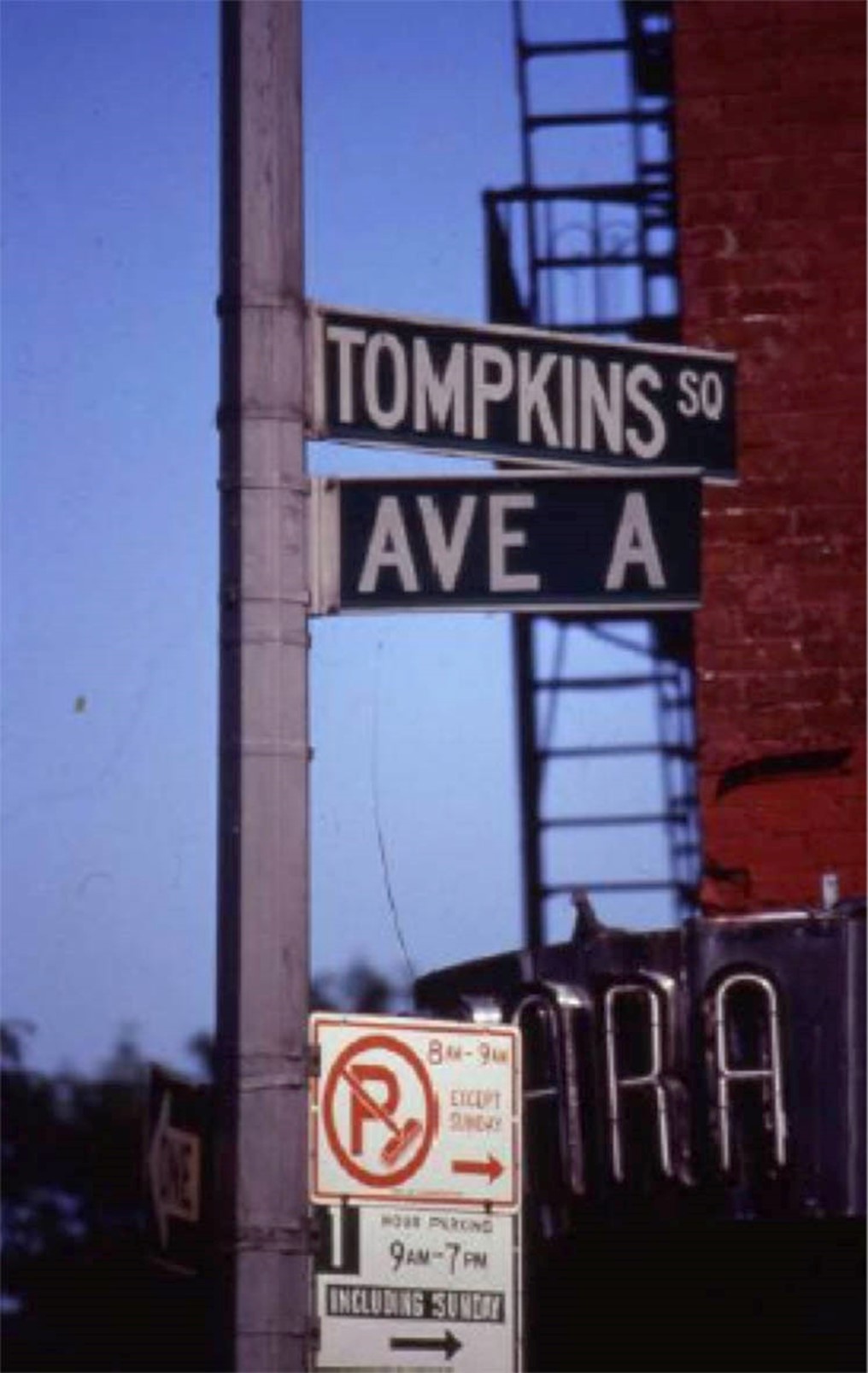
“At Tompkins Square Park the coffin was set on a stand and my brother was dressed in a flowered halter top, which was chosen by his friend Risa. People sat down here and watched and we went up to speak one at a time. Somebody did a Jewish prayer, and it really touched my parents that somebody would do that. Actually, my brother Jon would have liked that too. People talked about him, somebody said something hyperpolitical and somebody came up and said this wasn’t a political thing. I can’t walk by there without being reminded of my brother. When I first met my current partner, we went for dinner at a place on Seventh Street and then we took a walk and we ended up sitting in the park, and it was a wild thing on our first date to be in Tompkins Square Park. And I couldn’t be there with this guy on a first date without thinking that right over there was where my brother’s funeral was.”
“Afterward, we loaded the coffin back into the van and they drove it back to the funeral hall and then it was cremated. Then what happened to the ashes is another story! We ate part of the ashes as per his wishes. It felt . . . I don’t know what it felt like. I mean, I can tell you that there were little pieces of bone left that crunched and were the consistency of a pretzel. Which is shocking, but you know, it’s just ashes, there’s nothing unhealthy about eating it as far as I can tell… then we went back up to Risa’s and we had potato salad and we found out she had put some ashes in the potato salad. So the people who chose not to eat ashes ended up eating the ashes…”
Emergent Ethnography
The excerpt above, which is about our journey around New York’s Lower East Side, attempts to bring to life the emergent realms of emotion, memory, and internalised expression that constitute people’s lived experiences of their local and habitual surroundings. The resulting narrative was generated and articulated in a particular kind of performative and pragmatic fieldwork context and as such is subject to varying levels of personal disclosure, self-censorship, and the act of recording. Accordingly, Neil’s words are best regarded as partial representations of the subjective lived experiences, emotions, and memories that emerged in dialogue with Frank as part of a performative journey around the neighbourhood. Although many realms of Neil’s experience are destined to remain incipient or unarticulated, others coalesce into stable symbolic and communicable forms for narrative expression to oneself and others to gain a glimpse into Neil’s embodied experience of his neighbourhood as it emerges in the moment while he walks around its streets and buildings. The performative journey Neil and Frank take us on around the Lower East Side is embedded in their shared social circumstances and life histories and uses their agency, intentionality, and interaction to craft a specific fieldwork site through movement and dialogic interaction.
Whereas our being-in-the-world is experienced as an assemblage of perception and sensation — in which the co-presence of thought, emotion, memory, and movement combine to create our embodied experience of the moment — language is largely linear in its structure and unfolds over time: what is experienced simultaneously across different cognitive, sensory, and emotional modalities is expressed verbally in a sequential fashion. This means that emotions experienced conjointly as part of an undifferentiated amalgam at the level of the body are separated out at the level of language and expressed in terms of bounded categories such as love, loss, grief, regret, and so forth. As indicated by Kim Nicolini’s ((1998)) attempt to map herself onto the streets of San Francisco, any narrative therefore can only offer a partial representation of a wider range of corporeal, sensory, and emotional experiences, of which many aspects are difficult to grasp, define, or articulate, and reinforces how lived experience often exceeds that which can be expressed or understood — including by the person who is experiencing it themselves — through linear forms of speech and language. As Neil walked around different parts of his neighbourhood, thoughts, memories, and experiences emerged and were communicated to Frank and myself in a storied form to create a “space of shared inter-est” (Jackson, 2002: 11). In doing so, Neil had to make his narrative relevant not only to himself, Frank, and myself but also to an imagined audience and readership he has never met. This necessitates the mediation of different personal experiences and moral understandings —including in this case in relation to events beyond human control, such as the death of friends and family —, which are couched in a storied form in ways that speak not just to one’s immediate interlocuter but also to a wider audience with diverse interests, concerns and values. In her pioneering work on empathy, Edith Stein (1989), argued that there is no direct access to the subjectivity or lived experience of other persons. Instead of feeling what another feels, we continually fill in other people’s streams of bodily experience and consciousness and project ourselves into their lives from the positionality of our own embodied — if imaginatively decentered — perspective and experience of the world. This reinforces how acts of storytelling are “never simply a matter of creating either personal or social meanings, but an aspect of the ‘subjective in-between’” (Jackson, 2002, p. 11), and also highlighting how the readers of this article are themselves part of the story-telling process.
Neil’s narration of his neighbourhood demonstrates how we are not fully in control of our own thoughts and memories, and are instead at best partial agents in shaping our thought processes. Sometimes a thought, event, image, memory, or dilemma repetitively comes into consciousness, unwanted and unbidden. The person may want to be thinking about something else and actively tries to change the content or character of their lifeworld, but the thought or memory keeps returning no matter how hard they try. Some thoughts may be recurrent and ongoing to the extent that they define a sense of personal or collective experience (or both)—that may be common to many persons with HIV/AIDS — while others are destined to remain formless, unspoken, or impossible to articulate. This reinforces William James’ notion of how the spectrum of consciousness ranges from barely graspable and transitory forms of thinking and being that exist on the periphery of consciousness, bodily awareness, and understanding to those more defined, purposeful, and stable forms that are easier to articulate and that enable persons to establish a sense of self and continuity, including amid radically changing conditions, crisis, or disruption. Certain moods and modes of consciousness may persist for hours, days, or weeks to create an experience of a world seemingly “shot through with regularities” and “essentially bound up with the way in which one moment in our experience may lead us toward other moments” (James, 2000, p. 90).
By employing a performative and ethnographically grounded approach—carried out by accompanying, moving with and alongside people in the field—my aim was to apply James’s idea that there is always some form of practical, as opposed to abstract or conjectured, connection between past, contemporaneous, and future events. In this case the aim was to understand how such events might be linked through performative action and how any given moment consists of multiple possible presents and whose character remains undetermined until realised in action. Nowhere is this more obvious than when Neil walks to the subway station on First Avenue and Houston Street. To do so, he must walk past Lucky Cheng’s — where he most likely caught HIV — as well his dead brother’s apartment building: an act that usually brings forth the deep memory of the past. On those occasions when Neil walks along First Avenue and does not think about his brother’s death — or his ex-partner John Vasquez, who died in the same apartment — he feels guilty about his lack of remembrance. On some days he simply does not want to engage with the emotional immediacy and intensity of walking down First Avenue; he walks the long way around the block or uses another subway station, thereby avoiding both Lucky Cheng’s and his brother’s apartment. However, taking the “long way around” elicits other qualities of thought and emotion, which for Neil accord a lack of respect to Jon and John’s lives, and he mostly chooses the direct way, both to acknowledge his brother and former lover but also as a personalized daily ritual and existential test of his moral fortitude and capacity for remembrance.
This illustrates how even the simple act of turning right or left when leaving one’s home presents multiple pragmatic possibilities for engaging with and experiencing the neighbourhood. A person’s daily movements through the neighbourhood create many different emotional contexts for shaping thought and experience as well as remembering and forgetting, insofar as certain streets and buildings in the neighbourhood have the capacity to elicit depths of personal experience, emotion, and memory, while other streets are much less defined in relation to personal history and offer the possibility of deadening the past or at least making the neighbourhood less emotionally active. A person’s daily movements help shape the empirical content and character of their sensus interior and establish different possibilities for being and expression from moment to moment. By deciding to walk down one street rather than another, by staying inside or choosing to go out, by going to a friend’s house or sitting in his local park, Neil’s movements actively create his sense of self and embodied, sensorial experience of the neighbourhood.
Such choices are made on an hourly, even minute-by-minute basis and continually redefine the experience and meaning of living with HIV/AIDS. The radically different moods that emerge demonstrate what is at stake by being-here rather than being-there (Casey, 1993), sensitizing the person to how life and history are made and manifested within the moment and through action. The modes of thinking and being that are generated by choosing to walk in Tompkins Square Park or down First Avenue and past Lucky Cheng’s, show what is at stake in people’s quotidian movements and how different places have the capacity to generate realms of experience and emotion that are qualitatively different from being elsewhere. Although Neil’s account of walking around his local neighbourhood reveals the impossibility of entirely removing oneself from the emotional and mnemonic power of place, it demonstrates how people’s lived experiences of the moment are continually generated through everyday movement whereby people shape their experience of the present and assign it new meanings and functions through their daily routines and actions.
Heidegger employs the term ausserlichkeit (outwardness, externality) to describe the superficial appearances of routine actions and concerns, and “everydayness” to describe “the pallid lack of mood that dominates the grey everyday through and through” (Heidegger, 1962, p. 395). Heidegger is not assigning a negative character to everyday life but instead is arguing that our perception and understanding of the world are never neutral or free-floating, insofar as the world is only disclosed through a specific mood and state-of-mind ((1962)). People’s pragmatic engagements and interactions with familiar objects and places are thus always intertwined with emergent modes of being, belief, and body, including those of health, illness, and emotion, which combine to define the character of dwelling from moment to moment. Neil’s performative recreation of his everyday experience of walking around his local neighbourhood continually moves between different moods and registers of expression: from loss, regret, and tragedy to humour, irony, and philosophical commentary. No matter how entrenched a particular perception may seem, it does not reveal an immutable reality or experience of the neighbourhood but one that remains labile and whose mood can be reshaped and reworked through words and movement. This means the account of the neighbourhood Neil recounted, like every ethnographic encounter, does not represent a static perception or mode of dwelling but a specific and situated lifeworld that was generated and expressed through action, dialogue, and movement.
Neil’s testimony reveals how intense, often recurring, moments of thinking and being emerge through his everyday engagement with his neighbourhood. The intensity of Neil’s relationship with familiar objects, buildings, and streets, suggests that Heidegger mistakenly conflates the routine performance and collective expression of ordinary, everyday activities—or sensus communis—with people’s situated, and sometimes intensely felt, experiences of everyday life. By making inferences based on outward appearances, Heidegger ascribes a lack of mood to people’s routine activities rather than the intense emotions, feelings, and dilemmas that Neil so movingly recounts in his public expressions of the neighbourhood. This holds important anthropological implications in that it cautions against theorizing and representing anthropological subjects or their social practices without taking account of the ongoing streams of consciousness and ever-changing reality of their inner lifeworlds. Grounding anthropological truth claims in people’s emergent experience of the world and according it a more active role in shaping ethnographic accounts not only offers a more accurate understanding and representation of social life but also implies an anthropological responsibility for accurately reporting on people’s inner lives in anthropological texts in ways that avoid theoretical overdetermination or reification and enable people to recognise their own experience in the text.
Conclusion: A Return to the Pragmatics of Experience and Memory
Fieldwork and ethnography are in part activities aimed at getting people to remember, experience, and express themselves, recalling Susanne Langer’s idea that “most new discoveries are suddenly seen things that were always there” ((1979), 8). The emotional and mnemonic resonance of Neil’s journey around his neighbourhood, illustrates how experience, memory and expression are involved in every stage of the production of ethnographic knowledge. As such, this article can be seen as an attempt to inscribe the theoretical dilemmas of pragmatic anthropology, as orginated by Kant, directly into the field and uses people’s intentionality and moral agency to carry out the “work” of exploring how experience and expression relate to the social and material environment. Memory is an embodied capacity, partially formed through practical activity and repetition. It is inherently unstable right down to the proteins and molecules in the brain, meaning that even long-term, repetitively embodied memories enter a labile state every time they are retrieved before being repatterned back into the brain and body. Both the process of retrieval and repatterning take place in relation to the specific emotions inherent and active in the moment, meaning that each time Neil walks by his brother Jon’s old apartment, he is not only retrieving and revisiting a complex chain of memories, feelings, and associations about his brother’s life and death but also these are subtly transformed by each and every act of recollection. During the process of remembering, memory enters an indeterminate state in which past events and episodes are intertwined with a complex assemblage of emotions to constitute a person’s current mode of being—be that happiness, sadness, or boredom—before being reconsolidated. This means that every occasion of walking past Jon and John’s apartment has the potential to refashion or add new layers and qualities of experience to the past that are then incorporated into being and body, recalling how truth and meaning are not fixed properties but are located “in future time” (Peirce, 1998, p. 340). For Peirce, reality is not fully coterminous with perception and does not inhere in the moment but is subject to revision in light of future evidence, events, and experiences.
Beyond individually embodied memory and cognition, there are also various forms of shared memory that define people’s collective experience and understanding of the neighbourhood. Jon’s public funeral is now part of the Lower East Side’s local mythology and continues to shape the social landscape. I have met many people living in the neighbourhood who still remember Jon’s funeral, even though they were not there. “Oh yeah,” one person told me, who never met him and didn’t witness the funeral, “I know Jon Greenberg. He had that public funeral that blocked off the whole of First Avenue and speeches were read out.” Another friend, who lives close to Jon’s old apartment but did not know him personally, told me that once he found out about Jon’s corpse being publicly carried along First Avenue, he realised that people continue to have a political responsibility even in death and made the decision to politically choreograph his own funeral. It seems that memories, like politics and disease, are also contagious. Jon’s life, death, and public funeral continue to be part of the Lower East Side’s present, especially now that photographs and recollections of Jon’s funeral can be found on websites more than twenty years after his death. Consequently, Jon Greenberg maintains a kind of presence in many different people’s lives that extends far beyond those that personally knew him. In establishing a type of being-in-absentia (Sartre, 1996), Jon is now part of the Lower East Side’s social, political, and emotional fabric and collective memory.
Building on Kant’s Anthropology: From a Pragmatic Point of View ([1798] 2006), this article has attempted to develop an ethnographic approach to researching the emergent realms of thinking and being that mediate familiar urban spaces. Kant differentiated between mere knowing or being acquainted with the world (die Welt kennen) and the knowledge that emerges from continually acting in or having a world (Welt haben), arguing that “the one only understands the play (Spiel), of which it has been a spectator, but the other has participated (mitgespielt) in it” (Kant apud Wood, 2003, p. 41). Consequently, a key aim of this article has been to find a means of forming socially inclusive dialogues and moral collaborations with persons who are accorded an equal role in shaping the research rather than present an abstract or philosophical account of how memory and place shape people’s senses of being when moving in urban space. The ethnographic content of the field emerges in real time, as Neil moves around his neighbourhood in response to questions rooted in Frank’s own embodied experience of HIV/AIDS to bring to life and dramatise the past of the Lower East Side in a particular moment of interaction rather than recover or memorialise it. The narrative that emerges reinforces how embodied consciousness is seldom stable but emergent through the pragmatic dimensions of intention, movement, and action. Or as Michael Jackson puts it: “at one extreme, our thoughts are idle, arbitrary, distracted, and diffuse; at the other extreme, we become conceptually fixated, obsessed, abstracted, and single-minded. We can be lost to the world one moment, and the next wholly engaged in a task at hand” (Jackson, 2015, p. 294).
Neil’s narration describes a personal and collective history of the Lower East Side and speaks of such things as loss, contingency, and the politics of disease to offer a portrait of the Lower East Side shared by many other people in the neighbourhood. However, Neil’s narrative also describes a specific social and cultural history of places and buildings that is unknown to many of the neighbourhood’s inhabitants. The Lower East Side combines traces of its immigrant, artistic, and ghetto past with its recent gentrification to reinforce how — like the self — a neighbourhood’s emotional and mnemonic constitution can never be fixed or mapped as it only ever comes into being through the activities of its inhabitants over time. The content and character of any given neighbourhood needs to be understood as incorporating the simultaneous copresence of many people’s subjective and emergent lifeworlds that range from the ordinary to the extraordinary in any given moment, and often encompasses both. The commonalities and discrepancies that exist among the local population’s collective experiences and understandings of the Lower East Side exposes the foundational diversity that lies at the heart of all neighbourhoods, meaning that Neil’s experience coexists alongside countless other experiences of the very same shops, restaurants, buildings, and streets. The Club Baths and St. Mark’s Baths are long gone, but their past still resonates for many locals in the sites they occupied, until they were taken over by Lucky Cheng’s and Kim’s Video Store (which have themselves given way to a BBQ restaurant and an amusement arcade).
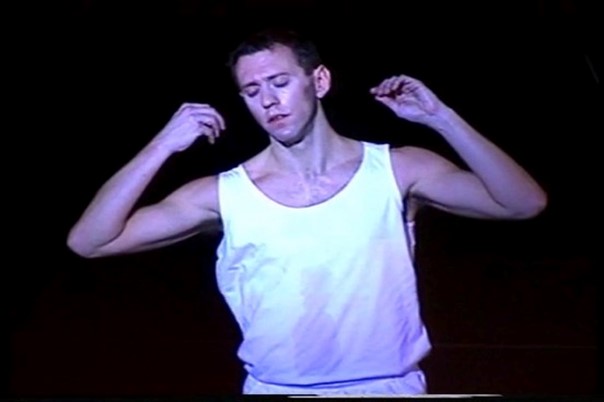
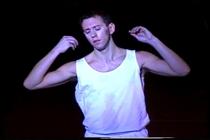
Neil and Frank are from a generation who came of age after decriminalization but before HIV/AIDS. Both were diagnosed in their mid-twenties in the 1980s and survived to tell the tale, while vast numbers of their friends and contemporaries did not, as signified by the photographs in Neil’s apartment, which became untended memorials. Neil tried to salvage some meaning from the deaths that surrounded him by using the life stories of his friends as inspiration for his extraordinary award-winning dance production, Not about AIDS dance. The dance is based on a diary that Neil kept throughout 1993: his idea was to create and choreograph a dance based on whatever life events happened to him that year. Neil had little idea when he embarked on the diary that one entry would describe his brother Jon’s death. One of the most powerful scenes in the dance is when Neil tries to recreate his brother’s facial expression in the moments before his death. Neil’s face is both a site of family resemblance and human vulnerability that communicates the borders of life and death. At this point in the dance, Neil has already informed the audience that he himself is HIV+; Neil’s expression effectively asks the audience to imagine his own impending demise. Thus, while seemingly about AIDS, Neil entitled the piece Not about AIDS dance because it describes the shared existential dilemma that all humans face—that is, of how to live a life in the knowledge of death. The dance met with great critical acclaim and won a number of prestigious prizes. Neil attributes its success to the dance’s ability to communicate beyond the specifics of AIDS to a broad audience about the human condition of finitude. However, when I pressed Neil to describe his work as a politically motivated piece, he repeatedly insisted that it wasn’t. Instead, he asserted that it was an ontological protest.
References
- AUSTEN, J. Emma London: Colburn; Bentley, 1833.
- CASEY, E. Getting back into place: Toward a new understanding of the place-world Bloomington: University of Indiana Press, 1993.
- DAVIS, C. Death in abeyance Edinburgh: Edinburgh University Press, 2000.
- FISCHER, M. Anthropological futures Durham, NC: Duke University Press, 2009.
- FOUCAULT, M. The art of telling the truth. Em: KELLY, M. (Ed.). Critique and power: Recasting the Foucault/Habermas debate Cambridge, MA: MIT Press, 1994. p. 139–148.
- HEIDEGGER, M. Being and time New York: Harper Row, 1962.
- JACKSON, M. The politics of storytelling: Violence, transgression, and intersubjectivity Copenhagen: Museum Tusculanum, 2002.
- ___. Afterword. Em: RAM, K.; HOUSTON, C. (Eds.). Phenomenology in anthropology: A sense of perspective Bloomington: Indiana University Press, 2015. p. 293–305.
- JAMES, W. Pragmatism and other writings London: Penguin, 2000.
- KANT, I. Introduction to logic Original work published 1800. New York: Philosophy Press, 1963.
- ___. Anthropology from a pragmatic point of view Original work published 1798. Cambridge: Cambridge University Press, 2006.
- KUEHN, M. Introduction. Em: LOUDEN, R. (Ed.). Anthropology from a pragmatic point of view Cambridge: University of Cambridge Press, 2006. p. vii–xxxi.
- LANGER, S. Philosophy in a new key: A study in the symbolism of reason, rite and art Original work published 1941. Cambridge, MA: Harvard University Press, 1979.
- NICOLINI, K. The streets of San Francisco: A personal geography. Em: TEAM, B. S. P. (Ed.). Bad subjects: Political education for everyday life New York: NYU Press, 1998. p. 78–83.
- PEIRCE, C. The essential Peirce: Selected philosophical writings, Vol. 2 (1893–1913) Bloomington: Indiana University Press, 1998.
- SARTRE, J.-P. Being and nothingness Original work published 1943. Translated by Hazel E. Barnes. London: Routledge, 1996.
- STEIN, E. On the problem of empathy Original work published 1917. Washington, DC: ICS Publications, 1989.
- WOOD, A. Kant’s ethical thought Cambridge: Cambridge University Press, 1999.
- ___. Kant and the problem of human nature. Em: JACOBS, B.; KAIN, P. (Eds.). Essays on Kant’s anthropology Cambridge: Cambridge University Press, 2003. p. 38–60.
-
Editoria:
Eduardo DimitrovAndressa RibeiroMaria Gabriela Hita