 Role of jasmonic and salicylic acids in defense responses during interaction with Phytophthora cinnamomi in avocado
ABSTRACT
In the current study, hormonal balance and cell wall biosynthesis were determined as responses related to defense mechanisms during infection with Phytophthora cinnamomi in avocado. The phytohormones jasmonic acid, salicylic acid, phenylpropanoids, and caffeic and ferulic acids were analyzed by liquid chromatography coupled to RP-UPLC-MS2 TQD mass spectrometry. Likewise, polyphenol oxidase enzymatic activity and lignin levels were determined. Data were correlated with the area under the disease progress curve (AUDPC). The analysis showed significant differences between cultivars for jasmonic acid levels and production peaks considering the susceptible cultivar ‘Hass’. During Phytophthora cinnamomi infection, salicylic acid production peaked at 24 h in the resistant cultivar ‘Duke 7’ and only increased gradually, without a clear peak, in the susceptible cultivar ‘Hass’, which suggests a differential response consistent with the role of salicylic acid in plant resistance. Production of caffeic and ferulic acids (activation of the phenylpropanoid pathway) increased over time in ‘Duke 7’, opposite to what was observed in ‘Hass’. Correlation between cultivar virulence assays and early responses in the production of signal-amplifying phytohormones (jasmonic and salicylic acids), as well as the subsequent differential production of caffeic and ferulic acids and the activation of polyphenoloxidase for lignin biosynthesis as defense responses, suggests that these phytohormones play an important role in the defense mechanisms of avocado. Better understanding of the avocado immune response may serve as a tool for early and relatively inexpensive identification of materials potentially resistant to P. cinnamommi infection.
Keywords
Persea americana
; phytohormones; defense responses; lignin; phenylpropanoids
RESUMO
No presente trabalho, o equilíbrio hormonal e a biossíntese da parede celular foram determinados como respostas relacionadas a mecanismos de defesa durante infecção por Phytophthora cinnamomi em abacateiro. Os fitormônios ácido jasmônico, ácido salicílico, fenilpropanoides, e ácidos cafeico e ferúlico foram analisados por cromatografia líquida acoplada a espectrometria de massas RP-UPLC-MS2 TQD. Da mesma forma, a atividade enzimática da polifenoloxidase e os teores de lignina foram determinados. Os dados foram correlacionados com a área abaixo da curva de progresso da doença (AACPD). A análise mostrou diferenças significativas entre as cultivares em relação aos teores e aos picos de produção do fitormônio ácido jasmônico, considerando-se a cultivar suscetível ‘Hass’. Durante infecção por Phytophthora cinnamomi, a cultivar resistente ‘Duke 7’ apresentou um pico de produção de ácido salicílico às 24 horas, enquanto a cultivar suscetível ‘Hass’ apresentou apenas um aumento gradual, sem um pico claro, sugerindo uma resposta diferencial consistente com o papel do ácido salicílico na resistência das plantas. A produção dos ácidos cafeico e ferúlico (ativação da via dos fenilpropanóides) aumentou ao longo do tempo na cultivar ‘Duke 7’, de forma oposta ao que foi observado na cultivar ‘Hass’. A correlação dos ensaios de virulência das cultivares com as respostas iniciais na produção dos fitormônios sinalizadores e amplificadores ácidos jasmônico e salicílico, assim como a posterior produção diferencial dos ácidos cafeico e ferúlico e a ativação da polifenoloxidase para a biossíntese de lignina, como respostas de defesa, sugere que esses fitormônios desempenham um papel importante nos mecanismos de defesa do abacateiro. Uma melhor compreensão da resposta imune do abacateiro servirá como uma ferramenta para a identificação precoce e relativamente econômica de materiais potencialmente tolerantes à infecção por P. cinnamomi.
Palavras-chave
Persea americana
; fitormônios; respostas de defesa; lignina; fenilpropanóides
The productive system of avocado (Persea americana Mill.) has great potential globally. However, avocado cultivation involves phytosanitary problems that affect both the quality and the health of fruits. One of the major phytosanitary problems of avocado crops is the disease caused by the oomycete Phytophthora cinnamomi, which is considered the most devastating pathology of avocado crops in the world (4). This disease affects avocado plants throughout their development, leading to death due to collar necrosis or wilt still in the nursery (2). One of the most important control strategies is the search for resistant or tolerant rootstocks (1). Currently, there are materials such as ‘Duke 7’, which present a recognized tolerance to that oomycete. The search for new rootstocks to broaden the genetic base and the resistance sources is proposed as an alternative to minimize the risks of resistance breaking by the pathogen. During their evolutionary process, plants have developed various defense mechanisms to respond to different types of stress, whether abiotic such as drought, salinity and high temperature or biotic such as pathogens (25). Among these mechanisms, phytohormones such as jasmonic acid and salicylic acid have been recognized as signal molecules participating in signal amplification processes and subsequent gene activation for the plant defense (24; 16; 19). The defense responses triggered by signal amplification can be varied. One of these responses is cell wall reinforcement (7). It is widely accepted that biochemical pathway activation for phenolic compound production, accumulation of phenylpropanoid acids, activation of enzymatic activities such as polyphenol oxidase, and accumulation of lignins participate in the biosynthesis and reinforcement of the plant cell wall as defense mechanisms against pathogens (26). In the present study, defense-related biochemical responses were investigated during the plant’s interaction with P. cinnamomi to understand innate and induced immunity aspects in avocado. The balance between the phytohormones jasmonic acid and salicylic acid was determined, as well as the subsequent lignin biosynthesis activation, phenylpropanoid pathway activation, and cell wall reinforcement as defense responses. Infection tests were carried out with Phytophthora cinnamomi Rands on clones of avocado ‘Hass’ and ‘Duke 7’, reported as susceptible and tolerant to the pathogen, respectively.
MATERIAL AND METHODS
Plant material and induction test
The tested virulent strain of P. cinnamomi was supplied by the Corporation for Biological Research of Medellín (CIB), Colombia. The phytopathogen was conserved and cultured in PDA medium until sufficient mycelial development was obtained. The use of mycelium as the pathogen inoculum is very efficient for the detection of rootstocks resistant to root rot caused by Phytophthora, similarly to that carried out with zoospores (8). Seedlings with genetic integrity were used as plant material. Clonal material of ‘Duke 7’ and ‘Hass’ avocado cultivars was acquired. Double grafting process (protocol owned by the producing nursery) was adopted to obtain ‘Hass/Hass’ and ‘Duke 7/Duke 7’ seedlings. In a greenhouse, under controlled conditions, a wound was made at the base of the stem, at 5 cm below the bark, where 10mm-diameter agar disks containing the oomycete mycelium were placed and covered with parafilm, according to Dixon, et al. (11). This technique has been tested as an alternative method to evaluate resistance to P. cinnamomi (12). All tests were carried out under a completely randomized design, with three replicates and one untreated control (uninfected plants), establishing as experimental unit the mixture of two seedlings, and carrying out three independent experiments in time. Once the plants were inoculated, samples were obtained at 0, 3, 48 and 120 hours, which were expressed as hours after infection (hai). The leaves of the sampled plants were macerated with liquid nitrogen and stored at -80 °C until used in the analytical determinations of jasmonic acid, salicylic acid, caffeic acid, ferulic acid and total polyphenol levels; in the assessment of the enzymatic activities of polyphenoloxidases and ascorbate peroxidase, and in the measurement of free radical scavenging capacity through the DPPH method (3).
Virulence tests on the two cultivars
Using the same stem wound inoculation methodology, the kinetics of disease progression was evaluated by calculating the area under the disease progress curve (AUDPC), obtained from the lesion diameter (cm) of ‘Hass’ and ‘Duke 7’ avocado cultivars infected with P. cinnamomi, based on the days after infection (dai), according to the expression of Campbell and Madden (5). Thus, the behavior of all biochemical responses could be correlated with susceptibility or resistance to the pathogen.
Extraction of phytohormones and phenylpropanoids
For extraction, detection and quantification of jasmonates, salicylates and phenylpropanoids by RP-UPLC-MS2-TQD, between 20 and 50 mg avocado leaf tissue were weighed (the weight obtained was recorded), previously macerated with liquid nitrogen and dissolved in 1 ml of 10% methanol solution (HPLC grade) in MilliQ water. Each sample was added of a mixture of deuterated internal standards to a final concentration of 100 ppb and vortexed for 30 s three times. Subsequently, the samples were centrifuged at 4000 rpm for 40 min, after which the supernatant was recovered and adjusted to pH between 2 and 3 by adding 50 μl HAc 50% to each sample (13). Then, the samples were extracted twice, using 2.5 ml diethyl ether, followed by stirring and centrifugation at 4000 rpm for 2 min. The organic phase was carefully recovered, and the samples were dried in SpeedVac for approximately 2 h. After this time, the samples were resuspended in 100 μl MeOH, stirred for 15 min in a shaker and added of 900 μl Milli Q water. Finally, the samples were filtered through a 0.45-μm nylon membrane and stored for injection into the chromatograph. During all the steps the samples were kept at a temperature close to 0 °C. The procedure for the extraction of phenylpropanoids (caffeic acid and ferulic acid) only differed in the use of 30% methanol as the initial extracting solution (13).
Quantification of phytohormones and compounds of the phenylpropanoid pathway
Quantitative measurements were conducted for jasmonates, salicylates, and compounds of the phenylpropanoid pathway (ferulic and caffeic acids), using liquid chromatography coupled to mass spectrometry RP-UPLC-MS2-TQD (14). For this purpose, an ultra-efficient liquid chromatograph (UPLC) was used (Waters, Mildford, MA, USA) with interface to a triple quadrupole mass spectrometer (TQD, Waters, Manchester, UK). For separation by liquid chromatography, a C18 reverse phase analytical column was used, with a 5μm particle size and 2.1 x 100 mm dimensions. The analytes were eluted with a gradient of methanol and water containing 0.01% HCOOH. The mobile phase gradient started at 90% until reaching 10% in 12 min. In the next 3 min, the gradient was kept under isocratic conditions until returning to the initial conditions in the next 4 min. The solvent flow rate was 0.3 ml per min. The injection volume was 20 μL. For the ESI-MS/MS, nitrogen was used as the drying and nebulization gas. The collision gas was Argon > 99.9% (Praxair, Valencia, Spain) at a pressure of 4 x 10⁻³ mbar in the collision cell. A capillary voltage of 3.3 kV was applied in negative electrospray ionization mode. The calibration curve was obtained by means of the internal standard method with deuterated standards of the analytes. The temperature interface was 350 °C, the temperature source was 120 °C, and the column temperature was 40 °C. The obtained data were analyzed for the quantification.
Analysis of the polyphenol oxidase activity (PPO, EC 1.14.18.1 )
Extraction was carried out with sodium phosphate buffer (NaH2PO4) and dibasic sodium phosphate (Na2H PO4), at 100 mM, pH 7.2 and 1:5 ratio (p/v), followed by vortexing for 30 s, normal agitation for 1 h at 0 °C, and centrifugation at 13500 rpm for 20 min at 0°C (6). In a microplate, each well received 156 μl sodium monobasic phosphate buffer (NaH2PO4) and dibasic sodium phosphate (Na2HPO4), at 100 mM, pH 7.2, plus 4 μl enzymatic extract, and 40 μl catechol, at 100 mM (p/v) (20), for a final volume of 200 μl. Once the samples were dispensed, the enzymatic activity was analyzed using a spectrophotometer at 470 nm. Data were reported as units of polyphenoloxidase activity U PPO (mmol.min-1x10⁻⁶), calculated from the molar extinction coefficient for catechol (ε = 1.260 M-1 x cm-1) and the initial enzymatic reaction rates.
Analysis of lignin content
The Klason methodology modified for lignin extraction was followed (23), consisting in acid hydrolysis. Initially, 100 mg tissue from macerated avocado leaves were weighed, and 5 ml of 72% sulfuric acid were added. After 2 h, a second hydrolysis was carried out at 3% and the mixture was placed in an autoclave for 1 h. The insoluble residue was extracted as a precipitate, followed by 3 to 4 washes with distilled water and drying in an oven at 45 °C for 24 h. Lignin extraction was carried out, from the trials with ‘Hass’ and ‘Duke 7’ cultivars, using samples inoculated with Phytophthora cinnamomi.
Statistical Analysis
Analysis of variance was performed and measurement comparison tests were conducted only when statistically significant differences were found at P <0.05. Linear regression analyzes were also carried out when data were significantly adjusted to the said model, as was the case for polyphenol oxidase activity.
RESULTS AND DISCUSSION
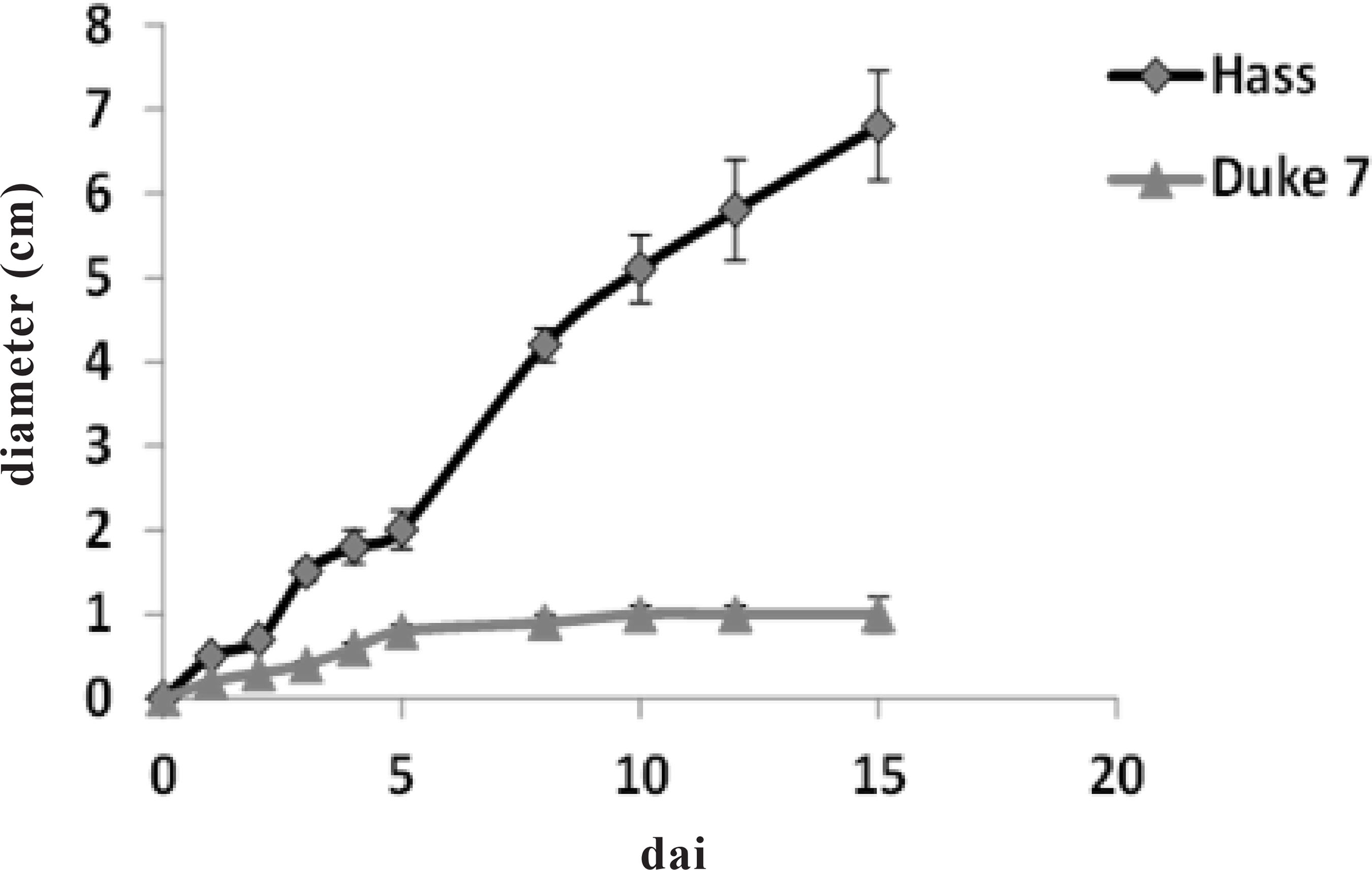
The AUDPC was 35.6 and 62.1 cm per day (area) for ‘Duke 7’ and ‘Hass’ genotypes, respectively. Additional experiments showed that the progress curve is affected by the plant age (data not shown). In all cases, the AUDPC was significantly lower for ‘Duke 7’. At 20 dai, all ‘Hass’ plants died, while ‘Duke 7’ plants remained alive despite some disease progress level.
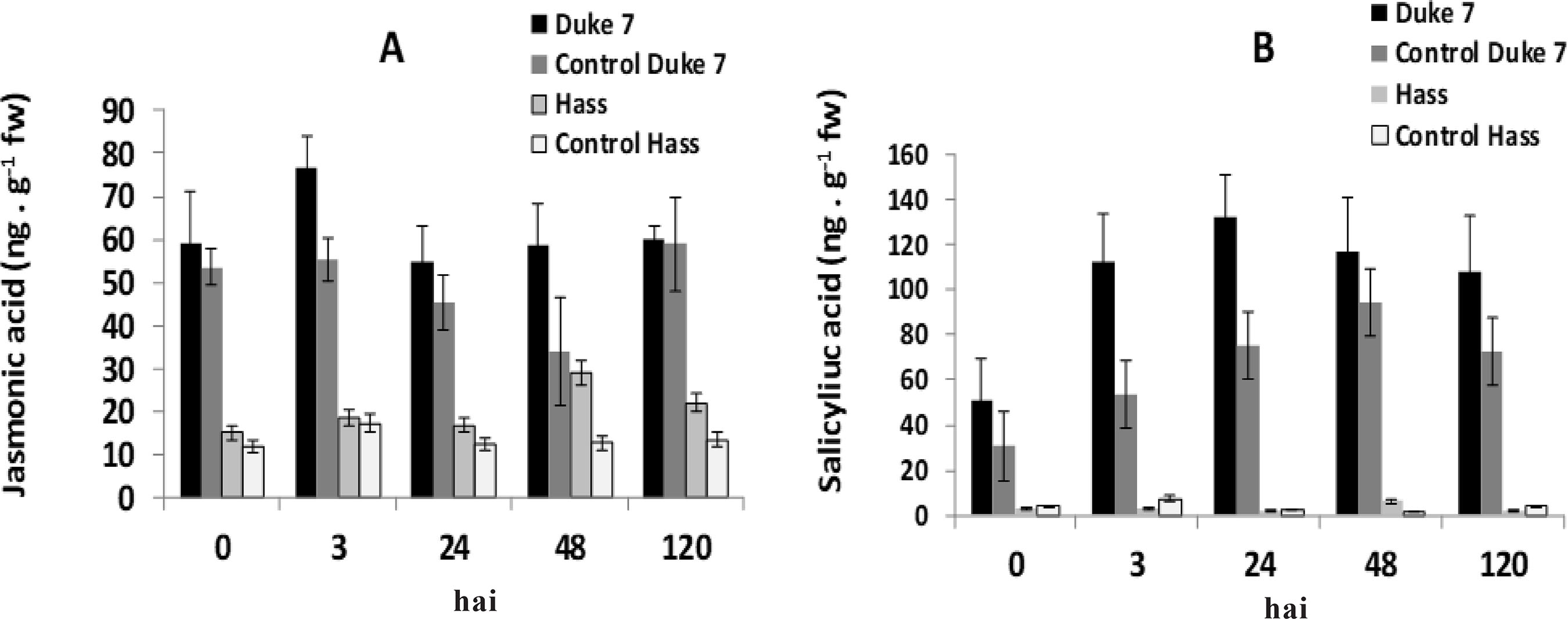
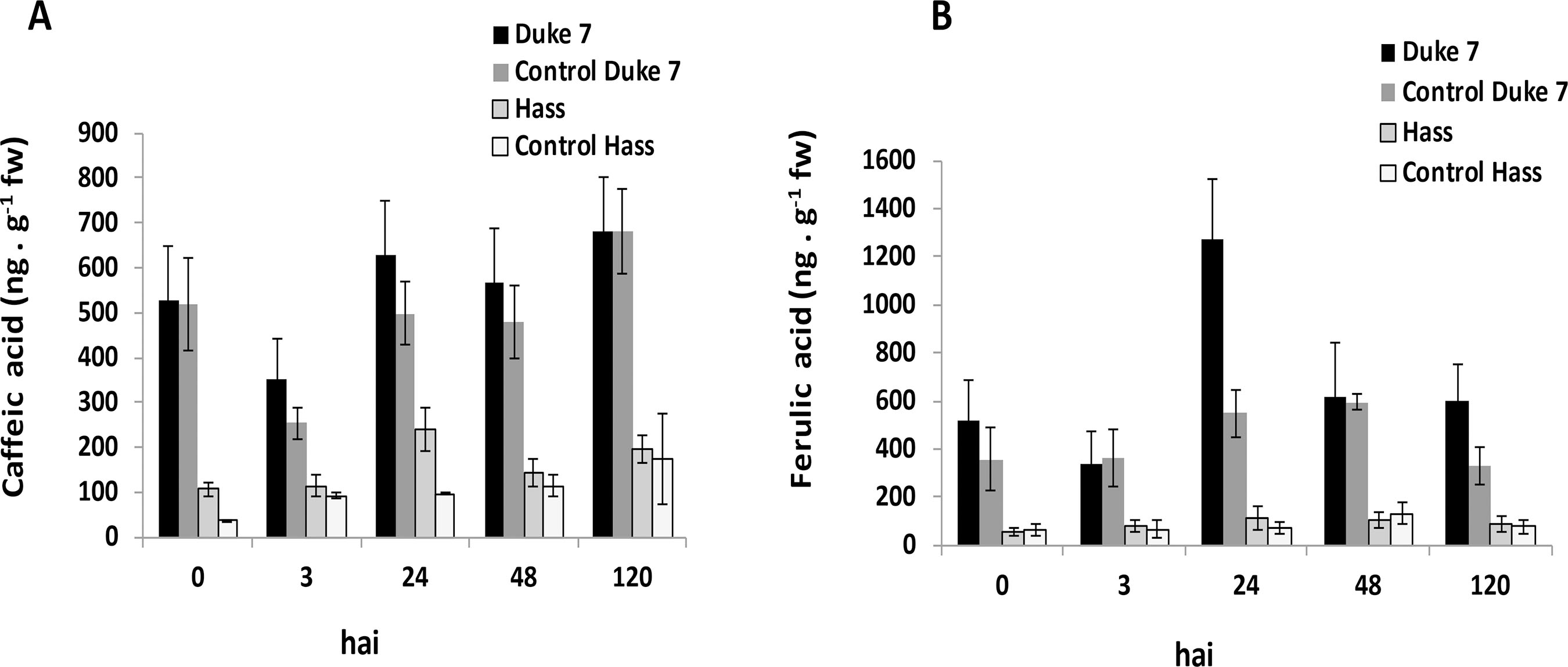
Resistance of ‘Duke 7’ and susceptibility of ‘Hass’ genotype to P. cinnamomi have been reported in the literature; however, little has been described so far regarding the molecular mechanisms of these behaviors. In the present study, analysis of variance for jasmonic acid production showed statistically significant differences among times for ‘Duke 7’ genotype (p-value = 0.018); the mean comparison test indicated a peak of significant production at 3 hai. For ‘Hass’ genotype, differences were also noted among times (hai) (p-value = 0.006), but production peaks were found at 48 and 120 hai. In general, jasmonic acid production levels were on average three times higher in ‘Duke 7’ than in ‘Hass’. Such higher levels and the earlier production peaks after infection with P. cinnamomi in ‘Duke 7’, as well as the correlation with the differential disease progress observed for the two tested genotypes, suggest that jasmonic acid plays a key role in avocado defense responses, which is consistent with the behavior of this phytohormone during early stages of defense responses in other plant species since it participates in the amplification of signals and subsequent activation of defense mechanisms (21; 27). Salicylic acid production induced by Phytophthora cinnamomi in the resistant avocado genotype ‘Duke 7’ started a peak at 3 hai, reaching its maximum at 24 hai. In contrast, in the susceptible genotype ‘Hass’, salicylic acid production gradually increased over time, reaching its maximum level at 48 hai; however, no defined peak was observed since no significant differences were detected between time points that would suggest a defense-associated response (Figure 2). Although still preliminary, these findings are consistent with numerous reports emphasizing the role of salicylic acid in plant defense. Such observations highlight the need for further research to develop a more robust experimental basis to clarify the specific role of salicylic acid in avocado defense responses. Several studies have reported its function as a signaling amplifier and discussed its involvement as a defense regulator. In some cases, a possible inverse correlation with jasmonic acid production has been proposed (10; 21; 28), as well as potential signal crosstalk between these two phytohormones (9). These aspects fall beyond the scope of the present study but should be addressed in future research. The acids of the phenylpropanoid pathway are precursors of the coniferyl and sinapyl alcohols, which in turn constitute the basic components of lignan and lignin polymers for the conformation of the plant cell wall (17; 9). In this respect, the phenylpropanoid pathway was activated in ‘Duke 7’; this was evidenced by the ferulic acid production which was significant at 24 hai and generally at a ratio that was around twice that found in ‘Hass’ (Figure 3B). Regarding caffeic acid, statistically significant differences were observed for ‘Hass’ genotype. The concentrations of caffeic and ferulic acids were not significantly different from those of the controls, but significantly differed between genotypes, suggesting that such a behavior is due to the genetic potential associated with the resistance or susceptibility of genotypes. In this sense, the difference in the severity of P. cinnamoni infection between cultivars correlates with the accumulated amount of caffeic and ferulic acids, which was greater in ‘Duke 7’ than in ‘Hass’. This is probably related to an overexpression of the phenylpropanoid pathway associated with other defense responses, such as cell wall biosynthesis or an innate antioxidant mechanism involving delocalization of free radicals, typical of oxygenated aromatic rings commonly found in phenylpropanoid compounds.
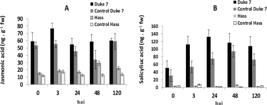
Concentration of jasmonic acid and salicylic acid in the avocado cultivars ‘Hass’ and ‘Duke 7’ as a function of the hours after infection (hai) with P. cinnamomi an d their respective controls (uninfected plants). Error bars correspond to the deviations obtained from three independente experiments. Measurement comparison tests were performed only when statistically significant differences were found at a significance level of 0.05. In each graph and within each treatment, different letters indicate statistically different means between treatments and control (P <0.05).
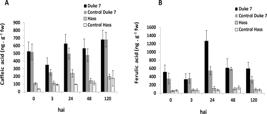
Concentrations of ferulic and caffeic acids in the avocado cultivars ‘Hass’ and ‘Duke 7’ as a function of hours after infection (hai) with P. cinnamomi and their respective controls (uninfected plants). Error bars correspond to the deviations obtained from three independent experiments. Measurement comparison tests were performed only when statistically significant differences were found at a significance level of 0.05. In each graph and within each treatment, different letters indicate statistically different means between treatments and control (P <0.05).
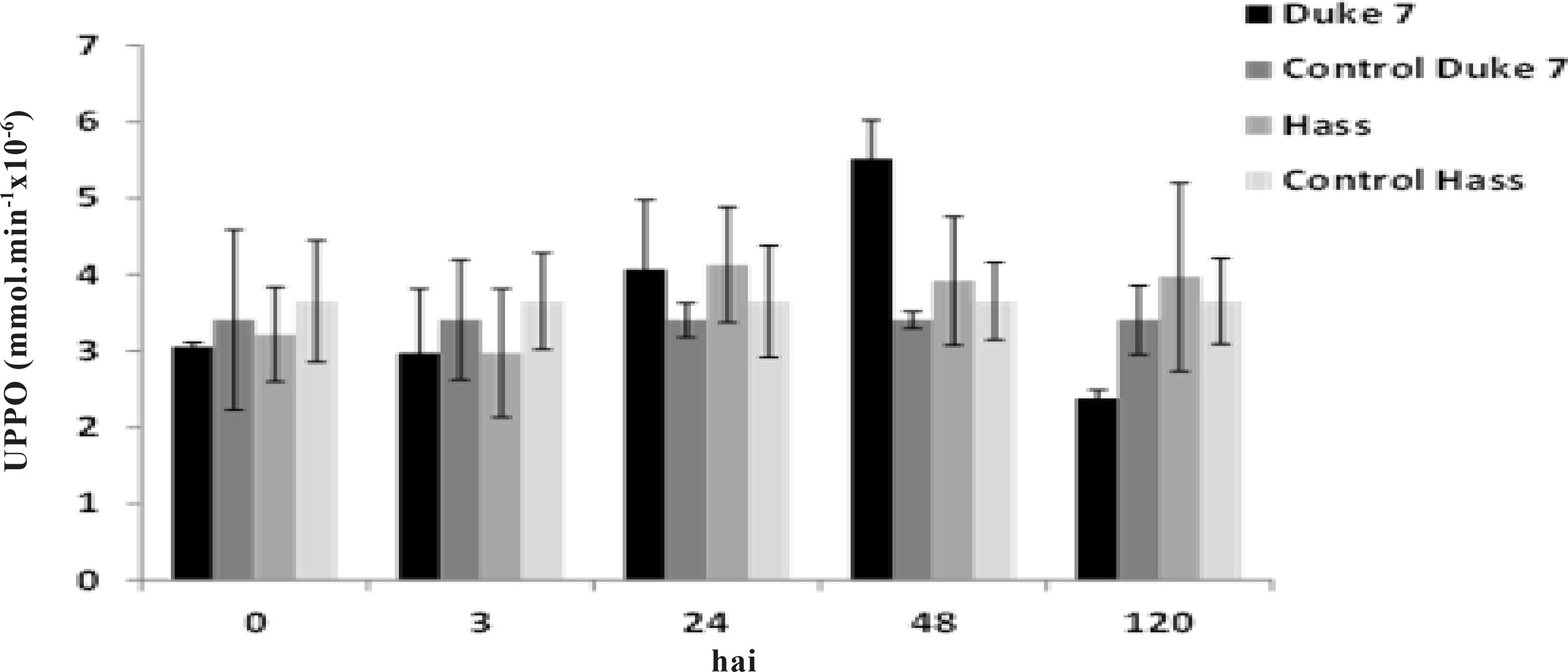
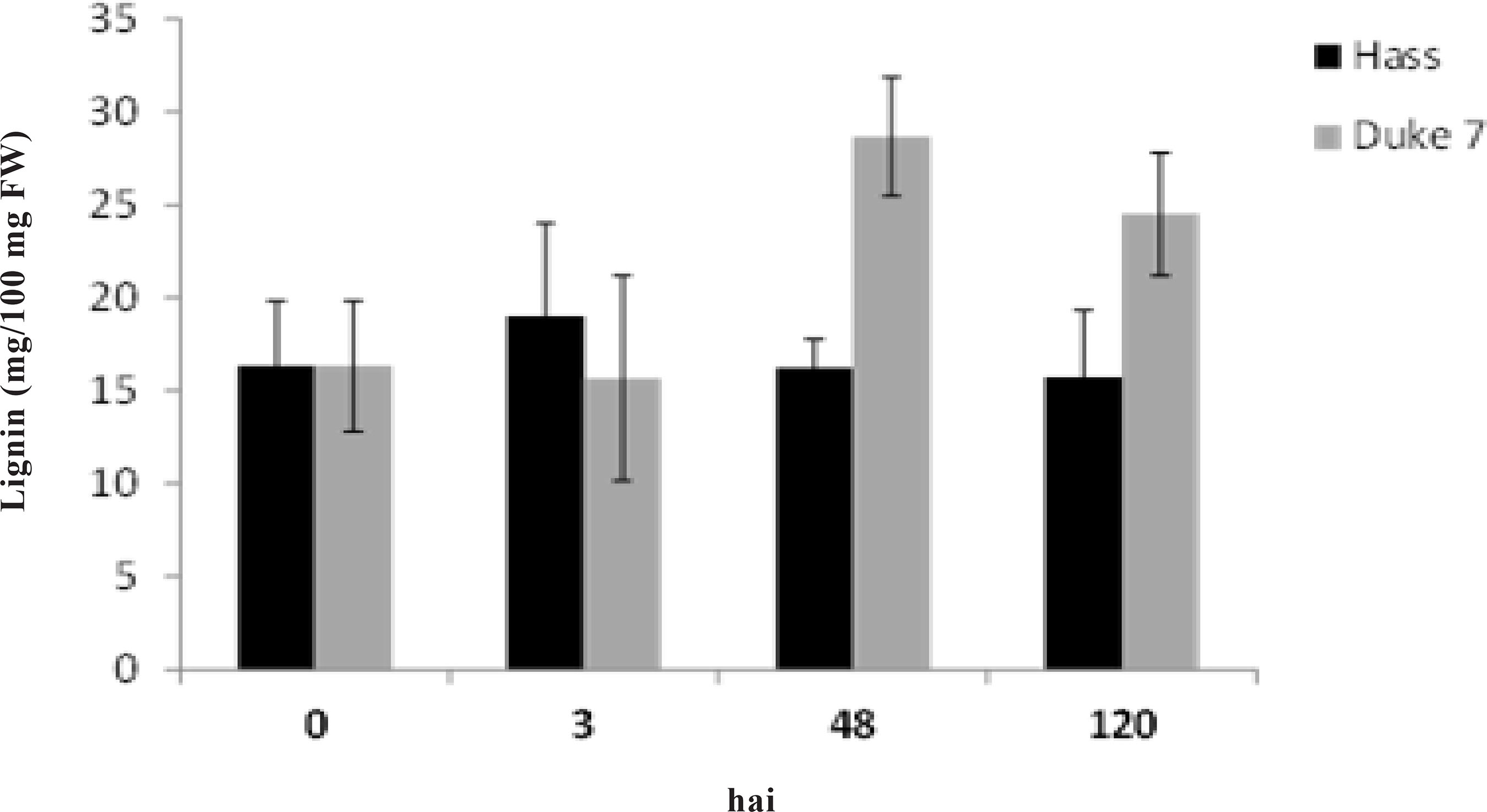
Regarding the evaluation of polyphenoloxidase activity, the controls of both ‘Hass’ and ‘Duke 7’ did not show significant models (Figure 4). The regressions of ‘Duke 7’ induced with P. cinnamomi were significant until 48 hai, with a slope of 0.011 and an R2 of 0.85, while the regressions of ‘Hass’ had a very low slope of 0.0004 and an R2 of 0.58, which corroborated the significantly induced PPO enzymatic activity for ‘Duke 7’ until 48 hai and the very little induced PPO enzymatic activity for ‘Hass’. This expression of PPO activity has been related to cell wall biosynthesis (22; 29), as is the case for pepper, in which cell wall reinforcement was induced in response to Phytophthora capsici after treatment with vanillyl nonanoate (15), and for mango, in which PPO and POD genes were induced by BTH against Colletotrichum gloeosporioides (18). Analysis of lignin content showed differences − lignin biosynthesis was not detected for ‘Hass’ genotype but was observed at 48 hai for ‘Duke 7’ (Figure 5). Analysis of lignin biosynthesis and its correlation with the disease progress evidenced that cell wall biosynthesis plays an important role in inducing defense responses in ‘Duke 7’ resistant material during infection with P. cinnamomi.
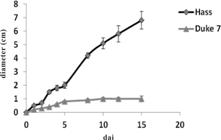
Kinetics of disease progression: Lesion diameter (cm) in ‘Hass’ and ‘Duke 7’ avocado cultivars infected with P. cinnamomi as a function of days after infection (dai). Error bars correspond to the standard deviation of three different time-independent experiments.
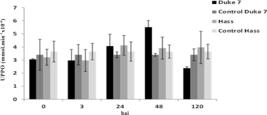
Polyphenol oxidase (PPO) activity in the avocado cultivars ‘Hass’ and ‘Duke 7’ as a function of hours after infection (hai) with P. cinnamomi and their respective controls (uninfected plants). Error bars correspond to the deviations obtained from three independent experiments.
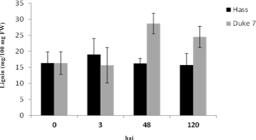
Lignin amount (mg/100 mg tissue) in the avocado cultivars ‘Hass’ and ‘Duke 7’ as a function of hours after infection (hai) with P. cinnamomi and their respective controls (uninfected plants). Error bars correspond to the deviations obtained from three independent experiments. Measurement comparison tests were performed only when statistically significant differences were found at a significance level of 0.05. In each graph and within each treatment, different letters indicate statistically different means between treatments and control (P <0.05).
CONCLUSIONS
Infection with P. cinnamomi at the base of the stem and the subsequent time-course evaluation of the leaves revealed that the early induction of the phytohormone jasmonic acid production is significantly higher in the cultivar ‘Duke 7’, compared to ‘Hass’, playing a fundamental role during signal amplification for subsequent activation of defense responses. Under Phytophthora cinnamomi infection, salicylic acid production peaked at 24 hai in the resistant cultivar ‘Duke 7’ and only increased gradually, without a clear peak, in the susceptible cultivar ‘Hass’, suggesting a differential response consistent with the role of salicylic acid in the plant’s resistance. After signal amplification, other biochemical events are developed justifying the differences in the disease progress between cultivars. In this sense, the production of caffeic and ferulic acids (phenylpropanoid pathway activation) was increased for ‘Duke 7’, whereas the opposite was observed for ‘Hass’. In addition, the subsequent lignin biosynthesis observed for ‘Duke 7’ suggests that cell wall reinforcement induction is part of the defense mechanisms in the resistant material during P. cinnamomi infection. Better understanding avocado’s immune response will serve as a tool for early and relatively economic identification of potentially tolerant materials, also leading to alternative methods that can be articulated to integrated disease management programs.
ACKNOWLEDGEMENT
The authors acknowledge the General System of Royalties of the Department of Antioquia, Colombia, for funding this study.
-
Rivera, O.J.M., Herrero, V.F.; Florez, J.E.M.; Lorza, E.A.R. Role of jasmonic and salicylic acids in defense responses during interaction with Phytophthora cinnamomi in avocado. Summa Phytopathologica, v.52, p.1-7, 2026.
Declaração de disponibilidade de dados
Os dados de pesquisa estão disponíveis no corpo do artigo.
REFERENCES
- 1 Andrade, H.P., Molina G., Eduardo, D., Carlos, E. Barquera, María de la Cruz, Al. Rosales, D., & López, J.A. (2015). Mecanismos de defensa en portainjertos de aguacate ante Phytophthora cinnamomi Rands. Revista mexicana de ciencias ciencias agricolas 6(2), 347-360.
-
2 Ayyandurai, M., Theradimani, M., Harish, S., Manonmani, K., Madhu, G. S., Yesu Raja, I., Balakumbahan, R., & Kavitha P. (2024). Bioprospecting of microbial agents and their metabolites as potential inhibitors of Phytophthora cinnamomi, the causal agent of avocado root rot, Physiological and Molecular Plant Pathology, Volume 133, ISSN 0885-5765, https://doi.org/10.1016/j.pmpp.2024.102362.
» https://doi.org/10.1016/j.pmpp.2024.102362 -
3 Barrientos Ramírez, Lucía, Arvizu, María Lourdes, Salcedo Pérez, Eduardo, Villanueva Rodríguez, Socorro, Vargas Radillo, J. Jesús, Barradas Reyes, Bianca Azucena, & Ruiz López, Mario Alberto. (2019). Contenido de polifenoles y capacidad antioxidante de Physalis chenopodifolia Lam. silvestre y cultivo. Revista mexicana de ciencias forestales, 10(51), 182-200. https://doi.org/10.29298/rmcf.v10i51.323
» https://doi.org/10.29298/rmcf.v10i51.323 - 4 Bartoli, A., & Angel, J. (2008). Manual técnico del cultivo del aguacate hass (persea americana l.). Fundación Hondureña de Investigación Agrícola (FHIA)
- 5 Campbell, C.L, Madden, L.V. “Introduction to Plant Disease Epidemiology”. John Wiley & Sons, New York, NY, USA.1990.
-
6 Concellon, A., Anon, M. C., Chaves, A. R. (2004) Characterization and changes in polyphenol oxidase from eggplant fruit (Solanum melongena L.) during storage at low temperature. Food Chemistry. 88 17–24. doi: 10.1016/j.foodchem.2004.01.017.
» https://doi.org/10.1016/j.foodchem.2004.01.017 -
7 Dangl, J.L., Jones, J.D.(2001). Plant pathogens and integrated defence responses to infection. Nature.411, 826–833. doi:10.1038/35081161.
» https://doi.org/10.1038/35081161 -
8 Del Castillo-González L, Soudani S, De La Cruz-Gómez N, Manzanera JA, Berrocal-Lobo M.(2024). An improved method to study Phytophthora cinnamomi Rands zoospores interactions with host. BMC Plant Biol. 6;24(1):508. doi:10.1186/s12870-024-05205-2
» https://doi.org/10.1186/s12870-024-05205-2 - 9 Dewick, P. Medicinal natural products. A biosynthetic approach., (2002). Jhon Wiley and sons, ltd. Chichester, UK.
-
10 Ding, L.N., Yang, G.X., Yang, R.Y., Cao, J. Zhou, Y. (2016). Investigating interactions of salicylic acid and jasmonic acid signaling pathways in monocots wheat, (2016). Physiological and Molecular Plant Pathology. 93, 67–74. doi: 10.1111/mpp.12559. Epub 2017 May 23.
» https://doi.org/10.1111/mpp.12559 - 11 Dixon, K. W., Trinlay, and Sivasithamparam, K., (1984). Técnica para la evaluación rápida de la tolerancia de Banksia spp. La pudrición de la raíz es causada por Phytophthora cinnamomi. Plant Dis. 68: 1077-1080.
-
12 Dixon, R.A., Achnine, L., Kota, P., Liu, C.J., Reddy, M.S., Wang, L. (2002). Phenylpropanoid pathway and plant defense a genomics perspective. Mol Plant Pathol. 3, 371–90. doi: 10.1046/j.1364-3703.2002.00131. x.
» https://doi.org/10.1046/j.1364-3703.2002.00131. x -
13 Flors, V., Ton, J., Van Doorn, R., Jakab, G., García-Agustín, P., MauchMani, B. (2008). Interplay between JA, SA and ABA signalling during basal and induced resistance against Pseudomonas syringae and Alternaria brassicicola The Plant Journal. 54, 81–92. doi:10.1111/j.1365-313X.2007. 03397.x
» https://doi.org/10.1111/j.1365-313X.2007. 03397.x -
14 Gamir, J., Pastor, V., Cerezo, M., Flors, V. (2012). Identification of indole-3–carboxylic acid as mediator of priming against Plectosphaerella cucumerina Plant Physiol Biochem. 61, 169–179.doi: 10.1016/j.plaphy.2012.10.004.
» https://doi.org/10.1016/j.plaphy.2012.10.004 -
15 García, T., Veloso, J., Díaz, J. (2018). Vanillyl nonanoate induces systemic resistance and lignification in pepper plants, Journal of Plant Physiology. doi.org/10.1016/j.jplph.2018.10.002.
» https://doi.org/10.1016/j.jplph.2018.10.002 -
16 Kazan, K., Lyons, R. (2014). Intervention of phytohormone pathways by pathogen effectors. Plant Cell. 26, 2285–2309. doi:10.1105/tpc.114.125419
» https://doi.org/10.1105/tpc.114.125419 -
17 Kostyn, K., Czemplik, M., Kulma, A., Bortniczuk, M., Skała, J., Szopa, J. (2012) Genes of phenylpropanoid pathway are activated in early response to Fusarium attack in flax plants. Plant Sci. 190, 103–115. doi: 10.1016/j.plantsci.2012.03.011.
» https://doi.org/10.1016/j.plantsci.2012.03.011 -
18 Lin, J., Gong, D., Zhu, S., Zhang, L., Zhang, L. (2011) Expression of PPO and POD genes and contents of polyphenolic compounds in harvested mango fruits in relation to Benzothiadiazole-induced defense against anthracnose. Scientia Horticulturae. 130, (1): 85-89.doi: 10.1016/j.scienta.2011.06.014.
» https://doi.org/10.1016/j.scienta.2011.06.014 -
19 Mika, A., Boenisch, M.J., Hopff, D., Lu¨thje, S. (2010). Membrane-bound guaiacol peroxidases from maize (Zea mays L.) roots are regulated by methyl jasmonate, salicylic acid, and pathogen elicitors. J Exp Bot. 61, (3):831–841. doi:10.1093/jxb/erp353.
» https://doi.org/10.1093/jxb/erp353 -
20 Qi, P.-F., Balcerzak, M., Rocheleau, H., Leung, W., Wei, Y.M., Zheng, Y.L., Ouellet, T. (2016) Jasmonic acid and abscisic acid play important roles in host-pathogen interaction between Fusarium graminearum and wheat during the early stages of Fusarium head blight. Physiological and Molecular Plant Pathology. 93, 39–48. doi.org/10.1016/j.pmpp.2015.12.004.
» https://doi.org/10.1016/j.pmpp.2015.12.004 -
21 Sattler, S., Funnell-Harris, D., (2013). Modifying lignin to improve bioenergy feedstocks: strengthening the barrier against pathogens? Front. Plant Sci. 4, 70. doi:10.3389/fpls.2013.00070.
» https://doi.org/10.3389/fpls.2013.00070 -
22 Schwanninger, M., Hinterstoisser, B. Klason lignin: Modifications to improve the precision of the standardized determination. (2002). Holzforschung. 56, (2) 161-166, doi: 10.1515/HF.2002.027.
» https://doi.org/10.1515/HF.2002.027 -
23 Shah, J., Zeier, J. (2013). Longdistance communication and signal amplification in systemic acquired resistance. Front. Plant Sci. 4, 30. doi:10.3389/fpls.2013.00030.
» https://doi.org/10.3389/fpls.2013.00030 -
24 Shah, M., Copeland, J., Dart, L., Adams-Huet, B., James, A., Rhea, D. (2014). Slower eating speed lowers energy intake in normal-weight but not overweight/obese subjects. J. Acad. Nutr. Diet. 114(3) 393 – 402. i: 10.1016/J.Jand.2013.11.002.
» https://doi.org/10.1016/J.Jand.2013.11.002 -
25 Vance, C.P., Kirk, T.K., Sherwood, R.T. (1980). Lignification as a mechanism of disease resistance. Annu Rev Phytopathol. 18, 259 – 88. doi.org/10.1146/annurev.py.18.090180.001355.
» https://doi.org/10.1146/annurev.py.18.090180.001355 -
26 Wang Z., Tan, X., Zhang, Z., Gu, S., Li, G., Shi, H. (2012). Defense to Sclerotinia sclerotiorum in oilseed rape is associated with the sequential activations of salicylic acid signaling and jasmonic acid signaling. Plant Sci. 184, 75-82.. doi.org/10.1016/j.plantsci.2011.12.013.
» https://doi.org/10.1016/j.plantsci.2011.12.013 -
27 Yang D. H., Hettenhausen C., Baldwin I. T., Wu J. (2011) The multifaceted function of BAK1/SERK3: plant immunity to pathogens and responses to insect herbivores. Plant Signal. Behav. 6, 1322–1324. doi.org/10.4161/psb.6.9.16438.
» https://doi.org/10.4161/psb.6.9.16438 -
28 Vanholme, R. Demedts, B., Morreel, K., Ralph, J., Boerjan, W. Lignin 99biosynthesis and structure. (2010). Doi.org/10.1104/pp.110.155119.
» https://doi.org/10.1104/pp.110.155119
Edited by
-
EDITOR CIENTÍFICO:
Edson Luiz Furtado https://orcid.org/0000-0002-6924-835X
-
EDITOR ASSOCIADO:
José Otávio Machado Menten https://orcid.org/0000-0002-9644-5770