 Efficiency of Trichoderma harzianum and Trichoderma asperellum on Phytophthora palmivora control in vitro and in detached stems of peach palm
ABSTRACT
Stem base rot, caused by Phytophthora palmivora, is the most important disease affecting peach palm. The present study aimed to develop a method for inoculating P. palmivora and Trichoderma spp. into detached peach palm stems and evaluating the efficacy of Trichoderma spp. on P. palmivora control both in vitro and in detached stems. The aggressiveness of P. palmivora and the colonization ability of Trichoderma spp. were investigated, as well as the preventive and curative effects of Trichoderma spp. against P. palmivora in detached stems. Additionally, the inhibitory effects of Trichoderma non-volatile metabolites on P. palmivora mycelial growth were assessed. Trichoderma harzianum TH2 and TH1, and T. asperellum TA1 and TA2 significantly reduced P. palmivora mycelial growth by 94.4% and 91.7%, and 61.8% and 80.9%, respectively. All four Trichoderma isolates colonized the internal tissues of the detached peach palm stem, exhibiting a growth rate of 1.42 cm/day and producing light-colored tissues, firm internal consistency and absence of soft tissues. When applied 24 and 48 hours before P. palmivora inoculation, T. harzianum TH2 and T. asperellum TA1 provided 40% and 38.7%, and 24.3% and 41.9% disease control, respectively. However, curative application was less effective than preventive treatments. Trichoderma harzianum TH2 colonized detached stems more rapidly than T. asperellum TA1. In stems treated with T. harzianum TH2 48 hours prior to Phytophthora inoculation, pathogen colonization was completely inhibited in all stem regions. The inoculation method employed in the current study proved effective for stem base rot investigation in detached peach palm stem. The present paper provides the first evidence of Trichoderma spp. penetration and endophytic colonization in peach palm tissues, besides pathogen control by this antagonist.
Keywords
Bactris gasipaes
; disease; wilt; heart of palm; peach palm
RESUMO
Podridão da base do caule (SBR), causada por Phytophthora palmivora, é a doença mais importante na pupunha. Este estudo teve como objetivo desenvolver um método para inocular P. palmivora e Trichoderma spp. em caules destacados de pupunha e avaliar a eficácia de Trichoderma spp. no controle de P. palmivora tanto in vitro quanto em caules destacados. A agressividade de P. palmivora, a capacidade de colonização de Trichoderma spp. e os efeitos preventivos e curativos de Trichoderma spp. contra Phytophthora em caules destacados foram investigados. Além disso, os efeitos inibitórios dos metabólitos não voláteis de Trichoderma no crescimento micelial de P. palmivora foram avaliados. Trichoderma harzianum TH2 e TH1, e T. asperellum TA1 e TA2 reduziram significativamente o crescimento micelial de P. palmivora em 94,4%, 91,7%, 61,8% e 80,9%, respectivamente. Todos isolados de Trichoderma colonizaram os tecidos internos da pupunha destacada exibindo uma taxa de crescimento de 1,42 cm/dia e produzindo uma coloração clara dos tecidos, consistência dura do interior e ausência de tecidos moles. Quando aplicados 24 e 48 horas antes da inoculação de P. palmivora, T. harzianum TH2 e T. asperellum TA1 controlaram a doença em 40% e 38,7%, e 24,3% e 41,9%, respectivamente. No entanto, a aplicação curativa foi menos eficaz do que os tratamentos preventivos. T. harzianum TH2 colonizou caules destacados mais rapidamente do que T. asperellum TA1. Em caules tratados com T. harzianum TH2 48 horas antes da inoculação com Phytophthora, a colonização do patógeno foi completamente inibida em todas as regiões do caule. O método de inoculação empregado neste estudo provou ser eficaz para investigação de SBR em caule destacado de pupunha. Esta pesquisa fornece a primeira evidência de penetração de Trichoderma spp. e colonização endofítica de tecidos de pupunha, além do controle do patógeno pelo antagonista.
Palavras-chave
Bactris gasipaes
; Doença; Murcha; Coração da palma; pupunha
In Brazil, the heart of palm was initially obtained through the extractive harvesting of Juçara palm (Euterpe edulis Martius). From the 1970s, after depletion of Juçara stocks in the Atlantic Forest, the Açaí palm (Euterpe oleraceae Martius) began to be considered a potential resource in the Amazon region. In the search for new sources of hearts of palm, the peach palm (Bactris gasipaes Kunth var. gasipaes Henderson) stood out for its early cutting and tillering, besides the slow oxidation of its heart of palm, which enables the raw product marketing (41). The peach palm cultivation area in Brazil has increased, especially in the states of Bahia and São Paulo, but also in Rio de Janeiro, Paraná, Santa Catarina and Espirito Santo, which accounted for approximately 20,000 ha planted area in 2014 (29, 30, 34).
The expansion of cultivation areas and peach palm monoculture have increased plant-pathogen problems, particularly stem base rot (SBR) caused by Phytophthora palmivora (Butler) Butler (21, 32). Stem base rot occurs in both young and adult plants. It begins with the yellowing of the flag leaf, followed by the yellowing and necrosis of other leaves, until the death of tillers and clump. This disease has caused severe damage to commercial plantations, evidencing the need for control strategies (15, 21). Information on fungicide effectiveness and resistant or tolerant varieties is limited (16, 29, 34, 35, 36, 42). Thus, developing alternative control methods is necessary, including biological control with antagonists or suppressive induction, which are efficient and leave no residues in the hearts of palm.
Trichoderma spp. can protect plants against pathogens since it competes for nutrients; inhibits pathogen development by producing metabolites (terpenes, 6-pentyl-2H-pyran-2-one, polyketides, peptaibols); degrades the cell wall by producing enzymes (8, 13, 22, 27, 45); induces plant defenses against biotic (pathogens) and abiotic (drought, salinization and temperature) stresses; promotes plant growth (12, 19, 24, 31,33, 37), and endophytically colonizes hosts (40). All these characteristics are essential for the healthy development of peach palm. Trichoderma-based bioproducts are the major biofungicides available in the world, particularly in the Brazilian market (5, 20, 44). Finally, since the heart of palm is also marketed raw, this biocontrol agent is useful for leaving no residues in the food (34, 38).
The potential of Trichoderma spp. to control diseases caused by Phytophthora species has been shown in some studies. Bae et al. (3) evaluated the effects of metabolites from isolates of T. atroviride, T. gamsii, T. harzianum, T. virens and T. brevicompactum on the mycelial growth of P. cactorum, P. melonis, P. sojae, P. capsici, P. nicotianae, P. infestans, and P. drechsleri, as well as on tomato and pepper plants inoculated with P. capsici. Those authors noted mycelial growth inhibition and reduction in the size of leaf lesions. According to Al-Shuaibi et al. (2), T. ghanense and T. citrinoviride showed the potential to increase shoot length, root length, leaf length, leaf width, and dry weight of cucumbers while suppressing the disease caused by P. infestans. Widmer (43) showed that T. asperellum isolates parasitize P. tamorum and, in soil assays, demonstrated that two Trichoderma isolates eliminated P. ramorum propagules from the soil. Ahmed et al. (1) observed that T. harzianum inhibited P. capsica in vitro and reduced the damage in pepper plants in vivo. Hanada et al. (18) demonstrated the potential of T. martiale to control black-pod rot in cacao caused by P. palmivora. Zhou et al. (46) showed the potential of T. brevicompactum to inhibit the mycelial growth of P. capsici, to control the disease in pepper and to have a growth-promoting effect.
The present study aimed to develop a method for inoculating P. palmivora and Trichoderma spp. in detached peach palm stems, as well as to evaluate the efficacy of Trichoderma spp. in controlling P. palmivora both in vitro and in detached stems. The aggressiveness of P. palmivora, the colonization ability of Trichoderma spp., and the preventive and curative effects of Trichoderma spp. against P. palmivora in detached stems were investigated. Additionally, the inhibitory effects of Trichoderma non-volatile metabolites on P. palmivora mycelial growth were assessed.
MATERIALS AND METHODS
Phytophthora and Trichoderma isolates and peach palm stems
Ten P. palmivora isolates (SA10, SA30, SA31, SA32-A, SA33, SA33-A, SA34, SA34-A, SA35, SA35-B) were obtained from the collection of Forest Fungi and Oomycetes at “Embrapa Florestas”, Colombo, Paraná State, Brazil. For zoospore production, P. palmivora isolates were transferred to Petri dishes containing carrot agar (CA) medium and incubated in a BOD chamber (Marconi®) under constant fluorescent light, at 24°C, for seven days. After this period, 5 mL ultrapurified and sterile water were added to each plate, which were kept in the refrigerator for 30 min. The plates were then transferred to laboratory conditions where they remained for 30 min, to allow zoospore release (15). The concentration of zoospore suspension was determined in a hemacytometer. For all experiments, the zoospore suspension was adjusted to 2.5 x 10⁶ zoospores/mL.
The following Trichoderma spp. isolates were obtained from commercial products: T. harzianum (TH1 = Ecotrich® – Ballagro Ltda., Bom Jesus dos Perdões, São Paulo State; and TH2 = Trichodermil® SC 1306 – Koppert Ltda., Piracicaba, São Paulo State) and T. asperellum (TA1 = Quality® WG – Laboratório Farroupilha, Patos de Minas, Minas Gerais State; and TA2 = Trichodermax® EC – Novozymes, Quatro Barras, Paraná State). For all experiments, 2.0 x 10⁸ conidia/mL was the adopted concentration of the isolates.
Detached stems of peach palm were obtained from healthy adult plants in areas without reports of SBR in Pariquera-Açu, São Paulo State, Brazil. To prepare the stems, outer barks measuring 130 cm in length and weighing approximately 2.5 kg were removed, and three bark layers were left protecting the heart of palm. Under laboratory conditions, the stems were cut transversely to obtain ten 12cm-long pieces. The stems were exposed to ultraviolet radiation in a laminar flow hood for surface disinfection during 20 min. To minimize water loss, the basal extremity of the stem was protected with liquefied paraffin.
Evaluation of the aggressiveness of P. palmivora isolates in detached peach palm stems
Each isolate was inoculated in the upper end of the detached stem (12 cm in length), and a 0.5mL aliquot of the zoospore suspension (2.5 x 10⁶ zoospores/mL) was sprayed with a hand atomizer (Guarany®). The stems were placed in polyethylene boxes (29 L) and incubated at 22 ± 2°C. Lesion area, color and consistency of tissues, besides the presence of soft rot in the edible part of the stem, were evaluated seven days after pathogen inoculation by cutting the stems longitudinally. Stem colonization was evaluated by using 1cm segments which corresponded to disks removed from the upper end of the stem at 0 – 1 cm, 5 – 6 cm and 10 – 11 cm. The stem disks were transferred to potato dextrose agar (PDA) medium [39 g commercial extract and 1,000 mL water plus ampicillin (80 μg/mL) and chloramphenicol (40 μg/mL)] and incubated in a BOD chamber (Marconi®) at 24 ± 2 ºC. After seven days, the mycelial growth of P. palmivora was evaluated. Results were expressed as colonized area (%). Non-inoculated stems were used as controls.
Inhibition of Phytophthora by Trichoderma in vitro
Trichoderma isolates (TA1, TA2, TH1 and TH2) were challenged against P. palmivora SA30 (selected in the assay described above for showing the greatest aggressiveness – Table 1). Trichoderma and P. palmivora in active growth (5 mm CA medium disks) were placed in Petri dishes (9cm diameter), 7 cm apart. Pathogen disks were transferred 48 h before the antagonist due to their slower growth rate. The plates were incubated for seven days at 12h-photoperiod and 24 °C. Antagonism was assessed using the scale described by Bell et al. (4) (1 = Trichoderma growth covering the whole plate, and 5 = Phytophthora growth covering the whole plate). Plates with P. palmivora mycelial disks were used as control. Mycelial growth was also determined by measuring colony diameter for both the pathogen and the antagonist with a digital caliper (Starrett®). Inhibition rate (%I) was calculated according to the following equation: %I = (Dc – Dt/Dc) x 100, where Dc = diameter of P. palmivora colonies on plates without the antagonist (control) and Dt = diameter of P. palmivora colonies on plates with the antagonist.
The effect of non-volatile metabolites of Trichoderma isolates on P. palmivora SA30 was determined based on the method described by Michereff et al. (26). The CA medium contained in Petri dishes was covered with sterile cellophane disks. A 5-mm mycelium disk from each Trichoderma isolate was placed in the center of the plastic Petri dish. After 48h incubation under the conditions described above, the cellophane paper containing adherent cultures of Trichoderma spp. was removed, and a P. palmivora mycelium disk (diameter = 5 mm) was transferred to the center of the plates, which were incubated under the same conditions as described above. Pathogen growth on PDA was used as control. The %I was calculated as described above.
Colonization of the detached peach palm stems by T. harzianum and T. asperellum
The upper end of the detached peach palm stem was inoculated with 0.5 mL of the 2.0 x 10⁸ conidia/mL suspension of T. harzianum (TH1 and TH2) and T. asperellum (TA1 and TA2) isolates, using a hand atomizer. The stems were placed in polyethylene boxes (29 L) and incubated at 22 ± 2°C. Evaluations were carried out after seven days of inoculation, following the same procedures described for P. palmivora aggressiveness assays.
Trichoderma spp. on P. palmivora control in detached stems
Using a spray dispenser, 0.5 mL of T. harzianum TH2 and T. asperellum TA1 isolates (2.0 x 10⁸ conidia/mL suspension) were sprayed 24 h and 48 h before (preventively) and after (curatively) the pathogen inoculation (0.5 mL of the 2.0 x 10⁶ zoospores/mL suspension of P. palmivora SA30) on detached stems. In addition, both the pathogen and Trichoderma isolates were applied simultaneously. The stems were placed in polyethylene boxes (29 L) and incubated at 22 ± 2°C for seven days. Evaluations were carried out following the same procedures described for P. palmivora aggressiveness assays. Colonization rate was calculated in comparison to the control. The assays for preventive and curative applications were conducted separately.
Data analysis
All assays were performed in a completely randomized design, adopting ten replicates per treatment. Data underwent analysis of variance, and treatments were compared according to Tukey’s test (5%). Statistical analyses were performed using Sisvar software (14).
RESULTS
Evaluation of the aggressiveness of P. palmivora isolates in detached peach palm stems
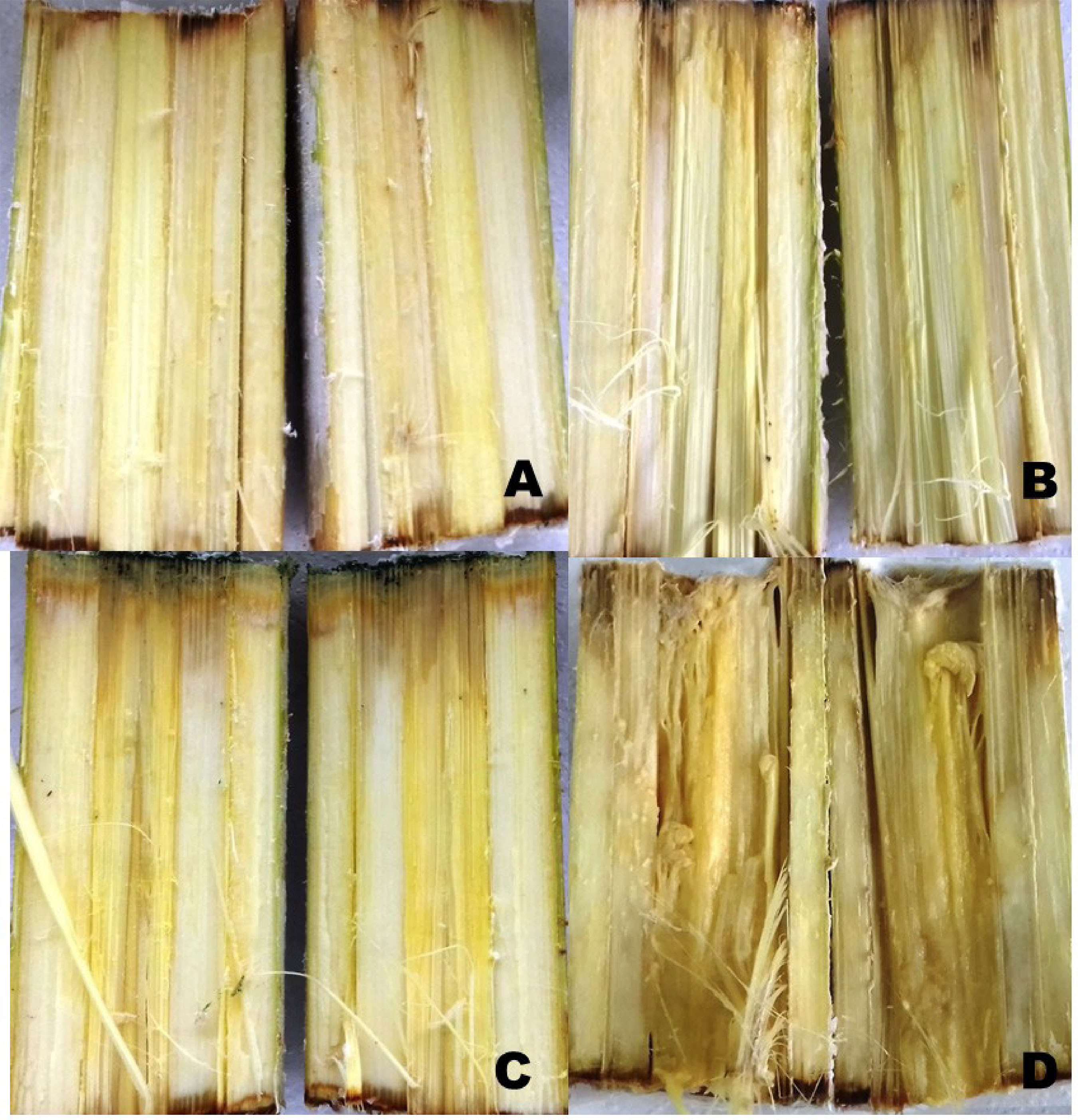
Lesion areas were similar among P. palmivora isolates inoculated on detached stems, except for P. palmivora SA34, which showed the smallest lesion area (24.6 cm2) (Table 1). The internal tissue of stems colonized by P . palmivora isolates exhibited dark yellow coloration and soft rot, differing from the control, which showed light coloration, absence of soft rot, and hard internal tissues. All P. palmivora isolates colonized the internal tissues of the inoculated stem, which was confirmed by the reisolation of different sampled regions (Table 1 and Figure 1). The most aggressive P. palmivora isolates were SA10, SA30 and SA32-A, colonizing tissues within 10 to 11 cm from the inoculation point at 86%, 86% and 82% colonization rate, respectively (Table 1). Phytophthora palmivora SA30 isolate showed the highest colonization rate (96% at both 0 - 1 cm and 5 - 6 cm, and 86% at 10 - 11 cm) (Table 1).
Lesion area (cm2) and tissue colonization rate (%) in detached stems of peach palm inoculated with Phytophthora palmivora isolates.
Longitudinal cuts in detached stems of peach palm. A = control; B = stems treated only with water; C = stems inoculated with Trichoderma harzianum; D = stems inoculated with Phytophthora palmivora.
Inhibition of Phytophthora by Trichoderma in vitro
The isolates T. harzianum TH2 and TH1, and T. asperellum TA2 and TA1 reduced P. palmivora SA30 mycelial growth by 94.4% and 91.7%, and 61.8% and 80.9%, respectively (data not shown). The isolates TH2, TH1 and TA2 scored 1.2, 1.3 and 1.7, respectively, according to the scale described by Bell et al. (4). Non-volatile metabolites of T. harzianum and T. asperellum isolates did not inhibit the mycelial growth of P. palmivora.
Colonization of detached peach palm stems by T . harzianum and T. asperellum
The four Trichoderma isolates colonized the internal tissues of the detached stems of peach palm at a growth rate of 1.42 cm/day. However, the tissues were light, internal tissues were hard, and soft rot was absent (Table 2 and Figure 1).
Tissue colonization rate and growth speed of Trichoderma asperellum and Trichoderma harzianum isolates in detached stems of peach palm.
Trichoderma spp. on P. palmivora control in detached stems
Stems treated with Trichoderma isolates and simultaneously inoculated with P. palmivora (time = 0) showed soft stems and soft rot, similarly to the control (Table 3). Preventive application of Trichoderma TH2 and TA1 isolates reduced the lesion area caused by P. palmivora (Table 3). Stems treated 24 h and 48 h before pathogen inoculation showed hard internal tissues and partial rotting. Trichoderma TH2 and TA1 isolates, when applied 24 h and 48 h before the pathogen, controlled the disease by 40% and 38.7%, and 24.3% and 41.9%, respectively, in comparison to the control (Table 3).
Effect of Trichoderma harzianum TH2 and Trichoderma asperellum TA1 on the lesion area (cm2) in detached stems of peach palm at 0, 24 h and 48 h before (preventively) and after (curatively) Phytophthora palmivora SA30 inoculation.
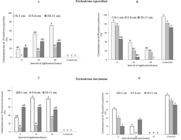
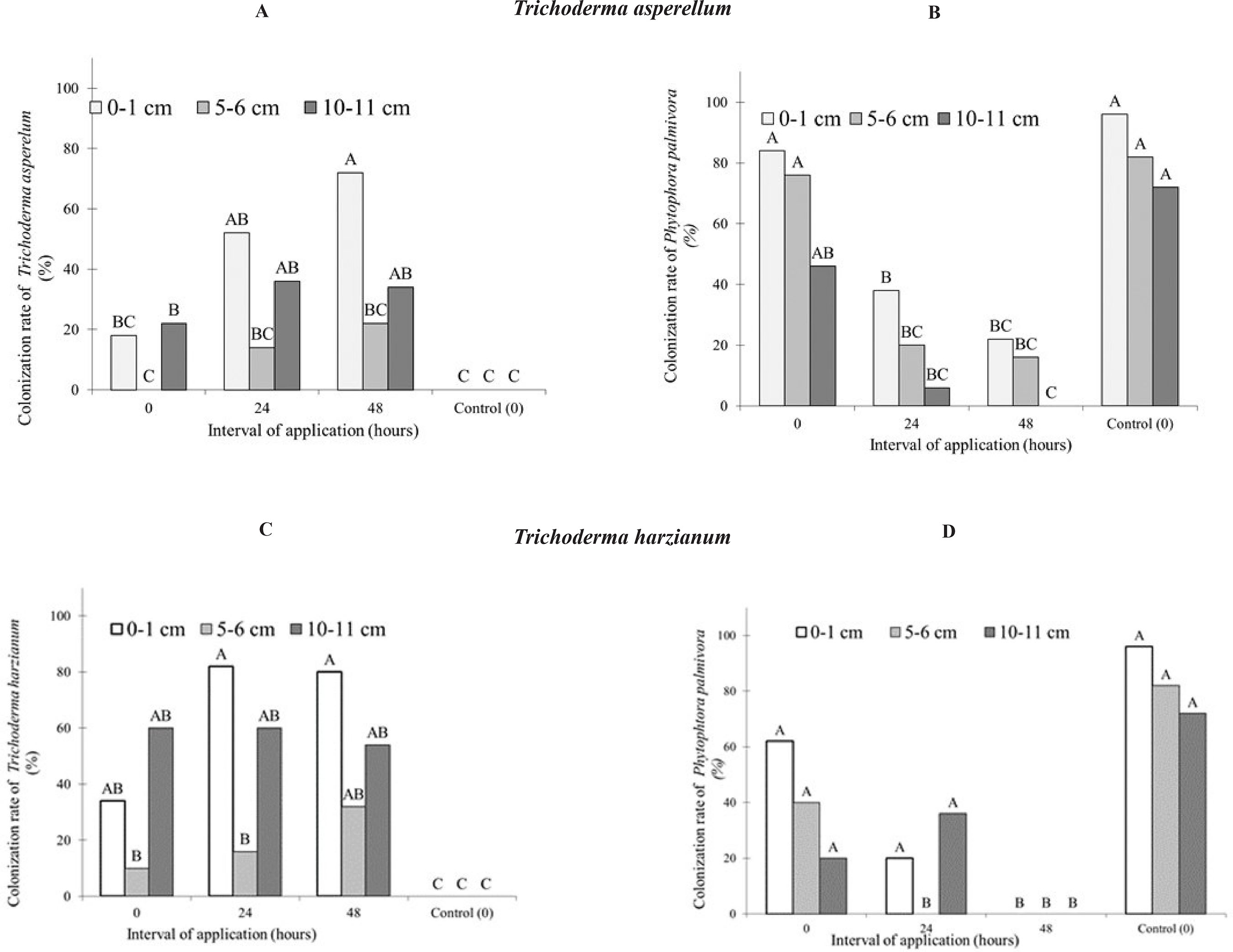
Colonization rate (%) of Trichoderma asperellum TA1 (A) and Trichoderma harzianum TH2 (C) applied on detached stems of peach palm at 0, 24 h and 48 h before inoculation with Phytophthora palmivora SA30 (B, D) in the regions 0 - 1 cm, 5 - 6 cm and 10 - 11 cm from the end, at seven days after pathogen inoculation. Means followed by the same letter do not differ from each other (Tukey’s test at 5%).
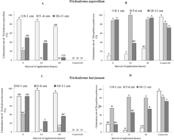
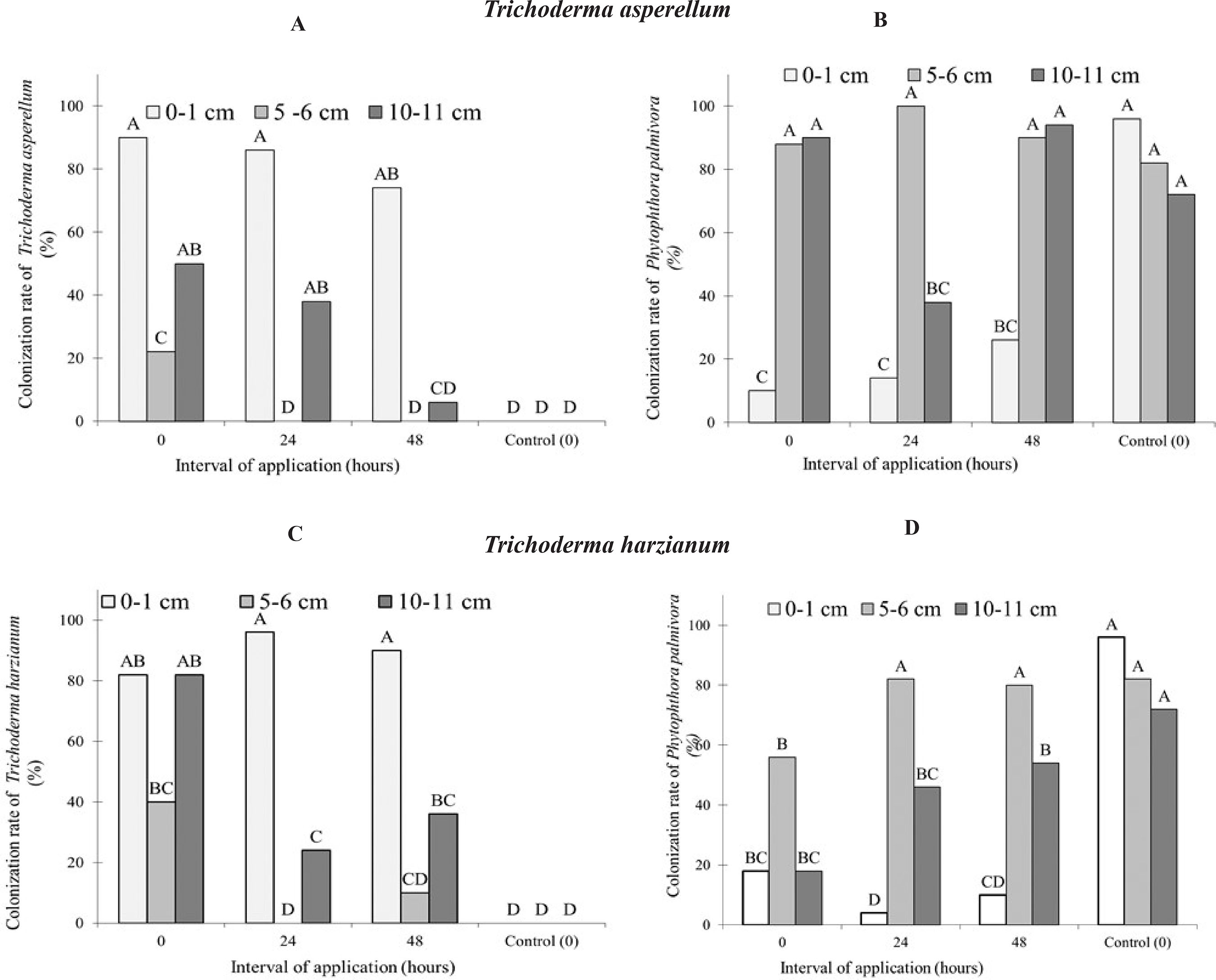
Colonization rate (%) of Trichoderma asperellum TA1 (A) and Trichoderma harzianum TH2 (C) applied on detached stems of peach palm at 0, 24 h and 48 h after inoculation of Phytophthora palmivora SA30 (B, D) in the regions 0 - 1 cm, 5 - 6 cm and 10 -11 cm from the end, at seven days after pathogen inoculation. Means followed by the same letter do not differ from each other (Tukey’s test at 5%).
Curative application of Trichoderma isolates was less efficient than the preventive application. When applied 24 h and 48 h after Phytophthora inoculation, T. harzianum TH2 was more efficient than T . asperellum TA1 (Table 3). The reduction in the lesion area was 30.3% and 21.1% for TH2 and 18.6% and 6.2% for the isolate TA1 when they were applied 24 h and 48 h after Phytophthora inoculation, respectively (Table 3). Trichoderma application 24 h and 48 h after P. palmivora inoculation resulted in stems with soft internal tissues and soft rot, differing from the partial rotting of internal tissues observed in simultaneous application. The control showed tissue rot and soft internal tissues.
Stems treated with T. asperellum TA1 at 0, 24 h and 48 h before pathogen inoculation (i.e., preventively) had colonization rates of 18%, 52% and 72% (0 - 1 cm region); 0%, 14% and 22% (5 - 6 cm), and 22%, 36% and 34% (10 - 11 cm), respectively (Figure 2A). In the 10 - 11 cm region, there was no difference among TA1 application intervals. Trichoderma asperellum TA1 inoculated 24 h and 48 h before pathogen inoculation reduced the pathogen colonization (Figure 2B) while Trichoderma colonization increased in the stems (Figure 2 A).
Stem colonization rate by T. harzianum TH2 applied at 0, 24 and 48 hours before Phytophthora inoculation was 34%, 82% and 80% (0 - 1 cm region); 10%, 16% and 32% (5 - 6 cm), and 60%, 60% and 54% (10 - 11 cm), respectively (Figure 2C). Treatment with T. harzianum TH2 48 h before Phytophthora inoculation reduced the pathogen colonization by 100% in the three stem regions (Figure 2D). In the control, stem colonization by the pathogen was 100% (0 - 1 cm region), 83% (5 - 6 cm), and 75% (10 - 11 cm) (Figure 2D). Phytophthora palmivora colonization rate on stems treated with T. harzianum TH2 at 0 and 24 h before pathogen inoculation was 62% and 20% (region 0 - 1 cm); 40% and 0% (5 - 6 cm), and 20% and 36% (10 - 11 cm), respectively.
Considering the curative application of T. asperellum TA1 at 0, 24 h and 48 h after P. palmivora inoculation, the antagonist colonization rate was 90%, 86% and 74% (0 - 1 cm); 20%, 0% and 0% (5 - 6 cm), and 50%, 38% and 6% (10 - 11 cm), respectively (Figure 3A). In these same stems, P. palmivora colonization was 10%, 14% and 26% (0 - 1 cm); 80%, 100% and 90% (5 - 6 cm), and 90%, 38% and 94% (10 - 11 cm), respectively, when the antagonist was applied at 0, 24 h and 48 h after the pathogen inoculation (Figure 3B).
Trichoderma harzianum TH2 application at 0, 24 h and 48 h after P. palmivora inoculation led to stem colonization of 82%, 96% and 90% (0 - 1 cm); 40%, 0% and 10% (5 - 6 cm), and 82%, 24% and 36% (10 - 11 cm), respectively (Figure 3C). Stem tissue colonization by P. palmivora was higher than 75% in the control in all three regions (Figure 3D).
DISCUSSION
The method of inoculating Trichoderma in detached peach palm stem was efficient for stem base rot control assays. Such a result is important since, to the best of our knowledge, it represents the first report of this methodology in biological control studies on the pathosystem Phytophthora palmivora vs. peach palm. Thus, inoculating peach palm stem tissues with both Trichoderma and the pathogen is feasible to study P. palmivora biocontrol, with the advantage of performing low cost assays under controlled conditions (Figures 1, 2 and 3; Tables 2 and 3).
This is the first report of the effectiveness of Trichoderma spp. penetration and endophytic colonization of peach palm tissues. However, Trichoderma ability to colonize plant tissues is well documented (9, 10, 11, 17, 19, 46). Trichoderma asperelloides strain 02/03 was reported to penetrate endophytically the cane of ‘Niagara Rosada’ grapevine, controlling Lasiodiplodia theobromae, similarly to chemical fungicides (23); this led the authors to describe a protocol for selecting Trichoderma isolates that would protect the pruning wounds of grapevine. In addition, Schubert et al. (39) inoculated Platanus x hispanica, Acer pseudoplatanus, Tilia platyphyllos, Populus nigra, Quercus rubra, Robinia pseudoacacia wounds with Trichoderma T-15603 and observed an 82.3% reduction in the growth of wounds colonized by the basidiomycetes Ganoderma adspersum, lnonotus hispidus and Polyporus squamosus.
Trichoderma TA1 and TH2 isolates rapidly colonize the tissues of peach palm stem (Table 2, Figure 2A); thus, preventive treatments will possibly be more efficient than curative ones. Phytophthora colonization was not detected in stems treated with T. harzianum 48 h before the pathogen inoculation, evidencing the action of this antagonist on P. palmivora. However, the same efficiency was not observed when T. harzianum was curatively applied. This finding evidences the importance of preventive stem base rot control since pathogen colonization reduces as the antagonist colonizes the tissues.
These results contribute to the management of stem base rot, which can become a limiting factor for peach palm cultivation in Brazil. Biological control will undoubtedly impact positively both the production system and the environment due to the reduced use of fungicides.
Several Trichoderma spp. are commercialized as biocontrol agents for the control of soilborne plant pathogens and as plant growth promoters (7, 18, 38). After observing the action of T. harzianum and T. asperellum on P. palmivora in peach palm under in vitro conditions, the next step will be to study in the field the effect of these Trichoderma isolates on stem base rot management and growth promotion of peach palm.
Trichoderma harzianum and T. asperellum are among the most commercialized antagonist species in Brazil and worldwide (6, 7, 44); thus, farmers can have easy access to commercial products to be used in the field. These two species have diverse mechanisms of action, offering a broad spectrum of action against soilborne plant pathogens (6, 7, 10, 11, 28, 44, 45).
Medeiros et al. (25) observed that all descendants of Trichoderma atroviride T11-treated tomato plants harvested 30 days after Meloidogyne javanica inoculation showed control of the nematode, indicating the heritability of the acquired characteristics. Furthermore, the plant growth promotion induced by T. atroviride T11 isolate was inherited. Considering the tillering characteristic of peach palm, as well as the extensive root colonization of Trichoderma and its potential to transmit inherited characteristics (25), the management of stem base rot, caused by P. palmivora, in peach palm could benefit from the use of Trichoderma.
ACKNOWLEDGMENTS
Eduardo Jun Fuzitani thanks “Coordenação de Aperfeiçoamento de Pessoal de Nível Superior” (CAPES) for the scholarship. Wagner Bettiol (CNPq 305557/2023-8) and Álvaro Figueredo dos Santos (CNPQ 309156/2022-0) thank “Conselho Nacional de Desenvolvimento Científico e Tecnológico” – CNPq for the productivity fellowship.
Declaração de disponibilidade de dados
Os dados de pesquisa estão disponíveis no corpo do artigo.
-
Fuzitani, E.J.; Santos, A.F.; Damatto Junior, E.R.; Nomura, E.S.; Franciscon, L.; Bettiol, W. Efficiency of Trichoderma harzianum and Trichoderma asperellum on Phytophthora palmivora control in vitro and in detached stems of peach palm. Summa Phytopathologica, v.52, p.1-9, 2026.
REFERENCES
-
1 Ahmed, A.S.; Pérez-Sanchez, C.; Egea, C.; Candela, M.E. Evaluation of Trichoderma harzianum for controlling root rot caused by Phytophthora capsici in pepper plants. Plant Pathology, v.48, p.58-65, 1999. DOI: https://doi. org/10.1046/j.1365-3059.1999.00317.x.
» https://doi.org/10.1046/j.1365-3059.1999.00317.x -
2 Al-Shuaibi, B.K.; Kazerooni, E.A.; Al-Maqbali, D.A.; Al-Kharousi, M.; Al-Yahya’ei, M. N.; Hussain, S.; Velazhahan, R.; Al-Sadi, A.M. Biocontrol potential of Trichoderma ghanense and Trichoderma citrinoviride toward Pythium aphanidermatum Journal of Fungi, v.10, article 284, 2024. DOI: https://doi.org/10.3390/jof10040284.
» https://doi.org/10.3390/jof10040284 -
3 Bae, S.J.; Mohanta, T.K.; Chung, J.Y.; Ryu, M.; Park, G.; Shim, S.; Hong, S.B.; Seo, H.; Bae, D.W.; Bae, I.; Kim, J.J.; Bae, H. Trichoderma metabolites as biological control agents against Phytophthora pathogens. Biological Control, v.92, p.128-138, 2016. DOI: https://doi.org/10.1016 /j.biocontrol.2015.10.005.
» https://doi.org/10.1016 /j.biocontrol.2015.10.005 -
4 Bell, D.K.; Wells, H.D.; Markham, C.R. In vitro antagonism of Trichoderma species against six fungal plant pathogens. Phytopathology, v.72, p.379-382, 1982. DOI: doi:10.1094/Phyto-72-379.
» https://doi.org/10.1094/Phyto-72-379 - 5 Bettiol, W.; Maffia, L.A.; Castro, M.L.M.P. Control biológico de enfermedades de plantas en Brasil. In: Bettiol, W.; Rivera, M.C.; Mondino, P.; Montealegre, J.R.; Comenárez, Y.C. (ed.). Control biológico de enfermedades de plantas en América Latina y el Caribe Montevideo: Facultad de Agronomía, 2014. p.91-137.
- 6 Bettiol, W.; Silva, J.C.; Castro, M.L.M.P. Uso atual e perpectivas do Trichoderma no Brasil. In: Meyer, M.C.; Mazaro, S.M.; Silva, J.C. (ed.). Trichoderma: uso na agricultura. Brasília, DF: Embrapa, 2019. p.21-43.
- 7 Bettiol, W.; Pinto, Z.V.; Silva, J.C.; Forner, C.; Faria, M.R.; Pacífico, M.G.; Costa, L.S.A. S. Produtos comerciais à base de Trichoderma. In: Meyer, M.C.; Mazaro, S.M.; Silva, J.C. (ed.). Trichoderma: uso na agricultura. Brasília, DF: Embrapa, 2019. p.45-160.
-
8 Boughalleb-M’Hamdi, N.; Salem, I. B.; M’Hamdi, M. Evaluation of the efficiency of Trichoderma, Penicillium, and Aspergillus species as biological control agents against four soil-borne fungi of melon and watermelon. Egyptian Journal of Biological Pest Control, v.28, article 25, 2018. DOI: https://doi.org/10.1186/s41938-017-0010-3.
» https://doi.org/10.1186/s41938-017-0010-3 -
9 Carrero-Carron, I.; Rubio, M.B.; Nino-Sanchez, J.; Navas-Cortes, J.A.; Jimenez-Diaz, R.M.; Monte, E.; Hermosa, R. Interactions between Trichoderma harzianum and defoliating Verticillium dahliae in resistant and susceptible wild olive clones. Plant Pathology, v.67, p.1758-1767, 2018. DOI: https://doi.org/https://doi.org/10.1111 /ppa.12879.
» https://doi.org/10.1111 /ppa.12879 -
10 Contreras-Cornejo, H.A.; Schmoll, M.; Esquivel-Ayala, B.A.; González-Esquivel, C.E.; Rocha-Ramírez, V.; Larsen, J. Mechanisms for plant growth promotion activated by Trichoderma in natural and managed terrestrial ecosystems. Microbial Research, v.281, article 127621, 2024. DOI: https://doi.org/10.1016/j.micres.2024.127621.
» https://doi.org/10.1016/j.micres.2024.127621 -
11 Contreras-Cornejo, H.A.; Orozco-Granados, O.; Ramírez-Ordorica, A.; García-Juárez, P.; López-Bucio, J.; Macías-Rodríguez, L. Light and mycelial injury influences the volatile and non-volatile metabolites and the biocontrol properties of Trichoderma atroviride. Rhizosphere, v.22, article 100511, 2022. DOI: https://doi.org/10.1016/j.rhisph.2022.100511.
» https://doi.org/10.1016/j.rhisph.2022.100511 -
12 Dominguez, S.; Rubio, M.B.; Cardoza, R.E.; Gutiérrez, S.; Nicolás, C.; Bettiol, W.; Hermosa, R.; Monte, E. Nitrogen metabolism and growth enhancement in tomato plants challenged with Trichoderma harzianum expressing the Aspergillus nidulans acetamidase amdS gene. Frontiers in Microbiology, v.7, article 1162, 2016. DOI: https://doi.org/10.3389/fmicb.2016.01182.
» https://doi.org/10.3389/fmicb.2016.01182 -
13 Druzhinina, I. S.; Seidl-Seoboth, V.; Herrera-Estrella, A.; Horwitz, B.A.; Kenerley, C.M.; Monte, E.; Mukherjee, P.K.; Zeilinger, S.; Grigoriev, I.V.; Kubicek, C.P. Trichoderma: the genomics of opportunistic success. Nature Review Microbiology, v.9, p.749-759, 2011. DOI: https://doi.org/10.1038/nrmicro2637
» https://doi.org/10.1038/nrmicro2637 -
14 Ferreira, D. F. Sisvar: a computer statistical analysis system. Ciência e Agrotecnologia, v.35, p.1039–1042, 2011. DOI: https://doi.org/10.1590/ S1413-70542011000600001.
» https://doi.org/10.1590/ S1413-70542011000600001 - 15 Fuzitani, E.J.; Santos, A.F.; Moraes, W.S.; Damatto Júnior, E.R.; Nomura, E.S. Eficiência de fosfitos no controle da podridão da base do estipe em mudas de pupunheira. Revista Brasileira de Fruticultura, v.35, p.1000-1006, 2013.
-
16 Fuzitani, E.J.; Santos, A.F.; Damatto Junior, E.R.; Nomura, E.S.; Kalil Filho, A.N. Inoculation methods, aggressiveness of isolates and resistance of peach palm progenies to Phytophthora palmivora Summa Phytopathologica, v.44, p.213-217, 2018. DOI: https://doi.org/10.1590/0100-5405/178476.
» https://doi.org/10.1590/0100-5405/178476 - 17 Gava, C.A.T.; Menezes, M.E.L. Eficiência de isolados de Trichoderma spp. no controle de patógenos de solo em meloeiro amarelo. Revista Ciência Agronômica, v.43, p.633-640, 2012.
-
18 Hanada, R.E.; Pomella, A.W.V.; Soberanis, W.; Loguercio, L.L.; Pereira, J.O. Biocontrol potencial of Trichoderma martiale against the black-pod disease (Phytophthora palmivora) of cacao. Biological Control, v.50, p.143-149, 2009. DOI: https://doi.org/10.1016/j.biocontrol.2009.04.005.
» https://doi.org/10.1016/j.biocontrol.2009.04.005 - 19 Harvey, I.C.; Hunt, J.S. Penetration of Trichoderma harzianum into grapevine wood from treated pruning wounds. New Zealand Plant Protection, v.59, p.343-347, 2006.
-
20 Hermosa, R.; Viterbo, A.; Chet, I.; Monte, E. Plant-beneficial effects of Trichoderma and of its genes. Microbiology, v.158, p.17-25, 2012. https://doi.org/10.1099/mic.0.052274-0
» https://doi.org/10.1099/mic.0.052274-0 - 21 Lopes, H.V.; Santos, A.F.; Luz, E.D.M.N.; Tessmann, D.J. Phytophthora palmivora: agente causal da podridão da base do estipe da pupunheira no Brasil. Summa Phytopathologica, v.45, p.164-171, 2019.
- 22 Mariano, R.L.R. Métodos de seleção in vitro para o controle microbiológico de patógenos de plantas. Revisão Anual de Patologia de Plantas, v.2, p.369-409, 1993.
-
23 Marraschi, R.; Ferreira, A.B.M.; Bueno, R.N.S.; Leite, J.A.B.P.; Lucon, C.M.M.; Harakava, R.; Leite, L.G.; Padovani, C.R.; Bueno, C.J. A protocol for selection of Trichoderma spp. to protect grapevine pruning wounds against Lasiodiplodia theobromae. Brazilian Journal of Microbiology, v.50, p.213-221, 2019. DOI: https://doi.org/10.1007/s42770-018-0029-y.
» https://doi.org/10.1007/s42770-018-0029-y -
24 Mastouri, F.; Björkman, T.; Harman, G.E. Seed treatment with Trichoderma harzianum alleviates biotic, abiotic, and physiological stresses in germinating seeds and seedlings. Phytopathology, v.100, p.1213–1221, 2010. DOI: 10.1094/PHYTO-03-10-0091.
» https://doi.org/10.1094/PHYTO-03-10-0091 -
25 Medeiros, H.A.; Araújo Filho, J.V.; Freitas, L.G.; Castillo, P.; Rubio, M.B.; Hermosa, R.; Monte, E. Tomato progeny inherit resistance to the nematode Meloidogyne javanica linked to plant growth induced by the biocontrol fungus Trichoderma atroviride. Scientific Reports, v.7, article 40216, 2017. DOI: https://doi.org/10.1038/srep40216.
» https://doi.org/10.1038/srep40216 - 26 Michereff, S.J.; Menezes, M.; Mariano, R.L.R. Antagonismo de espécies de Trichoderma sobre Colletotrichum graminicola, agente da antracnose do sorgo em condições de laboratório. Summa Phytopathologica, v.19, p.14-17, 1993.
-
27 Monte, E.; Hermosa, R. The use of Trichoderma spp. to control plant diseases. In: Köhl, J.; Ravensberg, W. (ed.). Microbial bioprotectants for plant disease management Cambridge: Burleigh, 2021. p.401–428. DOI: 10.19103/AS.2021.0093.13.
» https://doi.org/10.19103/AS.2021.0093.13 - 28 Monte, E.; Bettiol, W.; Hermosa, R. Trichoderma e seus mecanismos de ação para o controle de doenças de plantas. In: Meyer, M. C.; Mazaro, S. M.; Silva, J. C. (ed.). Trichoderma: uso na agricultura. Brasília, DF: Embrapa, 2019. p.181-199.
- 29 Neves, E.J.M.; Santos, A.F.; Rodigheri, H.R.; Corrêa Júnior, C.; Belletini, S.; Tessmann, D.J. Cultivo da Pupunheira para Palmito nas Regiões Sudeste e Sul do Brasil Colombo: Embrapa, 2007. (Circular Técnica, 143).
- 30 Penteado Júnior, J.F.; Santos, A. F.; Neves, E. J. M. Aspectos do agronegócio do palmito de pupunha no Brasil Colombo: Embrapa Florestas, 2014. 21p. (Documentos, 275).
-
31 Pérez, E.; Rubio, M.B.; Cardoza, R.E.; Gutiérrez, S.; Bettiol, W.; Monte, E.; Hermosa, R. Importance of chorismate mutase in the biocontrol potential and plant defense signaling of Trichoderma parareesei. Frontiers in Microbiology, v.6, article 1181, 2015. DOI: https://doi.org/10.3389/fmicb.2015.01181.
» https://doi.org/10.3389/fmicb.2015.01181 - 32 Pizzinatto, M.A.; Bovi, M.L.A.; Feichtenberger, E.; Spiering, S.H. Ocorrência da podridão do estipe em pupunheira, causada por Phytophthora palmivora, no estado de São Paulo. Summa Phytopathologica, v.28, p.363-365, 2022.
-
33 Rubio, M.B.; Hermosa, R.; Vicente, R.; Gómez-Acosta, F.A.; Morcuende, R.; Monte, E.; Bettiol, W. The combination of Trichoderma harzianum and chemical fertilization leads to the deregulation of phytohormone networking, preventing the adaptive responses of tomato plants to salt stress. Frontiers of Plant Science, v.8, article 294, 2017. DOI: https://doi.org/10.3389/fpls.2017.00294.
» https://doi.org/10.3389/fpls.2017.00294 - 34 Santos, A.F.; Correa Junior, C.; Neves, E.J.M. Palmeiras para produção de palmito juçara, pupunheira e palmeira real Colombo: Embrapa Florestas, 2008. 188p.
- 35 Santos, A.F.; Luz, E.D.M.N.; Finato, P.D.; Tessmann, D.J.; Vida, J.B. Primeiro relato da podridão do estipe da pupunheira causado por Phytophthora palmivora, no Estado do Paraná. Fitopatologia Brasileira, v.29, p.601-682, 2004.
- 36 Santos, A.F.; Tessmann, D. J.; Vida, J.B.; Neves, E.J.M.; Kalil Filho, A.N.; Mafacioli, R. Doenças da pupunheira no estado do Paraná Colombo: Embrapa, 2004. (Circular Técnica, 90).
-
37 Silva, L.G.; Camargo, R.C.; Mascarin, G.M.; Nunes, P.S.O.; Dunlap, C.; Bettiol, W. Dual functionality of Trichoderma: Biocontrol of Sclerotinia sclerotiorum and biostimulant of cotton plants. Frontiers in Plant Science, v.13, article 983127, 2022. DOI: https://doi.org/ 10.3389/fpls.2022.983127.
» https://doi.org/10.3389/fpls.2022.983127 -
38 Silva, L.G.; Camargo, R.C.; Mascarin, G.M.; Favaro, C.P.; Nunes, P.S.O.; Farinas, C.S.; Ribeiro, C.; Bettiol, W. Innovative sustainable bioreactor‐in‐a‐granule formulation of Trichoderma asperelloides. Applied Microbiology and Biotechnology, v.108, article 458, 2024. DOI: https://doi.org/10.1007/s00253-024-13261-9.
» https://doi.org/10.1007/s00253-024-13261-9 - 39 Schubert, M.; Fink, S.; Schwarze, F.W.M.R. Field experiments to evaluate the application of Trichoderma strain (T-15603.1) for biological control of wood decay fungi in trees. Arboricultural Journal, v.31, p.249-268, 2008.
-
40 Toghueo, R.M.K.; Ike, P.; Zabalgogeazcoa, I.; Aldana, B.R.V.; Nana, L.W.; Boyom, F.F. Biocontrol and growth enhancement potential of two endophytic Trichoderma spp. from Terminalia catappa against the causative agent of Common Bean Root Rot (Fusarium solani). Biological Control, v.96, p.8-20, 2016. DOI: https://doi.org/10.1016/j.biocontrol.2016.01.008.
» https://doi.org/10.1016/j.biocontrol.2016.01.008 - 41 Tonet, R.M.; Ferreira, L.G.S.; Otoboni, J.L.M.A. Cultura da Pupunha. Campinas: CATI, 1999. 44p. (Boletim técnico, 237).
- 42 Vaz A.B.; Luz, E.D.M.N.; Silva, S.D.V.M.; M.L. Aspectos histopatológicos da interação Phytophthora palmivora com a pupunheira. Tropical Plant Pathology, v.36, p.259-263, 2011.
-
43 Widmer, T.L. Screening Trichoderma species for biological control activity against Phytophthora ramorum in soil. Biological Control, v.79, p.43-48, 2014. DOI: https://doi.org/10.1016/j.biocontrol.2014.08.003
» https://doi.org/10.1016/j.biocontrol.2014.08.003 -
44 Woo, S.L.; Ruocco, M.; Vinale, F.; Nigro, M.; Marra, M.; Lombardi, N.; Pascale, A.; Lanzuise, S.; Manganiello, G.; Lorito, M. Trichoderma-based products and their widespread use in agriculture. The Open Mycology Journal, v.8, p.71-126, 2014. https://doi.org/10.2174/1874437001408010071.
» https://doi.org/10.2174/1874437001408010071 -
45 Woo, S.L.; Hermosa, R.; Lorito, M.; Monte, E. Trichoderma: A multipurpose, plant-beneficial microorganism for eco-sustainable agriculture. Nature Review in Microbiology, v.21, p.312-326, 2023. https://doi.org/10.1038/s41579-022-00819-5.
» https://doi.org/10.1038/s41579-022-00819-5 -
46 Zhou, J.; Liang, J.; Zhang, X.; Wang, F.; Qu, Z.; Gao, T.; Yao, Y.; Luo, Y. Trichoderma brevicompactum 6311: Prevention and control of Phytophthora capsici and its growth promoting effect. Journal of Fungi, v.11, article 105, 2025. DOI: https://doi.org/10.3390/ jof11020105.
» https://doi.org/10.3390/ jof11020105
Edited by
-
EDITOR CIENTÍFICO:
Edson Luiz Furtado https://orcid.org/0000-0002-6924-835X
-
EDITOR ASSOCIADO:
José Otávio Machado Menten https://orcid.org/0000-0002-9644-5770