Taxonomic surrogacy in the ichthyofauna of streams of the Pomba River drainage, Paraíba do Sul River basin, southeastern Brazil
ABSTRACT
This study characterizes the ichthyofauna of the Pomba River drainage, a tributary of the Paraíba do Sul River basin in southeastern Brazil. Sampling was conducted in 20 streams during the dry season (July 2018 and July 2022) utilizing electrofishing equipment for 60 minutes at each site. A total of 3,411 specimens were collected, representing six orders, 13 families, 27 genera, and 31 species. Poecilia reticulata Peters, 1859, Deuterodon intermedius (Eigenmann, 1908), and Bryconamericus ornaticeps Bizerril & Perez-Neto, 1995 were the most abundant species. Correlations of taxonomic richness and diversity between hierarchical levels were positive. Although the region remains poorly surveyed and is heavily impacted by deforestation, industrial and energy enterprises, and other anthropogenic pressures, strong correlations between family and species richness and between family and order diversity suggest that higher taxa effectively reflect key aspects of assemblage structure owing to high trait conservatism. Such strong correlations suggest that families are functionally cohesive and ecologically distinct from one another, supporting their utility as surrogates in biodiversity assessments, particularly when comprehensive taxonomic revisions are lacking or rapid ecological assessments are conducted by non-taxonomists.
KEYWORDS:
Atlantic Forest; conservation; environmental filtering; electrofishing; higher-taxon approach
INTRODUCTION
As the most industrialized and densely populated region in Brazil, the Paraíba do Sul River basin in southeastern Brazil is home to approximately 7,000 industries and 6,000 farms of varying scales (Meneguelli-Souza et al. 2021). This basin supplies water to around 15 million people across the states of São Paulo, Rio de Janeiro, and Minas Gerais. The ongoing alteration and exploitation of its natural resources are heavily driven by industrial development and energy infrastructure (Meneguelli-Souza et al. 2021). Like other river basins within the Atlantic Forest domain, it has undergone intense modification over more than four centuries of land use, yet it continues to harbor remarkable ichthyofaunal richness (Teixeira et al. 2005). Caramaschi et al. (1991) initially recorded 88 fish species for the Paraíba do Sul River basin, a number later estimated by Bizerril and Primo (2001) to exceed 160 species. More recently, 73 fish species were recorded exclusively within the Domain of Fluvial Islands (Berriel et al. 2018), a complex network of small archipelagos that subdivides the main river channel (Oliveira 2014).
Ichthyofaunal surveys are essential to reduce Wallacean knowledge gaps regarding species occurrence and richness, while simultaneously updating the conservation status of small streams throughout the Atlantic Forest (Buckup et al. 2014). Given that the modern biodiversity crisis is nowhere more acute than in freshwater ecosystems (Tickner et al. 2020, Ottoni et al. 2023), global conservation efforts for these habitats have been historically inadequate (Harrison et al. 2018, Ottoni et al. 2023). This critical scenario applies directly to the Pomba River, a major tributary of the lower Paraíba do Sul basin.
Herein, we characterize the ichthyofauna of Pomba River streams, present a taxonomic identification key for the recorded species, and evaluate the effectiveness of different levels of taxonomic resolution as surrogates for stream fish diversity. Specifically, we test whether the richness and diversity patterns of orders, families, and species are strongly correlated with each other to validate the higher-taxon approach in regional biodiversity assessments. Ultimately, this study aims to provide an essential ecological baseline to support future conservation measures and environmental policies in the basin.
MATERIAL AND METHODS
Study area
The Pomba River drainage encompasses an area of 8,544 km2 (IBGE 2011), originating at an altitude of 1,182 m in the Mantiqueira Mountains, Minas Gerais state, and flowing into the municipality of Aperibé, Rio de Janeiro state, where it joins the Paraíba do Sul River within the Domain of Fluvial Islands. The climatic typology of the hydrographic basin is Cwb (highland tropical) near the headwaters and Aw (hot and humid tropical) throughout the remaining area (Köppen 1948). The average annual temperatures range from 15 to 26 °C, and the average accumulated precipitation is 1,300 mm (Gomes et al. 2021), defining a dry season from May to September and a rainy season from October to March (Silva et al. 2018). Pastures for dairy cattle farming predominate land use, representing the primary economic activity in the region (Silva et al. 2018).
Measurement of environmental variables
The average width (m) of each stream (n = 20) was based on measurements taken at six equidistant points along an 80 m stretch. The average depth (m) was calculated from random surveys along the same stretch. Water velocity (m/s) was determined by measuring the time taken for a floating object to travel a known distance (1 m) in the center of the channel (Casatti et al. 2001). To determine the physical structure of land use in the adjacent matrix, a visual habitat approach was employed based on established protocols (Barbour et al. 1999). The assessment of vegetation cover at each study site relied on data from the Global Land Cover-SHARE (GLC-SHARE), a comprehensive global database providing a high-resolution portrayal of land cover at approximately a 1,000 m radius (Latham et al. 2014). This dataset focused on the forest vegetation of the microbasin, and the extracted values represent the percentages of vegetation cover surrounding each of the examined sites (Latham et al. 2014).
Sampling design, identifications and taxonomy
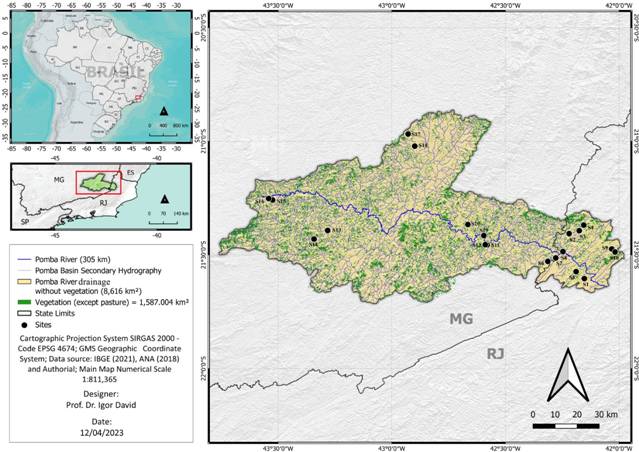
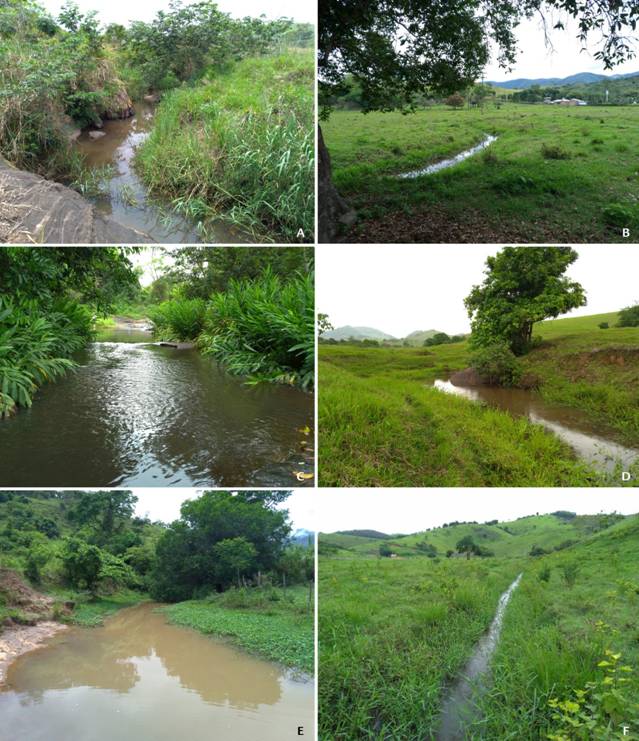
A total of 20 streams were sampled during the dry season (July 2018 and July 2022) in the Pomba River drainage (Fig. 1). The physical conditions of the sampling stations in the lower basin are shown in Table 1 and Fig. 2. In each stream, which consisted of second-order segments according to the Strahler (1957) classification, an 80 m stretch was blocked with nets (mesh size 0.5 cm) to prevent fish from escaping. Sampling was conducted during the day using an electrofishing apparatus consisting of two electrified nets, powered by a portable alternating current generator (Vonder, 2.5 kW, 220 V, ranging from 400 to 600 W output; 3-4 A) for 60 minutes. Specimens were anesthetized in a clove oil solution (Eugenol, 2 drops per liter; AVMA 2001), fixed in a 10% formalin solution, and subsequently preserved in 70% ethanol.
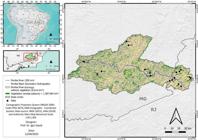
Map of the study area showing the collection stations in the drainage systems of the rio Pomba basin, Minas Gerais (MG) and Rio de Janeiro (RJ) states, Southeastern Brazil.
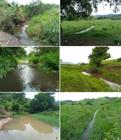
Streams (collecting sites) in the lower Pomba River drainage, state of Rio de Janeiro, Southeastern Brazil. (A) stream S2; (B) stream S3; (C) stream S4; (D) stream S6; (E) stream S7 and (F) stream S9. Codes of the collecting sites are provided in Table 1.
Sampling sites in the lower Pomba River drainage, Paraíba do sul River basin, states of Minas Gerais (MG) and Rio de Janeiro (RJ), Southeastern Brazil, with municipalities, geographic coordinates, depth, width, water velocity (WV), altitude, percentage of forest cover in the microbasin (FC%), land use in the adjacent matrix and distance from collection points to bridges, roads and urban agglomerations (distance).
The identification of all collected specimens was conducted to the species level whenever possible, based on specialized taxonomic literature specific to each taxon. Species names, validity, and authors were checked against Fricke et al. (2025). Voucher specimens were deposited in the Ichthyological Collection of the Museu Nacional, Universidade Federal do Rio de Janeiro.
Data analysis
Spatial variations in the distribution of the ichthyofauna between the upper (above 260 m elevation), middle (169-260 m), and lower (below 169 m) sampling points of the basin followed the regional classification of Guedes et al. (2014). Following the logarithmic transformation of species abundances, we performed a Principal Coordinates Analysis (PCoA) using the Bray-Curtis dissimilarity index (Legendre and Legendre 1998). To assess inventory representativeness, species richness was estimated using a sample-based accumulation curve with 9,999 permutations of the abundance matrix, where rows corresponded to sites and columns to species. We employed the Jackknife 1 estimator to obtain the expected richness using the software EstimateS (Colwell and Elsensohn 2014).
To investigate the consistency of biodiversity metrics across different taxonomic resolutions, we calculated taxon richness at two higher hierarchical levels: order and family. Pairwise Pearson correlations were computed between richness and diversity (Shannon-Wiener index) values across these levels to assess taxonomic congruence. Correlation coefficients (r) and associated p-values were used to quantify the strength and significance of these relationships. To evaluate taxonomic surrogacy, species accumulation curves were constructed based on the rarefaction of all sampled fish species, families, and orders. All statistical analyses and visualizations were performed in R version 4.4.2 (R Core Team 2024). Information regarding the distribution of species in the Pomba River drainage was verified in Froe se and Pauly (2024) and Fricke et al. (2025). Conservation status was consulted via the SALVE platform (https://salve.icmbio.gov.br/#/), the public interface of the Instituto Chico Mendes de Conservação da Biodiversidade (ICMBio), to verify the current conservation category of each freshwater fish species following the criteria of Baillie et al. (2004). The ornamental potential of the species was evaluated according to Brasil (2012).
RESULTS
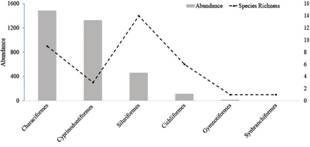
A total of 3,411 specimens were sampled, representing six orders, 13 families, 27 genera, and 31 fish species (Table 2). All analyzed species are classified as Least Concern by ICMBio, except for Phalloceros circummontanus Souto-Santos, Mejia, Arcila & Buckup, 2025, which was recently des cribed; conservation status cannot be assigned to species identified only as morphotypes and to species introduced into the river basin (INT in Table 2). Characiformes were the most abundant order (n = 1,487, 43%), followed by Cyprinodontiformes (n = 1,330, 38%) and Siluriformes (n = 460, 13%). Cichliformes (n = 115), Gymnotiformes (n = 17), and Synbranchiformes (n = 2) represented 5% of the total abundance. Siluriformes were the most species-rich order (S = 14, 36%), followed by Characiformes (S = 13, 34%) and Cichliformes (S = 6, 15%; Fig. 3).

Species abundance and richness of fish orders collected in streams of Pomba River drainage, states of Minas Gerais and Rio de Janeiro, Southeastern Brazil.
Fish captured in streams of the Pomba River drainage, Paraíba do sul River basin, States of Minas Gerais and Rio de Janeiro, Southeastern Brazil, in July 2019 and July 2022, with their abundance (N) and catalog number from National Museum (MNRJ) for voucher specimens. Distribution in the Pomba River drainage: INT = introduced (introduced are the species described for river basins distant from the Paraíba do Sul River basin) and N = native (native are the species described for the Paraíba do Sul River basin). Potential for the trade of ornamental fish (Brazil 2012): UND = undetermined, NO = not ornamental, and O = ornamental. Systematic positions were based on Fricke et al. (2025).
The family with the greatest abundance was Poeciliidae (n = 1,330, 39%), followed by Acestrorhamphidae (n = 972, 28%) and Stevardiidae (n = 473, 14%). The families Acestrorhamphidae, Trichomycteridae, and Cichlidae presented the greatest species richness, each with five species (Fig. 4). Poecilia reticulata Peters, 1859 (n = 912, 26%), Deuterodon intermedius (Eigenmann, 1908) (n = 684, 20%), and Bryconamericus ornaticeps Bizerril & Perez-Neto, 1995 (n = 473, 13%) were the most abundant species among the specimens collected in the streams (Table 2).
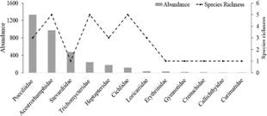
Species abundance and richness of fish families sampled in streams of Pomba River drainage, states of Minas Gerais and Rio de Janeiro, Southeastern Brazil.
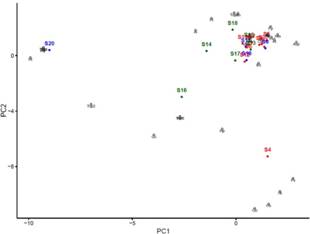
The first axis of the graph (PCoA 1 = 19.1%) segregated stream groups according to their faunistic composition (Fig. 5). Rhamdioglanis transfasciatus Miranda Ribeiro, 1908, Rhamdia quelen (Quoy & Gaimard, 1824), and Crenicichla lacustris (Castelnau, 1855) were associated with the upper portions of the river basin, whereas Astyanax sp., Poecilia vivipara Bloch & Schneider, 1801, and Hoplosternum littorale (Hancock, 1828) were associated with the intermediate and lower portions.

Principal Coordinates Analysis ordination plot, evi dencing the composition and distribution of species along upper (green), middle (blue) and lower (red) streams of the Pomba River drainage, states of Minas Gerais and Rio de Janeiro, Southeastern Brazil.
A total of 21 (68%) species are native to the Paraíba do Sul River basin, five (16%) are exotic to this basin, and all speci mens of Trichomycterus Valenciennes, 1832 (n = 5, 16%) were identified only as morphospecies. Species identification in this genus, which is already difficult, is exacerbated by the fact that there are currently 25 species of Trichomycterus cited for this river basin (Fricke et al. 2025), some of them with very similar colors and/or external morphology, requiring revision with analysis of type materials from all its geographic extension. Revisional taxonomy is essential for biological research in all areas of interest (Wheeler 2004). The citation of “Astyanax sp. 1” Melo (2001) is due to the fact that specimens collected in some parts of the river basin are similar to this author’s description for a species not yet scientifically named. This information reinforces the importance of faunal inventories, especially in areas with strong endemism affected by chronic human disturbances, such as the Atlantic Forest.
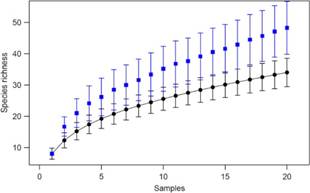
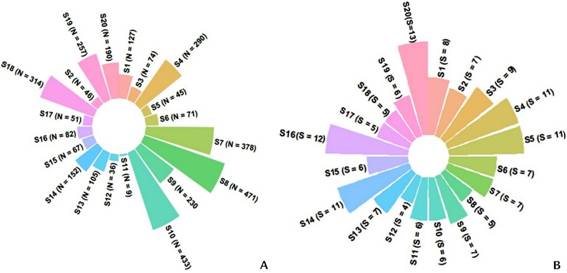
Observed species richness (31 species) represented 68% of the total richness estimated by the Jackknife 1 index (47 ± 4 species). Although the species accumulation curve exhibited a stabilization trend, it did not reach an asymptote, indicating that additional species would likely be recorded with increased sampling effort (Fig. 6). The streams harboring the highest fish abundances were S8 (n = 471 individuals), S10 (n = 433), and S18 (n = 314) (Fig. 7A). The most species-rich streams were S20 (S = 13 species), followed by S16 (S = 12), and S4 and S5, each with 11 species (Fig. 7B).
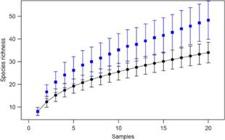
Species accumulation curve for the fish collected from streams of the Pomba River drainage, states of Minas Gerais and Rio de Janeiro, Southeastern Brazil. Square = Jackknife 1; circle = richness observed. The bars represent the confidence interval.
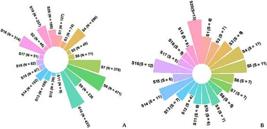
(A) Fish abundance (N) and (B) species richness (S) in streams of the Pomba River drainage, Minas Gerais and Rio de Janeiro states, Southeastern Brazil.
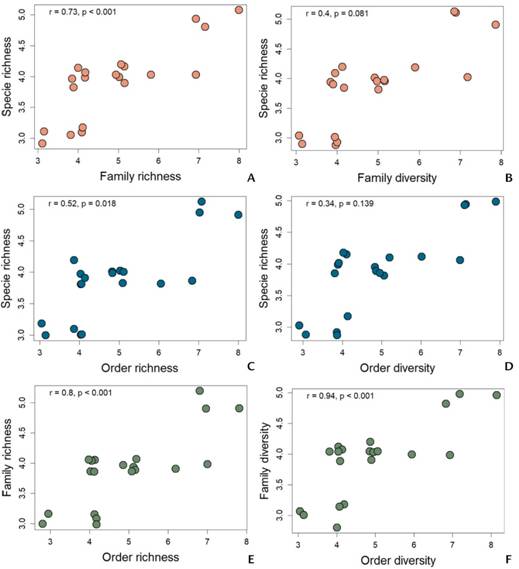
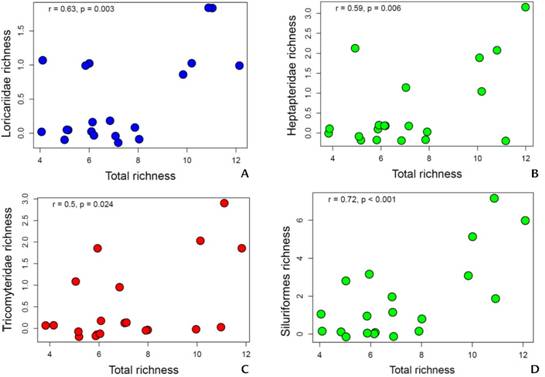
Overall, correlations of taxonomic richness and diversity metrics between hierarchical levels were positive. The strongest correlations were observed between family diversity and order diversity (r = 0.94, p < 0.001; Fig. 8F), followed by family richness and order richness (r = 0.80, p < 0.001; Fig. 8E) and species richness and family richness (r = 0.73, p < 0.001; Fig. 8A). Among the 12 sampled families, only Loricariidae (r = 0.63, p = 0.003; Fig. 9A), Heptapteridae (r = 0.59, p = 0.0062; Fig. 9B), and Trichomycteridae (r = 0.50, p = 0.02; Fig. 9C) showed significant positive correlations with total species richness. Among the six analyzed orders, only Siluriformes (r = 0.72, p = 0.001; Fig. 9D) was positively correlated with overall species richness.

Relationships among richness and diversity measures across different taxonomic hierarchical levels of the mobile fish assemblage in 20 streams of the Pomba River basin, Brazil. Pearson correlation analyses were performed using each stream as a sampling unit. Correlations between (A) species richness and family richness, (B) species richness and family diversity, (C) species richness and order richness, (D) species richness and order diversity, (E) family richness and order richness, and (F) family diversity and order diversity.

Relationships between the richness of selected fish taxa and total species richness of the mobile fish assemblage in 20 streams of the Pomba River basin, Brazil. Pearson correlation analyses were performed using each stream as a sampling unit. (A) Loricariidae, (B) Heptapteridae, (C) Trichomycteridae, (D) Siluriformes.
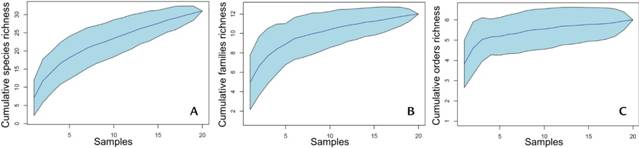
Taxonomic accumulation curves did not reach an asymptote across all analyzed hierarchical levels (Fig. 10). However, the cumulative curve for fish orders (Fig. 10C) was noticeably less steep than those for families and species, reflecting the intrinsically limited number of orders occurring in freshwater environments. Although the ichthyofauna of the Paraíba do Sul River basin has been addressed by several authors, many species remain poorly defined (e.g., representatives of Deuterodon Eigenmann, 1907 and Psalidodon Eigenmann, 1911), exhibit substantial morphological overlap in diagnostic characters, e.g., Trichomycterus); or belong to complex species groups, e.g., Hoplias malabaricus (Bloch, 1794). The identification key provided herein synthesizes diagnostic characters to facilitate species identification and access to distributional records for the taxa recorded in this study.
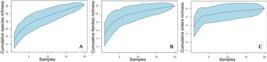
10. Accumulation curves of species (A), families (B) and orders (C) of the mobile fish assemblage in 20 streams in Pomba River basin, Southeastern Brazil.
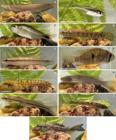
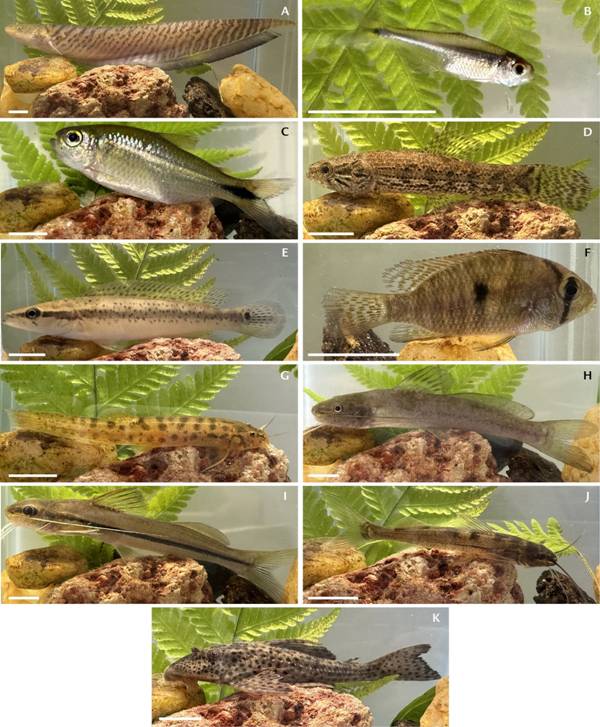
Photographs in life of native species sampled in Pomba River drainage, Paraíba do Sul River basin, states of Minas Gerais and Rio de Janeiro, Southeastern Brazil: Gymnotus carapo (A), Bryconamericus ornaticeps (B), “Astyanax sp. 1” (C), Hoplias malabaricus (D), Crenicichla lacustris (E), Geophagus brasiliensis (F), Trichomycterus sp. 4 (G), Rhamdia quelen (H), Pimelodella lateristriga (I), Rhamdioglanis transfasciatus (J) and Hypostomus punctatus (K). Scale bars: 1 cm.
DISCUSSION
The number of fish species recorded for the studied stream tributaries is expectedly lower than that documented for the entire Paraíba do Sul River basin or its main channels. Bizerril (1999) recorded 167 fish species in one of the earliest broad investigations covering the entire basin, which included a higher proportion of marine and euryhaline species (37 species, 22% of the total) than that found in the Pomba River tributaries. Teixeira et al. (2005) noted that the sampling of Bizerril (1999) encompassed small tributaries harboring species that are absent from the main river channel. In their own basin-wide survey along the main stem, Teixeira et al. (2005) obtained 81 species. The species richness observed in other tributaries of the Paraíba do Sul River basin closely mirrors our findings. For instance, Oliveira and Lacerda (2004) reported 33 species after a one-year inventory in a reservoir area within the Paraibuna River basin. Honorio and Martins (2018) recorded 30 species in the Una River, while De Brito and Buckup (2019) documented 32 species from the upper Piraí drainage, a tributary whose course was artificially reversed and diverted into the water supply system of Rio de Janeiro and adjacent municipalities.
Numerous studies have addressed stream fish assemblages across the Atlantic Forest domain. These assessments recorded 23 species in the Perequê-Açu River (Guimarães et al. 2021) and 54 species along the Fluminense Green Coast (Dopazo et al. 2023), both representing coastal drainage systems. Oliveira and Lacerda (2004) highlighted that the abundance and spatial distribution of species along river stretches were heavily influenced by reservoir dynamics, noting that fish diversity was contrastingly higher in the upper reaches, possibly because those sites predated dam construction. In our study area, Siluriformes was also the most frequent group. In most Atlantic Forest stream inventories, the dominant order is either Siluriformes or Characiformes, and the primacy of either group is linked to environmental factors including terrain slope, altitude, water velocity, and microhabitat availability. When comparing these historical data with modern inventories, recent systematic rearrangements must be taken into account. The family Characidae, which historically exhibited high species richness in most regional checklists, has undergone extensive taxonomic revisions aimed at establishing monophyletic groups. Consequently, multiple species previously allocated to this broad family are currently nested within Acestrorhamphidae and Stevardiidae.
Part of the variation in these richness estimates is likely attributable to differences in water body dimensions, varying sampling efforts, and specific structural characteristics of each stream reach. Given that biodiversity loss rates are higher in freshwater ecosystems than in terrestrial ones (Turak et al. 2017), freshwater fish represent one of the most threatened vertebrate groups globally (Reid et al. 2019). Since 2000, fish populations have experienced drastic reductions at local scales across temperate (Freyhof and Brooks 2011), tropical (Pelicice et al. 2017), and diverse climatic zones (Ngor et al. 2018). Furthermore, the spatial distribution of fish species in high-altitude areas suffers from a Wallacean shortfall (Hortal et al. 2015), representing a major knowledge gap since fish remain among the least studied taxonomic groups along altitudinal gradients (Guedes et al. 2025). The present study contributes 31 species to the regional inventory of hydrographic basins in the Atlantic Forest biome, providing novel data for streams located at altitudes above 600 m. Specimens deposited in Brazilian ichthyological collections have underpinned critical taxonomic works, expanding our understanding of Neotropi cal ichthyofauna (e.g., Volcan et al. 2014, Ohara et al. 2015, Katz and Costa 2020, Lehmann and Reis 2021, Ribeiro et al. 2021, Ferreira and Ohara 2023).
Poecilia reticulata was the most abundant species in the streams of the Pomba River drainage, corroborating the patterns observed by Araújo et al. (2009) in other portions of the Paraíba do Sul drainage. This numerical dominance aligns with findings by Casatti et al. (2010) for urbanized streams in the Bodoquena Plateau; Pereira et al. (2014) for Paraná River basin streams; and Larantis et al. (2022) for the Iguaçu and upper Paraná River basins. This widespread pattern is an expected consequence of anthropogenic degradation; P. reticulata is non-native to Brazil (Bragança et al. 2020), and its occurrence outside its natural range is strongly associated with environmental stressors including urbanization, instream siltation, reduction of riparian forest cover, and domestic or industrial effluent discharge (Bragança et al. 2020, Bueno et al. 2023)-conditions that are prevalent throughout the Paraíba do Sul River basin. Accidental releases by aquarists, escapes from aquaculture facilities, and live-bait transport for sport fishing represent the primary introduction pathways (Magalhães et al. 2024). Bizerril (1999) recorded 16 introduced fish species (9.5% of the total fauna) along the Paraíba do Sul River basin, with P. reticulata being one of the three species occurring across all seven hydrographic zones. Years later, Moraes et al. (2017) recorded 62 fish, three bivalve, and three decapod introduced species within the same basin. Invasive freshwater fish can severely impact native communities and physical habitats through increased predation pressure, competitive exclusion, hybridization, disease transmission (Cucherousset and Olden 2011), loss of native richness, and structural habitat alterations (Gozlan et al. 2010). These cumulative introductions threaten natural ecosystems by promoting population growth and behavioral, genetic, or physiological interactions that ultimately lead to the local extinction of less competitive native species.
Approximately 26% of the species captured in the Pomba River drainage (10 species) possess recognized ornamental value (Brasil 2012). Some of these taxa, such as Poecilia vivipara, Pimelodella lateristriga, and Geophagus brasiliensis, were numerically abundant in our samples. Even unlisted species (Brasil 2012), including Astyanax sp. 1, Deuterodon intermedius, Neoplecostomus microps, and Rhamdioglanis transfasciatus, exhibit striking morphological and coloration patterns. With the implementation of appropriate management strategies, native ornamental fish could serve as sustainable sources of income for local communities through ecotourism and environmental education, potentially fostering economic incentives for the preservation of small stream ecosystems.
Our PCoA ordination indicates that fish assemblages in the Pomba River drainage are spatially heterogeneous. In the upper headwaters, the combination of rocky substrates, torrent flows, and preserved riparian canopies promotes a higher abundance of Heptapteridae species, such as R. transfasciatus and R. quelen, which are strongly adapted to high-gradient habitats (Cherobim et al. 2016). Conversely, these steep headwater environments restrict the occurrence of most Characiformes and Cyprinodontiformes species. In contrast, the middle and lower river sections-characterized by greater stream width, depth, diverse substrates (sand and gravel), and richer food resources-sustain a higher diversity of species, particularly generalist taxa including Astyanax sp. (with several species currently being assigned to Deuterodon and Psalidodon) and representatives of Poecilia.
The sample-based species accumulation curve failed to reach an asymptote, indicating that maximum regional richness was not fully captured. However, a sampling efficiency exceeding 60% demonstrates that observed richness aligns well with the expected values of the non-parametric estimator, capturing the core structure of the local assemblages. The Jackknife 1 analysis provided richness estimates close to the expected total species pool. Because many Siluriformes and Gymnotiformes are nocturnally active and seek refuge during the day to avoid predation (Lowe-McConnell 1964), supplementing inventories with nighttime sampling and expanding the geographical coverage to adjacent microbasins would likely increase the number of cryptobiotic species recorded in the Pomba River drainage.
The substantial richness documented at both family and species levels indicates that the studied ichthyofauna is taxonomically diverse and functionally complex. The strong correlation between family and species richness, as well as between family and order diversity, likely reflects the prominent role of environmental filtering, which restricts assemblage membership to a few functional lineages with conserved traits (Bower and Winemiller 2019). These findings align with the phylogenetic gambit hypothesis (Mazel et al. 2018), which supports the premise that higher taxa can effectively reflect key aspects of assemblage structure when trait conservatism is high. In our system, this strong correlation suggests that families are functionally cohesive and ecologically distinct from one another, justifying their application as valid surrogates in biodiversity assessments. Consequently, the higher-taxon approach retains substantial information regarding community-level patterns, particularly in the functional dimension. Analyzing fish diversity at the family level significantly reduces the time and cost required for specimen identification, streamlining biomonitoring protocols and accelerating conservation planning (Santos et al. 2022). High-richness fish families possess great potential as biological surrogates (Santos et al. 2022). Future steps should focus on characterizing the functional traits of this fauna to evaluate their relationship with landscape features, seasonal variations, reproductive phenology, and microhabitat use.
In our survey, streams lacking riparian vegetation, dominated by emergent rooted macrophytes and marginal grasses, and characterized by silt or sand substrates in pastoral matrices exhibited the highest fish abundances, with a predominance of P. reticulata and D. intermedius. Conversely, reaches with mature arboreal canopies on one or both banks, abundant woody debris, exposed root mats, and heterogeneous substrates (composed of rocks, gravel, branches, and leaf litter) supported significantly higher species richness. Under regional deforestation and structural homogenization scenarios, instream siltation reduces mesohabitat availability, leading to the loss of habitat specialists (Zeni et al. 2019). Deforestation acts as a severe environmental filter that alters the functional structure of stream fish assemblages (Teresa and Casatti 2017), favoring the colonization of generalist species with high swimming performance and maneuverability capable of exploiting uniform substrates and marginal grasses (Zeni et al. 2019). Forested riparian zones enhance environmental heterogeneity by supplying allochthonous inputs, such as large woody debris, leaves, fruits, and seeds (Cantanhêde et al. 2021), which provide critical trophic resources, structural shelter, and spawning substrates (Pusey and Arthington 2003). Habitat heterogeneity promotes the coexistence of species with distinct ecological requirements by broadening the available niche space (Nonato et al. 2021). Consequently, structurally complex streams support greater species richness and a wider array of functional groups (Gutierrez et al. 2018).
Hydrographic basins within the Atlantic Forest harbor a remarkably rich ichthyofauna (> 500 species, Thomaz and Knowles 2018), consisting predominantly of small-bodied species (Menezes 2007). Most of these taxa exhibit strong ecological dependencies on the adjacent forest matrix, which provides crucial food and physical structure (Gonçalves et al. 2018). Fish assemblages in the Brazilian Atlantic Forest are highly sensitive to local habitat structures (Terra et al. 2016) such as depth, current velocity, and substrate composition (Ferreira et al. 2014). The spatial structure of stream fish communities in this biome is driven by the longitudinal zonation of ecological resources along the upstream-downstream gradient, creating high environmental heterogeneity (Vannote et al. 1980, Mazzoni and Lobón-Cerviá 2000, Ferreira and Petrere 2009). Therefore, increasing our knowledge on stream fish diversity is imperative not only for macroecological tracking of fish biodiversity but also for designing targeted mitigation strategies to preserve biological integrity in a region with a long history of severe anthropogenic disturbance.
Identification key for fish species from the studied area
1. Body covered by scales .................... 2
1’. Smooth skin (body not covered with scales) or rough skin covered with heavy bony plates .................... 19
2. Body covered only by cycloid scales; a single lateral line, complete or interrupted .................... 3
2’. Presence of ctenoid scales; lateral line divided into one anterior upper portion and a posterior lower portion running along the middle of the caudal peduncle .................... 15 (Cichliformes, Cichlidae)
3. Sub-cylindrical body, depressed head, mouth superior, with a prognathous lower jaw; a long anal fin and a short tail, without a caudal fin .................... Gymnotus carapo Linnaeus, 1758 (Gymnotiformes, Gymnotidae; Fig. 11A)
3’. Cylindrical or laterally compressed body; head depressed or not, mouth anterior or superior; short anal fin; caudal fin always present .................... 4
4. Toothless .................... Cyphocharax gilbert (Quoy & Gaimard, 1824) (Characiformes, Curimatidae)
4’. Teeth present in both jaws .................... 5
5. With a spot on caudal peduncle .................... 6
5’. Without a spot on caudal peduncle .................... 10
6. Only unicuspid teeth in both jaws; maxillary bone with about 20 conical teeth .................... Oligosarcus hepsetus (Cuvier, 1829) (Characiformes, Acestrorhamphidae)
6’. Multicuspidated teeth: two premaxillary series, one dentary series and maxillary bone with 0 to 3 teeth .................... 7
7. Four teeth in the internal premaxillary series and two teeth on the maxillary bone; vertically elongated humeral spot .................... Bryconamericus ornaticeps Bizerril & Perez-Neto, 1995 (Characiformes, Stevardiidae; Fig. 11B)
7’. Five teeth in the internal premaxillary series .................... 8
8. Horizontally oval humeral spot; maxillary bone toothless; dentary bone with 4 antero-medial teeth bigger than the lateral ones .................... “Astyanax sp. 1” Melo, 2001 (Characiformes, Acestrorhamphidae; Fig. 11C)
8’. Vertically elongated humeral spot; dentary teeth size varies abruptly .................... 9
9. Dentary teeth size varies abruptly from the fifth tooth; 1-3 teeth on maxillary bone; scales above the anal fin arranged on regular series towards the caudal fin .................... Deuterodon intermedius (Eigenmann, 1908) (Characiformes, Acestrorhamphidae)
9’. Dentary teeth size varies abruptly from the fourth tooth; a very small tooth in the maxillary bone; scales above the anal fin arranged on oblique series towards the base of the fin, even in the smallest individuals .................... Psalidodon parahybae (Eigenmann, 1908) (Characiformes, Acestrorhamphidae)
10. Mouth superior; males with a gonopodium (intromittent organ) .................... 11 (Cyprinodontiformes, Poeciliidae)
10’ .................... Mouth anterior; males without a gonopodium .................... 13
11. Gonopodium tip divided in two branches, each one with a small hook; female urogenital papilla straight along ventral midline; lateral dark brown spot located under dorsal fin .................... Phalloceros circummontanus Souto-Santos, Mejia, Arcila & Buckup, 2025 (Cyprinodontiformes, Poeciliidae)
11’. Gonopodium single-tipped, no appendices; no lateral dark brown spot located under dorsal fin .................... 12
12. Both sexes with a network-like color pattern; males can have irregular colorful patches distributed; gonopodium with triangular tip and a fold of skin ventrally .................... Poecilia reticulata Peters, 1859 (Cyprinodontiformes, Poeciliidae)
12’. Males and females with dark spot in front of the dorsal; gonopodium with dorsal serrae in 4th ray .................... Poecilia vivipara Bloch & Schneider, 1801 (Cyprinodontiformes, Poeciliidae)
13. Body light brown; a large and vertically elongated humeral spot; dorsal and anal fins with large black spots .................... Megalamphodus eques (Steindachner, 1882) (Characiformes, Acestrorhamphidae)
13’. Body covered with spots regularly or irregularly distributed .................... 14
14. Body with 9-11 irregular dark bands; small, subterminal mouth with conical teeth .................... Characidium vidali Travassos, 1967 (Characiformes, Crenuchidae)
14’. A single large horizontal stripe crossed by dark vertical bands; a large terminal mouth with conical and canine strong teeth .................... Hoplias malabaricus (Bloch, 1794) (Characiformes, Erythrinidae; Fig. 11D)
15. Elongated body; 22 spines in the anterior region of the dorsal fin; lateral band continuous from head to caudal fin base; ocellus at the base of the upper caudal lobe .................... Crenicichla lacustris (Castelnau, 1855) (Cichliformes, Cichlidae; Fig. 11E)
15’. Body taller than elongated; less then 22 spines in the anterior region of the dorsal fin .................... 16
16. No lobe on the first branchial arch .................... 17
16’. A lobe on the first branchial arch; 15 spines on the dorsal fin and 3 on the anal fin; no scales on the face .................... Geophagus brasiliensis (Quoy & Gaimard, 1824) (Cichliformes, Cichlidae; Fig. 11F)
17. Bicuspid teeth; 16 spines in the dorsal fin and 3 in the anal fin .................... Oreochromis niloticus (Linnaeus, 1758) (Cichliformes, Cichlidae)
17’. Conical teeth .................... 18
18. Fourteen spines on the dorsal fin and 3 on the anal fin; with scales on the face .................... Aequidens tetramerus (Heckel, 1840) (Cichliformes, Cichlidae)
18’. Fifteen spines in the dorsal fin and 7 in the anal fin .................... Australoheros oblongus (Castelnau, 1855) (Cichliformes, Cichlidae)
19. Body without bony plates .................... 20
19’. Body covered with bony plates .................... 28
20. Elongate body; gill membranes fused, leaving a single small ventral opening; absence of pectoral, pelvic and caudal fins, rudiments in the dorsal and anal fins .................... Synbranchus marmoratus Bloch, 1795 (Synbranchiformes, Synbranchidae)
20’. Tall or elongated body, with paired gill slits; fins present .................... 21
21. With opercular odontodes; adipose fin absent .................... 22 (Siluriformes, Trichomycteridae)
21’. Without opercular odontodes; adipose fin well developed .................... 26 (Siluriformes, Heptapteridae)
22. Body homogeneously dark ……. Trichomycterus sp. 1 (Siluriformes, Trichomycteridae)
22’. Body with spots or bands .................... 23
23. Body crossed by a dark lateral stripe and 11 dorsal transverse bars up to half of the side of the body .................... Trichomycterus sp. 2 (Siluriformes, Trichomycteridae)
23’. Body with spots .................... 24
24. Light yellowish body, with dark rounded spots distributed in a stripe along the dorsum and a lateral longitudinal stripe; large eye .................... Trichomycterus sp. 4 (Siluriformes, Trichomycteridae; Fig. 11G)
24’. Body with irregularly distributed spots; small eye .................... 25
25. With scattered gray rounded spots, without forming bands; head a little longer than wide .................... Trichomycterus sp. 3 (Siluriformes, Trichomycteridae)
25’. Dark spots of various sizes, irregularly distributed, forming a longitudinal stripe on the anterior half of the body; head as wide as long .................... Trichomycterus sp. 5 (Siluriformes, Trichomycteridae)
26. Grayish body, with numerous small spots irregularly distributed .................... Rhamdia quelen (Quoy & Gaimard, 1824) (Siluriformes, Heptapteridae; Fig. 11H)
26’. Yellowish body, with bands .................... 27
27. Yellowish body crossed by a dark longitudinal stripe .................... Pimelodella lateristriga (Lichtenstein, 1823) (Siluriformes, Heptapteridae; Fig. 11I)
27’. Yellowish body crossed by about 6 dark transverse bands... Rhamdioglanis transfasciatus Miranda Ribeiro, 1908 (Siluriformes, Heptapteridae; Fig. 11J)
28. Body covered by a double series of dermal plates; coracoids exposed ventrally .................... Hoplosternum littorale (Hancock, 1828) (Siluriformes, Callichthyidae)
28’. Body covered by more than two series of dermal plates; lower lip transformed into a suction cup .................... 29 (Siluriformes, Loricariidae)
29. Lower lip well developed, with 2 or 3 series of large papillae; a hexagonal shield of plates with small odontodes covers the ventral region of the body .................... Neoplecostomus microps (Steindachner, 1877) (Siluriformes, Loricariidae)
29’. Lower lip moderately developed and without large papillae; no shield in ventral region .................... 30
30. Adipose fin absent; cleithra exposed ventrally; two small open fossae on the isthmus .................... Schizolecis guentheri (Miranda Ribeiro, 1918) (Siluriformes, Loricariidae)
30’. Adipose fin present; cleithra not exposed ventrally; isthmus not openings .................... Hypostomus punctatus Valenciennes, 1840 (Siluriformes, Loricariidae; Fig. 11K)
ACKNOWLEDGEMENTS
The authors are grateful to Ichthyologic Collection of the Museu Nacional, Universidade Federal do Rio de Janeiro for their curatorial assistance.
LITERATURE CITED
-
AVMA (2001) Report of the AVMA panel on euthanasia. American Veterinary Medical Association 218: 669-696. https://doi.org/10.2460/javma.2001.218.669
» https://doi.org/10.2460/javma.2001.218.669 -
Araújo FG, Peixoto MG, Pinto BCT, Teixeira TP (2009) Distribution of guppies Poecilia reticulata (Peters, 1860) and Phalloceros caudimaculatus (Hensel, 1868) along a polluted stretch of the Paraíba do Sul River, Brazil. Brazilian Journal of Biology 69: 41-48. https://doi.org/10.1590/S1519-69842009000100005
» https://doi.org/10.1590/S1519-69842009000100005 - Baillie JEM, Hilton-Taylor C, Stuart SN (2004) 2004 IUCN Red List of Threatened Species. A Global Species Assessment. IUCN, Gland, 191 pp.
- Barbour MT, Gerritsen J, Snyder BD, Stribling JB (1999) Rapid bioassessment protocols for use in wadeable streams and rivers: periphyton, benthic macroinvertebrates and fish. EPA USEPA, Washington, D.C., 344 pp.
-
Berriel TCS, Caramaschi ÉP, Polaz CNM (2018) Monitoramento da fauna aquática: funções ecossistêmicas do domínio das ilhas fluviais do Rio Paraíba do Sul. https://ebookprojetopiaban.wixsite.com/ebook [Accessed: 12/08/2024]
» https://ebookprojetopiaban.wixsite.com/ebook - Bizerril CRSF (1999) A ictiofauna da bacia do rio Paraíba do Sul. Biodiversidade e padrões biogeográficos. Brazilian Archives of Biology and Technology 45: 125-156.
- Bizerril CRSF, Primo PBS (2001) Peixes de águas interiores do Estado do Rio de Janeiro. Fundação de Estudos do Mar, Rio de Janeiro, 417 pp.
-
Bragança PD, Guimarães EC, De Brito PS, Ottoni FP (2020) On the natural occurrence of Poecilia reticulata Peters, 1859 (Cyprinodontiformes: Poeciliidae). Cybium 44(4): 309-316. https://doi.org/10.26028/cybium/2020-444-002
» https://doi.org/10.26028/cybium/2020-444-002 - Brasil (2012) Instrução Normativa Interministerial nº 1, de 03 de janeiro de 2012. Estabelece normas, critérios e padrões para a explotação de peixes nativos ou exóticos de águas continentais com finalidade ornamental ou de aquariofilia. Ministério da Pesca e Aquicultura, Ministério do Meio Ambiente, Brasília.
- Bower LM, Winemiller KO (2019) Fish assemblage convergence along stream environmental gradients: an intercontinental analysis. Ecography 42(10): 1691-1702.
- Buckup PA, Britto MR, Souza-Lima R, Pascoli JC, Villa-Verde L, et al. (2014) Guia de Identificação das Espécies de Peixes da Bacia do Rio das Pedras Município de Rio Claro, RJ. The Nature Conservancy, Rio de Janeiro, 144 pp.
-
Bueno ML, Heringer G, De Carvalho DR, Robinson TB, Pompeu PS, Zenni RD (2023) Ecosystem variables importance in the presence and abundance of a globally invasive fish. Science of the Total Environment 876: 162795. https://doi.org/10.1016/j.scitotenv.2023.162795
» https://doi.org/10.1016/j.scitotenv.2023.162795 -
Cantanhêde LG, Luiza-Andrade A, Leão H, Montag LFA (2021) How does conversion from forest to pasture affect the taxonomic and functional structure of the fish assemblages in Amazonian streams? Ecology of Freshwater Fish 30: 334-346. https://doi.org/10.1111/eff.12589
» https://doi.org/10.1111/eff.12589 - Caramaschi EP, Aranha JMR, Thiago HS, Moraes DF, Halboth DA, et al. (1991) Levantamento da ictiofauna do rio Paraíba do Sul e ciclo reprodutivo das principais espécies, no trecho compreendido entre Três Rios e Campos. Fundação José Bonifácio, Rio de Janeiro, 191 pp.
-
Casatti L, Langeani F, Castro R (2001) Peixes de riacho do Parque Estadual Morro do Diabo, bacia do alto rio Paraná, SP. Biota Neotropica 1: 1-15. https://doi.org/10.1590/S1676-06032001000100005
» https://doi.org/10.1590/S1676-06032001000100005 -
Casatti L, Romero RDM, Teresa FB, Sabino J, Langeani F (2010) Fish community structure along a conservation gradient in Bodoquena Plateau streams, Central West of Brazil. Acta Limnologica Brasiliensia 50: 59. https://doi.org/10.4322/actalb.02201007
» https://doi.org/10.4322/actalb.02201007 -
Cherobim AM, Lazzarotto H, Langeani F (2016) A new species of the catfish Neoplecostomus (Loricariidae: Neoplecostominae) from a coastal drainage in southeastern Brazil. Neotropical Ichthyology 14(4): e160015. https://doi.org/10.1590/1982-0224-20160015
» https://doi.org/10.1590/1982-0224-20160015 -
Colwell RK, Elsensohn JE (2014) EstimateS turns 20: statistical estimation of species richness and shared species from samples, with non-parametric extrapolation. Ecography 37(6): 609-613. https://doi.org/10.1111/ecog.00814
» https://doi.org/10.1111/ecog.00814 - Cucherousset J, Olden JD (2011) Ecological impacts of nonnative freshwater fishes. Fisheries 36(5): 215-230.
-
De Brito V, Buckup PA (2019) The fish fauna of the upper Piraí drainage, a transposed mountain river system in southeastern, Brazil. Check List 15(1): 235-247. https://doi.org/10.15560/15.1.235
» https://doi.org/10.15560/15.1.235 -
Dopazo M, Souto-Santos ICDA, Ribeiro de Britto M, Rangel Moreira C, Buckup AP (2023) The freshwater fishes from the Costa Verde Fluminense region of southeastern Brazil. Biota Neotropica 23: e20221422. https://doi.org/10.1590/1676-0611-BN-2022-1422
» https://doi.org/10.1590/1676-0611-BN-2022-1422 -
Ferreira FC, Petrere M (2009) The fish zonation of the Itanhaém River basin in the Atlantic Forest of southeast Brazil. Hydrobiologia 636: 11-34. https://doi.org/10.1007/s10750-009-9932-4
» https://doi.org/10.1007/s10750-009-9932-4 -
Ferreira KM, Ohara WM (2023) A new rheophilic species of Knodus Eigenmann (Characiformes: Characidae: Stevardiinae) from the upper rio Juruena, rio Tapajós basin, Chapada dos Parecis, Mato Grosso, Brazil. Zootaxa 5227(3): 365-377. https://doi.org/10.11646/ZOOTAXA.5227.3.5
» https://doi.org/10.11646/ZOOTAXA.5227.3.5 -
Ferreira M, Costa J, Reis-Henriques MA (2014) ABC transporters in fish species: a review. Frontiers in Physiology 5: 266. https://doi.org/10.3389/fphys.2014.00266
» https://doi.org/10.3389/fphys.2014.00266 - Freyhof J, Brooks E (2011) European red list of freshwater fishes. Publications Office of the European Union, Luxembourg, 60 pp.
-
Fricke R, Eschmeyer WN, Van der Laan R (2025) Eschmeyer’s catalog of fishes: genera, species, references. http://researcharchive.calacademy.org/research/ichthyology/catalog/fishcatmain.asp [Accessed: 12/08/2024]
» http://researcharchive.calacademy.org/research/ichthyology/catalog/fishcatmain.asp -
Froese R, Pauly D (2024) FishBase. http://www.fishbase.org [Accessed: 10/08/2024]
» http://www.fishbase.org -
Gomes FBR, Vargas IS, Procópio AS, Castro SR, De Melo Ribeiro CB (2021) Estudo da variabilidade espaço-temporal e tendências de precipitação na bacia hidrográfica do rio Paraíba do Sul. Revista Brasileira de Climatologia 28: 365-390. https://ojs.ufgd.edu.br/rbclima/article/view/14571
» https://ojs.ufgd.edu.br/rbclima/article/view/14571 -
Gonçalves BB, Nascimento NF, Santos MP, Bertolini RM, Yasui GS, Giaquinto PC (2018) Low concentrations of glyphosate-based herbicide cause complete loss of sperm motility of yellowtail tetra fish Astyanax lacustris Journal of Fish Biology 92(4): 1218-1224. https://doi.org/10.1111/jfb.13571
» https://doi.org/10.1111/jfb.13571 - Gozlan RE, Britton JR, Cowx I, Copp GH (2010) Current knowledge on non-native freshwater fish introductions. Journal of Fish Biology 76(4): 751-786.
-
Guimarães FV, Souza TMD, Rodrigues RR, Souza-Lima R (2021) Composition and distribution of fishes from the Perequê-Açu River basin, Paraty, Rio de Janeiro, Southeastern Brazil. Biota Neotropica 21(2): e20201096. https://doi.org/10.1590/1676-0611-BN-2020-1096
» https://doi.org/10.1590/1676-0611-BN-2020-1096 - Guedes HAS, Silva D, Dergam JA, Elesbon AAA (2014) Estabelecimento do regime de vazões ecológicas no Rio Formoso/MG com base em espécies neotropicais. Revista Brasileira de Recursos Hídricos 19: 72-82.
-
Guedes GHS, Luz CHP, Souza VJ, Araújo FG (2025) A fish frontier? Itatiaia expedition and biodiversity repositories reveal gaps in fish occurrences in Brazil’s high-altitude aquatic ecosystems. Zoologia 42: e24077. https://doi.org/10.1590/S1984-4689.v42.e24077
» https://doi.org/10.1590/S1984-4689.v42.e24077 -
Gutierrez CA, Ortega JCG, Agostinho AA (2018) Fish beta diversity responses to environmental heterogeneity and flood pulses are different according to reproductive guild. Neotropical Ichthyology 16: 1-10. https://doi.org/10.1590/1982-0224-20180022
» https://doi.org/10.1590/1982-0224-20180022 -
Harrison I, Abell R, Darwall W, Thieme ML, Tickner D, Timboe I (2018) The freshwater biodiversity crisis. Science 362(6421): 1369. https://doi.org/10.1126/science.aav9242
» https://doi.org/10.1126/science.aav9242 -
Honorio JR, Martins IA (2018) Ichthyofauna of the Una River in the Paraíba do Sul Paulista River Valley, Southeastern of Brazil. Biota Neotropica 18(4): e20180528. https://doi.org/10.1590/10.1590/1676-0611-BN-2018-0528
» https://doi.org/10.1590/10.1590/1676-0611-BN-2018-0528 -
Hortal J, de Bello F, Diniz-Filho JAF, Lewinsohn TM, Lobo JM, Ladle RJ (2015) Seven shortfalls that beset large-scale knowledge of biodiversity. Annual Review of Ecology, Evolution, and Systematics 46: 523-549. https://doi.org/10.1146/annurev-ecolsys-112414-054400
» https://doi.org/10.1146/annurev-ecolsys-112414-054400 - IBGE (2011) Atlas de Saneamento 2011. Instituto Brasileiro de Geografia e Estatística, Rio de Janeiro, 268 pp.
-
Katz AM, Costa WJ (2020) A new species of the catfish genus Cambeva from the Paranapanema River drainage, southeastern Brazil (Siluriformes: Trichomycteridae). Tropical Zoology 33(1): 2-13. https://doi.org/10.4081/tz.2020.63
» https://doi.org/10.4081/tz.2020.63 - Köppen W (1948) Climatologia: con un estudio de los climas de la tierra. Fondo de Cultura Económica, México, 478 pp.
-
Larantis C, Kliemann BCK, Neves MP, Delariva RL (2022) Effects of human disturbance on habitat and fish diversity in Neotropical streams. PLOS One 17(9): e0274191. https://doi.org/10.1371/journal.pone.0274191
» https://doi.org/10.1371/journal.pone.0274191 - Latham J, Cumani R, Rosati I, Bloise M (2014) Global land cover share (GLC-SHARE) database beta-release version 1.0-2014. FAO, Rome.
- Legendre P, Legendre L (1998) Numerical Ecology. Elsevier Science, Amsterdam, 853 pp.
-
Lehmann AP, Reis RE (2021) A new species of the armored catfish Parotocinclus (Loricariidae: Hypoptopomatinae) from the upper Xingu River basin, Brazil. Ichthyology & Herpetology 109(2): 449-455. https://doi.org/10.1643/i2021046
» https://doi.org/10.1643/i2021046 - Lowe-McConnell RH (1964) The fishes of the Rupununi savanna district of British Guiana. Pt. 1. Groupings of fish species and effects of the seasonal cycles on the fish. Journal of the Linnean Society of London, Zoology 45: 103-144.
- Magalhães ALB, De Azevedo CS, Maceda-Veiga A, Patoka J (2024) The scientist eyes: monitoring YouTube™ to quantify aquatic pet release in Brazil. Aquatic Ecology 58(1): 73-88.
-
Mazel F, Pennell MW, Cadotte MW, Diaz S, Dalla Riva GV, et al. (2018) Prioritizing phylogenetic diversity captures functional diversity unreliably. Nature Communications 9(1): 2888. https://doi.org/10.1038/s41467-018-05126-3
» https://doi.org/10.1038/s41467-018-05126-3 -
Mazzoni R, Lobón-Cerviá J (2000) Longitudinal structure, density and production rates of a neotropical stream fish assemblage: the river Ubatiba in the Serra do Mar, southeast Brazil. Ecography 23(5): 588-602. https://doi.org/10.1111/j.1600-0587.2000.tb00178.x
» https://doi.org/10.1111/j.1600-0587.2000.tb00178.x -
Melo FA (2001) Revisão taxonômica das espécies do gênero Astyanax Baird e Girard, 1854, (Teleostei: Characiformes: Charqacidae) da região da serra dos Orgãos. Arquivos do Museu Nacional do Rio de Janeiro 59: 1-46. https://revistas.ufrj.br/index.php/amn/article/view/47811/25810
» https://revistas.ufrj.br/index.php/amn/article/view/47811/25810 -
Meneguelli-Souza C, Pestana IA, Azevedo LS, De Almeida MG, De Souza CMM (2021) Arsenic in the lower drainage basin of the Paraíba do Sul River (Southeast Brazil): dynamics between the water column and sediment. Environmental Monitoring and Assessment 193: 57. https://doi.org/10.1007/s10661-020-08830-0
» https://doi.org/10.1007/s10661-020-08830-0 - Menezes NA (2007) Peixes de água doce da Mata Atlântica. Museu de Zoologia da Universidade de São Paulo, São Paulo, 407 pp.
- Moraes MB, Polaz CNM, Caramaschi EP, Santos Junior S, Carvalho FL (2017) Espécies exóticas e alóctones da Bacia do Rio Paraíba do Sul: Implicações para a conservação. Biodiversidade Brasileira 7: 35-55.
-
Ngor PB, McCann KS, Grenouillet G, So N, Mcmeans BC, et al. (2018) Evidence of indiscriminate fishing effects in one of the world’s largest inland fisheries. Scientific Reports 8: 8947. https://doi.org/10.1038/s41598-018-27340-1
» https://doi.org/10.1038/s41598-018-27340-1 -
Nonato FAS, Michelan TS, Freitas PV, Maia C, Montag FA (2021) Heterogeneity of macrophyte banks affects the structure of fish communities in flooded habitats of the Amazon Basin. Aquatic Ecology 55: 215-226. https://doi.org/10.1007/s10452-020-09823-4
» https://doi.org/10.1007/s10452-020-09823-4 -
Ohara WM, De Queiroz LJ, Zuanon J, Torrente-Vilara G, Vieira FG, Da Costa Doria CR (2015) Fish collection of the Universidade Federal de Rondônia: its importance to the knowledge of Amazonian fish diversity. Acta Scientiarum, Biological Sciences 37(2): 251-258. https://doi.org/10.4025/actascibiolsci.v37i2.26920
» https://doi.org/10.4025/actascibiolsci.v37i2.26920 - Oliveira JC, Lacerda AKG (2004) Alterações na composição e distribuição da ictiofauna na área de influência do reservatório de Chapéu d’Uvas, bacia do rio Paraíba do Sul, pouco depois da sua implantação. Revista Brasileira de Zoociências 6 (1): 45-60.
-
Oliveira LFD (2014) Domínio das Ilhas Fluviais: um segmento relativamente conservado no degradado Rio Paraíba do Sul. M. Sc. Thesis, Pontifícia Universidade Católica do Rio de Janeiro, Rio de Janeiro, 148 pp. https://doi.org/10.17771/PUCRio.acad.26638
» https://doi.org/10.17771/PUCRio.acad.26638 -
Ottoni FP, South J, Azevedo-Santos VM, Henschel E, De Bragança PHN (2023) Freshwater biodiversity crisis: Multidisciplinary approaches as tools for conservation. Frontiers in Environmental Science 11: 1155608. https://doi.org/10.3389/fenvs.2023.1155608
» https://doi.org/10.3389/fenvs.2023.1155608 - Pelicice FM, Azevedo-Santos VM, Vitule JR, Orsi ML, Lima Junior DP, et al. (2017) Neotropical freshwater fishes imperilled by unsustainable policies. Fish and Fisheries 18: 1119-1133.
- Pereira BB, Oliveira EAD (2014) Determinação do potencial larvófago de Poecilia reticulata em condições domésticas de controle biológico. Cadernos Saúde Coletiva 22: 241-245.
-
Pusey BJ, Arthington AH (2003) Importance of the riparian zone to the conservation and management of freshwater fish: a review. Marine and Freshwater Research 54: 1-16. https://doi.org/10.1071/MF02041
» https://doi.org/10.1071/MF02041 -
R Core Team (2024) R: a language and environment for statistical computing. R Foundation for Statistical Computing, Vienna. https://www.R-project.org/ [Accessed: 01/05/2024]
» https://www.R-project.org/ -
Reid AJ, Carlson AK, Creed IF, Eliason EJ, Gell PA, et al. (2019) Emerging threats and persistent conservation challenges for freshwater biodiversity. Biological Reviews 94: 849-873. https://doi.org/10.1111/brv.12480
» https://doi.org/10.1111/brv.12480 -
Ribeiro AR, Damásio LM, Silvano RA (2021) Fishers’ ecological knowledge to support conservation of reef fish (groupers) in the tropical Atlantic. Ocean & Coastal Management 204: 105543. https://doi.org/10.1016/j.ocecoaman.2021.105543
» https://doi.org/10.1016/j.ocecoaman.2021.105543 -
Santos LL, Benone NL, Brasil LS, Pires TH, Begot TO, et al. (2022) The use of taxonomic families as biological surrogates of the diversity of the Amazonian stream fish. Ecological Indicators 141: 109094. https://doi.org/10.1016/j.ecolind.2022.109094
» https://doi.org/10.1016/j.ecolind.2022.109094 - Silva RRD, Siqueira EQD, Nogueira IDS (2018) Environmental impacts of dairy effluent on waterway in the Pomba River Basin. Engenharia Sanitária e Ambiental 23(2): 217-228.
- Strahler AN (1957) Quantitative analysis of watershed geomorphology. Eos, Transactions American Geophysical Union 38(6): 913-920.
- Teixeira TP, Pinto BCT, Terra BF, Etiliano EO, Gracia D, Araujo FG (2005) Diversidade das assembleias de peixes nas quatro unidades geográficas do rio Paraíba do Sul. Iheringia, Série Zoologia, 95(4): 347-357.
- Teresa FB, Casatti L (2017) Trait-based metrics as bioindicators: responses of stream fish assemblages to a gradient of environmental degradation. Ecological Indicators 75: 249-258.
-
Terra BDF, Hughes RM, Araújo FG (2016) Fish assemblages in Atlantic Forest streams: the relative influence of local and catchment environments on taxonomic and functional species. Ecology of Freshwater Fish 25(4): 527-544. https://doi.org/10.1111/eff.12231
» https://doi.org/10.1111/eff.12231 -
Thomaz AT, Knowles LL (2018) Flowing into the unknown: inferred paleodrainages for studying the ichthyofauna of Brazilian coastal rivers. Neotropical Ichthyology 16(3): e180019. https://doi.org/10.1590/1982-0224-20180019
» https://doi.org/10.1590/1982-0224-20180019 -
Tickner D, Opperman JJ, Abell R, Acreman M, Arthington AH, et al. (2020) Bending the curve of global freshwater biodiversity loss: an emergency recovery plan. BioScience 70(4): 330-342. https://doi.org/10.1093/biosci/biaa002
» https://doi.org/10.1093/biosci/biaa002 - Turak E, Harrison I, Dudgeon D, Abell R, Bush A, et al. (2017) Essential Biodiversity Variables for measuring change in global freshwater biodiversity. Biological Conservation 213: 272-279.
- Vannote RL, Minshall GW, Cummins KW, Sedell JR, Cushing CE (1980) The river continuum concept. Canadian Journal of Fisheries and Aquatic Sciences 37(1): 130-137.
- Volcan MV, Lanés LEK, Gonçalves ÂC (2014) Austrolebias bagual, a new species of annual fish (Cyprinodontiformes: Rivulidae) from Southern Brazil. Aqua 20(4): 161-172.
- Wheeler QD (2004) Taxonomic triage and the poverty of phylogeny. Philosophical Transactions of the Royal Society of London B 359: 571-583.
-
Zeni JO, Pérez-Mayorga MA, Roa-Fuentes CA, Brejão GL, Casatti L (2019) How deforestation drives stream habitat changes and the functional structure of fish assemblages in different tropical regions. Aquatic Conservation: Marine and Freshwater Ecosystems 29(8): 1238-1252. https://doi.org/10.1111/aqc.3125
» https://doi.org/10.1111/aqc.3125
- ZooBank register
-
Data Availability Statement
Datasets generated or analyzed in this study are available from the corresponding author on reasonable request.
-
Funding Statement
This study was supported by the INFES/UFF (grant #2018/001) and Fundação de Amparo à Pesquisa do Estado do Rio de Janeiro (FAPERJ, E-26.210.384/2022 and E-26.200.620/2022).
-
Ethical Statement
All procedures involving live vertebrates were approved by the Animal Ethics Committee of Universidade Federal Fluminense (CEUA #4852250821). Fieldwork was conducted under collection permit 66046-1/2018 issued by Instituto Chico Mendes de Conservação da Biodiversidade (ICMBio).
-
AI Statement
No artificial intelligence tools were used in the preparation of this manuscript.
-
How to cite this article
Costa ID, Costa LL, Nunes NSS, Mafort M, Zalmon IR, Souza-Lima R (2026) Taxonomic surrogacy in the ichthyofauna of streams of the Pomba River drainage, Paraíba do Sul River basin, southeastern Brazil. Zoologia 43: e25066. https://doi.org/10.1590/S1984-4689.v43.e25066
-
Published by
Sociedade Brasileira de Zoologia at Scientific Electronic Library Online - https://www.scielo.br/zool
Datasets generated or analyzed in this study are available from the corresponding author on reasonable request.
Data citations
Fricke R, Eschmeyer WN, Van der Laan R (2025) Eschmeyer’s catalog of fishes: genera, species, references. http://researcharchive.calacademy.org/research/ichthyology/catalog/fishcatmain.asp [Accessed: 12/08/2024]
Froese R, Pauly D (2024) FishBase. http://www.fishbase.org [Accessed: 10/08/2024]