Taxonomic surrogacy in the ichthyofauna of streams of the Pomba River drainage, Paraíba do Sul River basin, southeastern Brazil
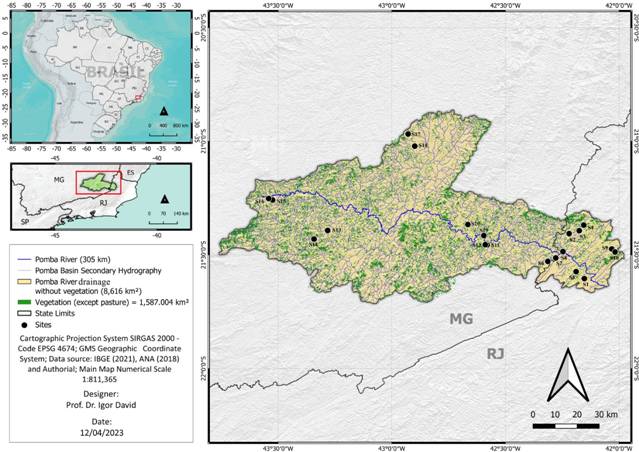
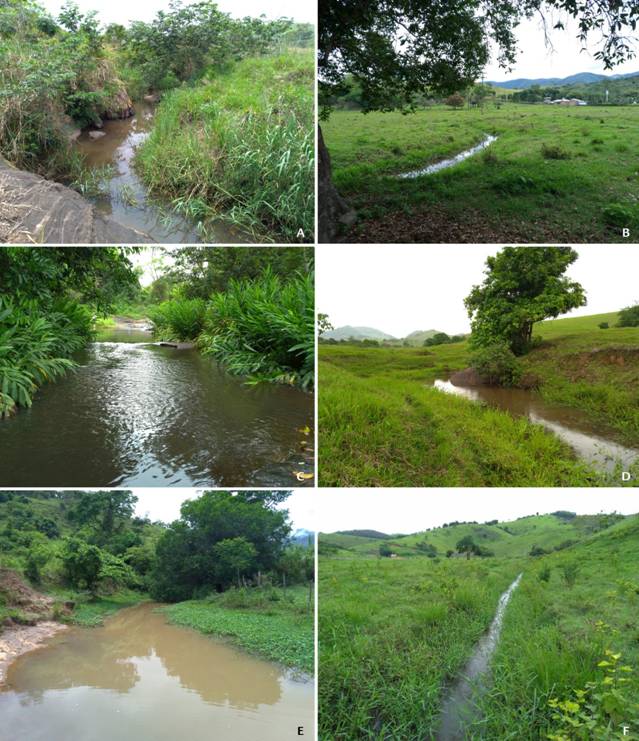
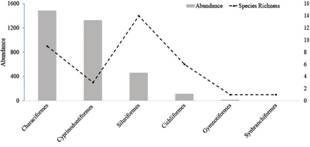
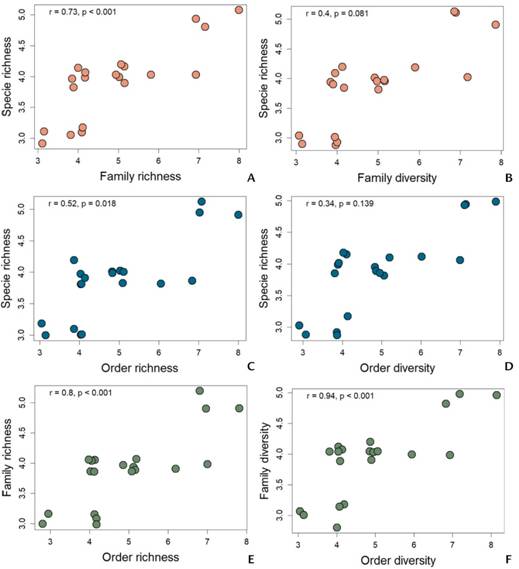
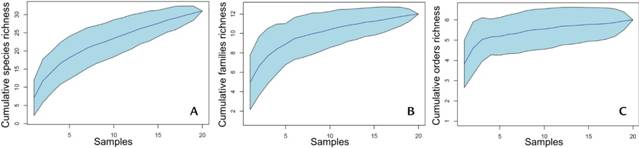
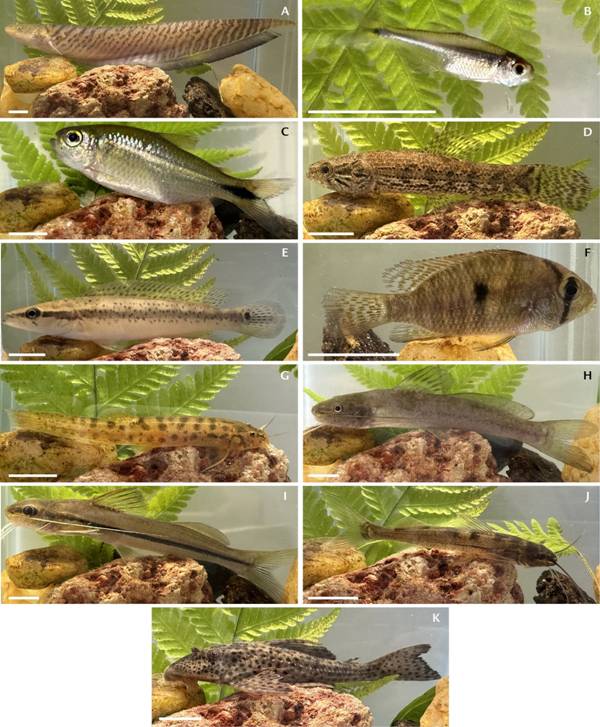
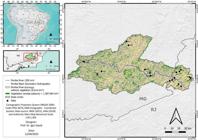
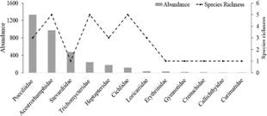
This study characterizes the ichthyofauna of the Pomba River drainage, a tributary of the Paraíba do Sul River basin in southeastern Brazil. Sampling was conducted in 20 streams during the dry season (July 2018 and July 2022) utilizing electrofishing equipment for 60 minutes at each site. A total of 3,411 specimens were collected, representing six orders, 13 families, 27 genera, and 31 species. Poecilia reticulata Peters, 1859, Deuterodon intermedius (Eigenmann, 1908), and Bryconamericus ornaticeps Bizerril & Perez-Neto, 1995 were the most abundant species. Correlations of taxonomic richness and diversity between hierarchical levels were positive. Although the region remains poorly surveyed and is heavily impacted by deforestation, industrial and energy enterprises, and other anthropogenic pressures, strong correlations between family and species richness and between family and order diversity suggest that higher taxa effectively reflect key aspects of assemblage structure owing to high trait conservatism. Such strong correlations suggest that families are functionally cohesive and ecologically distinct from one another, supporting their utility as surrogates in biodiversity assessments, particularly when comprehensive taxonomic revisions are lacking or rapid ecological assessments are conducted by non-taxonomists.
KEYWORDS:
Atlantic Forest; conservation; environmental filtering; electrofishing; higher-taxon approach
 Thumbnail
 Thumbnail
 Thumbnail
 Thumbnail
 Thumbnail
 Thumbnail
 Thumbnail
 Thumbnail
 Thumbnail
 Thumbnail
 Thumbnail