 Educational technologies used in the care of sexually transmitted infections: a scoping review
Abstract
Objective To map and describe the educational technologies used in the care of people with sexually transmitted infections.
Methods A scoping review was conducted in accordance with JBI recommendations. The search was carried out between July and August 2023 in the MEDLINE, Web of Science, Scopus, LILACS, Virtual Health Library databases, as well as an electronic repository and grey literature sources. Studies were included without restriction as to methodological design, language, or publication date. Study selection was conducted by two reviewers in a blinded and independent manner using Rayyan software. Data analysis was performed using descriptive statistics.
Results Twenty-seven studies were included (24 articles and three grey sources), with the highest number published in 2020 (6; 22.2%), and had a methodological study design (10; 37.03%). Most interventions focused on the development of games, serious games, or guidance in computer software or mobile applications (13; 48.2%), followed by board games, printed materials, videos, blogs, and podcasts.
Conclusion Various educational technologies were identified, primarily aimed at adolescents and young people, promoting innovative and diverse approaches to sexually transmitted infection prevention and management.
Keywords
Educational technology; Experimental games; Games and toys; Sexually transmitted infections
Resumo
Objetivo Mapear e descrever as tecnologias educacionais utilizadas no cuidado às pessoas com infecções sexualmente transmissíveis.
Métodos Revisão de escopo conduzida em conformidade com as recomendações do Joanna Briggs Institute. A busca foi realizada entre julho e agosto de 2023 nas bases de dados Medline, Web of Science, Scopus, LILACS, Biblioteca Virtual da Saúde, além de um repositório eletrônico e fontes de literatura cinzenta. Foram incluídos estudos sem restrição quanto ao delineamento metodológico, idioma ou data de publicação. A seleção dos estudos foi conduzida por dois revisores, de forma cega e independente, utilizando o software Rayyan. A análise dos dados foi realizada por meio de estatística descritiva.
Resultados Incluíram-se 27 estudos (24 artigos e três fontes cinzentas), com maior publicação em 2020 (6; 22,2%), e tiveram como desenho o estudo metodológico (10; 37,03%). A maioria das intervenções se concentrou no desenvolvimento de jogos, serious games ou orientações em softwares para computadores ou aplicativos móveis (13; 48,2%), seguidas por jogos de tabuleiro, materiais impressos, vídeos, blogs e podcasts.
Conclusão Identificaram-se variadas tecnologias educacionais voltadas, principalmente, a adolescentes e jovens, promovendo abordagens inovadoras e diversificadas para prevenção e manejo das infecções sexualmente transmissíveis. Open Science Framework: https://doi.org/10.17605/OSF.IO/EWQYD
Descritores
Tecnologia educacional; Jogos experimentais; Jogos e brinquedos; Infecções sexualmente transmissíveis
Resumen
Objetivo Mapear y describir las tecnologías educativas utilizadas en la atención a personas con infecciones de transmisión sexual.
Métodos Revisión de alcance realizada de acuerdo con las recomendaciones del Joanna Briggs Institute. La búsqueda se llevó a cabo entre julio y agosto de 2023 en las bases de datos Medline, Web of Science, Scopus, LILACS, Biblioteca Virtual de la Salud, además de un repositorio electrónico y fuentes de literatura gris. Se incluyeron estudios sin restricciones en cuanto al diseño metodológico, al idioma y a la fecha de publicación. La selección de los estudios fue realizada por dos revisores, de forma ciega e independiente, utilizando el software Rayyan. El análisis de los datos se realizó mediante estadística descriptiva.
Resultados Se incluyeron 27 estudios (24 artículos y tres fuentes grises), con mayor publicación en 2020 (6; 22,2 %), y diseño de estudio metodológico (10; 37,03 %). La mayoría de las intervenciones se centró en el desarrollo de juegos, juegos serios u orientaciones en software para computadoras o aplicaciones móviles (13; 48,2 %), seguidos de juegos de mesa, material impreso, videos, blogs y pódcast.
Conclusión Se identificaron diversas tecnologías educativas dirigidas principalmente a adolescentes y jóvenes, que promueven enfoques innovadores y diversificados para la prevención y el manejo de las infecciones de transmisión sexual.
Descriptores
Tecnología educativa; Juegos experimentales; Juegos y juguetes; Infecciones de transmisión sexual
Introduction
Sexually transmitted infections (STIs) are among the most frequent causes of disease in the world. Every day, there are more than 1 million new cases of STIs among the population aged 15 to 49,(1)which equates to 376 million new cases annually, including chlamydia, gonorrhea, trichomoniasis, syphilis, and HIV.(2)Considered a public health concern, STIs are generally associated with serious health and life consequences for individuals. Therefore, the World Health Organization (WHO) has established priority actions to achieve the goal of ending STIs by 2030.(3)
STIs are caused by viruses, bacteria, and other microorganisms transmitted through contact of mucous membranes or skin with contaminated bodily fluids, such as through unprotected sex with an infected person. Transmission can also occur from mother to child during pregnancy, childbirth, or breastfeeding.(4) The term “at-risk population” refers to all sexually active individuals, i.e., adolescents, young people, and adults of all genders and races, considering the mean age of sexual initiation in the Brazilian population to be 17 years.(5)
The WHO develops global goals, norms, and standards for STI prevention, testing, and treatment. Its mission is to support countries in developing strategic plans and guidelines, including the creation of care environments that enable individuals to talk and discuss STIs.(3)
Healthcare encompasses welcoming, listening, understanding, and respecting individuals’ social context. In this regard, health education initiatives developed through dialogue between professionals and the target audience, with the aid of technology, facilitate the construction and reconstruction of collective knowledge.(6)
Educational technologies can be used as a health education strategy in the teaching-learning process, but they do not eliminate the need for in-person guidance and practices conducted by healthcare professionals.(7,8)Educational technologies represent a systematic body of scientific knowledge that helps to plan, execute, control, and monitor the formal or informal educational process.(6,8) Furthermore, horizontal care, in which professionals include individuals in the process, considering the context and needs of those involved, can encourage changes in individual behavior, which can significantly impact the development of healthy habits and lifestyles.(9)
To date, no scoping or systematic reviews on the topic have been found, either available or in progress, in the Medical Literature Analysis and Retrieval System Online (MEDLINE), Latin American and Caribbean Literature in Health Sciences (LILACS), JBI, Cochrane, or Open Science Framework databases. Only one review protocol focused on STI prevention in adolescents was identified in the Universidade Federal de Pernambuco repository, but it is unavailable for access.
Given this setting, and considering the relevance of the topic, a scoping review that identifies technologies used in the care of STIs for adolescents, young people, adults, and older adults, of all genders, sexual orientations, and race/color, can be used to support best practices and the use of technologies in the health education process, as well as to identify gaps on the subject, fostering the creation and validity of new technologies. Therefore, this review aimed to map and describe the educational technologies used in the care of people with STIs.
Methods
This is a synthesis of evidence, a scoping review developed following the JBI guidelines and structured according to the Preferred Reporting Items for Systematic Reviews for Scoping Reviews (PRISMA-ScR). This type of review is conducted when the objective is to provide a broader view or map available evidence and knowledge, enabling, in the field of health, the identification of knowledge gaps, the clarification of key concepts, and a report on the types of evidence and their practical applications.(10)
The protocol for this review was registered in the Open Science Framework (https://doi.org/10.17605/OSF.IO/EWQYD).
The research questions and eligibility criteria were defined according to the mnemonic suggested by the JBI: Population (P) - Adolescents, young people, adults, and older adults of all genders, sexual orientations, and race/color; Concept (C) - Educational technologies used in STI care; and Context (C) - Any setting in Brazil of the intended review. It is believed that, due to the vast number of existing technological products, there is a dimension of educational technologies, including those applied in different contexts, that extends beyond the health sector, such as in schools and educational institutions. Therefore, the following questions were used: What types of educational technologies are used in STI care with adolescents, young people, adults, and older adults of all genders, sexual orientations, and races/colors? How are different educational technologies used in STI care with adolescents, young people, adults, and older adults of all genders, sexual orientations, and races/colors?
Studies in Portuguese, English, and Spanish, without temporal limitations or design restrictions, that addressed the variables of the acronym PCC (Population, Concept, and Context), involving adolescents, young people, adults, and older adults of all genders, sexual identities, and races, were included. Studies on educational technologies applied to the care of STIs in any setting in Brazil were also considered. Research that addressed educational technologies focused exclusively on professional training was excluded.
The search for studies took place in three stages, from July to August 2023, as indicated by JBI. Initially, with the help of a librarian experienced in health sciences and review studies, the Health Sciences Descriptors (DeCS)/Medical Subject Headings (MeSH), keywords, and selection of search sources were defined. To this end, a preliminary search was conducted in the MEDLINE database, via the US National Library of Medicine National Institutes of Health (PubMed), and LILACS, via the Virtual Health Library (VHL), to analyze the words used in articles’ titles and abstracts, and thus define the descriptors and combine the search strategy using the Boolean operators OR and AND.
Subsequently, search commands were developed using retrieved words and descriptors from controlled vocabularies (MeSH, DeCS), including synonyms and relevant keywords. New searches were conducted in the MEDLINE database via PubMed, Scopus, LILACS, and Web of Science. A search was also conducted in grey literature from sources such as the WHO, Pan American Health Organization (PAHO), Ministry of Health (MoH), and Biblioteca Digital Brasileira de Teses e Dissertações (BDTD), with specific strategies for each database (Chart 1).
Finally, in the third stage, the references of the articles selected for full-text reading were searched as additional sources, in order to identify relevant studies that met the selection criteria and that had not been reached by the electronic search of the sources.
All materials and articles identified in the searches were grouped and exported to the EndNote Web reference manager, where duplicate publications were identified and considered only once. Subsequently, the articles were exported to the Rayyan program, and two independent reviewers analyzed the titles and abstracts to select articles for full-text reading. The Rayyan program was used because it allows for blinding of the researchers who independently selected the studies, and any discrepancies were weighed by a third researcher. The selection results were presented using the PRISMA-ScR flowchart.(10)
The data from the studies included in the scoping review were extracted by the two researchers using an instrument organized from the template provided by JBI containing the following information: title; authors and year; country; objective; population; context; study design; technology used; approach used; main results.
For data analysis, descriptive statistics with absolute and relative frequency were used, and the findings were presented in charts/tables. The data were analyzed inductively and organized according to the type of technology developed. Thus, they were categorized into computer games/applications, board games, printed materials, and videos/blogs/podcasts.
Since this was a review study, it was not necessary to submit the project to the Research Ethics Committee. However, ethical principles in research and the copyright of the sources were respected.
Results
The final search identified 594 citations, with 143 in VHL, 33 in PubMed, 84 in Scopus, 149 in Web of Science, 35 in LILACS, and 150 on the PAHO/WHO/MoH and the BDTD websites. Of these, 529 were found to be duplicates and were removed, and 65 abstracts remained for analysis. Of these, 25 were excluded because they did not meet the objective of the review. Of the 40 materials that continued for analysis, 11 were excluded for not answering the guiding questions, and two articles were related to healthcare professional education. In the end, 27 documents remained to comprise the review.(9,11-36)Figure 1 describes the search flowchart and study selection process.

Most of the selected studies were published in 2020(18-23) (6; 22.2%), and had a methodological study design (10; 37.03%),(12,15,16,18,22,24,26,27,30,37) as shown in Chart 2. The educational technologies that emerged from the studies were applied in different contexts, such as educational institutions,(28,36) outpatient clinics,(30) hospitals, health units, prison units, both in person and online. Furthermore, they primarily included adolescent and young adult populations. (12,14-18, 21, 23,24, 26, 28, 30,31, 33,34, 36,37)
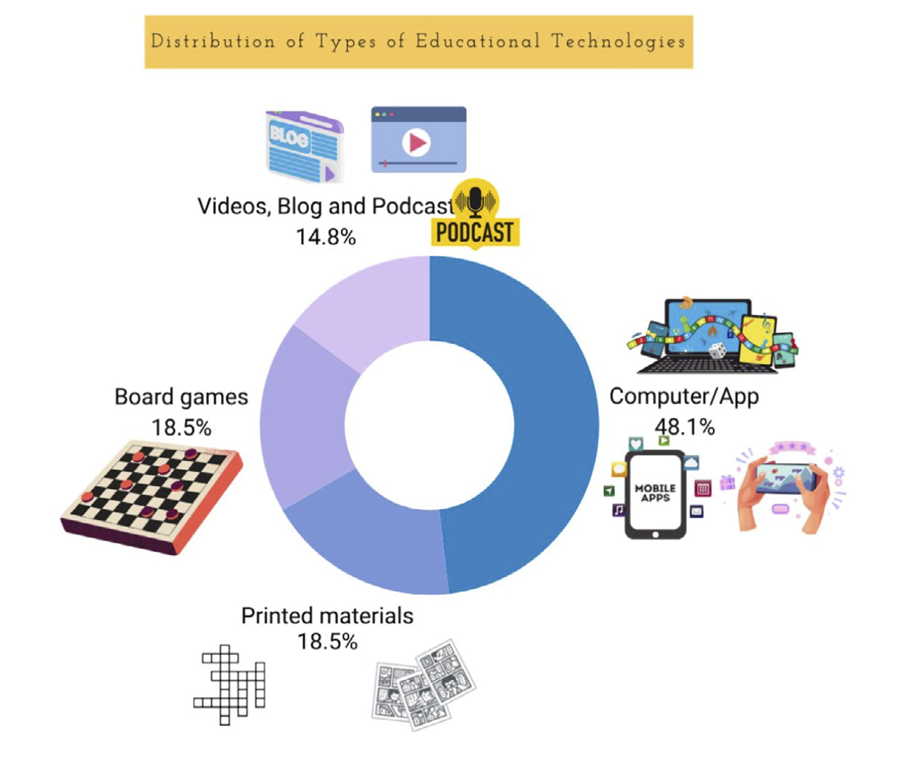
When mapping the results, different types of educational technologies emerged. Among them, 13 (48.1%) studies(12,15,17,18,19,21,24,25,26,27,29,32,34) developed virtual games, video games, serious games, or guidance in software for computers or mobile applications; five (18.5%)(11,23,30,33,35) used board games; five (18.5%) studies developed printed materials such as booklets(9,13,22), comic book(36) and manual games(14); and the others used technologies such as educational videos (7.4%)(20,28), blog (3.7%)(31) and podcast (3.7%)(16) (Figure 2).

Discussion
In the computer games/applications category, it was observed that cell phones, tablets, and computers expanded the possibilities for the use of different educational technologies, and also increased the scope, approach, and contexts of application, providing a broad space for discussion and access to topics on sexuality and STIs.(12,15,17-19,25)
Virtual games, mobile apps, and computer programs were the technologies most highlighted in this review, attracting the new generation with interactive storylines about sexuality and STIs.(24-27) The game SAAFE, for instance, offers seven missions in a virtual reality environment where players interact with characters to complete educational objectives. Each mission addresses a specific theme, promoting engaging learning.(21)
The Girl Talk app, in a study conducted with female adolescents aged 12 to 17, provided content such as anatomy and physiology, mental and physical health, pregnancy prevention, sexuality and relationships, and STI prevention.(29)
Regarding the gaming experience, a randomized controlled trial investigated the positive effect of serious video games on influencing adolescents’ attitudes, intentions, knowledge, and self-confidence regarding HIV testing and counseling. This study points to the potential to increase HIV testing rates among young people, and suggests that video games can be an effective tool in HIV prevention.(37)
However, as discussed in an editorial, the availability of computing devices, such as smartphones, tablets, and desktop computers, and internet connectivity, while growing, is not widespread or accessible.(38)
In the board game category, these games were found to be effective in health education, especially in groups with facilitators.(35) A study using dominoes revealed greater knowledge among participants about cells, reproductive organs, prevention of STIs/HIV/AIDS, and unplanned pregnancy. However, difficulties were reported regarding the understanding of terms such as “susceptible” and “symptomatology”, and the use of pieces related to HPV and congenital syphilis. Board games encourage collective discussion, reflection, and clarification of doubts, filling gaps in knowledge about sexuality and STIs.(30,33,35)
Furthermore, results demonstrated a significant increase in knowledge among incarcerated women, with retention of learning about prevention and risk behaviors related to STIs.(11) These studies highlight the usefulness of educational technologies in assisting educators and healthcare professionals in teaching and discussing sexuality, demonstrating their effectiveness in diverse contexts and with different audiences.(23)
In the category of technologies in printed materials, such as booklets, comic books, serial albums, and almanacs, it was found that they enabled continued care by allowing individuals to take the information home.(9,13,14,22,36) In this way, such technologies favor the health education process because they have a simple, illustrative, and accessible approach.(39) These tools constitute an essential resource for those who lack access to the internet, cell phones, and computers. Therefore, they are widely developed and disseminated as means of providing health guidance on various topics, such as creating a booklet for fall prevention in hospitals,(40) serial album for pressure injury prevention,(41) almanac of emotions for children and adolescents, among others.(42)
Conducting health education activities using tools that facilitate this communication process contributes to individuals’ autonomy. The involvement and participation of the target audience of these technologies in their development and application allows for greater inclusion and adaptability to their needs.(43)
Establishing an effective dialogue with young people about the essential means and precautions to prevent STIs is crucial. After all, lack of knowledge has been identified as one of the risk factors for the increase in HIV cases among young people.(44,45) In this regard, there is a need to work on changing the behavior of the population, especially the so-called “at-risk populations”, by building and implementing activities that communicate with these individuals and are effective in promoting change.
In the videos/blog/podcast category, the educational video about male condoms, created for both deaf and hearing people, for instance, allowed for effective communication and inclusion of a vulnerable population.(28)
Educational videos using a multimedia projection approach and different methods addressed STIs, presenting relevant information and clarifying frequently asked questions. A study used the “Draw My Life” video style, which, with just one character, tells a short story in an illustrative and fun way, changing settings, backgrounds, adding objects, and actions.(46) Videos also function as tools for inclusion when developed to meet the needs and specificities of a particular audience.
There has been an increased emphasis on exploring new approaches in developing effective interventions and messages. This includes integrating co-production methods with experimental, quasi-experimental, and real-world assessments. In response, a co-design study was conducted to create motivational films aimed at encouraging parents to protect their adolescent children. The intention is to highlight the benefits of cancer prevention by offering accurate and compelling information about the human papillomavirus (HPV) vaccine safety. Furthermore, the importance of administering the vaccine at the recommended age is emphasized, while communicating the universality and common nature of HPV infection.(47)
Podcasts are gaining relevance among new technologies because they are direct, conversational, and simplified. This online audio resource was produced with the participation of adolescents. Most participants said they were familiar with STIs/HIV/AIDS (90%), HPV (75%), herpes (61.7%), and syphilis (61.7%), but there were no satisfactory levels of knowledge regarding HIV testing and sexuality counseling at school. Furthermore, the topics of first sexual intercourse and sexual practices, the relationship between alcohol consumption and perception of sexual behaviors, pregnancy resulting from unprotected penetrative sex, and HIV transmission showed a moderate level of understanding.(16)
The studies considered in this scoping review used approaches in varied social contexts and, by employing technologies and games, played an important role in the effectiveness of interventions related to STIs, promoting the expansion and retention of knowledge conveyed by these technologies. These different educational technologies were used to disseminate information and train their target audience regarding STIs. Most addressed prevention methods, transmission, signs and symptoms, vaccines, treatments, and personal care, as well as the use of male and female condoms and health risks. The translation of evidence-based information was facilitated by healthcare professionals or students who, with the aid of technology, fostered debate and mediated reflection among individuals about STIs to facilitate learning for the target audience.(48,49)
Limitations of this research include the different types of study designs found in the literature regarding the creation, validation, and/or application of technologies. As a result, each study describes the approach and functionality of the product differently, sometimes limiting the interpretation of the true purpose of a given technology. A variety of technological applications related to STIs were also found, some of which are teaching tools intended for professional training and were therefore excluded from this review.
It is important to highlight that, in terms of knowledge gaps, studies addressing educational technologies with older adults are scarce, based on the findings of this scoping review. Therefore, further in-depth scientific studies that include an assessment of the use of various educational technologies for this target audience are necessary, as adapting technologies to different social contexts is paramount, as is tailoring approaches to the needs of each reality. It also became evident that technologies such as educational chatbots, simulations, storytelling, quizzes, and personalized artificial intelligence were not found in the literature and would require further study before being fully developed.
Conclusion
The study identified different types of educational technologies that addressed the topic of STIs and developed: 13 virtual games, serious games, or guidance in computer software or mobile applications; five board games; five printed materials, such as word searches, educational comics, and booklets; two educational videos; a blog; and a podcast. The educational technologies were used to disseminate information and train their target audience regarding STIs, addressing prevention methods, transmission, signs and symptoms, vaccines, treatments, and personal care, the use of male and female condoms, and health risks.
The translation of information was facilitated by healthcare professionals or students who, with the aid of technology, fostered debate and mediated reflection among individuals about STIs to facilitate learning for the target audience.
Various educational technologies were employed to address STIs in different groups: with adolescents, apps, virtual games, board games, blogs, educational comics, podcasts, and word searches were used. For young people, app games were used. For adults of all genders, manual games and booklets were used. For deaf individuals and listeners, educational videos were used. In the case of incarcerated women, printed materials and board games were used. And for homosexual, cisgender, and transgender individuals, serious games and a mobile app were used.
Educational technologies mediated the care and health education process carried out by the healthcare professionals involved, enabling a more welcoming approach of listening, understanding, and respect for individuals. These technologies assisted in the construction and reconstruction of collective knowledge, expanding the health literacy of the population that used the technologies.
Acknowledgments
This study was supported by the Fundação de Amparo à Pesquisa do Estado do Espírito Santo (FAPES), case 2022-57157.
References
-
1 Organização Panamericana de Saúde (OPAS). A cada dia, há 1 milhão de novos casos de infecções sexualmente transmissíveis curáveis. OPAS; 2019 [citado 2024 Abr 12] Disponível em: https://www.paho.org/pt/noticias/6-6-2019-cada-dia-ha-1-milhao-novos-casos-infeccoes-sexualmente-transmissiveis-curaveis
» https://www.paho.org/pt/noticias/6-6-2019-cada-dia-ha-1-milhao-novos-casos-infeccoes-sexualmente-transmissiveis-curaveis -
2 World Health Organization (WHO). Progress report on HIV, viral hepatitis, and sexually transmitted infections, 2019. Geneva: WHO; 2019 [citado 2024 Jul 4] Disponível em: file:///C:/Users/fonto/Downloads/WHO-CDS-HIV-19.7-eng.pdf
» file:///C:/Users/fonto/Downloads/WHO-CDS-HIV-19.7-eng.pdf -
3 Organização Mundial da Saúde (OMS). Global health sector strategies on, respectively, HIV, viral hepatitis, and sexually transmitted infections for the period 2022-2030. OMS; 2022 [cited 2024 Apr 12]. Disponível em: https://www.who.int/publications/i/item/9789240053779
» https://www.who.int/publications/i/item/9789240053779 - 4 Brasil. Ministério da Saúde. Protocolo Clínico e Diretrizes Terapêuticas para Atenção Integral às Pessoas com Infecções Sexualmente Transmissíveis - IST. Brasília (DF): Ministério da Saúde; 2022.
- 5 Felisbino-Mendes MS, Araújo FG, Oliveira LVA, Vasconcelos NM, Vieira ML, Malta DC. Sexual behaviors and condom use in the Brazilian population: analysis of the National Health Survey, 2019. Rev Bras Epidemiol. 2021;24(Suppl 2): e210018.
- 6 Silva NV, Pontes CM, Sousa NF, Vasconcelos MG. Tecnologias em saúde e suas contribuições para a promoção do aleitamento materno: revisão integrativa da literatura. Ciênc Saúde Coletiva. 2019;24(2):589-602.
- 7 Cascalheira CJ, Pugh TH, Hong C, Birkett M, Macapagal K, Holloway IW. Developing technology-based interventions for infectious diseases: ethical considerations for young sexual and gender minority people. Front Reprod Health. 2023;5:1303218.
- 8 Minarini GP, Primo CC, Muri LA, Souto JS, Resende FZ, Brandão MA. Desenvolvimento de tecnologias digitais para o apoio ao processo de enfermagem com ênfase na saúde materna e neonatal. In: Associação Brasileira de Enfermagem, Associação Brasileira de Obstetrizes e Enfermeiros Obstetras; Morais SC, Souza KV, Duarte ED, organizadores. PROENF Programa de Atualização em Enfermagem: Saúde Materna e Neonatal: Ciclo 14. Porto Alegre: Artmed Panamericana; 2023. p. 9-28.
- 9 Carvalho IS, Guedes TG, Bezerra SM, Alves FA, Leal LP, Linhares FM. Educational technologies on sexually transmitted infections for incarcerated women. Rev Lat Am Enfermagem. 2020;28:e3392.
-
10 Aromataris E, Munn Z. JBI manual for evidence synthesis. Adelaide, Australia: Joanna Briggs Institute; 2020 [cited 2024 Apr 12]. Available from: https://jbi-global-wiki.refined.site/space/MANUAL
» https://jbi-global-wiki.refined.site/space/MANUAL - 11 da Silva Carvalho I, Mendes RC, de Souza Soares Lima LH, da Silva GP, de Freitas Gonçalves Lima M, et al. Effect of a board game on imprisoned women's knowledge about sexually transmitted infections: a quasi-experimental study. BMC Public Health. 2023;23(1):690.
- 12 Maciel NS, Ferreira DS, Oliveira AW, Santos MP, Da Costa CC, de Sousa LB. Aplicativo móvel sobre sífilis para adolescentes: validação de aparência e conteúdo. Enferm Global. 2023;22(1):499-534.
- 13 Lima MA, Cunha GH, Lopes MV, Fontenele MS, Siqueira LR, Ramalho AK, et al. Cartilha para estilo de vida saudável em pessoas com HIV: ensaio clínico. Acta Paul Enferm. 2023;36:eAPE03101.
- 14 Infante Rivera LJ, Armada Pacheco JM, Baldeón-Tovar MT, Medina-Pelaiza LE, Tasa Catanzaro ME. Intervención lúdica para la prevención de enfermedades de transmisión sexual. BMSA. 2022;62(5):1086-92.
- 15 Maciel MP, Costa LM, Sousa KH, Oliveira AD, Amorim FC, Moura LK, et al. Construção e validação de jogo educativo sobre a infecção pelo papilomavírus humano. Acta Paul Enferm. 2022;35:eAPE03012.
- 16 Leite PL, Torres FA, Pereira LM, Bezerra AM, Machado LD, Silva MR. Construção e validação de podcast para educação em saúde sexual e reprodutiva de adolescentes. Rev Lat Am Enfermagem. 2022;30(Spe):e3706.
- 17 Cherobini MD. Educação em saúde sexual de adolescentes escolares mediada por jogos digitais [tese]. Santa Maria: Universidade Franciscana; 2021.
- 18 Rocha KA. Tecnologias educacionais para a promoção do autocuidado de adolescentes escolares sobre as infecções sexualmente transmissíveis [tese]. Recife: Universidade Federal de Pernambuco; 2020.
- 19 Chandler R, Hernandez N, Guillaume D, Grandoit S, Branch-Ellis D, Lightfoot M. A community-engaged approach to creating a mobile hiv prevention app for black women: focus group study to determine preferences via prototype demos. JMIR Mhealth Uhealth. 2020;8(7):e18437.
- 20 Leite SD. Aprendizado de surdos e ouvintes portugueses sobre preservativo masculino após utilização de vídeo educativo. Fortaleza: Universidade Federal do Ceará, doutorado em enfermagem; 2020.
- 21 Patchen L, Ellis L, Ma TX, Ott C, Chang KH, Araya B, et al. Engaging African American youth in the development of a serious mobile game for sexual health education: mixed methods study. JMIR Serious Games. 2020;8(1):e16254.
- 22 Costa CC, Gomes LF, Teles LM, Mendes IC, Oriá MO, Damascen AK. Construção e validação de uma tecnologia educacional para prevenção da sífilis congênita. Acta Paul Enferm. 2020;33:eAPE20190028.
-
23 Praxedes ML, Queiroz MV, Vieira RP. Efetividade de jogo educativo sobre contracepção com adolescentes escolares: estudo quase-experimental. On-line Braz J Nurs. 2020;18(4). Disponível em: http://www.objnursing.uff.br/index.php/nursing/article/view/6184
» http://www.objnursing.uff.br/index.php/nursing/article/view/6184 - 24 Ruiz-López T, Sen S, Jakobsen E, Tropé A, Castle PE, Hansen BT, et al. FightHPV: Design and evaluation of a mobile game to raise awareness about human papillomavirus and nudge people to take action against cervical cancer. JMIR Serious Games. 2019;7(2):e8540.
- 25 Sullivan PS, Zahn RJ, Wiatrek S, Chandler CJ, Hirshfield S, Stephenson R, et al. HIV prevention via mobile messaging for men who have sex with men (M-Cubed): Protocol for a randomized controlled trial. JMIR Res Protoc. 2019;8(11):e16439.
-
26 Tamashiro LM. Desenvolvimento de tecnologia educacional digital sobre prática sexual segura e contracepção com adolescentes [tese]. [Ribeirão Preto: Universidade de São Paulo; 2020 [citado 2023 Dez 22]. Disponível em: https://www.teses.usp.br/teses/disponiveis/22/22133/tde-07072020-152142/
» https://www.teses.usp.br/teses/disponiveis/22/22133/tde-07072020-152142/ - 27 Hemingway C, Baja ES, Dalmacion GV, Medina PMB, Guevara EG, Sy TR, et al. Development of a mobile game to influence behavior determinants of hiv service uptake among key populations in the philippines: user-centered design process. JMIR Serious Games. 2019;7(4):e13695. DOI:
- 28 Leite SD. Aprendizado de surdos e ouvintes portugueses sobre preservativo masculino após utilização de vídeo educativo [tese]. Fortaleza: Universidade Federal do Ceará; 2020.
- 29 Brayboy LM, Sepolen A, Mezoian T, Schultz L, Landgren-Mills BS, Spencer N, et al. Girl Talk: A smartphone application to teach sexual health education to adolescent girls. J Ped Adolesc Gynecol. 2017;30(1):23-8.
- 30 Scopacasa LF. Validação de jogo educativo para construção do conhecimento de adolescentes acerca da prevenção de DST/AID [tese]. Fortaleza: Universidade Federal do Ceará; 2013.
- 31 Valli GP, Cogo AL. Blogs escolares sobre sexualidade: estudo exploratório documental. Rev Gaúcha Enferm. 2013;34(3):31-7.
- 32 DiClemente RJ, Bradley E, Davis TL, Brown JL, Ukuku M, Sales JM, et al. Adoption and implementation of a computer-delivered HIV/STD risk-reduction intervention for African American adolescent females seeking services at county health departments: implementation optimization is urgently needed. J Acquir Immune Defic Syndr. 2013;63 Suppl 1(1):S66-71.
- 33 Wanyama JN, Castelnuovo B, Robertson G, Newell K, Sempa JB, Kambugu A, et al. A randomized controlled trial to evaluate the effectiveness of a board game on patients' knowledge uptake of HIV and Sexually Transmitted Diseases at the Infectious Diseases Institute, Kampala, Uganda. J Acquir Immune Def Synd. 2012;59(3):253-8.
- 34 Noar SM, Webb EM, Van Stee SK, Redding CA, Feist-Price S, Crosby R, et al. Using computer technology for HIV prevention among African Americans: development of a tailored information program for safer sex (TIPSS). Health Educ Res. 2011;26(3):393-406.
- 35 Barbosa SM, Dias FL, Pinheiro AK, Pinheiro PN, Vieira NF. Jogo educativo como estratégia de educação em saúde para adolescentes na prevenção às DST/AIDS. Rev Eletr Enferm. 2010;12(2):337-41.
- 36 De Oliveira MI. Construção e validação de gibi educacional sobre saúde sexual e reprodutiva de adolescentes escolares [tese]. Fortaleza: Universidade Federal de Pernambuco; 2018.
- 37 Boomer TP, Larkin K, Duncan LR, Fernandes CF, Fiellin LE. A Serious Video Game Targeting HIV Testing and Counseling: A Randomized Controlled Trial. J Adolesc Health. 2024;74(2):252-9.
- 38 Tebb K. Leveraging serious video games to transform HIV prevention and care for adolescents and young adults: The case for PlayTest! J Adolesc Health. 2024;74(2):220-2.
- 39 Fontenele MS, Cunha GH, Lopes MV, Siqueira LR, Lima MA, Moreira LA. Development and evaluation of a booklet to promote ealthy lifestyle in people with HIV. Rev Bras Enferm. 2021;74(Suppl 5):e20200113.
- 40 Ximenes MA, Fontenele NÂ, Bastos IB, Macêdo TS, Galindo Neto NM, Caetano JÁ, et al. Construção e validação de conteúdo de cartilha educativa para prevenção de quedas no hospital. Acta Paul Enferm.2019;32(4):433-41.
- 41 Fontenele NÂ, Ximenes MA, Brandão MG, Fernandes CD, Galindo Neto NM, Carvalho RE, Barros LM. Creation and validation of a serial album for the prevention of pressure ulcer: a methodological study. Rev Bras Enferm. 2021;74(3):e20201060.
- 42 Gouget DT, Bastos JD. Almanaque das emoções para crianças e adolescentes, em época de pandemia. Saúde Debate. 2022;46(Spe 5):310-24.
- 43 Pereira LM, Leite PL, Torres FA, Bezerra AD, Vieira CM, Machado LD, et al. Tecnologias educacionais para promoção da saúde de adolescentes. Rev Enferm UFPE Online. 2021;15(1):1-17.
- 44 Lima MS de Raniere JC, Paes C, Gonçalves LH, Cunha CL, Ferreira GR, et al. The association between knowledge about HIV and risk factors in young Amazon people. Rev Bras Enferm. 2020;73(5):e20190453.
- 45 Mesquita J, Fernandes da Costa MI, Luna IT, Silva AA, Pinheiro PN. Fatores de risco e de proteção entre adolescentes em relação às DST/HIV/AIDS. Rev Enferm UFPE Online. 2017;11(3):1227-33.
- 46 Calcavecchia C. Vídeo para prevenção do contágio de infecções por HPV em adolescentes [tese] Rio de Janeiro: Universidade Federal do Rio de Janeiro; 2018.
- 47 Fisher H, Denford S, Chantler T, Audrey S, Finn A, Hajinur H, Hickman M, Mounier-Jack S, Roderick M, Tucker L, Yates J, Mohamed A. Developing films to support vaccine-hesitant, ethnically diverse parents' decision-making about the human papillomavirus (HPV) vaccine: a codesign study. BMJ Open. 2024;14(9):e079539.
- 48 Araújo KC, Souza AC de, Silva AD da Weis AH. Tecnologias educacionais para abordagens de saúde com adolescentes: revisão integrativa. Acta Paul Enferm. 2022;35:eAPE003682.
- 49 Silveira MS, Cogo AL. Contribuições das tecnologias educacionais digitais no ensino de habilidades de enfermagem: revisão integrativa. Rev Gaúcha Enferm. 2017;38(2):e66204.
-
Data availability:
The survey data are available in the article.
Edited by
-
Associate Editor:
Rafaela Gessner Lourenço (https://orcid.org/0000-0002-3855-0003) Universidade Federal do Paraná, Curitiba, PR, Brasil
The survey data are available in the article.