
 LOCAL AND SUPRALOCAL NORMS IN IN THE PROCESS OF LINGUISTIC (RE)ACCOMMODATION IN RETURN MIGRATION
ABSTRACT
This study analyzes the effects of returning to Alagoas on the preservation or abandonment of São Paulo dialectal variants by Alagoans who previously lived in the state of São Paulo. To this end, it investigates correlations between social factors and three dialect–distinguishing variables: (i) medial coda /R/ (‘po[ɻ,ɾ,h]ta’); (ii) medial coda /S/ (‘pa[s,ʃ]ta’); and (iii) /t, d/ before [i] (‘[dʒ,d]ia’), based on recordings of 32 Alagoan speakers. The analysis, grounded in the theoretical and methodological framework of Variationist Sociolinguistics (Labov, 1978 [1972]) and in literature on dialect contact (Trudgill, 1986; Chambers, 1992) and norms (Milroy, 2002), shows that São Paulo variants persist after return migration to Alagoas and display distinct dynamics in terms of social recognition, frequency of use, and normative values. Style was the only variable correlated with all three sociolinguistic variables: the reading context disfavors the São Paulo variant of (R) and favors the São Paulo variants of (S) and (TD). These findings suggest that return migrants orient themselves toward supralocal norms in more monitored speech styles – a reflection of their multidialectal experience – unlike non–migrants, who tend to orient toward local norms.
Dialect contact; Return migration; Dialect accommodation; Alagoas; São Paulo
RESUMO
Esta pesquisa analisa os efeitos do retorno a Alagoas na preservação ou abandono de variantes paulistas por alagoanos que residiram no estado de São Paulo. Para tanto, investigam-se correlações entre fatores sociais e três variáveis diferenciadoras de dialetos – (i) /R/ em coda medial (‘po[ɻ,ɾ,h]ta’); (ii) /S/ em coda medial (‘pa[s,ʃ]ta’); e (iii) /t, d/ diante de [i] (‘[dʒ,d]ia’) – em gravações com 32 alagoanos. As análises, com base nos pressupostos teórico-metodológicos da Sociolinguística Variacionista (Labov, 2008) e na literatura sobre contato dialetal (Trudgill, 1986; Chambers, 1992) e normas (Milroy, 2002), demonstram que as variantes paulistas persistem após o retorno a Alagoas e exibem dinâmicas próprias que as diferenciam em termos de reconhecimento social, frequência de uso e valores normativos. O Estilo foi a única variável que se correlacionou com as três variáveis resposta: o contexto de leitura desfavorece a variante paulista de (R) e favorece as variantes paulistas de (S) e (TD). Esses resultados apontam que os migrantes se orientam por normas supralocais no estilo mais monitorado, um reflexo de sua experiência multidialetal, diferentemente da fala de não migrantes, que tendem a se orientar pelas normas locais.
Contato dialetal; Migração de retorno; Acomodação dialetal; Alagoas; São Paulo
Introduction
Internal migration in Brazil, intrinsically linked to the country’s socioeconomic dynamics, has historically shaped demographic distribution, influenced by its vast territorial extension and marked regional diversity. These population movements have enabled a multiplicity of ethnic, linguistic, and cultural influences, contributing to the formation of a complex and heterogeneous national identity. Within this context, the migration of Alagoans to São Paulo and their subsequent return to Alagoas constitutes a particularly relevant phenomenon for understanding the impact of dialect contact on linguistic and cultural changes resulting from such interaction.
It is worth noting that, in Brazil, research on dialect contact remains relatively scarce (Oushiro et al., 2023). To date, no studies have specifically addressed dialect contact in return migration contexts, such as those involving Brazilian Northeastern migrants who return to the Northeast. This gap lends the present study a pioneering character, expanding the scope of sociolinguistic research by offering new perspectives on linguistic variation produced by speakers in return migration situations.
This study examines the dialect accommodation (Trudgill, 1986) of Alagoans who lived in the state of São Paulo, as well as the preservation or abandonment of linguistic variants typically associated with the São Paulo dialect after their return to Alagoas. Specifically, it analyzes three dialect – differentiating variables: (i) medial coda /R/ – hereafter (R) – realized as a retroflex approximant [ɻ] or tap [ɾ] versus a fricative [h], as in porta ‘door’ and carta ‘letter;’ (ii) the alveolar fricative /S/ in medial coda before /t, d /– hereafter (S) – realized as alveolar [s, z] or palatal [ʃ, ʒ], as in pasta ‘folder’ and desde ‘since;’ and (iii) /t, d/ before [i] – hereafter (TD) – realized as affricates [tʃ, dʒ] or stops [t, d], as in dente ‘tooth,’ político ‘political,’ and dia ‘day.’ In all cases, the analyses are conducted from the perspective of the first variant, associated with the São Paulo variety.
The general objective is to analyze the effect of return migration to Alagoas on the preservation or abandonment of linguistic variants acquired in São Paulo by Alagoan migrants. To this end, correlations are investigated between the response variables and the social predictors Gender (female, male), Length of Residence in São Paulo (1-21 years), Time Since Return to Alagoas (1-49 years), Years of Schooling (1-12 years), Social Class (B, C, D), Experience in São Paulo (positive, neutral, negative), and Current Residence Area (rural, urban), in addition to Style (conversation, reading; Labov, 2001), in order to determine whether these factors correlate with the use of São Paulo variants.
Speech samples from 32 Alagoan speakers were analyzed, balanced by Gender, Length of Residence in São Paulo (more or less than five years), and Time Since Return (more or less than five years). The theoretical and methodological framework is grounded in Variationist Sociolinguistics (Labov, 1978 [1972]), with additional support from studies on dialect contact (Trudgill, 1986; Chambers, 1992) and local and supralocal norms (Milroy, 2002; Milroy; Gordon, 2003).
The results indicate that Style is the most strongly correlated predictor with all three response variables, in the Labovian sense of attention paid to speech (Labov, 1978 [1972], 2001), both as an isolated factor and in interaction with other social predictors (Gender, Schooling, Social Class, and Residence Area). However, these correlations do not always occur in the same direction: the fronted realization of /R/ is inhibited in word lists, whereas the depalatalization of /S/ and the affrication of /t, d/ are favored in this context. Although seemingly contradictory, these results indicate that migrants orient themselves toward supralocal norms in more monitored speech styles – the use of fricative /R/, alveolar /S/, and affricate /t, d/ before /i/ – reflecting their multidialectal experience, unlike non-migrants, who tend to orient themselves toward local norms.
This article is structured into five sections. The next section reviews previous research relevant to the present discussion, including studies on dialect contact among Northeastern speakers in São Paulo, on the variables (R), (S), and (TD), and on stylistic variation from a Labovian perspective. The Methodology section details the procedures for data collection and statistical analyses. The Results section presents findings from statistical models for each variable. The Discussion section offers theoretical considerations and interpretations of the results. Finally, the Conclusion summarizes the findings and outlines questions for future research.
1 Literature Review
Dialect contact is a dynamic linguistic phenomenon that occurs when speakers of different linguistic varieties interact, whether due to geographical proximity, as in border regions, or through speaker mobility (Trudgill, 1986), as in the case of Northeastern migrants in São Paulo. In such contexts, speakers may undergo processes of linguistic accommodation (Giles, 1973) in response to the social and cultural characteristics of the groups involved.
Accommodation may occur through either convergence or divergence (Giles, 1973). Convergence is observed when speakers adopt features of their interlocutors’ variety, particularly in situations where speakers from different regions come into sustained contact and one group or both gradually adopt grammatical features of the other (Milroy; Milroy, 2012). Divergence, by contrast, occurs when speakers seek to distance themselves from their interlocutors, possibly due to unfavorable attitudes, beliefs, or social evaluations (Giles, 1973), thereby emphasizing linguistic differences.
Schilling-Estes (2002) addresses this tension by highlighting the competing forces that drive the adoption of more widely accepted linguistic forms while maintaining a desire to preserve authentic social and linguistic identities. In such contexts, speakers face conflicting pressures: the need to conform to broader linguistic norms often contrasts with the desire to retain locally distinctive features.
We can explain innovation and variation in isolation by pointing to both cognitive and social factors: speakers in isolated communities do not confront heterogeneous usage norms from outside varieties and the leveling pressure such heterogeneity brings. In addition, the close-knit networks that often characterize isolated communities further reinforce the community’s ability to maintain and transmit complex usage norms and to innovate unusual forms that may be less readily learnable. Further, intracommunity distinctions are very important in close-knit, inward-looking communities, and so linguistic distinctions are preserved for social reasons as well (Schilling-Estes, 2002, p. 80).
The adoption of more widely accepted linguistic forms may thus be motivated by the desire for social acceptance and integration, whereas the preservation of original variants may reflect a commitment to maintaining cultural and linguistic identity (Milroy; Gordon, 2003). These competing pressures shape individual linguistic practices and influence accommodation processes in contexts of dialect contact (Trudgill, 1986).
In this sense, accommodation in dialect contact among migrants – and return migrants in particular – also involves speakers’ subjectivities and their susceptibility to socially established values and beliefs. This leads to an active negotiation in the construction of both individual and collective identity in relation to the communities to which they belong. Such processes mobilize adaptive strategies of both social and linguistic nature, aimed at integrating the speaker into the receiving community. It is therefore essential to identify the linguistic features to which Alagoan migrants may accommodate in contact with the São Paulo variety and upon their return to Alagoas.
1.1 Studies on (R), (S), and (TD) in Native Speech and Dialect Contact Contexts
The phonetic variables (R), (S), and (TD) were selected for this study because they differentiate dialects in São Paulo and Alagoas, thus allowing for the measurement of accommodation levels among Alagoan migrants who lived in São Paulo. It is first necessary to describe these differences, since the distribution of variants is not necessarily categorical in either region.
The variable (R) exhibits the most extreme dialectal contrast. Although variation exists within each locality, data from the Atlas Linguístico do Brasil (ALiB; Cardoso et al., 2014: map F04 C63) show that in São Paulo, glottal and velar realizations of /R/ occur at 0%, with only retroflex and tap realizations attested – the latter exceeding 75%. In contrast, Alagoas shows the inverse distribution: 0% retroflex or tap, 75% glottal, and 25% velar realizations. In a study of 118 native speakers from São Paulo, Oushiro (2015) found only marginal occurrences (0.4%) of glottal or velar /R/. Thus, occurrences of retroflex or tap realizations in the speech of return migrants from Alagoas can reasonably be attributed to contact with the São Paulo dialect.
The variable (S) before /t, d/, although less extreme in its distribution, also constitutes an important dialectal differentiator in terms of variant frequency. In São Paulo, the frequency of palatalized /S/ before [t]4 is below 25%, whereas in Alagoas it exceeds 90% (Cardoso et al., 2014: map F05 C3).
The variable (TD), in turn, occurs categorically in affricate form in São Paulo and in less than 25% of cases in Alagoas, according to ALiB data (Cardoso et al., 2014: map F06 C1). This variable has undergone rapid change toward palatalization in various regions of Brazil, with the South and Southeast leading this shift (Abaurre; Pagotto, 2002). However, it does not strictly differentiate northern and southern dialects but rather aligns with a rural-urban continuum (Bortoni-Ricardo, 1985). For instance, stop realizations of /t, d/ persist in the interior of São Paulo (e.g., Plaza, 2019; Carreão, 2018), while affricate variants [t͡ʃ, d͡ʒ] are spreading in regions where the change remains incomplete. Falcão (2021) illustrates this process in Alagoas: comparing Maceió, Arapiraca, and Delmiro Gouveia – cities progressively farther from the coast – she found affrication rates of 7.1%, 3.6%, and 2.9%, respectively, suggesting diffusion from urban centers toward the interior.
Studies on dialect contact involving Northeastern migrants in São Paulo highlight accommodation processes toward /R/ fronting (Hora; Wetzels, 2010; Oliveira, 2020; Oushiro, 2020a); /S/ depalatalization (Silva, 2016; Barbosa, 2022); and /t, d/ affrication before [i] (Santana, 2021; Oushiro, 2020a).
Oliveira (2020), analyzing 584 tokens of /R/ among 12 Bahian migrants in Bauru (SP), found retroflex realizations in approximately 25% of cases, indicating accommodation. Significant predictors included Attitude, Age, Education, Style, Contact with Bahians, Length of Residence, and Age of Arrival.
Oushiro (2020a) analyzed 15,130 tokens of coda /R/ in the speech of 21 migrants from Alagoas and 11 from Paraíba living in the city of São Paulo, finding that the rate of São Paulo /R/ (tap and retroflex) was approximately 19%. The production of this variable correlated with Education, Age of Migration, Length of Residence in São Paulo, and Proportion of Life Spent in São Paulo. Fronted realizations of /R/ were favored by speakers with lower levels of education, those who migrated at a younger age, and those who had lived longer in São Paulo, both in absolute terms and relative to their age.
Silva (2016), examining 843 tokens of medial coda /S/ before /t, d/ in the speech of 10 Paraiban migrants residing in São Paulo, identified an advanced process of dialect accommodation, with rates of alveolar fricative realization [s, z] approaching 70%. The study shows that the São Paulo variant is more frequent among speakers with higher levels of education, those with less contact with Paraiban speakers, those who maintain frequent contact with Paulistas, as well as among women and younger speakers.
Barbosa (2022), based on 40 sociolinguistic interviews with Northeastern migrants (22 from Alagoas and 18 from Paraíba) living in Campinas, analyzed 6,512 tokens of coda /s/, of which 76% were realized as alveolar fricatives. The variable correlated with Age of Migration and Length of Residence: the older the speaker at migration and the shorter their residence in São Paulo, the lower the likelihood of producing the São Paulo variant. The author further shows that including additional variables – Degree of “Paulistanidade,” Degree of “Nordestinidade,” Northeastern Network Index, and Habits Index – altered the estimated effect of Length of Residence on /S/ depalatalization. Moreover, the inclusion of the Nordestinidade Index rendered Age of Migration non-significant. This interaction is interpreted as suggesting a potential indissociation between speakers’ attitudes toward the host community and their exposure to São Paulo variants, as proposed by Oushiro (in press).
Regarding the affrication of /t, d/, Santana (2021) analyzed 2,160 tokens in the speech of 27 Sergipe migrants residing in São Paulo. While non-migrant speakers from Sergipe show affrication rates of around 10%, migrants in São Paulo exhibit rates exceeding 60%. Higher rates of affrication were observed among those who migrated at younger ages and those who were educated in São Paulo.
In Oushiro (2020a), among 22,158 tokens of /t, d/ before [i] in the speech of Alagoan and Paraiban migrants, the average rate of São Paulo variant production was slightly above 40%. The results indicate that younger speakers and those who migrated earlier favor affricate realizations, with no correlation found for other social predictors. Expanding this analysis to a new sample of 23 Alagoan and 17 Paraiban migrants in the Campinas region, stratified by Gender, Age of Migration, and Length of Residence in São Paulo, Oushiro (2020b) found correlations between (TD) and the first two predictors, with affricates favored by women and by those who migrated at younger ages.
While these studies use different predictor sets, they show that (R), (S), and (TD) correlate with different social variables. For example, while Silva (2016) and Oushiro (2020b) found that São Paulo variants of (S) and (TD) are favored by women, correlations with Gender are not consistently observed. Similarly, Length of Residence in São Paulo correlates with (R) and (S), but not with (TD). Education shows opposing patterns: Oushiro (2020a) found São Paulo /R/ to be favored by less educated speakers, whereas Silva (2016) and Santana (2021) found São Paulo variants of (S) and (TD) to be favored by more educated speakers.
By contrast, the variables Experience in São Paulo, Residence Area, Social Class, and Time Since Return to Alagoas – the latter directly associated with return migration – remain underexplored. The present study seeks to address this gap by examining their effects. It is hypothesized that São Paulo variants will be more frequent among speakers with positive migration experiences, those currently residing in rural areas, and those who have returned more recently.
Finally, expectations regarding Style, the central focus of this study, are discussed in detail in the following section.
1.2 Stylistic Variation and Linguistic Norms
The accommodation of migrants to linguistic forms of a new community is shaped by the interplay between local and supralocal norms. Local norms refer to linguistic patterns specific to a region, while supralocal norms correspond to broader, socially recognized standards that transcend geographical boundaries and are often associated with prestige varieties (Milroy; Gordon, 2003).
Contact between speakers of different varieties influences linguistic choices but also reflects subjective values embedded in interaction.
On the basis of evidence from language attitudes research, sociolinguists commonly assume that ideological motivations underlie the long-term maintenance of distinctive, often stigmatized, local norms in the face of pressures from more powerful speech communities (Milroy; Gordon, 2003, p. 132).
One way to access speakers’ attitudes toward linguistic variants is through stylistic variation. In Labov’s definition, Style corresponds to the degree of attention paid to speech (Labov, 2001, 1978 [1972]), closely linked to the notion of prestige. Across different speech styles – ranging from casual speech to reading tasks – variants used in more monitored styles tend to be those considered more prestigious or “correct” within the community. One of the central findings of Labov’s (2006) pioneering study in New York City is that the variants most frequently used in more monitored styles are also those most commonly employed by higher social classes. This provides an indirect way of assessing the prestige of variants within a speech community. Such evaluative processes are, in fact, central to Labov’s definition of a speech community:
The speech community is not defined by any marked agreement in the use of language elements, so much as by participation in a set of shared norms; these norms may be observed in overt types of evaluative behavior, and by the uniformity of abstract patterns of variation which are invariant in respect to particular levels of usage (Labov, 1978 [1972], p. 120-121, emphasis added).
According to Labov (1978 [1972]), a speech community consists of individuals who share norms of evaluation as well as abstract patterns of variation. It follows from this definition that individuals who do not share these two types of norms – evaluative and usage-based – do not belong to the same speech community. Thus, Americans and Britons, for example, although they share the English language, constitute distinct speech communities, as they differ in their evaluation of postvocalic /r/ variants, as in car and part: whereas the standard norm in the United States is rhotic realization (with deletion stigmatized), in England the standard norm is non-rhoticity (with realization stigmatized).
However, Labov’s definition was developed primarily with native speakers in mind, rather than individuals who migrate at different stages of life. The speech of Northeastern and Southeastern Brazilians, as well as that of Alagoans and Paulistas, differs not only in the rates of use of variants of (R), (S), and (TD), but also, presumably, in the social meanings attributed to these variants. For instance, while [ɾ, ɻ] constitute the local norm for coda /R/ in São Paulo, in Alagoas the norm is fricative realization – not only in terms of production, but also in terms of evaluation.
It is plausible to assume that migrants in situations of dialect contact are relatively more exposed to multiple linguistic norms. This raises the question of how migrants behave when faced with potentially competing norms: in more monitored contexts, which norm do they adopt – that of their community of origin or that of the host community?
Hora and Wetzels (2010) examined the role of Style (more versus less careful speech) in the realization of rhotics by Paraiban speakers living in São Paulo. By comparing spontaneous speech data (9,859 tokens) from Paraiban speakers in Paraíba (from the VALPB corpus) with segments of interviews reflecting more careful speech produced by four Paraiban migrants in São Paulo, the authors found that migrants avoid the São Paulo variant in more monitored speech. This result runs counter to their initial expectation that the tap – considered the prestige variant in São Paulo – would be favored in reading style.
Similarly, Oushiro (in press), analyzing stylistic variation in (R) and (S) in a sample of 40 Alagoan and Paraiban speakers in Campinas, finds that São Paulo variants [ɻ, ɾ] are disfavored in reading contexts and that, for (S), the Alagoan variant [ʃ] is also disfavored in this context. However, her interpretation differs from that of Hora and Wetzels (2010): in careful speech, speakers do not orient toward the local norm (use of tap or retroflex /R/), as native Paulistanos do, nor toward the norm of their place of origin (use of palatalized /S/), but rather toward a supralocal norm (use of fricative /R/ and alveolar /S/).
Oushiro’s (in press) interpretation is adopted here as a working hypothesis. The present analysis of variables (R), (S), and (TD) – whose supralocal alignments vary, at times corresponding to Alagoan norms (as in the case of /R/), at times to São Paulo norms (as in /S/), and at times to broader urban norms (as in /t, d/) – will allow for a clearer disentangling of the roles of local and supralocal norms in the linguistic accommodation of migrants.
2 Methodology
This section describes the methodological procedures employed for data collection and statistical analyses. The study adopts a quantitative approach grounded in Variationist Sociolinguistics, aiming to understand the effects of dialect contact on the speech of Alagoans who returned from the state of São Paulo.
2.1 Data Collection
Semi-spontaneous speech data were collected through sociolinguistic interviews with 32 native speakers from Alagoas who had lived for at least one year in the state of São Paulo.5 Participants were stratified according to Gender (male, female), Length of Residence in São Paulo (less than five years, five years or more), and Time Since Return to Alagoas (less than five years, five years or more), with four participants per cell in the sampling design. All recordings were conducted by native speakers from Alagoas.6
Following the structure of a Labovian sociolinguistic interview (Becker, 2013) and based on the protocol proposed by Oushiro (2023), the interviews were divided into three parts. The first one consisted of a set of questions about childhood, migration experience, and expectations of return. The goal was to elicit relatively spontaneous speech samples, prioritizing less monitored speech (Labov, 1978 [1972]; Becker, 2013).
The second part involved a structured conversation covering topics such as social networks, migration history, schooling, daily habits, and identity. This stage aimed to obtain more detailed information about motivations for migration, social network density, educational background (both of participants and their families), and subjective aspects related to identification with São Paulo and Alagoas cultures.
The third part consisted of the reading of a list of 75 words containing the variables under investigation. This task was designed to assess speakers’ linguistic behavior in reading style, as opposed to the semi-spontaneous speech elicited during conversation. For items containing (R), phonological contexts were controlled for medial coda position, preceding vowel, and syllable stress (stressed vs. unstressed), in lexical items such as arma ‘gun,’ cerca ‘fence,’ irmão ‘brother,’ gordo ‘fat,’ and urgente ‘urgent.’ For (S), similar controls were applied, including preceding vowel, medial coda position, and stress, in words such as astúcia ‘astuteness,’ peste ‘plague,’ Cristo ‘Christ,’ and custoso ‘costly.’ For (TD), the controlled factors included preceding vowel and stress, in words such as atitude ‘attitude,’ retina ‘retina,’ político ‘political,’ ponte ‘bridge,’ and executivo ‘executive.’
Participants were also invited to complete an optional socioeconomic questionnaire including information on income and consumption, which was used to classify speakers into social classes. Interviews were preferably conducted in participants’ homes, though some took place in other locations, such as workplaces, according to participants’ preferences.
Following data collection, the 32 recordings were transcribed and coded using the software ELAN (Hellwig; Geerts, 2013). Subsequently, variables were automatically extracted and coded via scripts in R (R Core Team, 2024-2025), using the dmsocio application (Oushiro, 2018), for subsequent statistical analyses.
2.2 Response and Predictor Variables
The response variables (R), (S), and (TD) were operationalized as follows:
-
(R): fronting of the glottal fricative /R/ in medial coda, as in po[ɻ,ɾ]ta ‘door’ and ca[ɻ,ɾ]ta ‘letter,’ versus the less fronted realization [h];
-
(S): depalatalization of the alveolar fricative /S/ in medial coda before /t/ and /d/, as in pa[s]ta ‘folder’ and de[z]de ‘since,’ versus [ʃ, ʒ];
-
(TD): palatalization of /t, d/ before /i/, as in polí[tʃ]ico ‘political’ and [dʒ]ia ‘day,’ versus stop realizations [t, d].
These response variables were tested against the categorical predictor variables Gender (female, male), Style (conversation, word list), Residence Area (rural, urban), Social Class (B, C, D), and Experience in São Paulo (positive, neutral, negative), as well as the continuous variables Education (1-12 years), Length of Residence in São Paulo (1-21 years), and Time Since Return to Alagoas (1-49 years).
As described in Section 2.1, Gender, Length of Residence, and Time Since Return were used to stratify the sample, while Style was operationalized through the contrast between conversational speech and the reading task (word list). The variables Residence Area, Social Class, Experience, and Education were derived from qualitative analysis, resulting in some imbalance across categories. For instance, only two participants reported a “neutral” migration experience, while 25 reported positive experiences and five reported negative ones. Similarly, only two participants belonged to social class B, whereas 19 belonged to class C and 11 to class D, with no participants in classes A or E.
To address the lack of orthogonality resulting from these distributions, categories were merged: “neutral” and “negative” were grouped into “non-positive” for Experience, and classes B and C were grouped together (vs. D) for Social Class. Multicollinearity was assessed using the vif function from the car package (Fox; Weisberg, 2019), and these adjustments were implemented to ensure model stability.
Statistical analyses were conducted in R (R Core Team, 2024-2025), using packages such as lme4 (Bates et al., 2015), gmodels (Warnes, 2024), multcomp (Hothorn, Bretz; Westfall, 2008), effects (Fox; Weisberg, 2019), and ggplot2 (Wickham, 2016). Three generalized linear mixed-effects models (GLMMs) were fitted, each focusing on one of the linguistic variables (R), (S), and (TD). These models included the predictor variables described above, as well as the random effects Speaker and Lexical Item. From the full models, summary statistics were extracted, including parameter estimates and standard errors.
3 Results
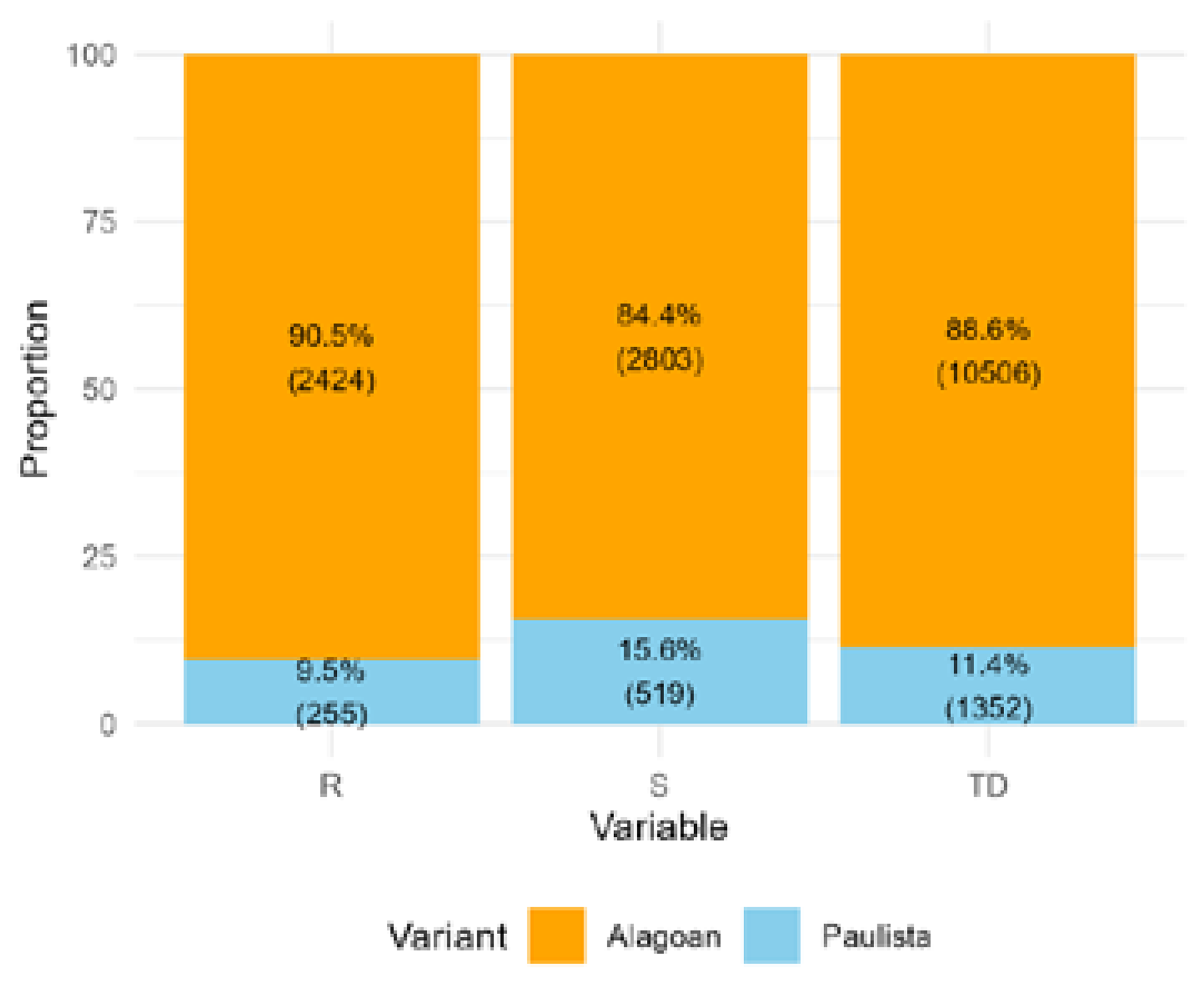
Figure 1 presents the mean rates of São Paulo and Alagoas variants in the speech of return migrants. São Paulo variants occurred at rates of 9.5%, 15.6%, and 11.4% for (R), (S), and (TD), respectively.

As described in Section 2.1, in the speech of non-migrant native speakers from Alagoas, the production of fronted /R/ (tap and retroflex) is not expected, and only minimal rates – below 10% – are expected for alveolar /S/ and palatalized /t, d/ before [i]. The proportions of São Paulo variants shown in Figure 1 all exceed those observed among non-migrant Alagoan speakers, which may be interpreted as an effect of dialect contact retained after return migration. At the same time, these rates remain below those reported for Northeastern migrants residing in the state of São Paulo – cf. for (R): 19%-25% (Oushiro, 2020a; Oliveira, 2020); for (S): 70%-76% (Silva, 2016; Barbosa, 2022); and for (TD): 40%-60% (Oushiro, 2020a; Santana, 2021) – indicating a tendency toward reduced use of non-native variants upon return to the place of origin.
Logistic regression models were used to identify the variables associated with the maintenance or reduction of São Paulo variants ([ɾ, ɻ], [s, z], and [tʃ, dʒ]). Table 1 reports the results for all three variables from the perspective of these variants.
Results in Table 1 show that the predictor variable Style was the only one that presented statistically significant correlations (p < 0.05) with the three response variables. In addition to these correlations with Style, the only other variable that presents correlation is Gender, and only with the realization of (TD). What is striking, initially, is the lack of correlations with predictor variables for which, in previous studies on migrant speech (see Section 2.1), effects of migratory contact had been observed, such as Social Class and Education. Of special importance in this study is the lack of correlation with Length of Residence in São Paulo and Time Since Return to Alagoas, which are pertinent to the process of return of these speakers.
The lack of correlations with most predictor variables may be explained by the variance of the random variables Lexical Item and Speaker, especially the latter. According to the ICC values, individuals are responsible for 39.4% of the variance in the data for (R), 55.5% in the data for (S), and 46.6% in the data for (TD). In other words, about half of the variation in the data is explained by inter-speaker differences, and not by fixed variables such as Social Class and Gender, which suggests unique trajectories for each of these individuals.
On the other hand, the systematic correlation with the variable Style points to the importance of the social meanings of the variants in contact with regard to their prestige or stigma, causing broader oscillations when comparing less monitored speech with reading style. More detailed analyses of each of the response variables are reported below, with special attention to Style and to interactions between Style and other predictor variables, in order to verify whether these patterns recur in all social subgroups.
3.1 Fronting of /R/ in Medial Coda
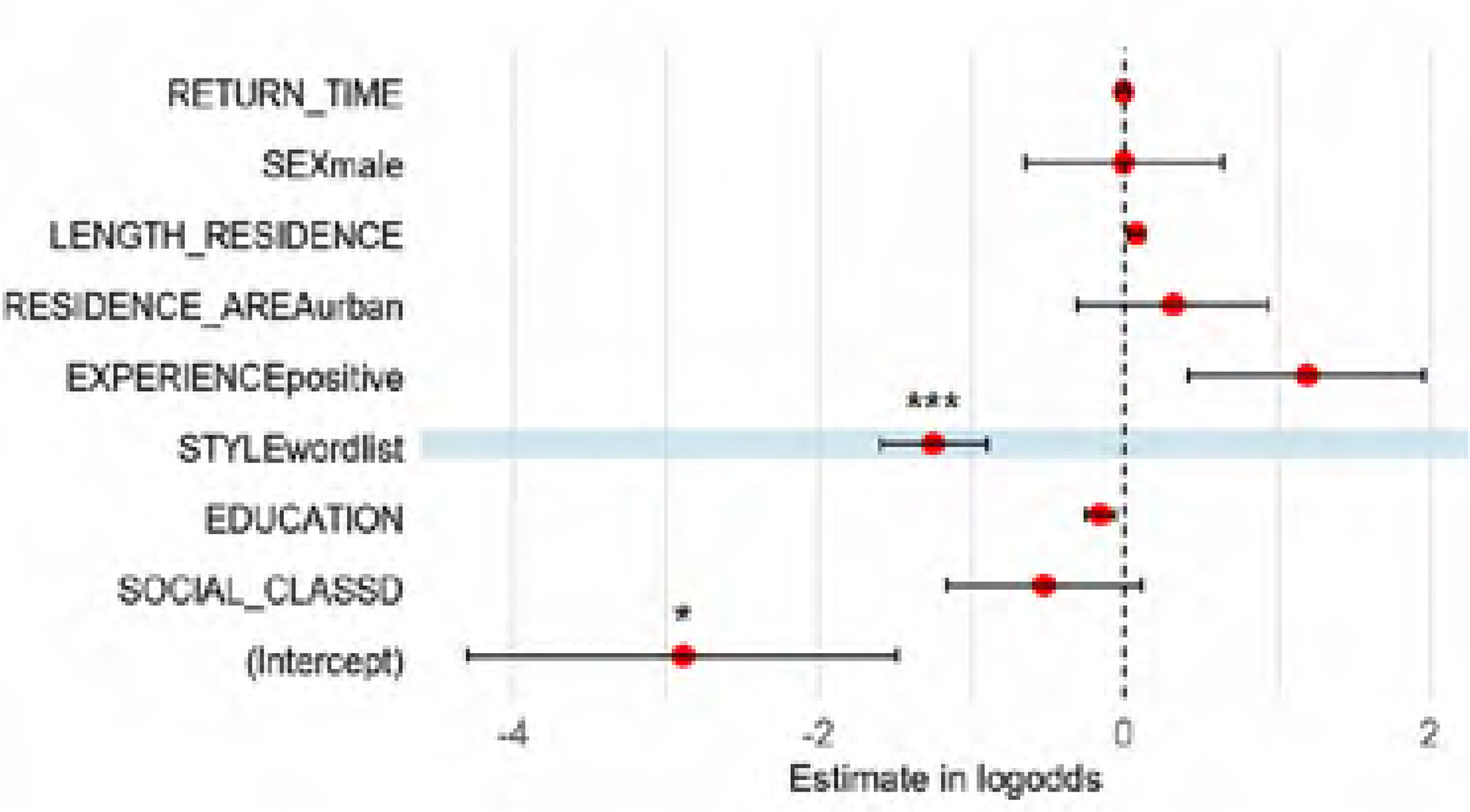
The results of Table 1 for the variable (R) are revisited in Figure 2, which shows that the São Paulo tap and retroflex variants are disfavored (log-odds – 1.256) in the word list in relation to conversation.

– Log-odds estimates and confidence intervals for the fronting of glottal fricative /R/ in medial coda
This pattern aligns with findings by Hora and Wetzels (2010) and Oushiro (in press), who also observed avoidance of São Paulo /R/ variants in more monitored speech among Northeastern migrants.
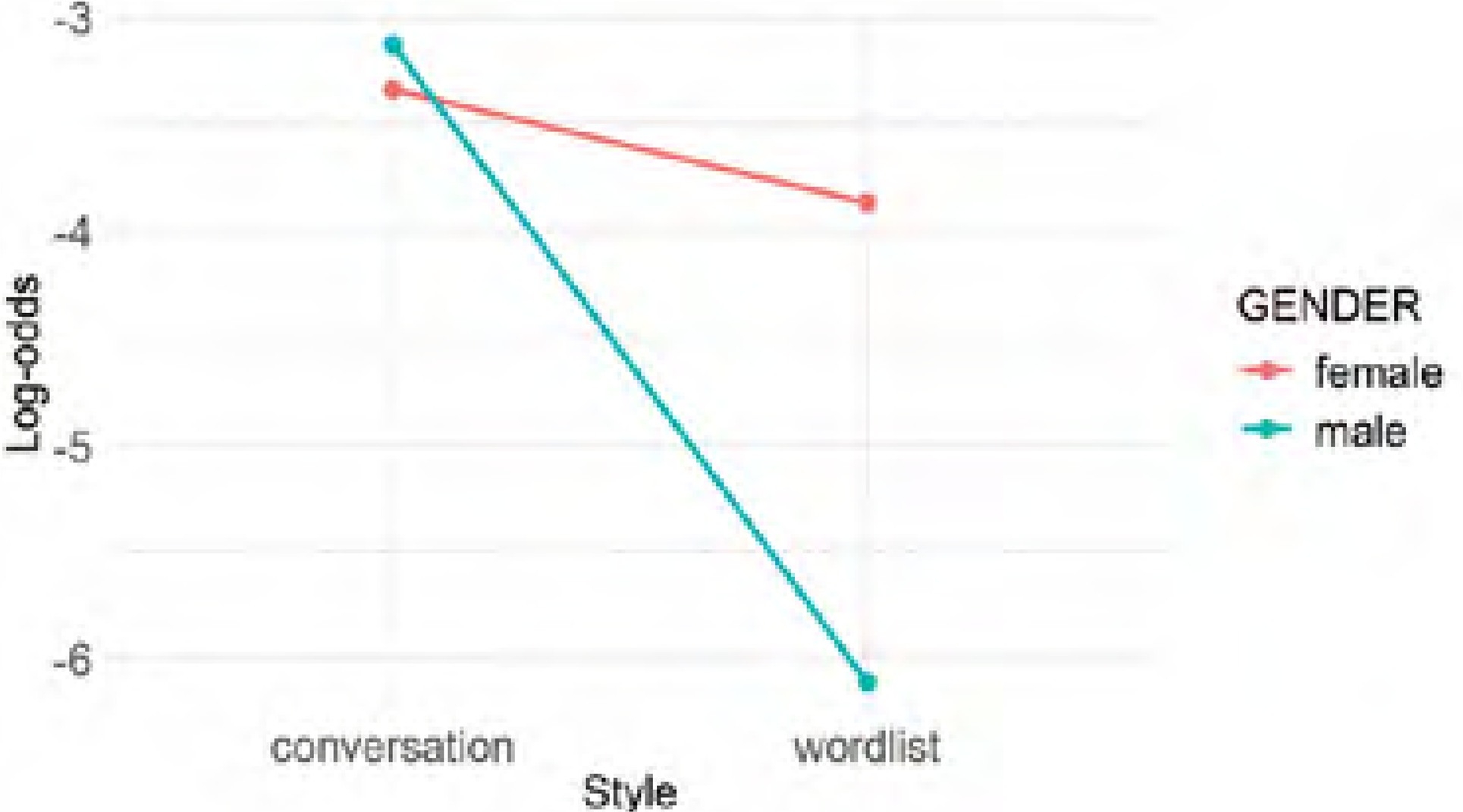
Although there is no significant correlation for the other social variables, the possible interaction scenarios with the variable Style were tested. Of all the interactions, the one between Style and the Speaker’s Gender proved significant, as illustrated in Figure 3.
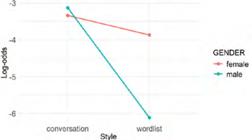
– Interaction between the variables Style and Gender in the analysis of fronting of glottal fricative /R/ in medial coda
What is observed here is that the return Alagoan migrant, in general, in a context of greater monitoring of speech, avoids the realization of the São Paulo variants, since both men and women have a lower probability of using tap or retroflex /R/ in reading style than in conversation. This indicates that, in Alagoas, these variants do not seem to carry positive social meanings. However, the impact of this style shift is more evident among men, who considerably reduce the use of the São Paulo variant when moving from a more spontaneous style (conversation) to a more formal one (reading). Women, on the other hand, show less marked variation between styles. This may be indicative of more constant linguistic monitoring on the part of women, including in contexts of lower monitoring, such as conversation.
3.2 Depalatalization of /S/ in Medial Coda before /t, d/
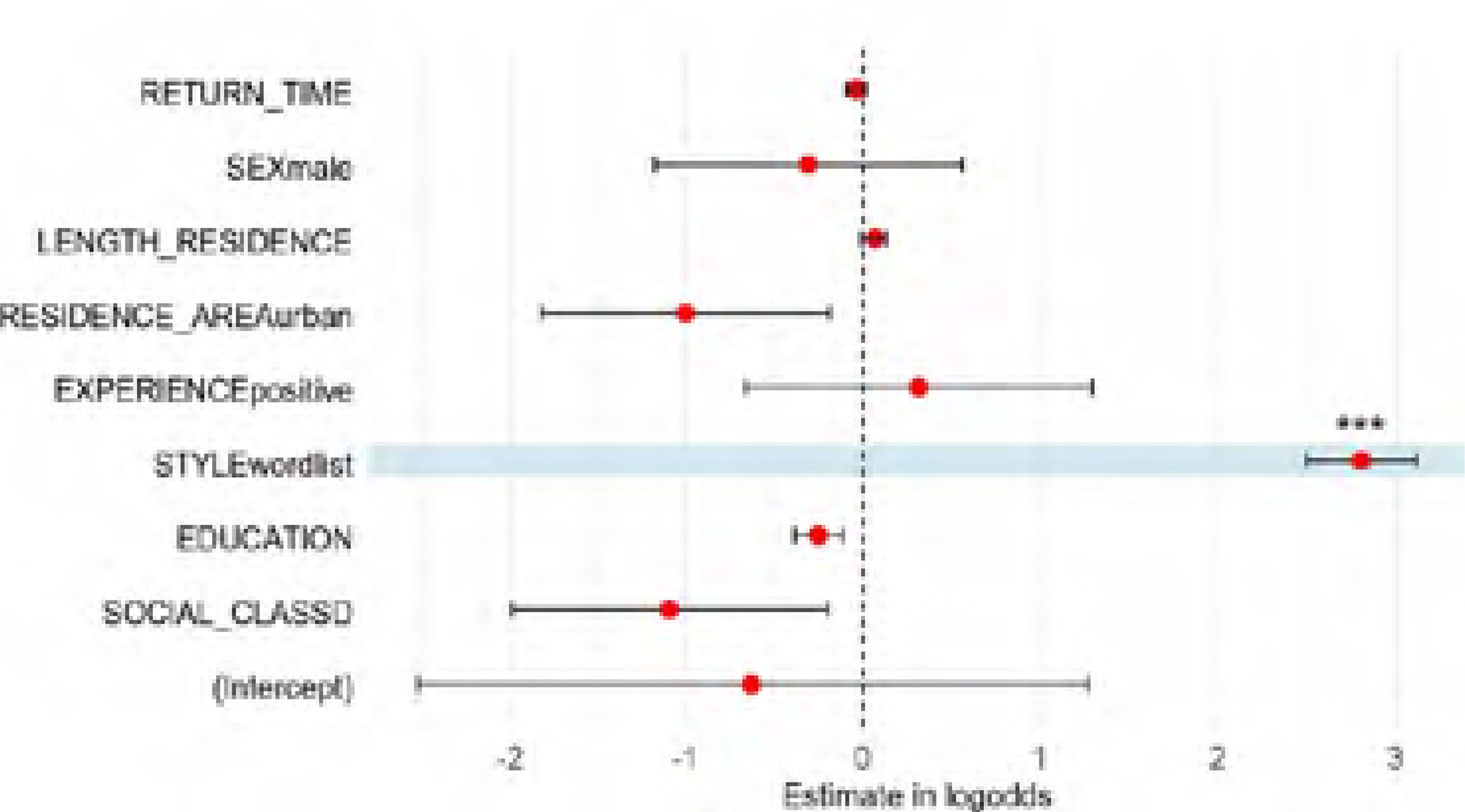
Figure 4 graphically reprises the results of Table 1 for variable (S) and illustrates the favoring of the reading context for the production of São Paulo (S) (log-odds 2.811).
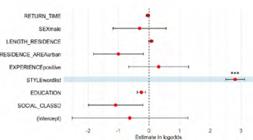
– Log-odds estimates and confidence intervals for the depalatalization of alveolar fricative /S/ in medial coda before /t, d/
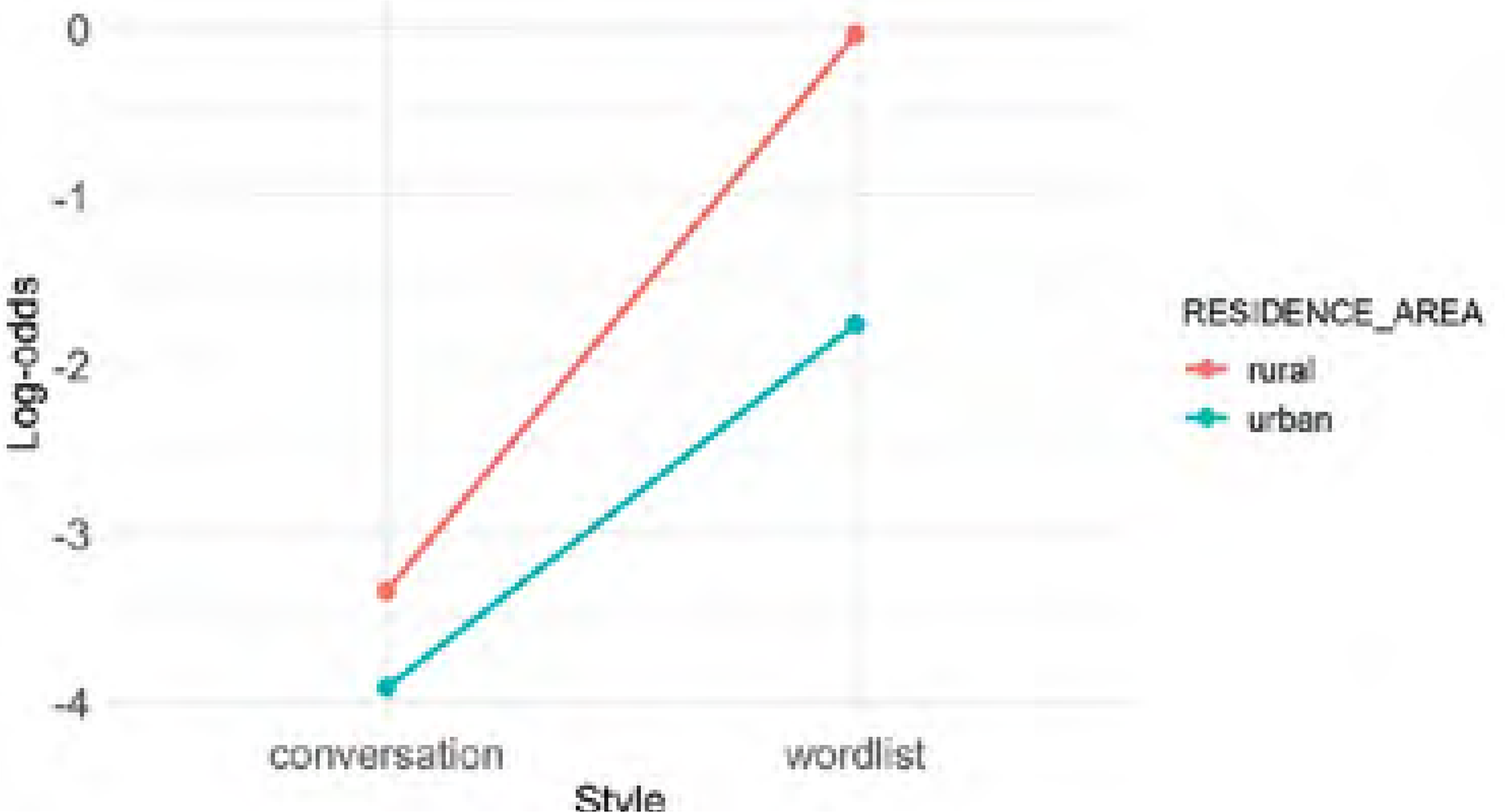
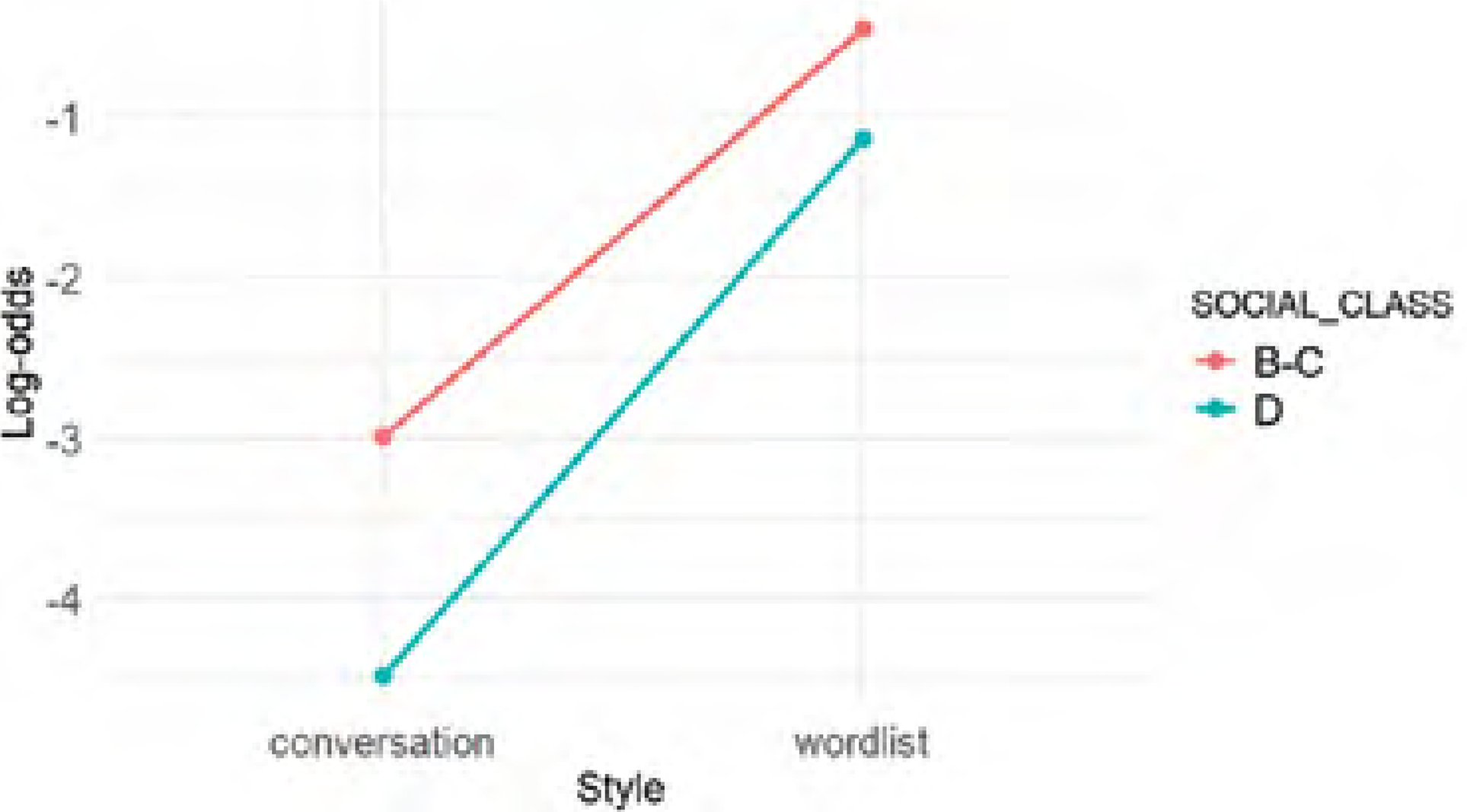
Interaction tests between Style and the other predictor variables indicated an interaction between Style and Residence Area (Figure 5) and between Style and Social Class (Figure 6).
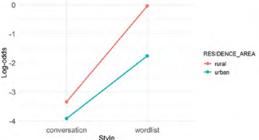
– Interaction between the predictor variables Style and Residence Area in the analysis of depalatalization of fricative /S/ in medial coda before /t, d/
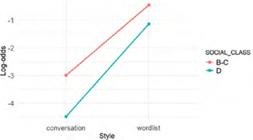
– Interaction between the predictor variables Style and Social Class in the analysis of depalatalization of alveolar fricative /S/ in medial coda before /t, d/
Speakers residing in rural areas show the highest rates of São Paulo variant usage in the word list. This pattern may be explained by differences in social network structure and exposure to local norms. Rural environments, typically characterized by lower population density and weaker institutional pressures, may be less subject to the enforcement of local linguistic norms. Sociodemographic characteristics of the sample reinforce this interpretation: 12 of the 15 rural participants are landowners not integrated into the formal labor market, whereas 15 of the 17 urban participants are engaged in professional occupations, implying greater exposure to local norms and pressures for accommodation. Thus, the variants acquired in São Paulo may have been relatively more preserved in rural contexts, especially in the more monitored style, due to the relatively smaller influence of the local norm.
Regarding Social Class, the hypothesis tested was that the variants proper to the supralocal linguistic norm, such as alveolar fricative [s, z] in medial coda context, would be more productive in the speech of people from higher social classes – a difference not attested in the regression model.
However, Figure 6 shows that there is differentiation between the classes according to speech monitoring: in less monitored style (conversation), speakers from lower classes prefer to maintain local linguistic characteristics, which may be interpreted as an expression of belonging, in opposition to what is perceived as external variants (Labov, 1978 [1972]). For these speakers, variants associated with the supralocal norm may be perceived as representative of an elitized linguistic identity, distancing themselves from everyday life and local social practices. Thus, the use of this variant may be discouraged, since it does not appear to have positive symbolic value with regard to identification with the local community, and may even be seen as an attempt to distance oneself culturally and symbolically from one’s group. In the word list, however, one notes that the difference between social classes decreases considerably and that the increase in the rate of use of the supralocal variant is greater for the lower class than for classes B-C. This result may indicate relatively greater linguistic insecurity among class-D speakers in their more monitored style.
3.3 Regressive Palatalization of /t, d/
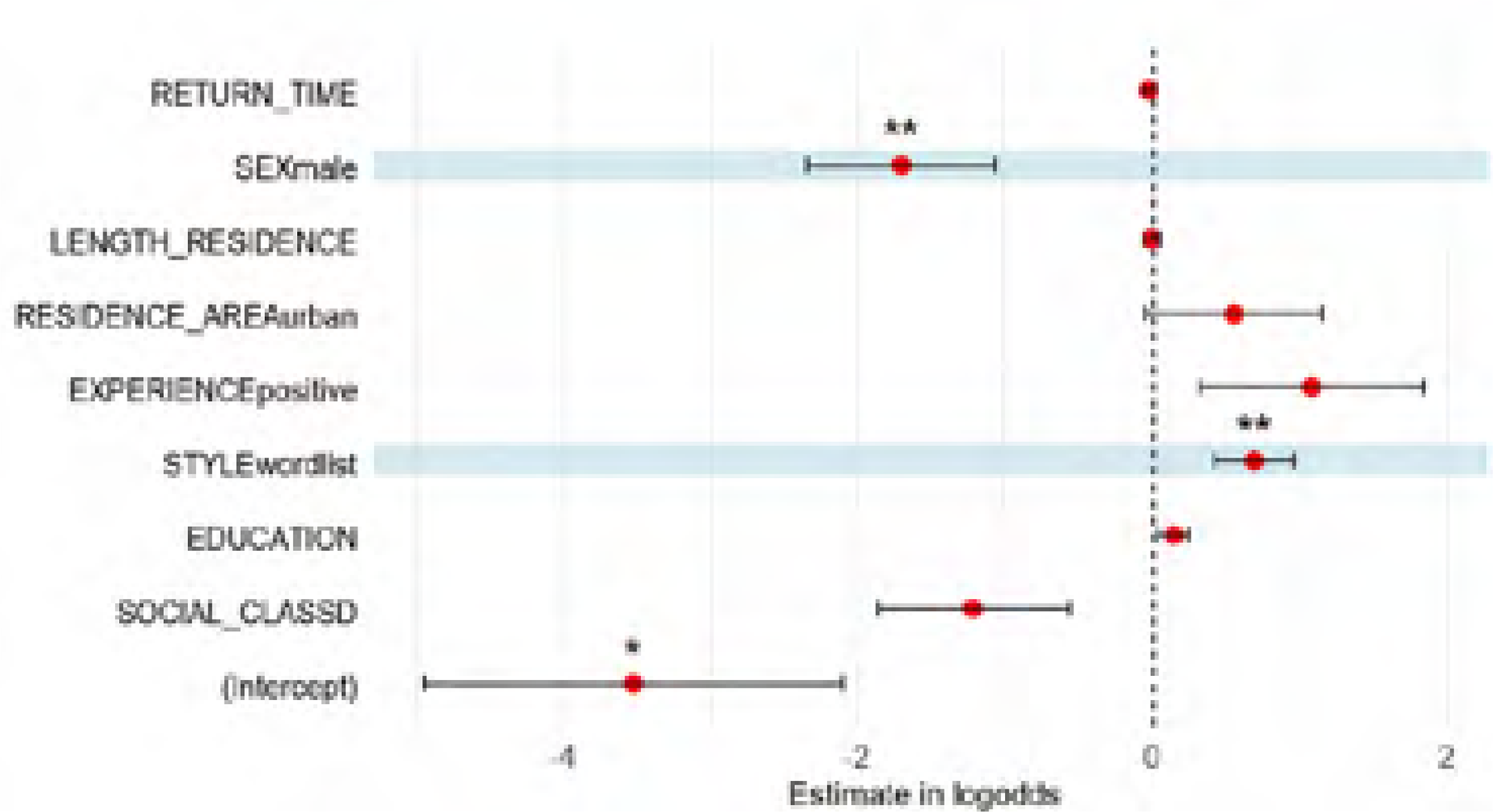
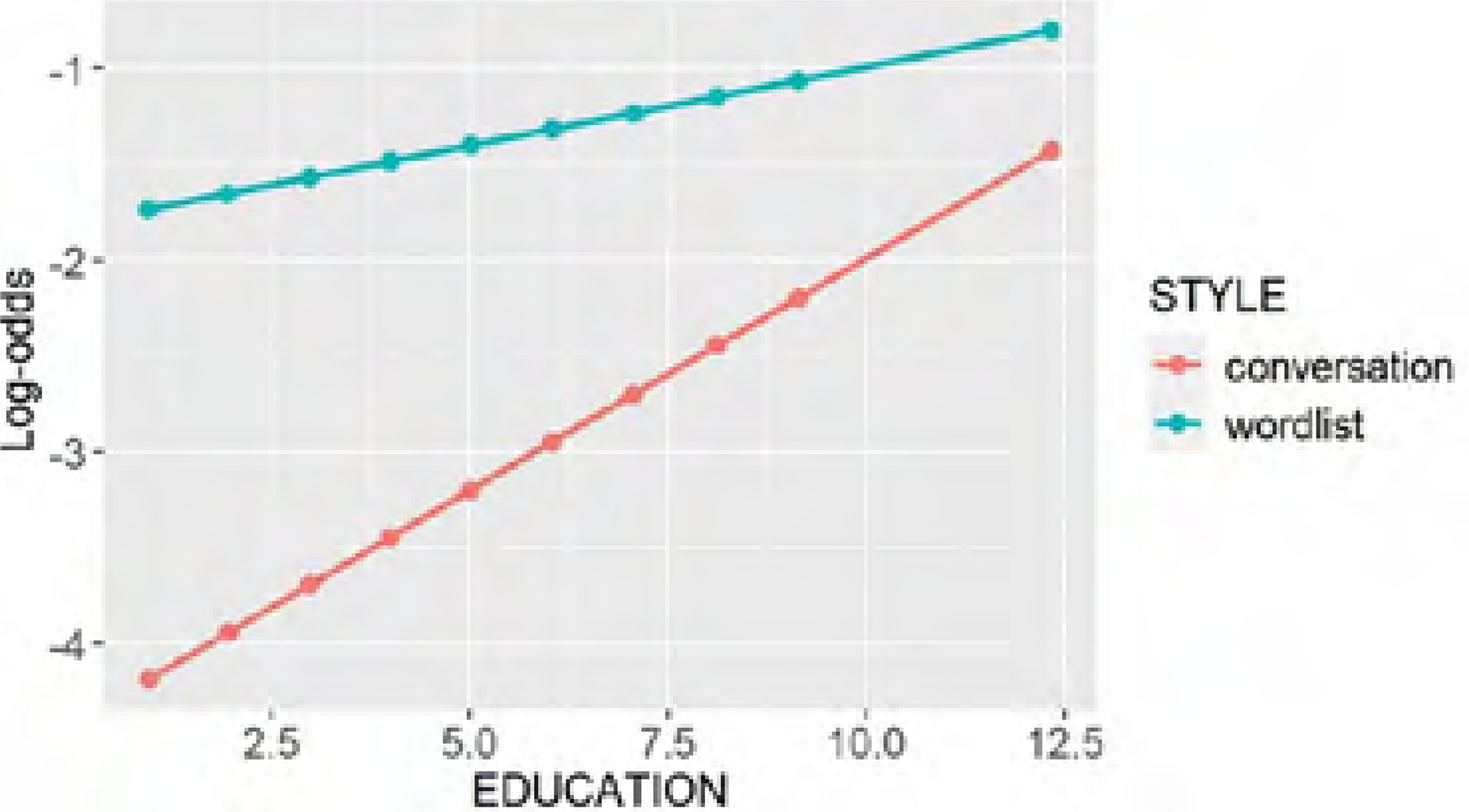
Figure 7 presents graphically the results of the logistic regression model in Table 1. The figure shows that the palatalization of (TD) is disfavored in men’s speech (–1.416) and favored in reading style (1.256).
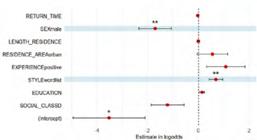
– Log-odds estimates and confidence intervals for the regressive palatalization of alveolar stops /t, d/
The correlation with speaker gender coincides with the results reported in Oushiro (2020b) for (TD) and for nominal number agreement, two variables related to the rural-urban continuum (Bortoni-Ricardo, 1985). In the same sample, Oushiro (2020b) did not find correlation between gender and the variables (R) and sentential negation, which more properly differentiate the varieties of the Northeast and São Paulo. Similarly, in the present study, variables (R) and (S) also did not show correlation with gender.
Oushiro (2020b) interprets this pattern of correlations with gender as a tendency for women, in a situation of dialect contact between Alagoans/Paraibans and Paulistas, to differentiate themselves from men with regard to the adoption of urban (vs. rural) patterns, but not necessarily Paulista (vs. Northeastern) ones. This points to the complexity of the prestige and social meanings attached to the multiple variants in contact: beyond the Northeast-Southeast axis, migrants, especially women, pay attention to the meanings of the rural-urban continuum, such as “caipira” ‘redneck’, “mateiro” ‘woodsperson’, and “sertanejo” ‘backlands resident,’ as opposed to notions of “cosmopolitanism” and “modernity.” The favoring of the affricate variant of (TD) by women indicates that they tend to move away from variants associated with rurality.
As with variables (R) and (S), correlation is also found between (TD) and speech style. In this case, the word list favors the palatalized variant, an Alagoan non-local form, similarly to (S) and unlike (R). As for the interactions between Style and the other social variables, significant correlation was observed only between Style and Education, as shown in Figure 8.

– Interaction between the variables Style and Education in the analysis of affrication of alveolar stops /t, d/
Figure 8 shows that the higher the level of education, the greater the tendency to use the palatalization of (TD), both in conversation and in the word list. However, the difference between the styles is smaller among the more educated speakers, who, even in conversation style, make relatively more frequent use of the palatalized variant. By contrast, the difference between conversation and reading styles is much greater among less educated speakers, who tend to adopt the supralocal variant only in the more monitored style and avoid it in less monitored style in favor of the local stop variant.
4 Discussion
Sociolinguistic research on the return migration of Alagoans who left São Paulo to return to Alagoas offers some reflections on the dynamics of linguistic variation in migratory contexts. Accommodation by native Alagoans to São Paulo linguistic variants during migration seems to play an active role in identity construction and represents an intersection between linguistic choices, social dynamics, and individual aspirations.
This social phenomenon results in a series of adaptations necessary for the speaker to navigate the intricate social and cultural networks that permeate both São Paulo and Alagoas. The need to sound like someone “local” in São Paulo, besides being a search for acceptance, is directly linked to access to opportunities and specific resources reserved for natives, as illustrated in the dialogue in (1)9 between the researcher and one of the study participants.
(1)Interviewer: em algum momento você teve que alterar a sua forma de falar para se adaptar a São Paulo?
Izadora:10 sim eu me esforçava bastante para falar do jeito deles lá... porque toda vez que eu falava do meu jeito era motivo de chacota
Interviewer: você nesse sentido se sentia muito…
Izadora: sim... sentia sentia muito né... e fiquei assim meio é... frustrada né... teve dias lá eu dizia... eu vou embora... não dá para ficar aqui... é muito bom você trabalhar... ter o seu dinheiro né... não te falta nada... mas não dá... esse povo é muito estranho... esse povo quer ser melhor que a gente entendeu? aí eu falei não... eu vim aqui para vencer então eu vou vencer... melhor do que eu ir embora... não... é eu falar igual a eles vou falar igual a eles... aí quando eu cheguei... aí me esforcei tanto para falar do jeito deles que quando eu cheguei aqui eu fui motivo de chacota aqui... que eu cheguei falando como eles lá... eu fiquei seis anos seguidos lá sem vir aqui... quando eu vim aqui eu cheguei falando como eles... ah mas para quê? aí eu fui motivo de chacota aqui.
The dialogue with the participant Izadora reveals that the attempt to adapt to the São Paulo norm does not occur spontaneously, but rather as a conscious effort in the face of social pressures, such as the demand for acceptance and fear of stigmatization. The dynamic between convergence and divergence in the accommodation of linguistic variants reflects a strategic process influenced by the social evaluations inherent to each community. In São Paulo, the production of certain linguistic variants may be perceived as essential for performing certain specific social roles, such as insertion into the labor market.
The preservation of São Paulo variants in Alagoas may be understood as an attempt to maintain an identity acquired during the stay in São Paulo, but this choice may be interpreted ambivalently, since the reproduction of São Paulo variants in Alagoas may also be interpreted negatively, associated with a forced attempt to sound “different” or “superior.” This may result in a negative construction of personal image and reflects resistance to an identity perceived as inauthentic or out of local context, as reflected in Izadora’s account.
It is curious to note, however, that the return to Alagoas does not imply an immediate resumption of pre-migration linguistic patterns, as can be seen in the use, at relatively higher rates, of non-local variants (/R/ tap/retroflex, alveolar /S/, and affricate /t, d/ before [i]) than in the speech of Alagoans who did not migrate. Whereas the acquisition of São Paulo variants in São Paulo may occur consciously, as in Izadora’s account, their maintenance in Alagoas seems to occur unconsciously, as a result of frequent prior accommodation while being a migrant and of the enlargement of the speaker’s repertoire of variants and linguistic norms. The preservation of these variants, therefore, faces the challenge of balancing the adaptation acquired during migration with the need to sound authentic in the community of origin.
According to recurrent accounts in the interviews, the São Paulo variant of (R) seems to be the most salient and susceptible to accommodation by Alagoan migrants, as illustrated in participant Edson’s excerpt in (2).11
(2)Interviewer: você já se adaptou na forma de falar paulista?
Edson: sem querer ou não você ainda pega umas palavras de lá entendeu... às vezes você utiliza porque de tanto você conviver com eles não é… aí sem querer ou não a gente de vez em quando fala uma palavra deles mesmo
Interviewer: e essas palavras… elas seriam mais ou menos como? você poderia citar alguma?
Edson: ah lá eles têm uma linguagem lá que… deixa eu ver aqui uma que eles falavam muito lá que eles usam… é porque sei lá eles puxam mais pelo S pelo R entendeu… é pelo e tudo deles lá é diferente ... tipo vai chamar uma porta chama “po[h]ta” normal… eles lá não… é po[ɻ]ta… pronto… aí é essas coisas que é diferente entendeu?
In the case of depalatalization of alveolar fricative /S/ in medial coda, the association with a Paulista identity is obvious, but relatively less marked. The palatalization of the alveolar stops, by contrast, does not seem to undergo any kind of social pressure against its realization on Alagoan soil. This manifestation is influenced by the speaker’s migratory experience, characterized by a transition from an average production in spontaneous speech below 5% (Falcão, 2021) to an average production above 10%. It is relevant to highlight that, although this variant is already present in the spontaneous linguistic expressions of Alagoans, albeit in a very small percentage proportion, its salience as a Paulista variant is attenuated. This variant seems to be recognized positively, but is not directly associated with a Paulista identity in a prominent way (Falcão, 2024).
As seen in the logistic regression models, Style is the only predictor that correlates with the three variables under analysis: while the São Paulo variants of (R) are disfavored in reading context, the São Paulo variants of (S) and (TD) are favored. These three cases, however, point in the same direction: in a context of greater speech monitoring, a supralocal variant is favored, which only coincidentally corresponds to the Paulista or the Alagoan norm. Together with the results of Hora and Wetzels (2010) and Oushiro (in press), which also found migrants to favor fricative /R/ and alveolar /S/ in word lists, our data reinforce the importance of looking at linguistic norms beyond the local community when dealing with mobile populations.
The supralocal norm, as outlined by Milroy and Gordon (2003), refers to a set of linguistic patterns that transcend geographical boundaries and are often associated with urban centers or areas of social prestige. The results observed in this study illustrate the relationship between linguistic variation and normative adjustment, insofar as “[...] the specific social meanings indexed by linguistic variables are local, despite the robust supralocal character of the relationship between language and social class.” (Milroy; Gordon, 2003, p. 90).
The persistence of these variants in Alagoas, after the return of speakers who had been in São Paulo, is evidence of how exposure to new dialect varieties broadens migrants’ linguistic repertoire and organizes these innovations into a hierarchy of norms, from the local to the supralocal. Upon returning, migrants adjust their linguistic use according to the demands of different social contexts, demonstrating an adaptive capacity that reflects the incorporation of new structural configurations. This dynamic suggests a reorganization of the linguistic repertoire, as can be exemplified in participant Josenice’s excerpt in (3):12
(3)Josenice: aí só quem convive com eles mesmo lá... eu senti às vezes até eu falava do jeito deles porque você acostuma… você acostuma estando perto e vivendo muitos anos… você acostuma mas depois que eu cheguei aqui voltei pro nordestino... muitas palavras lá eu falava mas quando você tem aquela raiz… acabou-se
The ability to maintain these variants in Alagoas, with varied frequencies of realization, demonstrates migrants’ capacity for selective and strategic adaptation to linguistic norms. At the same time, such strategies are also modulated by individuals’ sociodemographic characteristics, as may be inferred from the interactions observed between Style and social variables. The results of the statistical analyses indicate that stylistic variation between the contexts of conversation and word list is greater among men, in the case of (R); among speakers who reside in rural areas and speakers from higher social class, in the case of (S); and among speakers with lower levels of education, in the case of (TD). This may be indicative of relatively greater monitoring, throughout the whole sociolinguistic interview situation, on the part of women, inhabitants of urban areas, lower-middle-class speakers, and the more educated, or of greater linguistic insecurity among the groups most likely to alternate styles according to speech monitoring. The specific interactions for each variable (R), (S), and (TD) should be the object of more in-depth analyses in the future, in the light of their social meanings locally and nationally.
It is equally noteworthy that several social variables studied in previous research did not exhibit a correlation with the migratory process, such as Length of Residence in the new locality and Time Since Return. Here the lack of correlation with these variables is interpreted as resulting from the large variance in inter-individual patterns, as indicated by the ICC indices of the mixed-effects models, which reveal the preponderance of this random effect over most fixed effects. Indeed, one may expect that migrants’ linguistic experience is more varied than that of non-migrants, which may lead to unique trajectories for each of these individuals and, therefore, greater variance among them.
Thus, the assimilation and preservation of these linguistic variants by Alagoans during return migration represent strategies of identity negotiation, aspirations of social belonging, and adaptation to different sociocultural contexts. This variation, therefore, reveals itself as an instrument that not only reflects but also influences social dynamics, being an active element in the construction and continuous redefinition of these migrants’ interactions.
Conclusion
Each of the variants investigated seems to carry a set of specific social meanings that are neither stable nor universally applicable, but which vary depending on the context of conversational interaction. For a Northeasterner in São Paulo, these variants may have different implications compared with what they mean for someone who returned to the Northeast.
The reports of participants Izadora, Edson, and Josenice illustrate the social pressure experienced by migrants to align their speech with the São Paulo norm, which may lead to a conscious effort to abandon original linguistic traits in favor of greater social acceptance. Exposure to the São Paulo context intensifies this transformation, while the return to Alagoas reactivates local linguistic traits, generating a tension between local and supralocal norms that shape migrants’ speech.
The diversity of the linguistic repertoire, expanded by both São Paulo and Alagoan variants, allows navigation through different norms. These may be local, meeting the social needs of the immediate surroundings, or supralocal, demonstrating knowledge of a broader norm. Thus, normative flexibility is established, continuously adjusting along a normative gradient.
This alternation between norms that the return migrant experiences does not configure itself as a binary choice between the Paulista or Alagoan norm, but as a continuous and dynamic adjustment of certain linguistic variants in relation to an axis that oscillates between the supralocal norm and different local norms. This may be observed in the results for the variable Style, when one observes that speakers not only access different normative patterns, but also modulate their use according to contextual demands throughout the interview situation. Thus, the main effect of migratory experience seems to be, besides the broadening of the linguistic repertoire, the capacity to move among distinct norms and, strategically, apply them according to the speaker’s social and communicative demands.
This complexity certainly transcends the limits of isolated linguistic phenomena. In this context, some questions still lack answers and therefore stimulate the continuation of investigation and the opening of new perspectives:
-
What role do social networks play in shaping dialect accommodation among return migrants?
-
What social meanings are associated with São Paulo variants in the perception of Alagoan speakers?
-
How does “sounding paulista” affect social integration upon return to Alagoas?
-
How have broader social transformations in the Northeast influenced return migrants’ attitudes toward linguistic variation?
-
To what extent do São Paulo – based norms influence ongoing linguistic change in Alagoas?
-
How do subjective processes of identity construction shape linguistic choices in return migration contexts?
Addressing these questions will contribute to a more comprehensive understanding of the complex interplay between language, mobility, and social meaning.
Acknowledgments
The authors would like to thank Prof. Dr. Emerson Souza (Federal University of Bahia) and the anonymous reviewers for their careful reading of this article and for their valuable suggestions.
References
- ABAURRE, M. B.; PAGOTTO, E. G. Palatalização das oclusivas dentais no português do Brasil. In: ABAURRE, M. B.; RODRIGUES, A. C. S. (org.). Gramática do Português Falado. Volume VIII: novos estudos descritivos. Campinas: Editora da UNICAMP, 2002. p. 557-602.
- BARBOSA, S. P. Análise do /s/ em coda na fala de migrantes alagoanos e paraibanos em Campinas. 2022. 84 f. Trabalho de Conclusão de Curso (Graduação) - Instituto de Estudos da Linguagem, Universidade Estadual de Campinas, Campinas, 2022.
-
BATES D, M. et al. Fitting Linear Mixed-Effects Models Using lme4. Journal of Statistical Software, p. 1-48, 2015. Disponivel em: https://github.com/lme4/lme4/ Acesso em: 10 jun. 2023.
» https://github.com/lme4/lme4/ - BECKER, K. The sociolinguistic interview. In: MALLINSON, C.; CHILDS, B.; VAN HERK, G. (ed.). Data collection in sociolinguistics: Methods and applications. London: Routledge, 2013. p. 99-100.
- BELL, A. Language style as audience design. Language in Society, v. 13, p. 145-204, 1984.
- BORTONI-RICARDO, S. M. The Urbanization of Rural Dialect Speakers Cambridge: Cambridge University Press, 1985.
- CARDOSO, S. et al. Atlas Linguístico do Brasil. v. 2. Londrina: Eduel, 2014.
- CARREÃO, V. Transformações econômicas e mudança linguística: a língua em Louveira/SP. 2018. Dissertação (Mestrado em Linguística) - Instituto de Estudos da Linguagem, Universidade Estadual de Campinas, Campinas, SP, 2018.
- CHAMBERS, J. K. Dialect Acquisition. Language, v. 68, n. 4, p. 673-705, 1992.
- ECKERT, P. Style and social meaning. In: ECKERT, P.; RICKFORD, J. (org.). Style and Sociolinguistic Variation. Cambridge: Cambridge University Press, 2001. p. 119-126.
- FALCÃO, A. B. Palatalização regressiva das oclusivas alveolares em Alagoas. 2021. 103 f. Dissertação (Mestrado em Linguística e Literatura) - Faculdade de Letras, Universidade Federal de Alagoas, Maceió, 2021.
- FALCÃO, A. B. Recepções sociolinguísticas associadas à palatalização de /t/ e /d/ em Alagoas. In: Seminário do GEL, 70, 2024, Campinas, SP. Caderno de resumos do 70º Seminário do GEL [livro eletrônico], 2024.
-
FOX, J.; WEISBERG, S. An R Companion to Applied Regression 3. ed. Thousand Oaks CA: Sage, 2019. Disponível em: https://socialsciences.mcmaster.ca/jfox/Books/Companion /index.html Acesso em: 10 jun. 2023.
» https://socialsciences.mcmaster.ca/jfox/Books/Companion /index.html - GILES, H. Accent Mobility: A Model and Some Data. Anthropological Linguistics, v. 15, n. 2, p. 87-105, fev. 1973.
- HELLWIG, B.; GEERTS, J. (2013). ELAN - Linguistc Annotator. Versão 6.7. Disponível em:. Acesso em: 10 jun. 2023.
- HORA, D.; WETZELS, L. Róticos: uma "po[h, ?, ?]ta" entre paraibanos e paulistanos. Lingüistica, Madrid, p. 51-76, 2010.
- INSTITUTO BRASILEIRO DE GEOGRAFIA E ESTATÍSTICA (IBGE). Pesquisa Nacional por Amostra de Domicílios Contínua: notas metodológicas. Rio de Janeiro: IBGE, 2014.
- HOTHORN, T.; BRETZ, F.; WESTFALL, P. Simultaneous Inference in General Parametric Models. Biometrical Journal, v. 50, p. 346-363, 2008.
- LABOV, W. The anatomy of style-shifting. In: ECKERT, P.; RICKFORD, J. R. (org.). Style and Sociolinguistic Variation. Cambridge: Cambridge University Press, 2001. p. 85-108.
- LABOV, W. Padrões Sociolinguísticos. São Paulo: Parábola, 2008.
- LABOV, W. The Social Stratification of English in New York City. Cambridge: Cambridge University Press, 2006.
- MILROY, L. Introduction: Mobility, contact and language change - Working with contemporary speech. Journal of Sociolinguistics, Oxford, v. 1, n. 6, p. 2-15, 2002.
- MILROY, L.; GORDON, M. Sociolinguistics: Method and Interpretation. Oxford: Blackwell Publishing, 2003.
- MILROY, J.; MILROY, L. Authority in Language: Investigating Standard English Londres: Routledge, 2012.
- OLIVEIRA, M. A. J. D. Dialetos em contato: acomodação dialetal por migrantes baianos habitantes da cidade de Bauru, São Paulo. 2020. 88 f. Dissertação (Mestrado em Linguística) - Faculdade de Ciências e Letras, Universidade Estadual Paulista, Araraquara, 2020.
- OUSHIRO, L. Identidade na pluralidade: avaliação, produção e percepção linguística na cidade de São Paulo. 2015. 423 f. Tese (Doutorado em Semiótica e Linguística Geral) - Faculdade de Filosofia, Letras e Ciências Humanas, Universidade de São Paulo, São Paulo, 2015.
-
OUSHIRO, L. dmsocio. v0.2.0, 2018. Disponível em: oushiro.shinyapps.io/dmsocio Acesso em 03 jun. 2024.
» oushiro.shinyapps.io/dmsocio - OUSHIRO, L. Múltiplas variáveis na fala de nordestinos residentes em São Paulo. In: BRESCANCINI, C. R.; MONARETTO, V. N. O. (ecl.). Sociolinguística no Brasil: textos selecionados. Porto Alegre: EDUPUCRS, 2020a. p. 121-153.
- OUSHIRO, L. Contrasting Age of Arrival and Length of Residence in Dialect Contact. University of Pennsylvania Working Papers in Linguistics, v. 25, n. 2, Article 10, 2020b.
- OUSHIRO, L. O estudo da fala de migrantes internos: desafios, procedimentos e resultados do Projeto Acomodação. In: BRANDÃO, S. F.; VIEIRA, S. R. (org.). Para o estudo comparativo de variedades do Português: questões teórico-metodológicas e análises de dados. Berlin/Boston: De Gruyter, 2023.
- OUSHIRO, L. Dialect contact in lusophone communities. In: CARVALHO, A. M.; OUSHIRO, L. (ed.) The Oxford Handbook of the Portuguese Language. Oxford: Oxford University Press, no prelo.
- OUSHIRO, L. et al. Estudos sociolinguísticos sobre contato dialetal: contribuições do VARIEM e agenda de pesquisa. Cadernos de Estudos Linguísticos, Campinas, v. 65, p. 1-18, 2023.
- PLAZA, L. O dialeto caipira no município de Itatiba-SP. 2019. 263 f. Dissertação (Mestrado em Linguística) - Instituto de Estudos da Linguagem, Universidade Estadual de Campinas, Campinas, SP, 2019.
-
R CORE TEAM. R: A language and environment for statistical computing. Vienna: R Foundation for Statistical Computing, 2024-2025. Disponível em: https://www.R-project.org/ Acesso em: 03 mar. 2024.
» https://www.R-project.org/ - SANTANA, A. L. A pronúncia variável de /t, d/ diante de [i] na fala de migrantes sergipanos em São Paulo. Estudos Linguísticos, São Paulo. v. 50, n. 3, p. 1283-1304, dez. 2021.
- SCHILLING-ESTES, N. On the nature of isolated and post-isolated dialects: Innovation, variation and differentiation. Journal of Sociolinguistics, v. 6, n. 1, p. 64-85, 2002. Publicado por Blackwell Publishers Ltd. 2002.
- SILVA, M. Contato dialetal: atitudes do falar paraibano em São Paulo. 2016. Dissertação (Mestrado) - Universidade Federal da Paraíba, João Pessoa, 2016.
- TRUDGILL, P. Dialects in contact. Oxford: Basil Backwell, 1986.
-
WARNES, G. R. Package 'gmodels'. Disponível em: https://github.com/r-gregmisc/gmodels Acesso em: 14 mar. 2024.
» https://github.com/r-gregmisc/gmodels -
WICKHAM, H. ggplot2: Elegant Graphics for Data Analysis. [ S.l .]: Springer-Verlag New York, 2016. Disponível em: https://ggplot2.tidyverse.org Acesso em: 14 mar. 2024.
» https://ggplot2.tidyverse.org
-
1
The ALiB data reported in Cardoso et al. (2014) cover only state capitals; in this study, the data for São Paulo (capital) and Maceió were consulted. Although not all speakers in the present sample are from the capital of Alagoas or have lived in the city of São Paulo, these data nonetheless allow for the establishment of regional contrasts.
-
2
Cardoso et al. (2014) do not report the proportions of [ʒ] before the segment /d/ separately.
-
3
Data collection was approved by the Research Ethics Committee (CAAE: 57956222.7.0000.5013).
-
4
The interviews, transcriptions, and coding were carried out with the active participation of members of the Grupo de Estudos em Variação Linguística de Alagoas (GEVAL): Carlos Colatino, Maria Clara, Nihirsi Costa, Samyra Costa, Gabriely Ferreira, Emanuelle Marques, Sivaldo Bezerra, and Quitéria Costa, to whom we extend our sincere thanks for their dedication and commitment.
-
5
The variables Education, Length of Residence, and Time Since Return are continuous; therefore, their intercepts represent the model’s predicted values when these variables are set to zero.
-
6
The intraclass correlation coefficient (ICC) measures the proportion of total variance attributable to between-group differences in a multilevel model with fixed and random effects. Values expressed as percentages indicate the share of variability accounted for within each grouping structure.
-
7
Interviewer: at some point did you have to change the way you speak in order to adapt to São Paulo?Izadora: yes I really made an effort to speak the way they do there... because every time I spoke my way it was cause for mockeryInterviewer: in that sense did you feel very...Izadora: yes... I did I really did you know... and I got kind of uh... frustrated right... there were days when I would say... I’m going away... I can’t stay here... it’s very good to work... to have your own money right... not to lack anything... but I can’t... these people are very strange... these people want to be better than us you know? then I said no... I came here to win so I am going to win... better than me going away... no... it’s me speaking like them I am going to speak like them... then when I arrived... I had tried so hard to speak the way they do that when I got here I became a laughingstock here... because I arrived speaking like them there... I spent six straight years there without coming here... when I came here I arrived speaking like them... oh but why? then I became a laughingstock here
-
8
Pseudonym to preserve the participant’s identity.
-
9
Interviewer: have you already adapted in the way of speaking Paulista?Edson: whether you want to or not you still pick up some words from there you know... sometimes you use them because from being around them so much right... then whether you want to or not every now and then we say one of their wordsInterviewer: and those words... what would they be more or less like? could you give an example?Edson: ah over there they have a way of speaking that... let me see here one that they used a lot there that they use... it’s because- I don’t know- they pull more on the S and the R you know... everything there is different... like if you’re going to say porta [‘door’] you say “po[h]ta” normally... there they don’t... it’s po[ɻ]ta... that’s it... those are the things that are different you know?
-
10
Josenice: then only people who are around them there really... I even felt that sometimes I spoke the way they do because you get used to it... you get used to it being close and living many years... you get used to it but after I got here I went back to sounding Northeastern... there were many words there that I used to say but when you have that root... that’s it
-
Data Availability Statement
All datasets supporting the findings of this study is available in a personal file and can be requested from the author(s).
-
Editor responsible:
Gisele Cássia de Sousa
All datasets supporting the findings of this study is available in a personal file and can be requested from the author(s).

 Source: The Authors
 Source: The Authors
 Source: The Authors
 Source: The Authors
 Source: The Authors
 Source: The Authors
 Source: The Authors
 Source: The Authors